
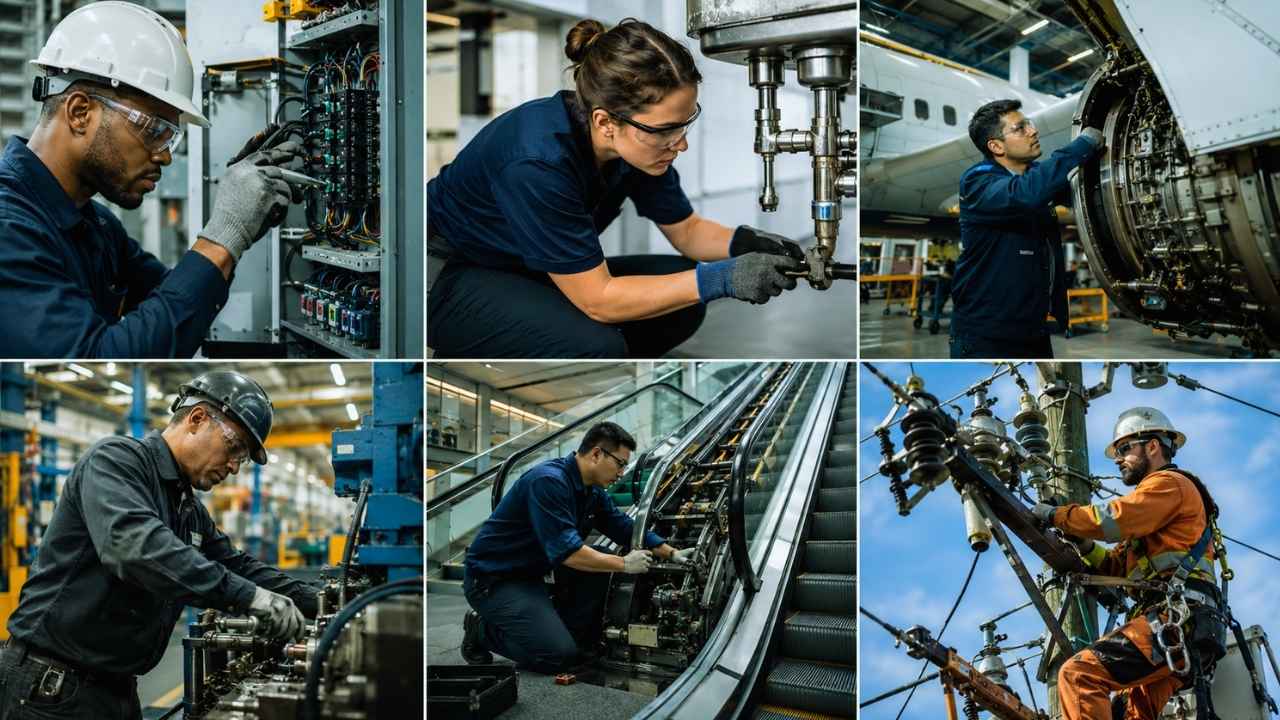
College is still useful. Nobody serious should pretend otherwise. Some careers need a degree, and many graduates still earn strong incomes over time. But the old advice that every smart person must take the four-year college route is starting to feel outdated.
In 2026, a lot of people want work that pays well, stays useful during economic slowdowns, and does not require years of student debt. That is where high paying trade jobs come in. These careers are built around real systems people use every day: electricity, water, buildings, aircraft, elevators, factories, and energy infrastructure.
The trade path is not soft or easy. You may work with tools, heights, weather, heavy equipment, strict safety rules, or emergency calls. You may also spend years training before you reach top pay. But the upside is real. Many skilled trades offer paid apprenticeships, strong local demand, and income potential that can beat many degree paths.
This article looks at six recession-resistant trade skills that deserve attention in 2026. We will compare pay, training, demand, risk, and long-term career value without pretending one path is perfect for everyone.
Why High Paying Trade Jobs Stand Out In 2026?
High paying trade jobs stand out because they solve problems that cannot be delayed for long. A broken elevator, failed power line, leaking pipe, faulty electrical panel, aircraft maintenance issue, or stopped production machine needs a trained person on-site. These are not jobs that can be fully handled by software.
The labor market is also changing. AI tools are affecting some office tasks, but they have not replaced workers who can repair physical systems. At the same time, infrastructure upgrades, energy demand, data centers, automation, and older buildings are creating more pressure for skilled workers.
Another big reason is cost. A four-year degree can be expensive, and the payoff depends heavily on the major, school, job market, and debt level. Trades often offer a more direct path. Many workers can train through apprenticeships and earn while learning.
That does not mean trades are automatically better than college. It means the comparison is more serious now. For some people, a trade skill may offer a better return on time, money, and effort.
|
Key factor |
What it means for readers |
|
Practical demand |
These jobs fix systems people use every day |
|
Lower education debt |
Many paths use apprenticeships or technical training |
|
Faster workforce entry |
Workers can often earn while learning |
|
Hard to automate fully |
The work requires tools, movement, judgment, and safety decisions |
|
Strong local need |
Homes, hospitals, factories, utilities, and transport systems need skilled workers |
|
Income ceiling |
Overtime, specialization, union work, and business ownership can raise earnings |
What Recession-Proof Really Means?
No career is completely recession-proof. That phrase gets thrown around too easily. A better word is recession-resistant. A recession-resistant job is one that people still need when money gets tight. Electricity still has to run. Water systems still need repair. Aircraft still need inspection. Elevators still need maintenance. Factories still need machines fixed.
The strength of these trades comes from necessity. People may delay a kitchen remodel during a downturn, but they usually cannot ignore a burst pipe or a dangerous wiring issue. That is why essential skilled trades often hold up better than jobs tied only to luxury spending or short-term corporate growth.
How We Selected These Six Trade Skills?
This list is not based on hype. We looked at trades with strong pay, clear training routes, steady demand, and real usefulness during uncertain economic periods. The goal is to help readers see which options may offer the best mix of income and security. The selected trades also have reliable wage and job outlook data. That matters because career advice should not be built on random social media claims. Some influencers make skilled trades sound like instant six-figure careers. That is not honest. Top earners often have years of experience, licenses, overtime, union contracts, or business ownership.
We also looked at whether the work is tied to essential systems. A job connected to power, water, safety, transport, housing, or industrial production has a better chance of staying useful when the economy slows. This does not mean every person should choose one of these trades. The right career depends on your body, location, interest, family needs, and long-term goals. A trade can be a great path, but only if it fits the person doing the work.
|
Selection point |
Why it matters |
|
Median pay |
Shows what a typical trained worker earns, not just top earners |
|
Job growth |
Helps estimate long-term demand |
|
Annual openings |
Shows replacement demand from retirements and career changes |
|
Training access |
Helps readers understand how realistic the path is |
|
Essential nature |
Shows whether the work is tied to basic needs |
|
Career ceiling |
Shows room for overtime, specialization, leadership, or business ownership |
What We Did Not Include?
Some valuable trades did not make the list. HVAC, diesel mechanics, welding, heavy equipment operation, and construction inspection can all be strong options. In some local markets, they may even beat a few jobs on this list.
We left them out because this article focuses on the strongest mix of pay, recession resistance, and broad career relevance. Some trades are more seasonal. Some depend heavily on construction cycles. Some have strong top-end pay but lower median wages. The goal is not to dismiss those careers. The goal is to keep the list tight, useful, and backed by clear data.
Quick Snapshot Of The 6 Trade Skills
Before going deep, here is the simple comparison. Elevator and escalator repair offers the highest median pay on this list. Electrical power-line work also pays very well and connects directly to energy infrastructure.
Aircraft and avionics maintenance suits people who enjoy precision, aviation, electronics, and strict safety standards. Industrial machinery maintenance is a strong option for people who like machines and want to work around automation. Plumbing and pipefitting remain steady because water, sanitation, heating, and piping systems are basic needs.
Electrical work offers one of the widest career paths because electricity touches nearly every building and industry. The numbers below are national medians. Actual pay can change a lot by state, city, employer, union status, overtime, licensing, and experience.
|
Trade skill |
Median annual pay |
Projected growth |
Strongest appeal |
|
Elevator and escalator repair |
$106,580 |
5% |
Highest median pay among the six |
|
Electrical power-line work |
$92,560 |
7% |
Strong utility and energy demand |
|
Aircraft and avionics maintenance |
$78,680–$81,390 |
5% |
Technical aviation career without a four-year degree |
|
Industrial machinery maintenance |
$63,510 |
13% |
Strong growth from manufacturing and automation |
|
Plumbing and pipefitting |
$62,970 |
4% |
Local demand and business potential |
|
Electrical systems |
$62,350 |
9% |
Flexible work across many industries |
How Readers Should Use This Comparison?
Do not choose a trade based only on the highest number. Pay matters, but it is not the full story. A person who hates heights should think twice before choosing elevator repair or line work. Someone who dislikes tight regulations may not enjoy aircraft maintenance. Someone who wants local self-employment may prefer plumbing or electrical contracting.
The best choice is the trade that matches your ability, health, interest, and local job market. A slightly lower-paying trade that you can do well for 20 years may be better than a higher-paying one you quit after 18 months.
1. Elevator And Escalator Repair
Elevator and escalator repair is one of the strongest high paying trade jobs in 2026. The work is technical, specialized, and safety-heavy. That combination pushes wages higher than many other trade careers. Elevator workers install, maintain, repair, and modernize elevators, escalators, moving walkways, and lifts. Their work may involve motors, cables, hydraulics, electrical controls, brakes, doors, sensors, and safety systems. It is not simple mechanical repair. It requires patience, code knowledge, and careful troubleshooting.
The demand comes from both new construction and older buildings. Even when construction slows, existing systems still need inspection and maintenance. In cities with high-rise buildings, hospitals, airports, hotels, and transit systems, elevator service is not optional. This trade can be a strong fit for someone who likes mechanical systems, does not mind heights or tight spaces, and can follow safety rules without shortcuts. It is less ideal for someone who wants a low-risk, low-pressure workday.
|
Key point |
Details |
|
Main work |
Install, repair, inspect, and maintain elevators and escalators |
|
Median pay |
$106,580 |
|
High-end pay |
Top earners can cross $149,000 |
|
Training route |
Apprenticeship is common |
|
Work setting |
Buildings, hospitals, airports, offices, malls, and transit stations |
|
Main challenge |
Competitive entry and serious safety risks |
Why This Trade Is Recession-Resistant?
Elevators and escalators are safety systems, not decorative features. If they fail in a hospital, apartment tower, airport, or office building, the problem must be fixed. Building owners cannot simply wait months because the economy is weak. Maintenance contracts also help stabilize demand.
Many elevator companies provide ongoing service agreements, which means work continues beyond new installation projects. Older elevators also need modernization. As buildings age, systems need upgrades for safety, performance, accessibility, and energy efficiency. That creates long-term service work for trained mechanics.
Training And Career Path
Most elevator and escalator workers enter through apprenticeships. Training usually combines classroom learning with paid hands-on work. Workers learn electrical theory, hydraulics, safety codes, blueprint reading, welding basics, and mechanical repair.
Licensing rules vary by state and city. Some areas require mechanics to pass exams or meet specific experience requirements. Because the work is high-risk, employers often look for serious candidates who can show discipline and reliability. This is not the easiest trade to enter, but the payoff can be strong for people who stay with it.
2. Electrical Power-Line Work
Electrical power-line work is demanding, dangerous, and extremely important. These workers install and repair the lines that carry power to homes, businesses, schools, hospitals, factories, and data centers. The job can involve climbing poles, operating bucket trucks, working in storms, repairing damaged lines, and handling high-voltage equipment. It is not for everyone. But for people who can handle outdoor work, heights, and pressure, it can be one of the most rewarding skilled trades.
This trade is also connected to a larger trend: electricity demand is rising. Data centers, electric vehicles, renewable energy, grid upgrades, and new infrastructure all depend on workers who can build and maintain power systems. The recession-resistant part is clear. When the power goes out, people want it back fast. Utility work does not stop just because the economy gets uncomfortable.
|
Key point |
Details |
|
Main work |
Install, maintain, and repair power lines |
|
Median pay |
$92,560 |
|
Projected growth |
7% from 2024 to 2034 |
|
Annual openings |
About 10,700 for electrical power-line workers |
|
Work setting |
Outdoors, utility networks, storm zones, construction sites |
|
Main challenge |
Dangerous conditions and emergency schedules |
Why This Trade Is Recession-Resistant?
Electricity is not a luxury. It powers homes, hospitals, water systems, communications, banks, stores, factories, and emergency services. Power-line workers are needed for routine maintenance, storm recovery, grid expansion, and outage repair.
When weather damages infrastructure, crews may work long shifts to restore service. The growth of data centers and energy infrastructure adds another layer of demand. More power demand means more transmission, distribution, maintenance, and grid work.
Training And Career Path
Many workers enter through apprenticeships or employer training programs. Training may include electrical safety, climbing, rigging, line installation, equipment operation, and emergency response.
Some jobs may require or prefer a commercial driver’s license. Physical fitness matters. So does calm judgment. A line worker must respect danger without freezing under pressure. This career can pay well, but the risk is real. Safety is not a side note. It is the job.
3. Aircraft And Avionics Maintenance
Aircraft and avionics maintenance is a strong trade for people who like precision, machines, electronics, and aviation. It is technical work with strict standards because mistakes can affect safety. Aircraft mechanics inspect, repair, and maintain engines, landing gear, brakes, airframes, and other aircraft systems. Avionics technicians focus more on electronic systems, navigation, communication, radar, sensors, and control systems.
This field can serve airlines, cargo carriers, private aviation, repair stations, defense contractors, and aircraft manufacturers. It is not as locally universal as plumbing or electrical work, but it offers a strong technical path without requiring a traditional four-year degree. It also has a clear identity. You are not just “fixing things.” You are keeping aircraft safe, compliant, and ready to fly.
|
Key point |
Details |
|
Main work |
Maintain aircraft mechanical and electronic systems |
|
Median pay |
$78,680 for aircraft mechanics; $81,390 for avionics technicians |
|
Projected growth |
5% from 2024 to 2034 |
|
Training route |
FAA-approved school, military experience, or qualifying work experience |
|
Work setting |
Airports, hangars, repair stations, manufacturers, defense contractors |
|
Main challenge |
Strict rules, certification demands, and shift work |
Why This Trade Is Recession-Resistant?
Aviation can feel economic pressure during travel slowdowns, but aircraft still need maintenance. Safety checks cannot be skipped. Cargo planes, military aircraft, emergency aircraft, and commercial fleets all depend on trained technicians.
The aviation industry also has a worker pipeline challenge. Many experienced mechanics are aging out of the workforce, and employers need trained replacements. Because the work is regulated, not everyone can walk in and do it. That barrier helps protect the value of the skill.
Training And Career Path
Many aircraft mechanics attend an FAA-approved Aviation Maintenance Technician School. Another route is military aviation experience or qualifying hands-on work under proper supervision.
The Airframe and Powerplant certification is a major credential for aircraft mechanics. Avionics technicians may pursue electronics-focused training and certifications depending on employer requirements. This path suits people who can work carefully, document repairs, and follow procedures. If you like shortcuts, this is not the field for you.
4. Industrial Machinery Maintenance
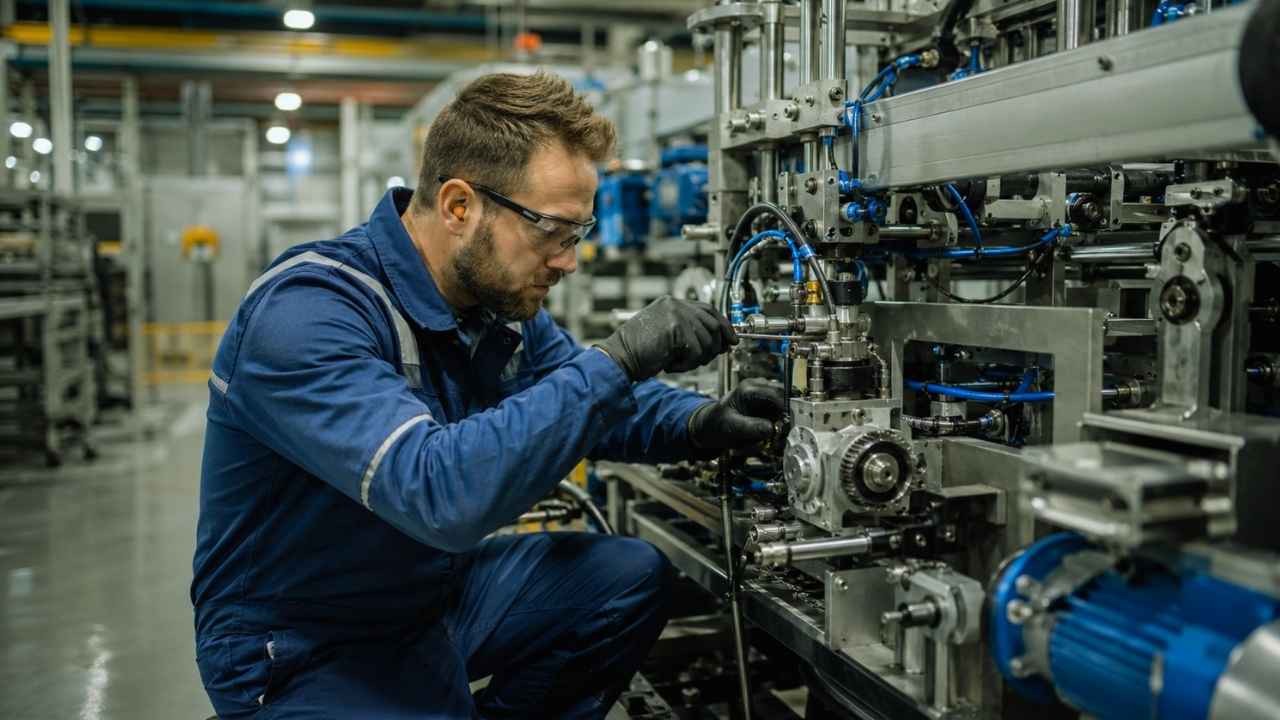
Industrial machinery maintenance may not sound flashy, but it is one of the smartest trade paths in a more automated economy. The more machines companies use, the more they need people who can maintain and repair them. These workers keep factories, warehouses, food plants, logistics centers, packaging lines, and production facilities running. They may work on motors, conveyors, pumps, bearings, sensors, robotics, hydraulics, pneumatics, and control systems.
When a production line stops, the company loses money. That makes a skilled maintenance worker valuable. A good mechanic can save thousands of dollars by finding the problem quickly and preventing bigger failures. This trade is especially interesting because automation does not erase it. In many workplaces, automation increases the need for better maintenance skills.
|
Key point |
Details |
|
Main work |
Repair, install, and maintain industrial machines |
|
Median pay |
$63,510 |
|
Projected growth |
13% from 2024 to 2034 |
|
Annual openings |
About 54,200 across related roles |
|
Work setting |
Factories, warehouses, plants, logistics centers |
|
Main challenge |
Noisy settings, overtime, and urgent repairs |
Why This Trade Is Recession-Resistant?
Manufacturing, food processing, logistics, and industrial production depend on machines. If machines stop, production slows or shuts down. Even during weaker economic periods, companies still need maintenance workers to prevent costly breakdowns. In many cases, repairing equipment is cheaper than replacing it.
The rise of automation makes this trade more valuable. A factory with robotics, sensors, and conveyors needs people who understand both mechanical problems and basic electronic controls.
Training And Career Path
Some workers start with a high school diploma and learn on the job. Others complete technical programs or apprenticeships. Millwrights often go through longer apprenticeship training.
Useful skills include reading manuals, understanding mechanical systems, replacing parts, aligning machinery, troubleshooting motors, and learning basic programmable logic controls. The best workers in this field are curious. They do not just ask, “What part broke?” They ask, “Why did it break, and how do we stop it from happening again?”
5. Plumbing, Pipefitting, And Steamfitting
Plumbing and pipefitting may not get the glamour treatment, but they remain deeply useful. Clean water, drainage, heating, gas lines, and safe piping are basic needs. Plumbers usually work on water, drainage, fixtures, and residential or commercial systems. Pipefitters and steamfitters often work with more complex piping systems in factories, power plants, hospitals, and industrial sites.
The career can also lead to self-employment. A licensed plumber with strong local reputation, reliable service, and good customer communication can build a small business over time. The work can be messy, physical, and urgent. But that is part of why it pays. Most people do not want to deal with a burst pipe at midnight. A trained plumber can.
|
Key point |
Details |
|
Main work |
Install and repair water, drainage, gas, heating, and piping systems |
|
Median pay |
$62,970 |
|
Projected growth |
4% from 2024 to 2034 |
|
Annual openings |
About 44,000 |
|
Work setting |
Homes, businesses, factories, hospitals, schools |
|
Main challenge |
Physical work, emergency calls, and licensing rules |
Why This Trade Is Recession-Resistant?
Plumbing problems are hard to ignore. A leaking pipe, clogged drain, broken water heater, or gas line problem usually needs quick service. The work is also spread across many customer types. Homes need plumbers. Restaurants need plumbers.
Hospitals need plumbers. Schools, factories, apartment buildings, and offices need them too. That wide customer base gives the trade stability. Even when new construction slows, repair and maintenance work continues.
Training And Career Path
Most plumbers learn through apprenticeships. Training covers tools, safety, math, blueprint reading, building codes, pipe systems, and local regulations. Licensing is important. A licensed plumber can usually access better jobs, higher pay, and business opportunities.
The rules vary by location, so readers should check local requirements before choosing a program. This trade rewards reliability. Showing up on time, explaining the problem clearly, and doing clean work can build a strong reputation.
6. Electrical Systems
Electrical work is one of the most flexible skilled trades. Electricians work in homes, apartments, offices, hospitals, factories, schools, warehouses, solar projects, EV charging systems, and data centers. This trade connects old infrastructure with new technology. Older homes need panel upgrades. Businesses need lighting and wiring. Factories need industrial systems. Data centers need complex electrical support. Solar and EV charging add even more demand.
The work also offers many paths. Some electricians focus on residential service. Others move into commercial work, industrial maintenance, renewable energy, controls, or contracting. That flexibility makes electrical work one of the most practical high paying trade jobs for people who want long-term options.
|
Key point |
Details |
|
Main work |
Install, maintain, and repair electrical systems |
|
Median pay |
$62,350 |
|
Projected growth |
9% from 2024 to 2034 |
|
Annual openings |
About 81,000 |
|
Work setting |
Homes, businesses, factories, data centers, construction sites |
|
Main challenge |
Licensing time, safety risks, and code knowledge |
Why This Trade Is Recession-Resistant?
Electricity touches almost every part of modern life. People need safe wiring, working panels, lighting, outlets, breakers, and emergency repairs. Demand also comes from growth areas.
Data centers, battery storage, smart buildings, solar systems, and EV charging stations all need electrical workers. Even in a slower economy, maintenance and safety work continue. Faulty wiring is not something people should delay for long.
Training And Career Path
Most electricians train through apprenticeships, trade schools, or a mix of classroom learning and paid work. Licensing rules vary by state and locality. Training usually covers electrical theory, wiring, safety, code requirements, blueprint reading, circuits, and troubleshooting.
Specialization can make a big difference. Industrial controls, commercial systems, renewable energy, and data-center work may offer stronger long-term earning potential than basic entry-level jobs.
Trade Jobs Vs College Degrees: Which Path Makes More Sense?
The better path depends on the person. A degree can still be the right choice for medicine, engineering, law, accounting, research, teaching, management, and many technology careers. College also offers broader academic and professional networks. But the trade path has a different kind of value. It can reduce education debt, speed up workforce entry, and provide a clear skill that employers need. For people who prefer hands-on work, that matters.
The real mistake is treating one path as morally superior. A bachelor’s degree is not automatically smart. A trade is not automatically practical. Both can be good or bad depending on cost, field, location, and effort. A student who spends heavily on a low-return degree may struggle. A trade worker who ignores safety, licensing, or skill growth may also struggle. Career success still depends on smart choices after the first step.
|
Career path |
Strong points |
Watch-outs |
|
Four-year degree |
Useful for professional fields, higher-level roles, and many white-collar careers |
Can be expensive and may not guarantee strong earnings |
|
Apprenticeship |
Earn while learning and build hands-on skill |
Entry can be competitive and training takes time |
|
Technical school |
Faster than college and focused on job skills |
Program quality and job placement can vary |
|
Union trade path |
Strong training, benefits, and wage structure in many areas |
Access depends on location and openings |
|
Self-employment |
High earning ceiling and independence |
Requires business skills, insurance, tools, and customer trust |
When A Degree Still Wins?
A degree still makes sense when the career clearly requires it. Doctors, engineers, lawyers, researchers, accountants, teachers, and many technology professionals often need formal education.
College can also help people who want leadership roles, corporate careers, international mobility, or academic paths. The problem is not college itself. The problem is choosing college without a plan, borrowing too much, or ignoring job-market realities.
When A Trade May Win?
A trade may be the better choice for someone who wants to work sooner, avoid heavy debt, and build a practical skill. It may also suit people who prefer movement over meetings. Some people simply do better when they work with tools, systems, and real-world problems.
For them, high paying trade jobs can offer a career path that feels more direct and more useful than sitting through four years of classes they do not want.
How To Choose The Right Trade Skill For You?
Choosing a trade should not start with pay alone. Start with fit. The wrong trade can drain you, even if the money looks good. Ask yourself honest questions. Can you handle heights? Do you want indoor or outdoor work? Are you okay with emergency calls? Do you like machines, aircraft, wiring, pipes, or utility systems? Do you want local work, travel, or a future business?
Your local market also matters. A trade that pays well nationally may not pay the same in your town. Licensing rules, union access, cost of living, construction demand, and employer competition can change the picture. The best move is to speak with real workers before enrolling anywhere. Ask about starting pay, training time, physical strain, slow seasons, overtime, and what they wish they knew earlier.
|
Decision point |
What to ask yourself |
|
Work environment |
Do I want indoor, outdoor, travel-based, or local work? |
|
Physical demands |
Can my body handle lifting, climbing, kneeling, or long shifts? |
|
Risk level |
Am I comfortable around electricity, heights, machines, or aircraft systems? |
|
Training time |
Can I commit to years of apprenticeship or certification? |
|
Local demand |
Are employers hiring in my area? |
|
Long-term ceiling |
Can I specialize, supervise, join a union, or start a business later? |
Check Apprenticeships Before Paying For School
Do not rush into a paid program before checking apprenticeship options. In many trades, apprenticeships offer paid training and direct work experience. That does not mean trade school is bad. A good technical program can help.
But readers should compare cost, completion rates, job placement, employer connections, licensing support, and local reputation. A cheap program with weak employer ties may be less useful than a harder-to-enter apprenticeship. A more expensive program may be worth it if it has strong placement and real industry connections.
Think About Your Life At 40, Not Just Your Pay At 25
Some trades are tough on the body. This is not a reason to avoid them. It is a reason to plan carefully. Workers should learn safe lifting, use protective equipment, protect hearing, stay fit, and keep adding skills.
The goal is not only to earn good money early. It is to build a career that can last. The smartest trade workers often move from pure physical labor into inspection, supervision, training, estimating, specialized repair, or business ownership later.
Final Thoughts
The best career is not always the one with the fanciest title. It is the one that gives you useful skills, real demand, fair pay, and a future you can actually live with. These high paying trade jobs are worth serious attention in 2026 because they are tied to systems people cannot ignore. Elevators must run. Power must flow. Aircraft must be safe. Machines must keep moving. Pipes must work. Electrical systems must stay reliable.
The trades are not easy. They require training, patience, safety habits, and respect for the work. But they also offer something many people want right now: a practical path to earning without automatically taking on a large college bill. For the right person, a skilled trade is not a backup plan. It is a smart career plan.
Frequently Asked Questions (FAQs) About High Paying Trade Jobs
What Trade Has The Best Long-Term Potential In 2026?
Electrical work has one of the strongest long-term outlooks because it connects to housing, commercial buildings, factories, solar systems, EV charging, and data centers. Elevator repair and power-line work may offer higher median pay, but electrical work offers broader career flexibility.
Which Trade Is Best For Someone Who Wants To Earn While Learning?
Apprenticeship-based trades are usually best for this. Electrician, plumber, power-line worker, elevator mechanic, and millwright paths often allow workers to earn while they train. Availability depends on the local market.
Are High Paying Trade Jobs Good For Career Changers?
Yes, but career changers should be realistic. Some trades require heavy physical work, long training, and lower starting pay before earnings improve. Adults changing careers should compare training length, local demand, licensing rules, and physical demands before committing.
Which Trade Is Best For Starting A Small Business?
Plumbing and electrical work are two of the strongest choices for small business potential. Both solve recurring local problems, offer emergency service opportunities, and can grow through referrals, maintenance contracts, and commercial clients.
Do Trade Jobs Have Retirement And Benefit Options?
Many do, especially union jobs, utility jobs, government roles, and large employers. Benefits vary widely. A self-employed tradesperson may earn more but must manage insurance, retirement savings, tools, taxes, and business expenses independently.
Can AI Replace Skilled Trade Workers?
AI can help with scheduling, diagnostics, estimates, training, and documentation. But it cannot fully replace workers who must inspect, repair, install, and maintain physical systems in real-world settings. Skilled trades may use AI tools, but the hands-on work still needs people.
Which Trade Is Least Affected By Economic Downturns?
Utility-related work, repair-focused plumbing, electrical maintenance, elevator service, and industrial maintenance tend to be more resilient because they deal with essential systems. New construction work can be more sensitive to economic cycles.