
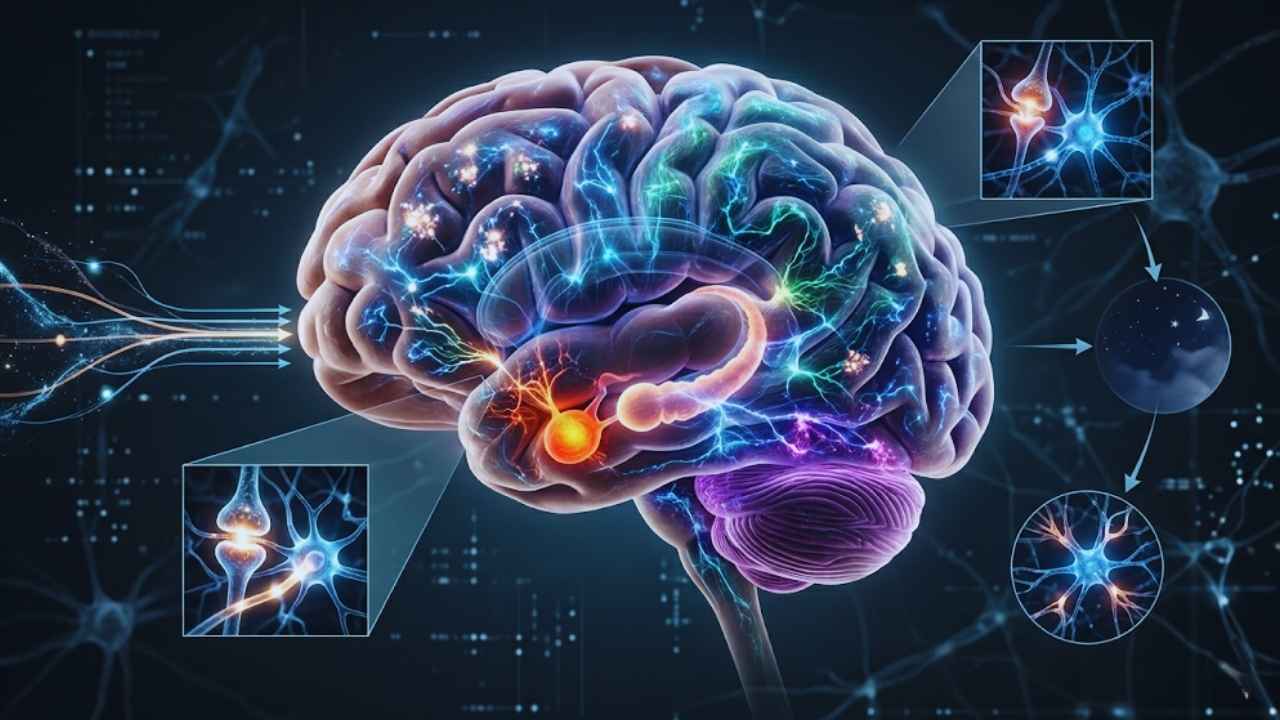
To wrap your head around the sheer scale of human memory, we have to look at the numbers. The average adult head houses about 86 billion neurons. These are the primary cells that process and transmit information every second of your life.
Each one of those single neurons actively talks to thousands of other neurons, creating a dense web of over 100 trillion connections. Scientists estimate that if your mind were a digital storage device, this massive network could hold around 2.5 petabytes of data.
To put that into perspective, 2.5 petabytes is enough space to store three million hours of high-definition television. You might complain about having a bad memory when you forget a grocery list, but your actual biological storage capacity is practically infinite. Memory gives you your unique identity. It lets you navigate the physical world, build relationships, and keeps you safe from repeating painful mistakes. Your brain is a living web that physically rewires itself every single day based on what you experience and what you care about. The way these intricate cellular connections form, strengthen, and eventually dissolve dictates who you are.
|
Feature |
Biological Details |
Everyday Comparison |
|
Neurons |
86 billion primary cells |
The individual workers processing information |
|
Synapses |
100 trillion physical connections |
The telephone lines between workers |
|
Storage Capacity |
2.5 petabytes of data |
Three million hours of recorded television |
|
Primary Function |
Identity and survival |
The core operating system of your personality |
The Three Main Stages of Memory Creation
Memory does not happen in a single flash. It might feel instantaneous when you recognize a familiar face in a crowd, but your mind actually runs a highly coordinated, multi-step process. If any part of this mental assembly line breaks down or gets interrupted by stress, the new information vanishes into thin air. Psychologists divide this sequence into three specific actions that transform a fleeting moment into a permanent record.
Think of it exactly like writing a document on your computer. You type the words, you hit the save button, and eventually, you open that file again weeks later to read it. The three core phases of this biological system are encoding, consolidation, and retrieval. Understanding these specific stages is the absolute key to figuring out how the brain stores memories so effectively. Let me break down exactly what happens during each phase and why paying strict attention is the most critical step of all.
|
Memory Stage |
Primary Action |
What Actually Happens in the Mind |
|
Encoding |
Gathering Data |
Taking in sensory information and filtering out noise |
|
Consolidation |
Stabilizing Data |
Strengthening connections to permanently save the raw data |
|
Retrieval |
Accessing Data |
Reconstructing the specific memory network for conscious use |
1. Encoding: Gathering the Information
Everything you will ever consciously remember starts with your five physical senses. When you meet someone new, your eyes take in their face, your ears pick up the pitch of their voice, and you might smell their perfume. Your sensory organs convert these physical inputs into fast electrical signals and shoot them up into your head for processing. But you are constantly bombarded with millions of sights and sounds every second.
Your brain acts as a strict bouncer at a crowded club, deciding exactly what gets in and what gets ignored. Attention is the currency of successful encoding. If you are scrolling on your phone, the information never makes it past the front door. Emotion also heavily dictates this process. When something scares you or makes you incredibly happy, your body releases a flood of adrenaline. This chemical rush flags the moment as highly important, forcing your mind to encode it deeply.
2. Consolidation: Stabilizing the Memory
Once an experience is successfully encoded, it is incredibly fragile. A sudden loud noise, a massive distraction, or a bump on the head could erase the newly formed connections entirely. To lock the new information down safely, your mind runs an automatic, behind-the-scenes stabilization program called consolidation. This complex process happens on two different clocks. First, there is synaptic consolidation, which kicks in rapidly within minutes of learning something new.
The microscopic physical structures connecting your neurons start to change shape and reinforce themselves. Then comes systems consolidation, a much slower process that takes weeks or even years. During this time, the memory is gently shipped out of temporary holding areas and woven tightly into the deep, permanent fabric of your cerebral cortex. Sleep is non-negotiable for this step. During deep sleep, your mind hits rewind and literally replays the electrical events of your day to cement the pathways.
3. Retrieval: Accessing Stored Information
Retrieval is the final act of pulling a fully stored memory back into your active, conscious mind. But contrary to popular belief, you are not just hitting play on a static video recording. Your mind actually has to actively rebuild the entire memory from scratch every single time you attempt to think about it. The visual sights, sounds, and emotions of a specific past event are scattered across entirely different sensory areas of your cortex. When you try to remember something, those isolated areas briefly link up to creatively recreate the scene in real time.
Because of this active reconstruction process, human memory is famously unreliable and prone to outside influence. Every time you pull a memory off the shelf, it becomes fragile again. It gets mixed up with your current mood or new conflicting facts you have recently learned. You then put the slightly altered memory back on the shelf, meaning a cherished memory can completely change over the years.
Different Types of Memory Explained
Not every single memory gets the exact same VIP treatment from your nervous system. Your mind cleverly categorizes all incoming daily information based on how long you actually need it and whether you have to consciously think about it to use it. You heavily use completely different neural networks to remember a random phone number for ten seconds versus remembering how to smoothly ride a bicycle after ten years of no practice.
In the 1960s, psychologists proposed a multi-store model that helped scientists map out exactly how information flows through these different systems. Understanding these different categories perfectly explains why you can completely forget what you had for breakfast yesterday but effortlessly execute a complex piano piece you learned in childhood. Your mind acts as an incredibly efficient sorting facility to keep you functioning safely without overwhelming your processing power.
|
Memory Type |
Average Duration |
Real-World Everyday Example |
|
Short-Term |
Seconds to a few minutes |
Remembering a brief text message verification code |
|
Working |
Active mental processing |
Doing basic mental math while looking at a restaurant bill |
|
Explicit |
Years to an entire lifetime |
Recalling the specific details of your first day of high school |
|
Implicit |
Years to an entire lifetime |
Typing effortlessly on a computer keyboard without looking |
Short-Term and Working Memory
Short-term memory is basically your mind’s temporary sticky note. It holds a tiny bit of surface-level information for a very brief window, usually just about twenty to thirty seconds at the most. Research shows that the average person can only hold about seven items in their short-term memory at any given moment. If someone tells you a six-digit verification code, you hold it in your short-term memory just long enough to type it into your phone.
If you get distracted for a single second by an incoming email, that code is gone. Working memory is the more active cousin of the short-term system. You use it constantly when you need to actively hold information and manipulate it to solve a problem. If you are calculating a tip on a dinner bill, you use your working memory to hold the total cost while you execute the mental math.
Long-Term Memory: The Permanent Archive
If raw incoming information manages to survive the highly fragile short-term phase and gets fully consolidated, it permanently moves into your long-term storage system. This is the massive, virtually limitless biological warehouse where you keep absolutely everything you know about yourself and the surrounding physical world. Long-term memory is split into two distinct operational systems known as explicit and implicit memory.
Explicit (Declarative) Memory
Explicit memory covers all the conscious historical stuff you can openly talk about, declare, and vividly describe to another person. It breaks down into two distinct flavors. Episodic memory acts exactly like your personal video diary. It holds the unique personal events of your life, complete with intense emotional, time, and place stamps.
Remembering the bad weather on your college graduation day is a classic episodic memory. On the other hand, semantic memory is your internal encyclopedia of general knowledge. It actively stores dry facts, concepts, and names completely without the personal context. You know that Paris is the capital of France, but you probably do not remember the exact childhood day where you originally learned that fact.
Implicit (Non-Declarative) Memory
Implicit memory operates quietly and efficiently far below the surface level of your conscious awareness. You use it constantly throughout the day without even trying to access it mentally. Procedural memory is the biggest part of this automatic biological system. It entirely governs your learned physical bodily skills and deeply ingrained daily habits.
Once you finally learn to tie your shoes, swim in a pool, or drive a manual car, the physical muscular instructions get buried incredibly deep within your motor networks. Because these specific motor memories are so deeply embedded, you do not have to think about the individual physical steps anymore. If you actually try to consciously think about the exact individual finger movements required to tie a necktie, you will probably stumble and mess up the whole process.
Key Brain Regions Involved in Memory Storage
For decades, early scientists hunted for a single central box inside the skull where all human data goes to rest permanently. They called this physical location the engram. We now know that memory storage is a massive team effort scattered across various specialized anatomical lobes and structures. Different areas specialize in completely different types of data.
Some regions handle intense evolutionary fear, others handle fine motor skills, and others act as a temporary holding pen for daily superficial events. To figure out exactly how the brain stores memories, you have to look closely at the complex physical anatomy of the central nervous system. Let us take a detailed tour of the main biological structures entirely responsible for keeping your personal past alive and accessible.
|
Brain Region |
Primary Memory Function |
Specific Type of Memory Handled |
|
Hippocampus |
Rapid indexing and cataloging |
Episodic personal events and newly learned factual data |
|
Neocortex |
Permanent long-term archiving |
General semantic knowledge and distinct sensory details |
|
Amygdala |
Immediate emotional tagging |
Severe fear, deep trauma, and highly emotional milestones |
|
Basal Ganglia |
Unconscious habit formation |
Fine motor skills, routine actions, and implicit behaviors |
|
Prefrontal Cortex |
Active mental command center |
Short-term focused attention and working memory tasks |
The Hippocampus: The Memory Indexer
If human memory has a primary corporate headquarters, it is absolutely the hippocampus. Tucked safely deep inside the temporal lobe, this small, seahorse-shaped organ is the ultimate biological indexer. We know this function largely because of a famous medical patient named Henry Molaison. In 1953, surgeons removed his hippocampus to cure his severe epileptic seizures. The seizures stopped, but he tragically lost the ability to form any new conscious explicit memories for the rest of his life.
He could enthusiastically meet a doctor, have a chat, and entirely forget that person ever existed the exact moment they walked out the door. The hippocampus quickly grabs the various disconnected sensory pieces of an ongoing experience and neatly ties them together into a single package. However, it holds onto fresh memories just long enough to carefully train the rest of the cortex to remember them, eventually passing the stabilized data off to other regions.
The Neocortex: General Knowledge Storage
The neocortex is the highly wrinkled, massive outermost layer of your brain that makes us distinctly human. It physically handles all the heavy lifting of higher-level conscious thinking, language processing, and intricate sensory perception. As daily memories fully mature and go through systems consolidation over the months, they slowly migrate away from the temporal hippocampus out into the vast neocortex.
This is the ultimate final destination where your entire lifetime of acquired general knowledge lives permanently. Interestingly, the intricate sensory details are stored right in the specific physical areas that originally processed them years ago. The vivid visual memory of your childhood bedroom lives strictly in the visual cortex at the back of your head, while the comforting sound of your mother’s voice lives exclusively in the auditory areas on the sides of your skull.
The Amygdala: Emotional Memory Center
Sitting directly right next door to the hippocampus is the amygdala, an incredibly powerful, tiny almond-shaped cluster of specialized emotional neurons. This tiny biological structure naturally serves as your primary emotional alarm system. When you experience something terrifying, joyful, or deeply devastating, the amygdala rapidly lights up with electricity and tags the current experience with heavy emotional weight.
It practically screams at the neighboring hippocampus to prioritize this specific event over absolutely everything else happening that day. This process is a hardwired evolutionary mechanism designed by nature to keep us safely alive in a dangerous world. If a wild animal attacks you near a local river, your amygdala immediately ensures you will never forget what that dangerous river looks like.
The Cerebellum and Basal Ganglia: Motor Skills and Habits
When you practice a new physical bodily skill for hours on end, the hippocampus thankfully takes a quiet back seat. Muscle memory and deep unconscious habit formation rely heavily on completely different ancient biological structures like the basal ganglia and the cerebellum. The basal ganglia sit incredibly deep in the central core of the brain and do the hard work of coordinating complex, sequential physical movements into a single fluid action.
Meanwhile, the cerebellum sits quietly right at the very base of your skull and fine-tunes your physical bodily balance and exact motor timing. Even though patient Henry Molaison completely lacked a hippocampus, doctors discovered he could still successfully learn new physical drawing skills because his basal ganglia and cerebellum remained completely intact and perfectly functional.
The Prefrontal Cortex: Short-Term Storage
The prefrontal cortex is situated right closely behind your physical forehead and is famously the last part of the human brain to fully develop, usually finishing in your mid-twenties. It acts as the ultimate conscious command center for your unique personality, rational logical decision-making, and immediate active working memory. When you critically need to explicitly hold a piece of raw information in your mind for immediate practical use, this specific frontal area powerfully fires up with intense electrical activity.
It acts exactly like a bright mental spotlight, actively keeping your direct active attention deeply focused on the current task at hand. While it securely holds the information, it simultaneously works exceptionally hard to forcefully filter out useless background noise, random passing thoughts, and bright environmental distractions.
How Synapses and Neurons Build Memories?
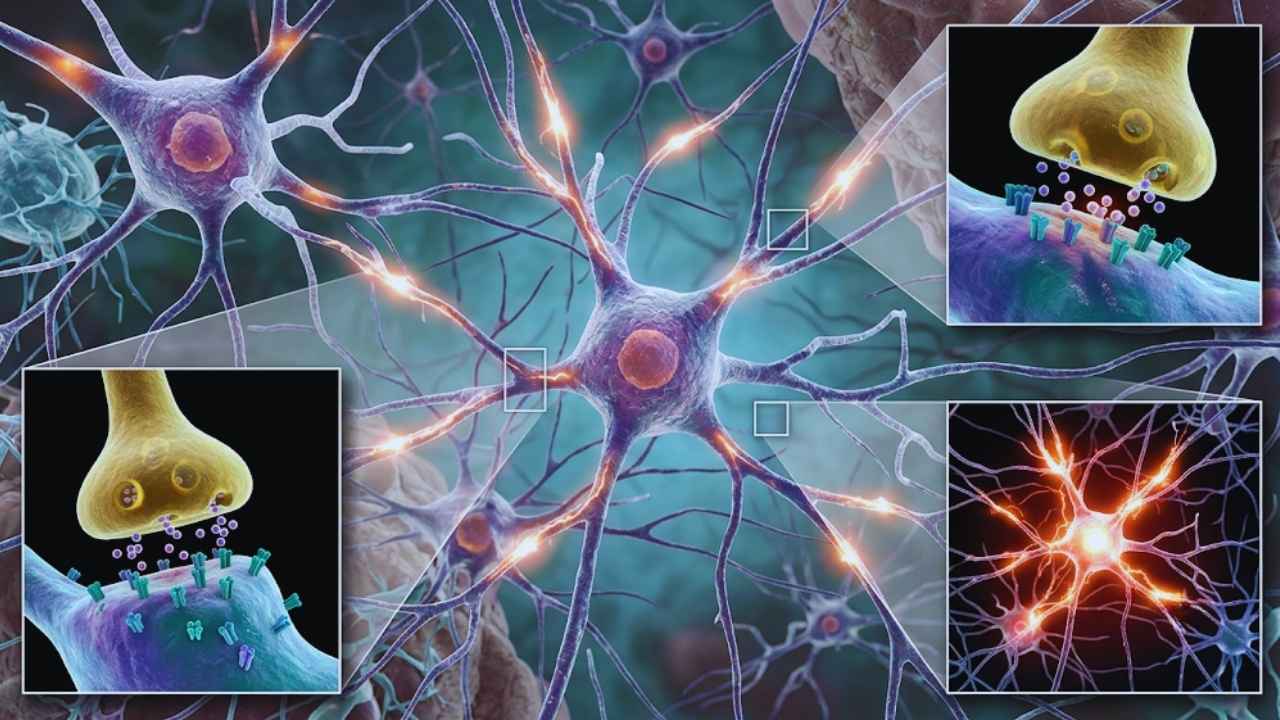
To truly understand the exact core of how the brain stores memories, we have to zoom in on the microscopic biological level. A personal memory is not a solid object you can pluck out of tissue with surgical tweezers. It is an ongoing, highly dynamic chemical and electrical conversation constantly happening between living microscopic cells.
Every single time you learn a new historical fact or experience a new place, your mind literally rewires its own cellular architecture. The cellular branches change shape, delicate liquid chemical balances completely shift, and entirely new electrical pathways are permanently carved out through the wet tissue. This incredible biological structural flexibility, known to top scientists as neuroplasticity, is the real biological secret behind high human intelligence and successful lifelong learning.
|
Microscopic Component |
Specific Role in Memory Formation |
Core Biological Mechanism |
|
Neuron |
Primary foundational information transmitter |
Sends rapid electrical signals down its cellular length |
|
Synapse |
Vital microscopic connection point |
Physically adapts and rapidly changes signal strength |
|
Neurotransmitter |
Important liquid chemical messenger |
Carries critical signals across the synaptic gaps |
|
Engram |
The highly specific physical memory trace |
A dedicated tight network of cells naturally firing together |
Synaptic Plasticity and Long-Term Potentiation
Individual microscopic neurons do not actually touch each other. They communicate loudly across incredibly tiny, microscopic gaps specifically known as synapses. When an active electrical signal successfully reaches the very end of one sending neuron, it dumps a massive load of specialized chemicals completely across the gap to physically trigger a chemical reaction in the receiving neuron. In 1949, psychologist Donald Hebb famously proposed a foundational rule that states cells that fire together, wire together.
Decades later, scientists proved this exact concept by studying sea slugs, demonstrating that chemical changes in these tiny synapses are the physical basis of all memory. If you stubbornly practice a new foreign language every single day, the exact same sequence of neurons fires repeatedly. Over a short time, the sending neuron gets much better at releasing chemicals, and the receiving neuron actively builds more physical receptors to catch them. The actual physical connection gets measurably stronger. This specific verified cellular process is scientifically called long-term potentiation.
The Role of Neurotransmitters
Liquid chemicals strongly dictate absolutely everything that happens up inside your human skull. Neurotransmitters are the crucial liquid chemical messengers that swiftly cross the synaptic gaps to safely deliver critical information. Glutamate is the absolute heavy hitter when it comes strictly to memory formation. It highly excites the receiving neurons and actively pushes them to rapidly form stronger physical connections.
Dopamine also steps in regularly, especially when a newly formed memory involves a highly surprising reward or deep physical pleasure. If you eat an incredible piece of chocolate cake, a massive flood of dopamine washes over your entire system, completely ensuring you permanently remember exactly what specific bakery you bought it from. Acetylcholine is another major chemical player naturally acting much like a tight tuning dial that shifts your wandering mind into sharp focus mode.
Why Do We Forget? The Science of Forgetting
It feels incredibly frustrating when a familiar name completely slips your mind. But forgetting is actually a brilliant necessary feature of your biology, not a terrible flaw. Back in 1885, a scientist named Hermann Ebbinghaus conducted groundbreaking memory experiments and created the famous forgetting curve. He perfectly showed that humans naturally lose about half of all newly learned meaningless information within a single hour unless it is actively reviewed.
If you actively remembered every single tiny visual detail of every waking day, your mind would be paralyzed by an overwhelming mountain of noise. Forgetting is a highly efficient, absolutely necessary daily cleanup process. It aggressively clears out old, highly useless data to make valuable physical room for new, highly relevant environmental information. Your mind is a ruthless biological editor, constantly permanently deleting mental files it firmly thinks you no longer need for daily survival.
|
Cause of Forgetting |
Scientific Description |
Everyday Real-World Example |
|
Synaptic Pruning |
Natural weakening of completely unused neural connections |
Forgetting complex high school calculus mathematical formulas |
|
Proactive Interference |
Old deeply ingrained memories actively block new ones |
Accidentally calling a brand new partner by an ex’s name |
|
Retroactive Interference |
Fresh newly formed memories totally overwrite older ones |
Forgetting your old house phone number after getting a new one |
|
Motivated Forgetting |
Subconsciously pushing away highly painful traumatic events |
Automatically blocking out the severe details of a car crash |
Our complex heavy brains naturally use a massive amount of daily caloric energy just to keep us breathing and walking. Keeping an old useless memory completely alive naturally requires continuous physical energetic resources to maintain the active synaptic connection. If you do not actively recall a piece of random information for multiple years, your biological operating system safely assumes it is pure garbage. It automatically initiates a cellular process called synaptic pruning, where the physical connection slowly safely weakens and eventually dissolves into nothing.
Interference is another incredibly huge scientifically verified factor in daily forgetting. Because we actively cram so much highly dense new data into our fragile heads through bright screens and daily interactions, extremely similar overlapping memories easily get tangled up. If you park your personal car in the exact same concrete parking garage every single day for a year, the overlapping similar memories strongly interfere with your ability to easily recall exactly where you parked today.
How to Improve Your Brain’s Memory Capacity?
You obviously cannot buy a physical hard drive computer upgrade for your natural head. But you can definitely train your biological networks to run much faster and vastly smoother. Because of the incredible magic of neuroplasticity, your mind remains highly physically adaptable and completely changeable until the very day you die.
You have immense, highly direct control over exactly how efficiently you naturally encode and actively retrieve daily required information. It just takes deliberate daily structured effort and a few scientifically verified healthy lifestyle habits to make an absolute massive noticeable difference. Research completely clearly shows that environmental enrichment and physical movement significantly and rapidly alter the physical structure of your hippocampus. Here are the absolutely most effective, highly researched, strictly science-backed ways to entirely sharpen your immediate daily recall and strictly perfectly protect your long-term cognitive brain health as you successfully age gracefully.
|
Core Improvement Strategy |
Primary Biological Proven Benefit |
Exactly How It Actually Works |
|
Getting High-Quality Sleep |
Fully consolidates fragile fresh memory |
Replays and firmly chemically locks in all daily conscious learning |
|
Consistent Aerobic Exercise |
Massively boosts overall total brain volume |
Increases clean blood flow and protective neural growth factors |
|
Strict Spaced Repetition |
Greatly safely strengthens cellular synapses |
Reviewing written information at slowly rapidly increasing intervals |
|
Information Concept Chunking |
Completely bypasses working memory limits |
Grouping small confusing details into large, memorable concepts |
Consistent, extremely high-quality sleep is without a single doubt the ultimate proven human memory hack. If you blindly decide to pull a highly stressful all-nighter to strictly cram for a college test or finish a massive work project, you are fundamentally shooting yourself in the biological foot. Without successfully hitting the slow-wave deep stages of the human sleep cycle, your system absolutely cannot heavily run its necessary systems consolidation program, meaning the new information simply totally bounces right off your outer cortex. Consistent physical exercise also does naturally far more than just build visible bodily muscle.
Daily aerobic workouts like jogging, road cycling, or lap swimming massively quickly increase rich red blood flow to the head and actively trigger the rapid release of a highly vital protein specifically called brain-derived neurotrophic factor. This critical protein acts exactly like premium liquid fertilizer for your central nervous system, actively helping new tiny neurons rapidly grow and permanently survive within the delicate hippocampus. You also desperately need to change exactly how you attempt to learn. Stop actively passively reading the exact same boring pages over and over again. Instead, use active recall by tightly closing the physical book and completely forcing yourself to physically write down exactly what you just read.
Final Thoughts
When you finally grasp how the brain stores memories, it is exactly like getting the secret user manual to your own conscious mind. You realize it is a beautifully messy biological system entirely completely driven by rapid traveling electricity, shifting complex chemistry, and continuous microscopic physical bodily changes. Every single individual time you proudly actively experience something new or perfectly learn a fascinating scientific fact, your mind literally entirely physically reshapes itself just to safely closely hold onto that specific exact moment for you.
While we understandably get incredibly frustrated when we occasionally forget a simple computer password or a short paper grocery list, we really truly have to totally respect the massive sheer biological computing power actively happening quietly safely behind the scenes every single waking second. By taking excellent strict care of your physical health, heavily intensely prioritizing your nightly required sleep, and actively consistently engaging your mind with new complex challenges, you can smoothly safely keep your biological internal hard drive running entirely flawlessly for many long decades to absolutely safely come.
Frequently Asked Questions (FAQs) About How Brain Stores Memories
Does taking digital photos of everything ruin my daily memory?
Yes, extensive cognitive research fully strongly indicates it actually severely actively impacts your natural independent recall. Scientists call this specific confirmed phenomenon the photo-taking impairment effect. When you heavily constantly rely on your shiny smartphone camera to quickly capture a beautiful visual moment, your mind lazily outsources the heavy biological lifting. Because you are naturally not paying deep, focused direct attention to the raw physical scene yourself, you totally skip the vital deep encoding process entirely.
Can you ever physically run out of total brain storage space?
Practically speaking, no, you will absolutely never see a physical storage full warning. Because the human mind constantly aggressively edits, rewrites, and prunes older unused connections to automatically make comfortable room for new ones, you will never physically run out of space in a standard human lifetime. The massive estimated 2.5 petabyte storage capacity is vastly infinitely more than enough.
Are specific memories strictly located in one exact specific spot I can point to?
No, pure human memories are entirely massively decentralized throughout the entire complete cortex. The vivid visual aspect of a childhood beach memory lives safely totally in the very back of your physical head, the specific crashing sounds strictly on the sides, and the intense warm emotions deeply firmly in the biological center. When you successfully try to remember something, these entirely totally separate geographical functional areas actively light up closely together.
Why do random sudden smells totally trigger such vivid childhood memories?
Your olfactory bulb, which directly exclusively processes daily incoming smells, is uniquely powerfully wired right directly into the highly emotional amygdala and the primary memory-indexing hippocampus. While your other main physical senses have to slowly pass through a central relay station called the thalamus first, your specific sense of smell strictly completely gets a direct, incredibly extremely fast, totally unfiltered line.
Can drinking standard black coffee actually help me study?
Strategic strictly timed caffeine use can successfully naturally enhance memory consolidation specifically if it is consumed directly right after a heavy dense learning session. A highly strong cup of dark coffee actively completely spikes your natural adrenaline and total dopamine levels, which naturally acts as a highly loud biological signal to your total system that the information is absolutely highly valuable.