
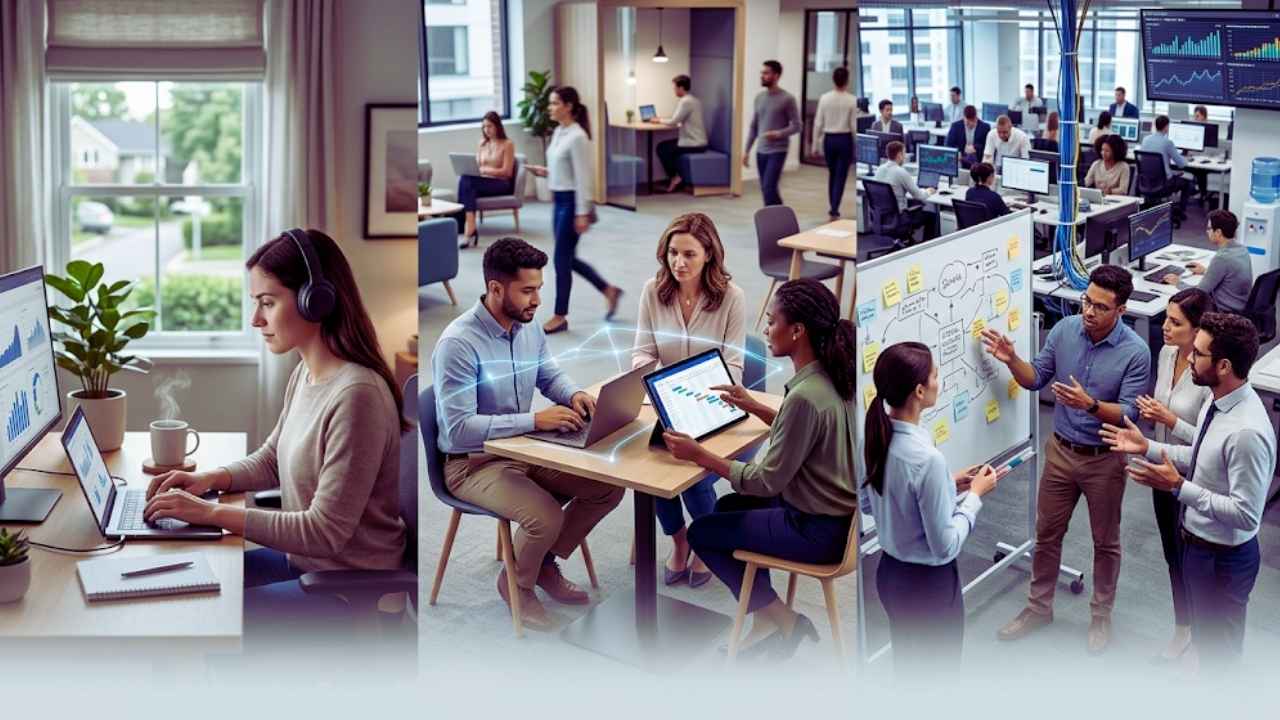
The way we look at work has shifted from a question of where we sit to a question of what we actually get done. In 2026, the old arguments about “lazy” remote workers or “micromanaging” office bosses have mostly faded into the background. Instead, companies are leaning on hard data to determine the most effective path forward.
The conversation around Remote vs Hybrid vs In-Office Productivity is now a core part of any business strategy. We aren’t just guessing anymore; we have years of metrics showing how different environments affect deep work, creative bursts, and long-term mental health.
Whether you are running a startup or managing a team at a global agency, understanding these dynamics is essential for staying competitive. The modern worker isn’t looking for a “job” so much as they are looking for a “work system” that allows them to perform at their peak. This guide dives into the latest trends, the impact of AI, and the financial realities of these three work models to help you decide which one actually delivers the best results for your specific goals.
The Evolution of the Workplace in 2026
Work has become a destination for specific tasks rather than a default location for every day of the week. We have moved into an era where “presence” is no longer the primary metric for success. In 2026, high-performing organizations treat their office space like a tool—similar to a software subscription or a piece of hardware. You use it when it’s the right tool for the job and put it away when it isn’t. This mindset shift has allowed companies to cut through the noise and focus on what really drives growth.
Moving Beyond the Pandemic Reaction
The chaotic shift to home offices in 2020 was a survival tactic, but 2026 is about optimization. Most professional teams have moved past the “trial and error” phase of digital communication. They now use sophisticated asynchronous tools that allow work to happen across time zones without the need for constant meetings. The office has been redesigned to favor open collaboration and social bonding, leaving the quiet work for the home environment. This maturity in management means that location is a tactical choice based on the needs of the project.
The New Productivity Standard: Results Over Hours
We finally stopped counting the minutes people spend at their desks and started measuring the value they create. The “8-hour workday” is quickly becoming a relic of the past as AI agents take over repetitive tasks. In 2026, productivity is tracked through “Milestone Velocity” and “Output Quality” rather than clock-in times. This shift respects the employee’s time and gives them the autonomy to work when they are most energetic. It’s a transition from a surveillance culture to a culture of high-trust accountability.
The Rise of Asynchronous Communication
One of the biggest lessons learned over the last few years is that real-time talk isn’t always the fastest way to solve a problem. In 2026, the most productive teams rely on recorded video updates and shared documentation. This allows everyone to digest information at their own pace without breaking their focus for a “quick sync.” By reducing the number of live meetings, companies have unlocked hours of productive time that used to be lost to calendar clutter. It turns out that giving people back their time is the fastest way to boost their output.
|
Workspace Shift |
Old Approach (Pre-2024) |
2026 Modern Standard |
|
Success Metric |
Time at desk |
Quality of output |
|
Communication |
Sync-first (Meetings) |
Async-first (Documentation) |
|
Office Role |
Default workspace |
Strategic collaboration hub |
|
Employee Tooling |
Basic software |
AI-integrated workflows |
Remote Work: The Focus and Efficiency Specialist
Remote work has claimed its spot as the ultimate environment for deep work and high-density execution. In 2026, the home office is where the “heavy lifting” of the professional world gets done. Without the hum of an open-plan office or the constant interruptions of “drive-by” meetings, remote workers are reaching flow states faster than ever before. This model isn’t just about comfort; it’s about creating a specialized space where high-level cognitive tasks can be completed with total precision.
The Power of Deep Work and Flow States
The ability to concentrate on a difficult task without distraction is a superpower in today’s economy. Remote environments allow people to control their lighting, noise levels, and temperature to suit their personal needs. This level of customization leads to shorter, more intense work sessions that often result in better work than a long, interrupted day at an office. In 2026, we see that “Remote vs Hybrid vs In-Office Productivity” heavily favors remote work when it comes to coding, writing, and analytical research.
The AI Advantage: Why Remote Workers Leverage Tools Better?
Remote workers are often the first to experiment with new technology because they have the freedom to curate their own digital stacks. In 2026, many remote professionals use AI agents to automate their scheduling, email triaging, and data entry. Because they aren’t being watched by a manager who might view “automated work” as “not working,” they are incentivized to be as efficient as possible. This leads to a higher adoption rate of tools that multiply their human effort, making them significantly more productive on an individual basis.
Commute Reclamation: Turning Travel Time into Task Time
The removal of the daily commute has given the average worker back nearly 250 hours a year. Data from 2026 shows that people aren’t just using this time to watch TV; they are using it to sleep more and exercise, which leads to better brain function during work hours. A well-rested employee who hasn’t spent an hour in traffic is far more likely to hit the ground running. The psychological relief of avoiding a stressful commute is perhaps the biggest hidden driver of remote work efficiency.
The Risk of Social Isolation and Career Asymmetry
While the efficiency is high, the “human” cost of remote work can be real if it isn’t managed. Working in a vacuum can lead to feelings of isolation and a disconnect from the company’s broader mission. There is also the danger of “proximity bias,” where managers inadvertently favor the people they see in person for promotions or high-profile projects. To fix this, 2026 leaders are using “digital first” policies to ensure that every team member has equal visibility, regardless of where they are logging in from.
|
Productivity Driver |
Remote Work Impact |
Business Result |
|
Flow State Access |
Very High |
Faster project completion |
|
Tool Adoption |
High (AI-focused) |
Lower cost per task |
|
Personal Wellness |
High |
Lower burnout rates |
|
Coordination Speed |
Moderate (Async) |
Better documented processes |
In-Office Work: The Hub of Human Connection
The office hasn’t disappeared, but it has certainly been rebranded. In 2026, people don’t go to the office to “work”—they go to connect, brainstorm, and build culture. There is a specific kind of “energetic productivity” that only happens when people are in the same physical space. For industries that thrive on fast-paced iteration and creative friction, the office remains an essential part of the toolkit. It provides the social glue that keeps teams aligned and motivated over the long haul.
Spontaneous Collaboration and Innovation Bursts
You cannot schedule a breakthrough on a calendar. Most of the best ideas in business come from “collision moments”—the random conversation in the hallway or the joke shared over a coffee break. These moments are incredibly hard to replicate on a screen. In-office work facilitates a rapid exchange of ideas that can move a project forward in minutes rather than days. For creative teams and hardware engineers, being in the room together is often the only way to reach peak Remote vs Hybrid vs In-Office Productivity.
Mentorship and the “Proximity Bias” Reality
The office is the best classroom for the next generation of talent. Junior employees learn by observing how senior leaders handle stress, negotiate deals, and solve problems in real-time. This “passive learning” is vital for long-term career growth and is nearly impossible to teach in a formal remote training session. Being in the office also helps build the trust that leads to mentorship. When a manager can see the effort a junior person is putting in, they are more likely to offer the guidance and opportunities that lead to a promotion.
The High Cost of Office Overhead and Idle Time
The biggest drawback of the in-office model is the sheer amount of “friction” involved. Between the commute, the long lunches, and the “office theater” of looking busy, the actual time spent on work is often surprisingly low. Companies in 2026 are realizing that paying for expensive downtown real estate just to have people sit in cubicles and do email is a massive waste of resources. The office only makes sense when it is being used for high-value collaborative activities that can’t be done anywhere else.
Security and Hardware-Dependent Productivity
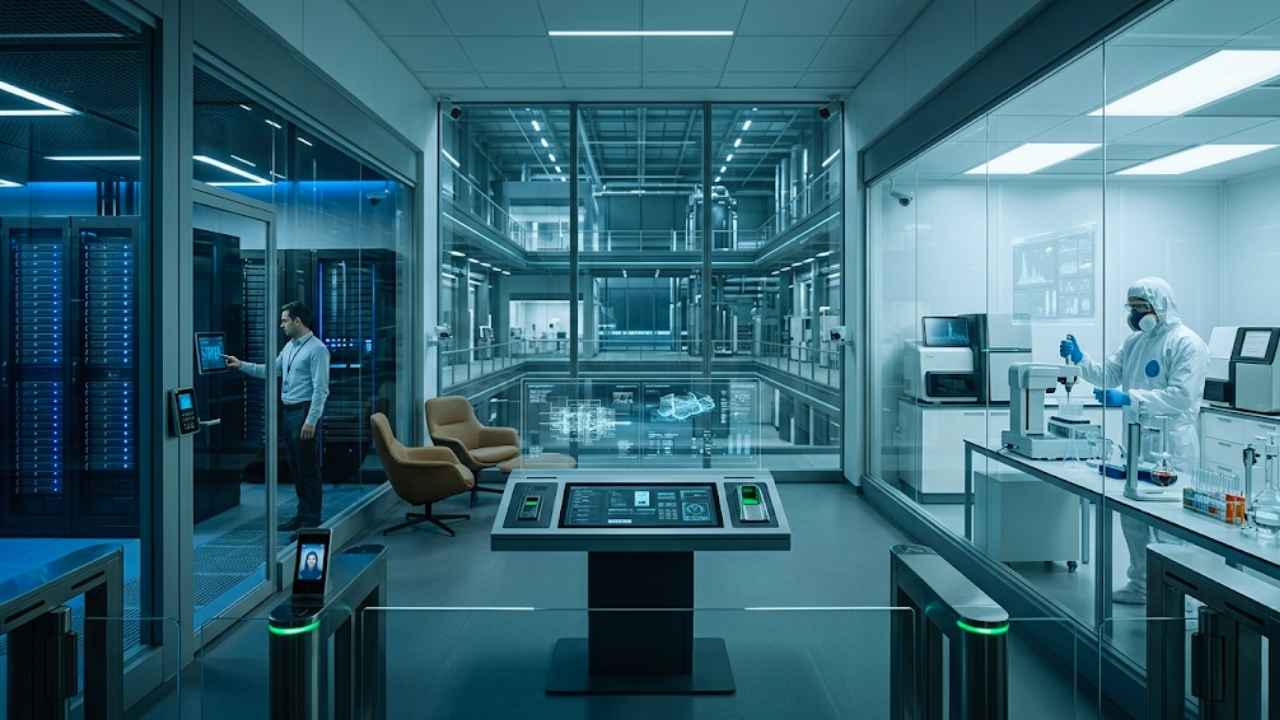
In certain high-stakes sectors, the office is a necessity for security and specialized tools. Whether it’s a high-security server room for a fintech firm or a lab for a biotech startup, some work simply cannot be done from a kitchen table. For these professionals, the office provides the secure environment and high-end hardware required to perform their jobs safely and effectively. In these cases, the office isn’t a choice; it’s a functional requirement for the work to exist at all.
|
Factor |
In-Office Benefit |
Potential Downside |
|
Social Trust |
High |
Office politics |
|
Training Speed |
Fast (Osmosis) |
Time away from tasks |
|
Equipment Access |
Total |
Commute frustration |
|
Crisis Management |
Instant response |
Constant interruptions |
Hybrid Work: Searching for the “Goldilocks” Zone
Hybrid work has become the “standard” for most global companies in 2026. It is the compromise that acknowledges we are humans who need both quiet focus and social interaction. By balancing the “home for tasks” and “office for team” approach, hybrid models offer a sustainable path that prevents the burnout of the office and the isolation of remote work. However, managing a hybrid team is an art form that requires clear rules and excellent technology to keep everyone on the same page.
The Flexibility Factor: Autonomy Meets Alignment
The magic of hybrid work is giving people the choice to match their environment to their task. If you have a deadline on a complex report, you stay home. If you have a team-wide planning session, you head to the office. This level of autonomy is the number one reason why employees in 2026 stay at their jobs. It respects their ability to manage their own time while still keeping them tied to the collective goals of the company. It’s about being “intentional” with where you spend your energy.
Mental Well-being: Why Hybrid Leads in Satisfaction
Hybrid workers consistently report the highest levels of happiness and mental clarity. They get the “recharge” of working in a quiet home environment and the “connection” of seeing their peers in person. This prevents the “groundhog day” feeling that can come with being fully remote for months at a time. A happy team is a productive team, and the mental health benefits of the hybrid model translate directly into fewer sick days and higher engagement during work hours.
Structured vs. At-Will Hybrid: Which One Works?
In 2026, the data has shown that “at-will” hybrid (come in whenever) usually leads to confusion and empty offices. The most productive organizations use a “structured hybrid” model, where the entire team agrees on specific “anchor days” to be in the office together. This ensures that the commute is actually worth it because the people you need to collaborate with are actually there. It removes the frustration of driving to an office only to sit on Zoom calls all day because your teammates decided to stay home.
|
Hybrid Model |
Productivity Impact |
Employee Sentiment |
|
Anchor Days |
High (Coordinated) |
Very Positive |
|
Manager-Led |
Moderate |
Neutral |
|
Employee-Choice |
Low (Random) |
Positive |
|
Quarterly On-sites |
High (Sprint-based) |
Mixed |
Data Comparison: Measuring the Output
To truly compare Remote vs Hybrid vs In-Office Productivity, we have to look at how people spend their actual minutes. In 2026, we use “Time Density” as a key metric. This measures how much real work happens within a given hour of “logged” time. The results show that while we spend more time “at work” in the office, we often get more “work done” at home. This paradox is the main reason why companies are moving away from traditional in-office mandates and toward more flexible arrangements.
Large-scale studies from 2026 indicate that the average office worker has an “Active Share” of about 60%. This means that out of an 8-hour day, only about 4.8 hours are spent on productive tasks. Remote workers, while often logging shorter total days, tend to have an “Active Share” closer to 85%. They are doing the same amount of work, but they are doing it in a more concentrated burst. Hybrid workers sit comfortably in the middle, benefiting from both the high-density focus of home and the high-value social time of the office.
The Financial Impact: Savings of $11,000 Per Employee
Productivity is also tied to the financial health of the company. When an organization can save $11,000 per employee each year by reducing its office footprint, that money can be reinvested in better software, higher salaries, or R&D. These “hidden” productivity gains are massive. A company that is financially lean and pays its staff better is always going to be more competitive than one weighed down by a massive, underused real estate portfolio. Efficiency isn’t just about the work; it’s about the cost of the work.
|
Metric |
Remote |
Hybrid |
In-Office |
|
Weekly Deep Work |
18.5 hrs |
12.2 hrs |
6.4 hrs |
|
Turnover Rate |
8% |
6% |
19% |
|
Cost of Attrition |
Low |
Very Low |
High |
|
Innovation Rate |
Moderate |
High |
High |
The AI Revolution’s Impact on Work Models
AI is the great equalizer in the productivity debate of 2026. It has automated the “boring stuff” so that humans can focus on the “human stuff.” However, the effectiveness of AI is highly dependent on how much autonomy an employee has over their workflow. We are seeing a widening productivity gap between teams that use AI agents to streamline their day and those that are stuck in rigid, manual processes. AI doesn’t care where you work, but it definitely makes you faster once you learn how to use it.
AI Agents and the Shrinking Workweek
We are quickly moving toward a world where a “standard” 40-hour workweek is no longer necessary to maintain high output. AI agents now handle the bulk of scheduling, email management, and basic research. In 2026, many remote-first companies are thriving on a 32-hour workweek because their staff is using AI to perform at a higher level in less time. This “AI-driven efficiency” is a major reason why remote and hybrid models are outperforming traditional in-office setups in terms of total volume of work produced.
Autonomy as the Key to AI Productivity
To get the most out of AI, you need to be able to iterate and experiment with your tools. Remote and hybrid workers tend to have more “digital sovereignty”—they can choose the AI assistants that work best for their specific tasks. In contrast, many office-bound teams are restricted by corporate IT policies that are slow to adopt new tech. This freedom to customize your “digital workforce” is becoming a primary driver of Remote vs Hybrid vs In-Office Productivity. The person who can use AI to do 10 hours of work in 2 hours is always going to be the most productive person on the team.
|
AI Tool Type |
Business Benefit |
Best Model for Use |
|
Auto-Meeting Recaps |
Saves hours of catch-up |
Remote/Hybrid |
|
Predictive Scheduling |
Eliminates back-and-forth |
Remote |
|
Real-time Translation |
Global collaboration |
Remote/Hybrid |
|
Security Scanning |
Protects sensitive data |
In-Office |
How to Choose the Right Model for Your Organization?
There is no “correct” answer to the work model debate—only the one that works for your culture and your goals. In 2026, the best leaders are those who are “location agnostic.” They focus on creating an environment of trust where employees feel empowered to do their best work, regardless of whether that happens in a high-rise office or a home studio. Choosing the right model is about balance and constant communication with your team to see what is actually moving the needle.
Assessing Task Complexity and Team Maturity
If your team is made up of experienced professionals who are self-starters, they will likely thrive in a remote or hybrid environment. They don’t need a manager looking over their shoulder to be productive. On the other hand, if you are building a new team or dealing with highly complex, collaborative projects that change every hour, you might need more in-person time. It’s about matching the “structure” of the work to the “location” of the worker. Don’t force a remote model on a team that needs high-touch collaboration, and don’t force an office model on a team that needs quiet focus.
The Role of Culture in Sustaining Long-Term Productivity
Culture is the invisible force that drives productivity. If your employees feel valued, trusted, and clear on their goals, they will be productive anywhere. If they feel micromanaged or disconnected, they will be unproductive even if they are sitting right in front of you. In 2026, the most successful companies are those that invest in “Cultural Infrastructure”—tools and practices that keep people connected and motivated across any distance. Focus on results, celebrate wins publicly, and give people the space they need to be their best selves.
|
Selection Criteria |
Go Remote If… |
Go Hybrid If… |
Go Office If… |
|
Primary Goal |
Individual Focus |
Balanced Growth |
Team Chemistry |
|
Employee Level |
High Experience |
Mixed Talent |
Junior/Learning |
|
Industry Type |
SaaS/Digital |
Agency/Professional |
Lab/Hardware |
|
Budget Focus |
Profit Margin |
Talent Retention |
Brand Presence |
Final Thoughts
As we navigate the middle of 2026, it is clear that the future of work is not about where the desk is, but about how the human behind it is supported. The debate over Remote vs Hybrid vs In-Office Productivity has taught us that flexibility is the ultimate competitive advantage. Remote work provides the deep focus we need for complex tasks, the office provides the social spark we need for innovation, and hybrid work offers a sustainable way to have both.
The companies that will win the rest of this decade are those that stop fighting for “control” and start fighting for “clarity.” When people know exactly what they need to achieve and have the tools—and the trust—to do it, location becomes secondary. Whether you are working from a beach, a bedroom, or a boardroom, true productivity comes from a clear mind, a supported spirit, and a smart set of tools.
Frequently Asked Questions (FAQs) About Remote vs Hybrid vs Office
Is there a clear winner in the productivity debate for 2026?
There isn’t one single winner because different tasks require different environments. However, for individual deep work, remote work usually wins. For creative brainstorming and team bonding, the in-office model is still superior. Hybrid work is the most popular because it attempts to solve both needs.
Traditional metrics often focused on hours logged or “eyes on glass” time. Active Share is a modern metric that looks at the actual percentage of a day spent on high-impact, meaningful work. It helps identify how much of a workday is lost to “office friction” or administrative bloat.
Does the four-day workweek actually improve productivity?
Yes, many companies in 2026 have moved to a four-day week and seen a 10-15% increase in total output. This is largely because employees are more focused during their work days and use AI to automate their routine tasks, leaving more time for rest and creative thinking.
What is “Proximity Bias” and how do you stop it?
Proximity Bias is the tendency for managers to favor employees they see in person. To stop it, companies use “remote-first” communication, where every meeting is held on a video call even if some people are in the same room. This ensures everyone has the same experience and visibility.
Can small businesses afford to stay fully in-office in 2026?
It is becoming increasingly difficult for small businesses to justify the high cost of a permanent office. Many are moving to “on-demand” spaces where they only pay for an office or meeting room when they actually need it, saving thousands in monthly overhead.
What role does employee mental health play in these productivity models?
Mental health is now recognized as a primary driver of productivity. Burnout is the biggest “productivity killer” in the modern economy. Models like hybrid and remote work that offer better work-life balance tend to have much lower turnover and more consistent output over the long term.