

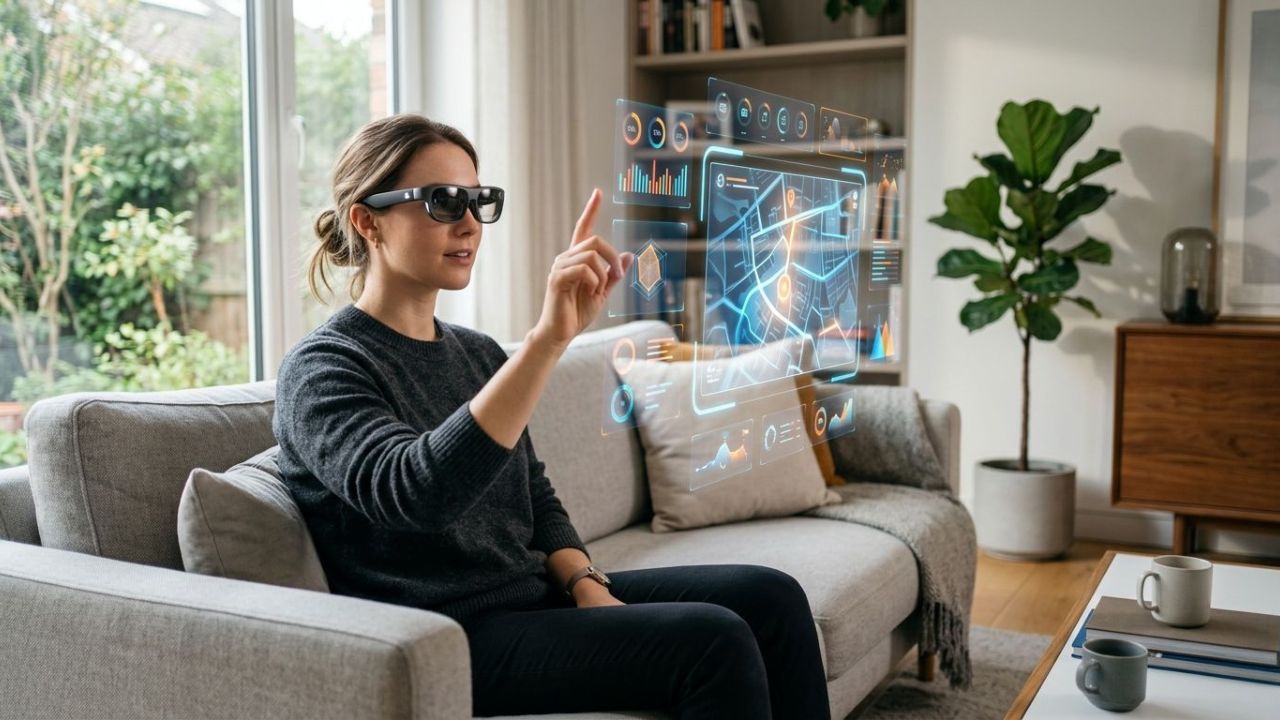
You put on smart glasses in your living room. Your hand moves through the air. Virtual objects appear right in front of you. They respond to your gestures and voice commands. These digital things blend perfectly with your real surroundings.
This isn’t science fiction anymore. This is augmented reality, and it’s changing how we learn, work, and play.
Here’s the problem, though. Most AR systems today struggle with one big issue. They can’t understand complex scenes or create realistic virtual content without tons of training data. Building new AR experiences takes months. It costs thousands of dollars. Teams collect endless data. They train models from scratch. The whole process feels slow and expensive.
You want AR that works in real situations, not just in controlled labs. That’s where ARK comes in.
ARK Augmented Reality with Knowledge Interactive does something different. It pulls knowledge from powerful AI models like GPT-4 and DALL-E. Researchers shared this approach on May 1, 2023. They showed how foundation models can transfer their knowledge to create smarter AR experiences.
The system learns from three sources. It uses world knowledge from AI. It taps into external information sources. And it learns from real interactions with users. This means AR applications work faster and smarter. They don’t need endless amounts of new training data.
ARK changes everything by making scene understanding and generation feel natural and responsive. The technology actually understands what you’re looking at and creates content that fits.
This article shows you exactly how ARK augmented reality works. You’ll discover the key features that make it powerful. You’ll see real uses in education, industry, and entertainment. You’ll learn how this technology transforms mixed reality systems and gaming experiences. By the end, you’ll understand why ARK matters for the future.
Ready to see what’s possible?
Key Features of ARK Augmented Reality
ARK Augmented Reality blends knowledge with memory to create smart experiences. The system understands your surroundings. It generates virtual content that fits perfectly into your physical world.
How does ARK integrate knowledge with memory?
ARK pulls knowledge from three powerful sources. These sources work together to build a complete picture of your world.
First, foundation models like GPT-4 and DALLE provide world knowledge. These are computer systems that have learned from massive amounts of data. They know facts about objects, places, and how things work.
Second, external knowledge bases add real facts from the internet and other sources. These databases contain information about everything from historical events to scientific facts.
Third, contextual memory captures what happens during your interactions with the system. Every time you use ARK, it learns from that moment. It remembers what matters to you.
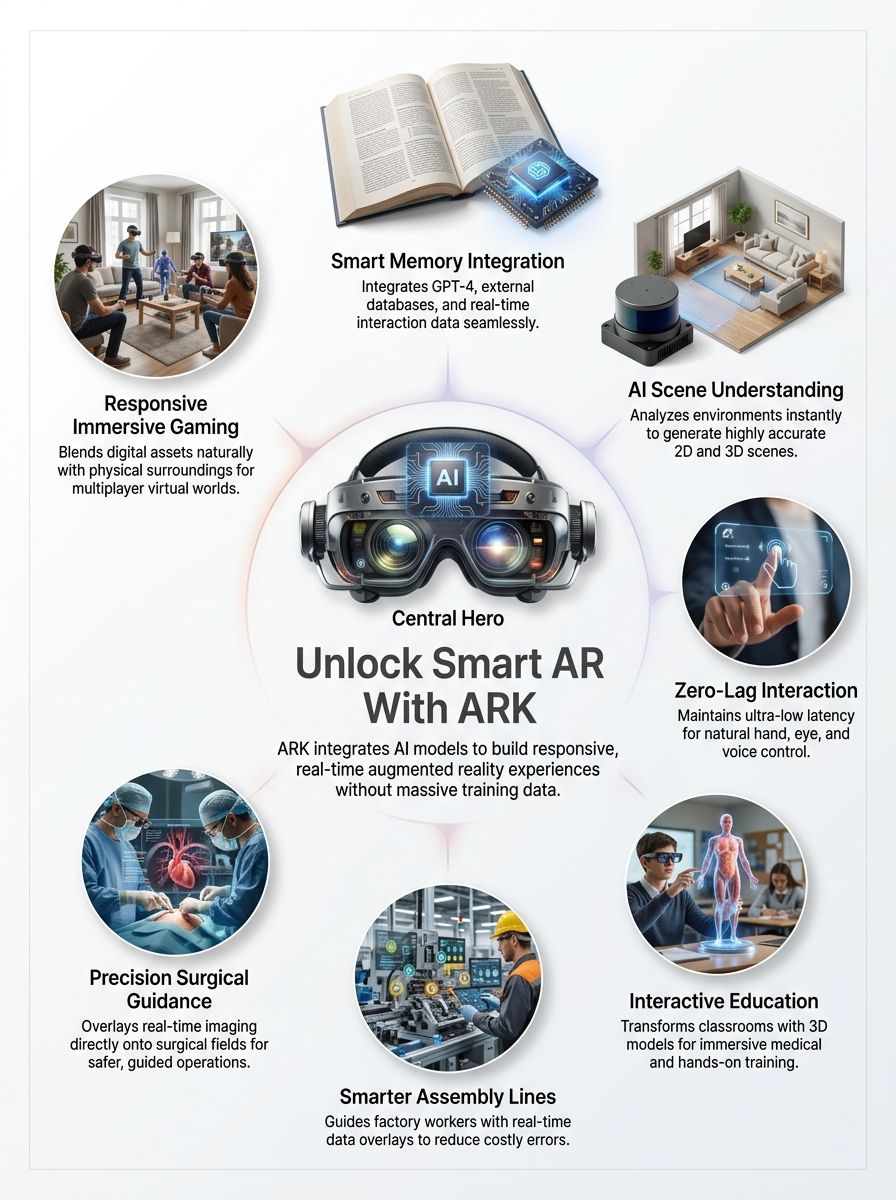
This three-part approach creates something special. The system actually understands your environment. It remembers what’s important to you. Think of it like a smart assistant that gets better over time.
The knowledge-memory integration works smoothly. As you explore new scenes and environments, your system collects relevant data. This cross-modal knowledge memory data helps the artificial intelligence understand what you’re looking at. It works whether you’re in a physical room or a virtual world inside your headset.
The infinite agent model transfers this knowledge to completely new situations. You don’t need expensive data collection for each fresh task. The system applies what it already knows to new challenges.
Real-time data flows through the framework constantly. This allows the computer vision system to generate and edit scenes with impressive quality. It works in both 2D and 3D formats. Your interactions shape how the system learns. Each use makes the experience more personal and effective.
What is AI-driven scene understanding and generation?
AI-driven scene understanding and generation form the backbone of ARK’s power. It lets the system see and create mixed reality worlds. Cross-modality models work together to analyze what the camera captures in real time.
These models pull data from multiple sources. They use sensors, cameras, and head-mounted displays. All these inputs help build a complete picture of your surroundings. ARK taps into knowledge memory to understand context. It fills in gaps about unseen scenes.
The system doesn’t just look at what’s in front of you. It thinks about what should be there based on what it already knows. If you’re looking at a desk, ARK might understand that computers, papers, and pens typically appear there too.
Large foundation models help ARK generate both 2D and 3D scenes. These models work similarly to advanced AI systems like GPT-4. The quality they produce impresses even experienced developers. ARK can reconstruct environments with remarkable accuracy. It does this even when parts of the scene remain hidden from view.
Scene generation quality jumps significantly compared to traditional systems. The technology uses something called simultaneous localization and mapping. This helps it understand where you are and what surrounds you in real time.
ARK’s knowledge interactive emergent ability lets the AI collect relevant multimodal data. It does this for scenes it has never encountered before. Tests proved that ARK produces better results than older methods. Both the numbers and the visual quality show clear improvements.
Your AR glasses or VR headset becomes smarter with every use. ARK learns from every interaction you make. The rendering pipeline processes information faster. This makes virtual environments feel seamless with physical reality.
Applications in the metaverse and gaming show tremendous promise. ARK adapts to new domains and scenarios with ease. This flexibility makes the technology valuable for many different uses.
How does ARK enable real-time interaction with virtual and physical environments?
ARK makes mixed reality work in real time. It combines what you see around you with digital content that responds instantly.
The system uses multi-modal models that understand both physical and virtual stimuli. These models catch your movements all at once. They track your voice commands, hand gestures, and where you’re looking. Everything works together smoothly.
Your gaze, touch, voice, and hand tracking combine to control what happens on screen. Point at something in your room. ARK adds digital layers right there. The response feels immediate and natural.
The platform maintains low motion-to-photon latency. This technical term means there’s no lag between your action and what appears. You move your hand. The virtual object moves at the same time. No delay, no waiting.
Scene geometry updates happen instantly as you move around. Virtual objects stay locked in place. They feel real because they don’t drift or jump around. A virtual vase on your real table stays on that table, even when you walk around it.
Collaboration becomes seamless with ARK. Multiple people can work together in mixed-reality settings. Your team can edit scenes together. They can add virtual fixtures and manipulate 3D content. Everyone sees the changes right away. No waiting for the system to catch up.
The architecture allows for immediate scene creation and editing. It responds to your actions instantly. Environmental changes trigger updates right away too. Cloud computing supports this speed by handling heavy processing away from your device.
Haptic technology adds physical feedback to the experience. Touch a virtual object, and you feel something actually happen. This makes the digital world feel more real.
ARK works across different platforms. Whether you use Apple Vision Pro, Meta Quest 3S, or Microsoft HoloLens, the system adapts. This reality-agnostic approach means you’re not locked into one device.
The system maintains stable 3D registration throughout your session. Overlaid content stays exactly where it should be. This stability makes immersion feel genuine. It also makes the technology practical for real work.
Applications of ARK Augmented Reality
ARK augmented reality transforms how we learn, work, and play. The technology puts powerful tools right into your hands. From classrooms to operating rooms, ARK changes everything.
How is ARK used in education and training?
Augmented reality with knowledge-interactive systems transforms how students learn complex skills. Medical students at Case Western Reserve University discovered this power firsthand.
The World Economic Forum reported amazing results in 2022. They found that 85% of first-year medical students liked mixed reality for anatomy lessons. These students said it worked as well or better than traditional classroom experiences.
Students could see 3D models overlaid on real bodies. The human-computer interaction made difficult concepts easier to grasp. They learned faster than with textbooks alone.
The Virtual Fixtures system started this approach back in 1992. The U.S. Air Force developed it for surgical planning and training. That early work paved the way for today’s advanced systems.
Modern augmented reality experiences provide real-time 3D graphics. These graphics superimpose onto the real world. Learners receive immediate feedback on their actions. They practice hands-on skills in safe environments. No risk of breaking expensive equipment or harming patients.
The visualization of complex structures makes abstract ideas concrete. Students can see inside engines, human bodies, or chemical reactions. These things become real and touchable instead of just diagrams in a book.
Knowledge inference in AR systems adapts to each learning context. Students studying anatomy get different content than those learning machinery repair. Architecture students see different overlays than those studying chemistry. The system knows what each learner needs.
Real-world environments become interactive classrooms. A park bench becomes a lesson about materials science. A building facade teaches architectural history. Learning happens everywhere.
Learners engage multiple senses through these experiences. Visual displays show information. Audio guides explain concepts. Haptic feedback from wearable technology lets students feel textures and resistance. This multi-modal learning approach strengthens memory. Students retain more information.
Mobile app platforms and AR headsets make these experiences accessible. More people can learn this way than ever before. Handheld devices work for basic lessons. AR glasses provide more immersive training.
Training programs in industrial settings use these tools every day. Workers learn maintenance procedures through step-by-step AR guides. They practice equipment operation without touching real machines first. Safety protocols become interactive experiences instead of boring videos.
The effectiveness of ARK lies in its ability to provide contextual learning. Knowledge integration supports immediate application. Students understand concepts more deeply because they can use them right away.
What are the industrial and medical applications of ARK? Industrial Applications: Building Smarter Factories
Major manufacturers have put AR technology to work on their assembly lines. Boeing, BMW, and Volkswagen lead the way. These companies use AR to monitor process improvements. They catch maintenance issues before they become big problems.
Mechanics get AR labels that clarify operating instructions. The instructions appear right in front of their eyes. No need to look away from the work or flip through manuals.
X-ray-like AR views help workers identify problems inside complex machinery. They can see through metal casings to spot broken parts. AR content overlays real-time data onto the surrounding environment. This makes repairs faster and more accurate.
The technology improves every stage of the product lifecycle. Design teams use AR to visualize prototypes. Manufacturing lines get AR-guided assembly instructions. Service technicians receive AR support for maintenance. Logistics teams track shipments with AR overlays.
Workers spend less time hunting for information. They spend more time actually fixing things. This approach cuts errors by showing exactly what to do. It saves money by preventing mistakes. Products get out the door quicker because work flows more smoothly.
Medical Applications: Transforming Surgery and Training
Surgeons started using AR technology in 1992. U.S. Air Force laboratories developed it for surgical planning and training. That early work has grown into something amazing.
Companies like Siemens, Karl Storz, and IRCAD have developed AR systems for laparoscopic surgeries. These are surgeries done through small cuts instead of large openings. The systems let doctors visualize internal structures during procedures. Surgeons can see organs and blood vessels that would otherwise be hidden.
Microsoft HoloLens provides AR-guided surgery capabilities. These tools help surgeons perform image-guided operations with better precision. The technology shows exactly where to cut and what to avoid.
Doctors access real-time patient monitoring data during surgery. They overlay imaging records directly into their field of view. Ultrasound and tomography images appear right where they need them. No looking away at separate screens.
Medical professionals use AR to train new surgeons safely. Trainees practice in controlled settings before entering operating rooms. They can repeat procedures until they get them right. No risk to real patients during this learning phase.
The technology enhances intraoperative visualization. This means surgeons can see better during the actual operation. It gives them confidence and control during critical moments. One wrong move could harm a patient, so this clarity matters.
AR is growing fast in healthcare. Both training and surgical guidance benefit from these advances. Some challenges remain about accuracy and system integration. But the benefits already outweigh the difficulties for many procedures.
How does ARK enhance immersive entertainment experiences?
ARK transforms entertainment by generating and editing 3D scenes in real time. Games and virtual worlds feel alive because they respond to you instantly.
Magic Leap 2, Meta Quest 3, and Apple Vision Pro all use similar technology. They blend digital content with physical spaces. These experiences grab your attention and keep you engaged.
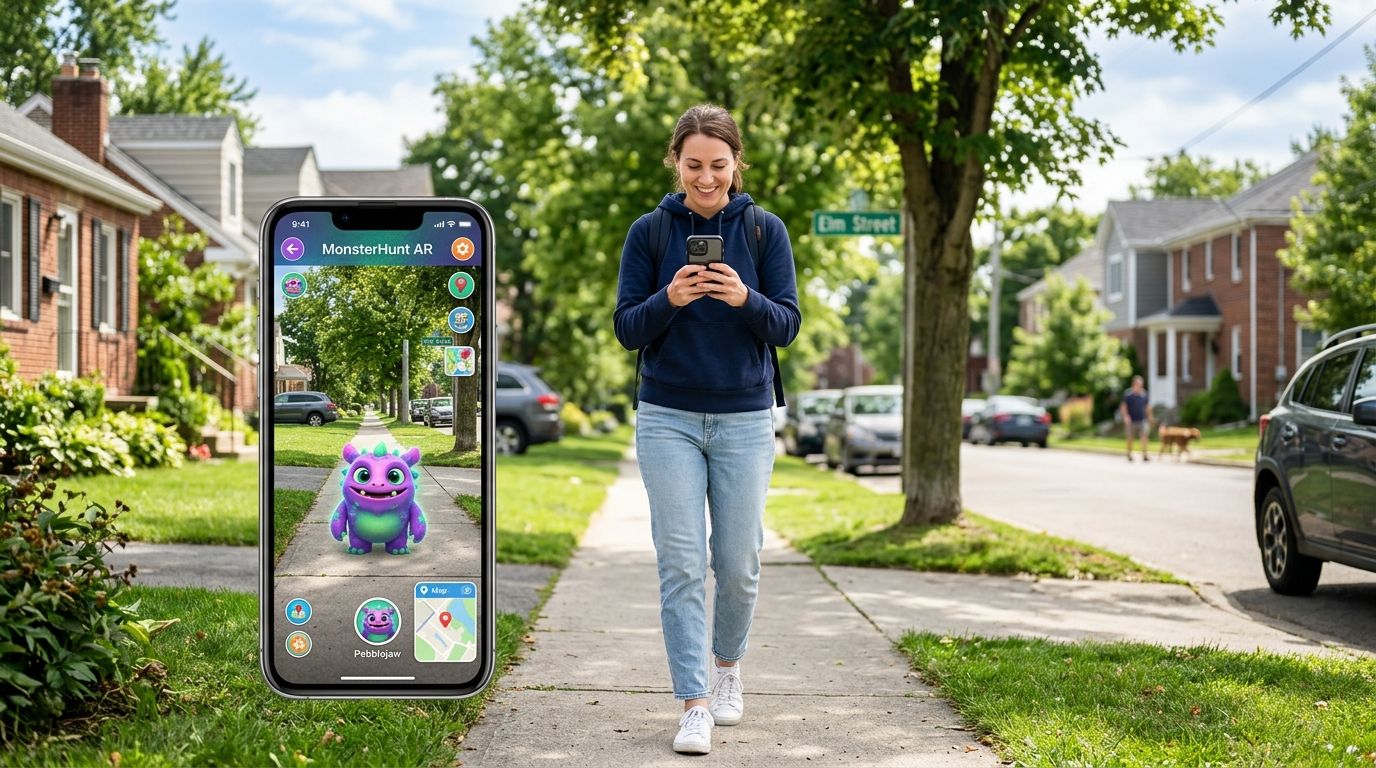
Pokémon Go started this revolution in 2016. Niantic released the game to millions of players worldwide. People walked around their neighborhoods catching virtual creatures. ARK goes much further than that early example.
The system understands your surroundings completely. It places interactive elements exactly where they belong. A virtual character sits on your real couch. A digital treasure chest hides behind your actual bookshelf.
ARK handles both additive and masking effects. Additive effects layer digital objects onto your world. Masking effects hide parts of reality. Both techniques work together to create convincing illusions.
Motion capture technology tracks your movements precisely. Your actions control what happens on screen. Wave your hand, and a magic spell flies across the room. Duck down, and virtual enemies miss their shots.
This real-time interaction makes you feel inside the experience. You’re not just watching entertainment. You’re part of it.
ARK’s scene generation abilities change metaverse and gaming simulations completely. Creators build immersive worlds on demand. They don’t need months of pre-production. New environments appear as players need them.
Head-up displays project information into your field of view. You stay connected to both digital and physical environments at once. Health bars float above characters. Map markers show through walls. Important information stays visible without blocking your view.
Computer-generated imagery looks sharper than ever before. Advances in rendering and processor power make this possible. Virtual objects cast realistic shadows. They reflect light properly. They look like they belong in your space.
Wearable computers let you explore virtual landscapes anywhere. Stand in your living room and visit alien planets. Walk down the street while battling robots. The adventures go wherever you go.
The mixed reality approach combines AI agents with your choices. Stories respond to what you do. Characters remember your decisions. Every playthrough feels unique because the system adapts to you.
Entertainment applications benefit from multi-sensory engagement. You see the action around you. Spatial audio puts sounds in the right places. Sometimes you even feel the action through haptic feedback.
Collaborative experiences let multiple people enter the same virtual space. Solo gaming becomes a shared adventure. Friends join your quest from their own homes. Everyone sees the same virtual elements in their own real spaces. Social connections grow stronger through shared virtual experiences.
Final Words
Knowledge-interactive systems like ARK represent a major shift in augmented reality. The technology pulls from foundation models like GPT-4 and DALL-E. This approach cuts down the need for expensive data collection on every new task.
Real-world applications already show great promise. Education uses ARK to make learning more engaging. Medical training becomes safer and more effective. Gaming simulation reaches new levels of immersion. Users see better scene generation everywhere. Interactions between virtual and physical worlds feel smooth and natural.
The technology still faces some hurdles. It depends on the quality of its knowledge bases. Human-AI interactions need to keep improving. These challenges are worth solving.
Researchers and developers who embrace this mixed reality framework will lead the future. They’ll create immersive experiences that actually work in novel domains. The technology keeps getting better as more people use it.
ARK shows us what augmented reality can become. It’s not just about adding digital objects to our world. It’s about creating intelligent systems that understand context and respond naturally. The future of AR is here, and it’s smarter than we imagined.
Frequently Asked Questions (FAQs) on ARK Augmented Reality
1. What is ARK Augmented Reality and how does it use knowledge interactive emergent technology?
ARK Augmented Reality blends 3D computer graphics with virtual reality, using knowledge inference to make experiences more immersive. It connects users to information in real time, letting them interact with digital objects through augmented reality glasses or a headset.
2. How do ARKit and mixed reality work together in the ARK approach?
ARKit powers the core of ARK’s system by tracking movement and rendering computer graphics over real-world scenes. Mixed reality adds interactive AI agents that respond to user actions, making each session feel like you’re talking to a smart friend who knows your world.
3. Can I use commercial augmented reality applications from Apple Inc., Meta Platforms, or other companies with ARK?
Yes, application software built for Apple Inc.’s devices or Meta Platforms’ headsets can support the ARK approach if they allow integration with microservices and general foundation models used by ARK.
4. How does human–computer interaction improve user experience in this system?
Human–computer interaction lets people control digital content using gestures or voice commands instead of just buttons on a controller. This makes communication smoother; you almost forget there’s tech between you and what you see.
5. Does ARK handle occlusion and estimation for realistic immersion in novel domains or scenarios?
Absolutely! The video system uses state-of-the-art rendering techniques for occlusion so virtual objects hide behind real ones when needed; estimation tools help adapt quickly even if you step into new places or try out different scenarios.
6. Is GPT-4 part of the emerging mechanism behind these interactive AI agents?
You bet! GPT-4 helps retrieve up-to-date information fast; it supports perception tasks so those AI agents can answer questions about anything from history to email tips right inside your universe—no need to leave your mixed-reality adventure just because curiosity strikes!