

Have you ever tried to memorize a huge list of French verbs, only to give up three days later? I know the feeling. Learning a new tongue used to mean staring at boring textbooks and repeating useless phrases like a robot. But the game has entirely changed. If you want to learn a language online in 2026, you are looking at a completely different experience.
We now have tools that actually talk back to you, adapt to your mood, and drop you straight into a virtual street in Tokyo. The old system of spending years in a classroom just to barely order a coffee is dead. Today, your smartphone holds more conversational power than a university degree. You can practice real-life scenarios, get instant feedback on your accent, and build confidence without the fear of judgment.
Artificial intelligence and virtual reality have turned the hardest parts of studying into an interactive game you actually want to play. This guide breaks down exactly what works right now. I will walk you through the smartest tools on the market, the daily habits that actually stick, and the traps that waste your time. Let us dive right into the smartest ways to get fluent fast.
Why Language Learning is Radically Different in 2026?
The Rise of Emotionally Intelligent AI Tutors
We have entirely moved past the days of robotic chat interfaces that only understand perfect grammar. Modern systems actually read your emotional state through your voice tone and speaking pace. When you stutter or pause out of frustration, the system immediately recognizes your anxiety and softens its approach. It might drop a helpful hint or slow down its own speaking speed to match your comfort level.
This creates a completely safe environment where you can make hundreds of mistakes without feeling embarrassed. You get the specialized attention of a private human coach without the massive hourly price tag. The technology essentially gives you a highly patient conversation partner available at three in the morning. This breakthrough completely removes the anxiety barrier that stops most people from ever speaking aloud.
|
AI Feature |
User Benefit |
Real World Application |
|
Tone Analysis |
Reduces performance anxiety |
Senses frustration and slows down |
|
Instant Correction |
Fixes mistakes on the fly |
Perfects pronunciation quietly |
|
24/7 Availability |
Fits any crazy schedule |
Allows late night speaking practice |
Virtual Reality and Immersive Digital Environments
Total immersion has always been the golden standard for achieving quick fluency. You used to need thousands of dollars and a flight to a foreign country to get this experience. Now, virtual reality headsets and mobile augmented reality drop you straight into a bustling digital street market in Tokyo or a quiet cafe in Paris. You physically look around the space, pick up digital menus, and order food from virtual waiters.
This physical interaction forces your brain to build spatial memories connected to the new vocabulary. You stop translating words in your head because you associate the word directly with the physical action. Even simple phone apps can now map your bedroom and place foreign labels on your desk and window. It turns your immediate physical surroundings into an active study zone.
|
Immersive Tech |
Core Function |
Fluency Impact |
|
VR Headsets |
Simulates entire foreign cities |
Builds strong visual associations |
|
AR Mobile Apps |
Labels real physical objects |
Turns your home into a classroom |
|
Digital Meetups |
Connects global learners |
Forces live social interaction |
The Shift from Rote Memorization to Practical Application
For decades, students suffered through memorizing thick books of verb tables and obscure grammar rules they never actually used. The modern curriculum completely flips this outdated model on its head. Today, platforms force you to learn high-frequency street phrases you need for immediate survival. If you cannot order water or ask for the bathroom, knowing the past perfect tense is entirely useless.
You learn the grammar naturally by speaking and making mistakes, exactly how a toddler learns their native tongue. The software tracks your ability to complete real-life scenarios rather than grading written tests. This hyper-practical focus keeps you highly motivated because you see massive improvements in your real-world communication right away. You focus purely on speaking and listening instead of academic perfection.
|
Old Method |
Modern Approach |
Core Difference |
|
Flashcard Stacks |
Roleplay Scenarios |
Focus on real context |
|
Grammar Quizzes |
Voice Recognition |
Focus on speaking ability |
|
Delayed Speaking |
Immediate Output |
Removes the fear of talking |
How to Choose the Right Online Language Learning Method?
Assess Your Personal Goals and Needs
You absolutely must figure out exactly why you want to learn a language online in 2026 before you download a single application. Downloading a random app because it has a cute mascot is a terrible strategy that leads straight to burnout. If you are preparing for a quick corporate trip to Berlin, you need business etiquette, formal email structures, and industry terms.
A casual gamified app will not teach you how to negotiate a contract. Conversely, if you just want to backpack across South America, you only need survival phrases, numbers, and basic directions. Sitting through a rigorous academic course will bore you to tears. Defining your exact motivation dictates the exact platform you should spend your money and time on. It filters out all the useless noise.
|
Goal Type |
Recommended Focus |
Best Platform Type |
|
Corporate Travel |
Formal business jargon |
University digital courses |
|
Casual Vacation |
Survival phrases and numbers |
Gamified mobile apps |
|
Moving Abroad |
Deep conversational fluency |
Live video tutors |
Free Applications vs. Paid Premium Platforms
Free applications give you a wonderful opportunity to test the waters without opening your wallet. You can play around with the sounds of a new dialect, learn basic colors, and decide if you actually enjoy the process. However, these free tools hit a massive wall very quickly. They constantly interrupt your focus with loud advertisements and completely lack the advanced speaking tools required for real fluency.
If you want to achieve conversational comfort, you must eventually treat your education as a real investment. Premium platforms offer unlimited access to live speaking sessions, deep grammar breakdowns, and customized lesson plans. Spending a little money every month forces you to take the process seriously and keeps you accountable. The return on investment is massive when you finally hold a confident conversation.
|
Platform Tier |
Core Advantage |
Major Limitation |
|
Free Version |
Zero financial risk |
Lacks speaking practice |
|
Premium Subscription |
Advanced voice feedback |
Requires monthly budget |
|
Pay-Per-Hour Tutor |
Real human connection |
Scheduling can be tough |
Structured Academic Courses vs. Conversational Practice
Every person has a highly specific learning style that dictates how they absorb information. Some people crave deep structure. They want a clear syllabus, graded homework, and a logical progression from chapter one to chapter ten. If you thrive in that environment, you should look into digital university programs that offer rigid academic paths. However, many learners find that strict approach entirely suffocating.
If you prefer to learn by doing, you need to jump straight into unstructured conversational platforms. You can book a thirty-minute video call with a native speaker and just start talking about your favorite movies. You will make a ton of errors, but the teacher corrects you on the spot. The best overall strategy usually mixes a little bit of grammar study with a massive amount of free-flowing conversation.
|
Learning Style |
Best Environment |
Expected Progress Route |
|
Highly Analytical |
Strict digital syllabus |
Steady and heavily grammatical |
|
Action Oriented |
Live video chatting |
Fast but messy speaking |
|
Blended Approach |
App drills plus weekend calls |
Well rounded and confident |
Top Platforms and Apps to Learn a Language Online in 2026
Best for Absolute Beginners
When you are starting from complete zero, the most important thing is simply showing up every single day. You need a platform that makes the initial learning phase incredibly fun and completely frictionless. Gamified applications dominate this space because they use bright visuals, point systems, and immediate rewards to hack your brain. You feel a tiny rush of dopamine every time you match a picture to the correct word.
This encourages you to open the app while waiting in line for coffee or sitting on the train. Other beginner platforms focus heavily on matching foreign audio directly to images, skipping English translation entirely. This forces your brain to build an immediate association with the object. These tools build the foundational daily habit you need to survive the harder lessons later on.
|
Target Audience |
Platform Strength |
Habit Building Feature |
|
Zero Experience |
Extreme gamification |
Daily streaks and points |
|
Visual Learners |
Picture association |
Removes native translation |
|
Grammar Focused |
Native language explanations |
Clear written rules |
Best for Real-Time Conversational Fluency
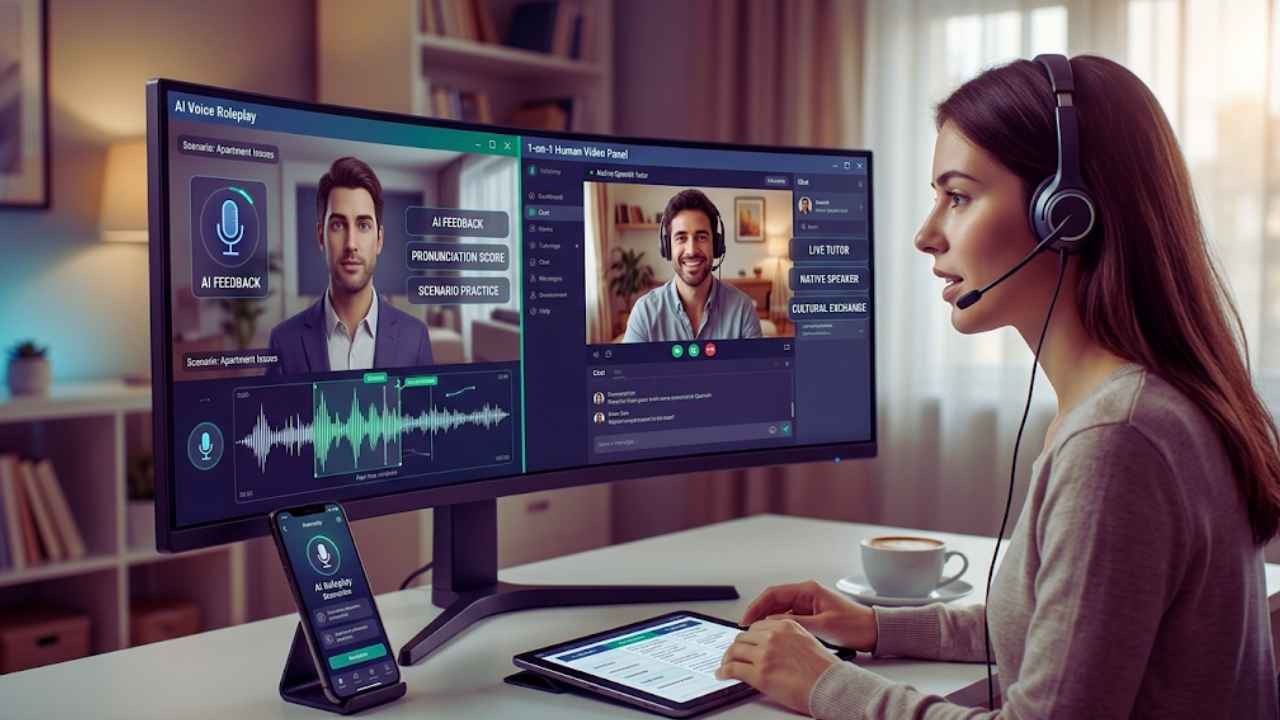
Knowing a thousand words means absolutely nothing if you freeze up the second a local asks you a question. To build real fluency, you have to transition to platforms that demand actual vocal output. The newest artificial intelligence platforms let you run highly specific roleplay scenarios using your phone microphone. You can practice arguing with a landlord about a broken window or ordering a complex coffee drink.
The system listens to your pronunciation and offers immediate, gentle corrections without any judgment. If you prefer real human connection, digital tutoring directories let you hire native speakers from around the globe for very low hourly rates. Spending thirty minutes a week laughing and struggling through a real conversation builds massive confidence very quickly.
|
Practice Method |
Best Use Case |
Fluency Benefit |
|
AI Voice Roleplay |
Preparing for specific events |
Zero judgment practice |
|
1-on-1 Human Video |
Real cultural interaction |
Adapting to local slang |
|
Group Digital Classes |
Collaborative learning |
Hearing other people speak |
Best for Professional and Specific Academic Needs
Casual street slang will not help you close a massive international business deal or pass a strict medical board exam. When your career depends on your speaking ability, you need highly specialized digital tools. Top-tier educational websites partner directly with famous universities to deliver rigorous business communication courses.
These platforms teach you how to write formal reports, run a corporate meeting, and use appropriate cultural etiquette. Furthermore, new software allows you to upload your own industry documents. The system then scans your files and builds custom flashcard decks filled entirely with your specific corporate jargon. This guarantees you only spend time memorizing the exact technical terms you need to succeed in your specific office environment.
|
Professional Need |
Digital Solution |
Career Impact |
|
Corporate Strategy |
University partnered courses |
Better global networking |
|
Industry Jargon |
Custom document scanners |
Highly specific vocabulary |
|
Medical/Legal |
Specialized terminology decks |
Passing foreign board exams |
A Step-by-Step Guide to Learning a Language Online
Step 1: Set a Realistic Baseline and Core Objective
Jumping blindly into a new study routine is the fastest way to fail. You have to start by figuring out exactly how much you already know. Take a quick digital placement test to ensure you do not waste three weeks reviewing simple greetings you learned in high school. Once you establish your starting point, create a highly specific, measurable goal.
Saying you want to be completely fluent is an awful target because it lacks a clear finish line. Instead, set a goal to easily read a specific news article without a dictionary by the end of next month. Or aim to hold a ten-minute conversation about your family by December. A clear target tells you exactly what to focus on today and what you can ignore until next year.
|
Goal Setting Phase |
Action Required |
Resulting Benefit |
|
Baseline Testing |
Take a digital quiz |
Skips boring beginner lessons |
|
Core Objective |
Pick a specific micro-goal |
Creates a clear finish line |
|
Time Framing |
Set a solid deadline |
Forces daily accountability |
Step 2: Build a Daily Digital Study Habit
You cannot cram for fluency. Studying for five hours on a Sunday and doing nothing the rest of the week completely destroys your momentum. Your brain requires small, consistent daily doses of exposure to lock new words into long-term memory. The secret is tying your practice to something you already do every single day.
Review a quick flashcard deck while you eat your breakfast cereal. Listen to a pronunciation podcast while you take your evening walk. When you weave the learning directly into your daily chores, it stops feeling like heavy homework. It just becomes an automatic part of your lifestyle. Consistency builds the deep neural pathways necessary to quickly recall words during a fast-paced conversation.
|
Daily Habit Idea |
Required Time |
Retention Focus |
|
Breakfast Flashcards |
5 minutes |
Visual memory triggers |
|
Commute Podcasts |
20 minutes |
Audio processing speed |
|
Evening Voice Drills |
10 minutes |
Muscle memory for talking |
Step 3: Combine App Learning with Human Interaction
Mobile applications provide a wonderful, safe space to build your initial vocabulary and figure out the basic mathematical logic of the grammar. But relying exclusively on a screen limits your true potential. Real human conversations are unpredictable, loud, and full of strange slang that apps rarely teach.
You must eventually cross the bridge from solitary study to social interaction. Find a digital language exchange partner or book a cheap online tutor as quickly as possible. Do not wait until you feel fully prepared, because that day will never arrive. The immense awkwardness of stumbling through your first real conversation is exactly what forces your brain to adapt. Embracing the panic is the true secret to speaking naturally.
|
Interaction Type |
Primary Focus |
Best Time to Start |
|
Solitary App Study |
Core vocabulary building |
Day one |
|
Digital Exchange |
Texting and voice memos |
Week three |
|
Live Video Tutor |
Fast unscripted talking |
Month two |
Step 4: Actively Consume Native Digital Media
The way native speakers talk on the street sounds radically different from the slow, perfect pronunciation you hear in textbook audio files. To close this massive gap, you must surround yourself with authentic media. Go into your smartphone settings right now and change the entire operating system to your target dialect. Start watching popular streaming shows with the foreign audio track turned on.
Read the comment sections under foreign cooking videos to pick up modern internet slang. Listen to local talk radio while you drive. This constant background noise trains your ear to catch the natural rhythm and speed of the spoken word. It allows you to absorb cultural context and humor that formal lessons completely miss.
|
Media Category |
Immersion Tactic |
Listening Benefit |
|
Streaming Shows |
Dubbed audio tracks |
Connects dialogue to action |
|
Local Podcasts |
Talk radio formats |
Adjusts ear to normal speeds |
|
Social Media |
Changing device settings |
Forces constant daily reading |
Common Pitfalls and How to Avoid Them
Relying Solely on Gamified Applications
It feels incredible to maintain a massive streak on a colorful mobile app. The constant animations and point bonuses trick your brain into thinking you are achieving massive fluency. But tapping multiple-choice buttons and dragging words into a blank space does not teach you how to generate a unique sentence from scratch.
If you never leave the safety of the game, you will completely freeze when a real person asks you a simple question. You have to use these tools strictly as a launchpad. Once you understand the absolute basics, force yourself to tackle harder material. Read long articles, listen to unscripted podcasts, and push yourself out of the comfortable gamified sandbox.
|
Study Illusion |
Harsh Reality |
Better Alternative |
|
High App Scores |
Poor speaking skills |
Booking a live tutor |
|
Multiple Choice |
Cannot build sentences |
Writing daily journal entries |
|
Endless Streaks |
Stuck at beginner level |
Moving to native podcasts |
Ignoring Speaking Practice from Day One
The biggest mistake beginners make is deciding to stay completely silent for the first six months. They convince themselves they need a massive vocabulary before they are allowed to open their mouths. This approach builds a terrifying wall of social anxiety. Language is a purely physical act.
The muscles in your face and throat literally have to learn how to form completely alien shapes. If you delay speaking, you train yourself to only read and write. Start repeating every single word you hear out loud in your empty bedroom from day one. Use the microphone feature on your phone to test your accent. Getting comfortable with your own voice early permanently removes the fear of sounding foolish later on.
|
Silent Trap |
Negative Result |
Immediate Action Needed |
|
Reading Only |
Heavy social anxiety |
Read paragraphs out loud |
|
Waiting for Perfection |
Never actually talking |
Use voice recognition daily |
|
Fear of Mistakes |
Stunted verbal growth |
Chat with a non-judgmental AI |
Maintaining Inconsistent Study Schedules
Life is inherently messy and unpredictable. You will have weeks where work piles up, family obligations take over, and you completely abandon your flashcards. Taking long breaks is totally devastating for a beginner. The new words you just learned sit in a very fragile part of your memory.
If you ignore them for ten days, they vanish completely, forcing you to start all over again. You have to build a foolproof backup plan for your most exhausting days. If you literally have zero free time, commit to doing just three minutes of review while brushing your teeth. That tiny effort keeps the mental pathways open and protects your hard-earned progress from decaying.
|
Schedule Block |
Root Cause |
Consistency Strategy |
|
Heavy Workload |
Zero free energy |
Do three minutes in bed |
|
Weekend Chaos |
Social obligations |
Listen to audio while driving |
|
Vacation Days |
Breaking the routine |
Change phone language settings |
Future Trends to Keep an Eye On
The Integration of Neurofeedback in Learning
The technology moving down the pipeline right now sounds like pure science fiction. Companies are currently testing lightweight headbands that read your brainwaves and monitor your exact cognitive load while you study. If the system detects that your focus is dropping or you are feeling overwhelmed, it automatically switches the lesson to an easier listening exercise.
This guarantees you are always operating at maximum mental efficiency without ever hitting a burnout wall. We will also see deeper integration into daily workspaces. Digital glasses will provide real-time translation subtitles during live corporate meetings, helping you learn the specific vocabulary of your industry while you actually work. These invisible integrations will make dedicated study blocks completely obsolete.
|
Future Tech |
Expected Function |
Daily Impact |
|
Brainwave Scanners |
Adjusts lesson difficulty |
Prevents severe mental burnout |
|
Smart Glasses |
Live real-world subtitles |
Makes the world a textbook |
|
Workplace Syncing |
Live email translations |
Teaches during office hours |
Final Thoughts
You possess an unbelievable advantage over anyone who tried to tackle this massive challenge a decade ago. Figuring out how to learn a language online in 2026 is no longer about finding the heaviest dictionary or the strictest classroom. It is entirely about leveraging smart digital tools that fit seamlessly into your chaotic daily life. The modern systems completely adapt to your mistakes, build your confidence in private, and connect you with entirely new cultures from the comfort of your living room.
Do not let the massive wall of available apps paralyze your decision making. Pick one highly rated tool, set a specific goal for next month, and start speaking out loud right now. The technology has removed all the traditional barriers, leaving your personal consistency as the only thing standing in your way.
Frequently Asked Questions (FAQs) About Learn Language Online 2026
What is the fastest way to learn a language online in 2026?
Speed comes entirely from hyper-focused daily consistency combined with immediate practical application. The absolute fastest route involves studying high-frequency street vocabulary for twenty minutes every morning and then forcing yourself to use those exact words in a live conversation later that day. You must completely abandon passive reading and traditional grammar drills. Rely heavily on artificial intelligence voice tools to simulate real-world encounters over and over until you stop translating in your head. When you pair this aggressive speaking practice with total digital immersion by changing your phone and media settings, your brain adapts incredibly fast.
Can AI actually replace a human language tutor?
Artificial intelligence is completely unmatched when it comes to perfect patience, instant grammar correction, and availability. It completely removes the fear of judgment that plagues so many beginners. However, it absolutely cannot replace the messy, beautiful reality of human connection. A machine cannot teach you the subtle cultural humor, the deep empathy, or the shared laughter that happens when you completely mess up a sentence. The smartest strategy is a hybrid approach. Use the machine for your daily heavy lifting, strict pronunciation drills, and vocabulary repetition. Then, hire a real human once a week to test your actual social skills and cultural understanding.
How much time should I dedicate daily to online language learning?
You do not need to lock yourself in a library for three hours to see massive progress. The ideal sweet spot for a busy adult is roughly forty-five minutes of dedicated contact every single day. The trick is to split this time into smaller, easily digestible chunks so you never feel overwhelmed. Spend twenty minutes actively drilling new concepts and speaking aloud during your morning commute. Then, spend another twenty-five minutes passively listening to a foreign podcast or watching a dubbed television show while you cook dinner. This split approach keeps your brain engaged without causing mental fatigue. Consistency across small blocks of time always beats massive, exhausting study sessions.
Are free language apps enough to become fluent?
Free applications provide a fantastic runway to get your plane off the ground, but they will never take you to your final destination. They are perfect for learning the alphabet, picking up your first few hundred nouns, and testing your general commitment level without spending any money. But true fluency requires unscripted conversation, deep cultural context, and the ability to express complex thoughts under pressure. Free tools completely lack the advanced voice recognition and live human connection necessary to build those higher-level skills. You will inevitably reach a frustrating plateau. To completely break through to conversational comfort, you must eventually transition to premium tools and live speaking platforms.