

If you pay attention to the news or just fill up your gas tank every week, you know fuel costs never stay put. Some months, the numbers on the pump drop, giving your household budget a nice break. Other times, they shoot up out of nowhere, dragging the cost of your groceries and retail goods right up with them.
Right at the center of this constant price rollercoaster sits an organization that sounds almost like a secret society to the average driver. Understanding how OPEC affects oil prices is your first step to making sense of global inflation, shifting economies, and why a political spat halfway around the world messes with your morning commute. I am going to break down exactly who these power players are, the everyday tools they use to control global supply, and what it actually means for your bank account. We will skip the dry textbook jargon and look directly at the real-world levers pulling money straight out of your pocket.
What is OPEC?
OPEC stands for the Organization of the Petroleum Exporting Countries. It is a large intergovernmental alliance that kicked off back in September 1960 during a conference in Baghdad. Back then, a handful of Western multinational corporations—often called the Seven Sisters—completely dominated the global energy trade. These big companies called all the shots and intentionally paid pennies to the actual countries where the oil came from. Five founding nations, including Iran, Iraq, Kuwait, Saudi Arabia, and Venezuela, finally got tired of the raw deal.
They banded together to form a united front, taking back control over their own natural resources. This bold move forced the industrialized world to negotiate with them as a single powerhouse rather than pushing them around one by one. Over the years, the group brought in heavy hitters from Africa and the rest of the Middle East. Today, they operate out of a headquarters in Vienna, Austria, standing as one of the strongest economic alliances on earth.
The Core Mission and Member Countries
The official mission statement of this alliance sounds incredibly polite and diplomatic on paper. They say their main goal is coordinating petroleum policies to ensure an efficient, steady supply of fuel to the world. But if you watch what they actually do, their number one priority is protecting their own cash flow. These member nations rely almost entirely on oil exports to fund their governments, build roads, and pay their citizens.
If the price per barrel crashes, their national budgets collapse fast. On the flip side, if they push the price too high, they risk killing global demand and pushing countries to buy electric cars even faster. Their ultimate goal is finding that perfect financial sweet spot that maximizes their profit without breaking the world economy. Hitting that target price sparks intense internal arguments, with poorer members demanding fast cash while wealthier members push for long-term stability.
The Mechanics: How OPEC Affects Oil Prices
To see how this group flexes its muscle, we have to look at the exact tools they use to steer the market. They do not just magically declare a price; they use basic economics to force the market where they want it to go.
|
Market Tool |
Strategic Function |
|
Supply Control |
Holding back new barrels to create artificial scarcity |
|
Production Quotas |
Strict daily pumping limits given to every member nation |
|
Spare Capacity |
Extra production kept offline to handle sudden emergencies |
|
Reference Basket |
An internal price index used to measure overall group profits |
Supply and Demand Fundamentals
Every physical item you buy answers to the basic laws of supply and demand, and crude oil is no exception. Global demand simply comes from the daily energy needs of the entire human race. When shipping lines run at full speed and factories operate day and night, the world burns through millions of barrels at a crazy pace. Supply represents the exact amount of oil currently coming out of the ground and heading to refineries.
Because drilling new wells and laying pipelines takes years, the global supply stays pretty stubborn in the short term. The organization steps right into the middle of this tug-of-war to deliberately manage the supply side. When global demand drops during a recession, they intentionally hold oil back to keep the market balanced. Taking barrels away creates artificial scarcity, which instantly forces panicked buyers to bid the trading price higher.
Production Quotas and Spare Capacity
The strongest weapon in the group’s economic arsenal is the daily production quota. During their regular meetings in Vienna, the oil ministers review global data and agree on a strict production limit for the whole organization. They then chop up that massive ceiling and assign a very specific daily barrel limit to each member country. Sticking to these agreements is notoriously tough because every nation secretly wants to pump more oil for extra cash.
To keep everyone in line, the group relies heavily on something called spare capacity. This refers to oil production that is currently turned off but can start flowing within thirty days and keep running for months. Saudi Arabia holds most of this spare capacity, acting as the ultimate safety net for the global market. If a sudden war wipes out supply elsewhere, they can instantly open their valves to prevent a global shortage, giving them unmatched leverage.
The Role of the OPEC Reference Basket
You hear a lot about Brent Crude and West Texas Intermediate on the evening news. But this specific cartel completely ignores those numbers and uses its own internal yardstick called the OPEC Reference Basket. This tool is just an average of the prices from the different unique oil blends produced by all the member nations. Crude oil is not the exact same liquid everywhere you drill; some blends are thick and heavy, while others are light and super easy to refine.
Because the member countries pump all these different grades, tracking a combined basket gives the leaders a highly accurate picture of their real daily income. They watch this specific number like hawks to make sure their current production cuts are actually working. If the value of the basket drops below their comfort zone for a few weeks, alarm bells go off. You can always bet the group will schedule an emergency meeting and draft new production cuts right after this basket price takes a dive.
Historical Examples of OPEC’s Influence
History shows us exactly what happens when these nations decide to flex their collective power. They have caused recessions and rescued markets, proving their moves matter.
|
Historical Event |
Action Taken |
Global Impact |
|
1973 Oil Crisis |
Full embargo and massive production cuts |
Prices quadrupled, causing a severe economic recession |
|
2014 Price Crash |
Refused to cut supply to fight US shale |
Prices plummeted below thirty dollars a barrel |
|
2020 Pandemic |
Historic output cuts of nearly 10 million bpd |
Stabilized markets after prices temporarily dropped below zero |
The 1970s Oil Crisis
The most dramatic display of their market power happened during the wild economic days of 1973. Several Arab member nations decided to launch a coordinated oil embargo against countries backing Israel during the Yom Kippur War. They aggressively stopped all shipments to the United States and slashed their own overall production. The resulting shockwave hit the Western world fast and hard.
Gas stations across America completely ran dry, and the retail price of fuel quadrupled in just a few months. Regular people had to wait in hours-long lines just to get enough gas to go to work, and the resulting inflation sparked a brutal national recession. This single event forced Western governments to totally rethink their approach to domestic energy security. It directly caused the creation of strategic petroleum reserves and kicked off the very first global investments in alternative energy.
Jump forward to 2014, and the group suddenly faced a brand new market threat. Massive breakthroughs in horizontal drilling and hydraulic fracturing had unexpectedly turned the United States into an energy powerhouse. Independent American drillers started flooding the global market with millions of barrels of cheap shale oil. This massive surge in American output directly threatened to make the traditional Middle Eastern cartel irrelevant.
Instead of cutting their own production to keep prices high, the group made an aggressive and risky choice. Led mostly by Saudi Arabia, they decided to keep pumping at maximum capacity and intentionally let the global price of oil crash. Their strategy was to drive the price down so low that the expensive American shale projects would go bankrupt. The move did force many smaller drillers out of business, but it also inflicted deep financial pain on the group’s own members.
The COVID-19 Pandemic and the 2020 Production Cuts
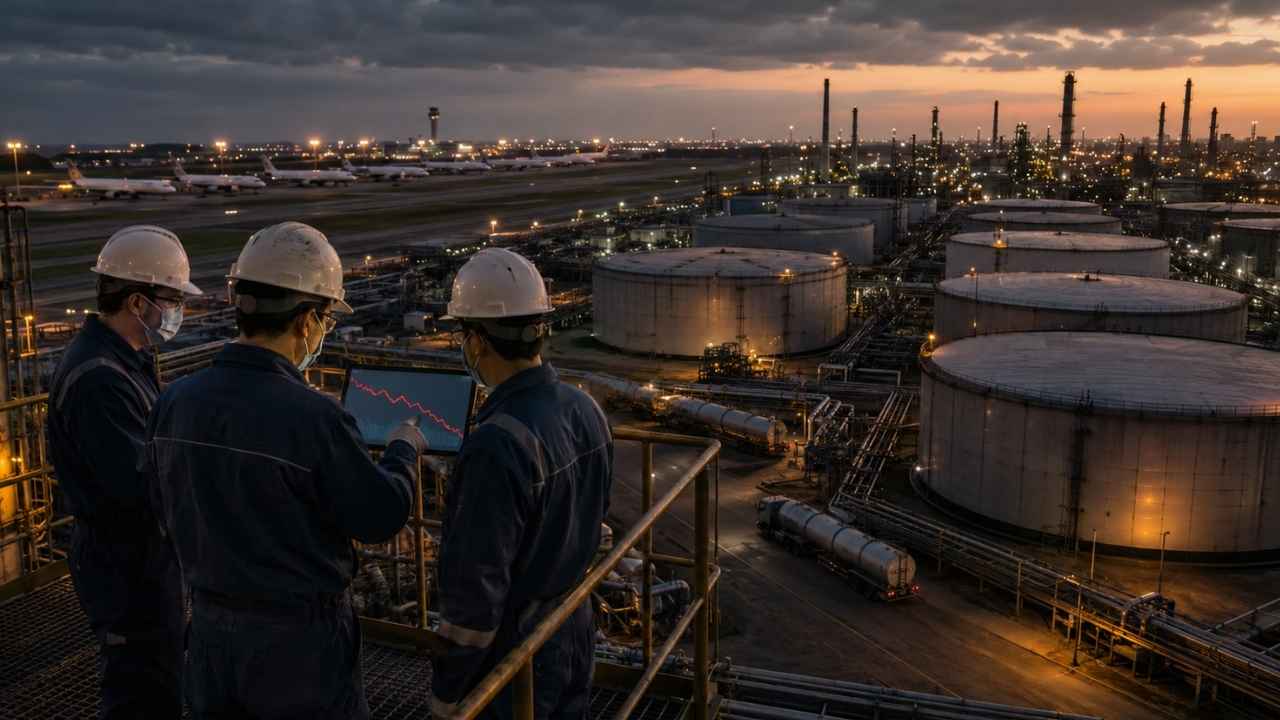
The craziest market intervention in modern history happened during the global lockdowns of early 2020. As international airplanes stayed grounded and daily commuter traffic vanished, global fuel demand disappeared practically overnight. With worldwide storage tanks completely full and literally nowhere left to put the extra oil, crude prices famously dropped below zero for a brief window. Desperate producers essentially had to pay financial buyers just to take the physical oil off their hands.
Facing total economic ruin, the group and its allies orchestrated an unprecedented emergency response. They quickly agreed to historic, massive production cuts, pulling nearly ten million barrels a day completely off the open market. This highly coordinated action slowly brought the global inventory back into balance over the next few months. That terrifying event proved that when things get bad enough, these nations can put aside their differences and act as one.
The Rise of OPEC+ and Changing Dynamics
The world looks very different today than it did fifty years ago. The cartel realized they were losing their absolute grip, so they made some powerful new friends.
|
Alliance Factor |
Strategic Details |
|
OPEC+ Formation |
An expanded coalition created in late 2016 to boost market power |
|
Key Partner |
Russia joined as the most critical non-member ally |
|
Market Dominance |
The expanded group commands roughly half of the world’s daily supply |
|
Non-Member Threat |
High cartel prices motivate independent drillers to boost production |
Who is OPEC+?
Recognizing their market share was shrinking, the original core members realized they needed outside help to stay on top. In late 2016, they reached out to other major oil-producing nations to form a much broader and stronger coalition. Global energy analysts and financial markets immediately started calling this newly expanded supergroup OPEC+. The absolute biggest addition to this new alliance was the Russian Federation.
As one of the top three individual oil producers on the planet, Russia brought massive volume and intense negotiating power to the table. Several other independent countries, including Kazakhstan, Oman, and Mexico, also jumped on board. By officially banding together, this massive supergroup now commands roughly half of the world’s daily oil supply. When this expanded alliance announces a coordinated production cut today, the sheer volume of oil they hold back hits the global trading platforms like a freight train.
How Non-OPEC Producers Alter the Equation
Keeping this massive, diverse alliance together is an absolute diplomatic nightmare for the leaders in Vienna. You have completely different nations with conflicting foreign policies, heavy economic sanctions, and very different long-term goals trying to agree on one market strategy. Plus, every single time they succeed in driving prices up, they accidentally hand a gift to their biggest rivals.
Sustained high crude prices make it highly profitable for independent drillers in the United States, Canada, and Brazil to ramp up their own production. If the expanded alliance cuts its own daily output too deeply, they just hand their valuable market share straight over to these outside competitors. It stays a constant, exhausting tug-of-war between keeping internal profit margins high and defending their global territory. When you ask how OPEC affects oil prices today, the answer always involves watching how independent drillers react to the cartel’s moves.
Factors Beyond OPEC That Impact Oil Prices
Even with all their power, the cartel does not control everything. The oil market reacts to plenty of outside forces they cannot stop.
|
External Factor |
Market Reaction |
|
Geopolitical Conflict |
Military threats near major pipelines create immediate price spikes |
|
Economic Growth |
High interest rates slow down business expansion and kill fuel demand |
|
Renewable Transition |
Electric vehicles slowly erase the long-term need for regular gas |
|
US Shale Boom |
American domestic production acts as a buffer against global shocks |
Geopolitical Tensions and Supply Disruptions
Oil deposits naturally sit beneath some of the most politically unstable regions on earth. Any sudden hint of violence or military action near major pipelines, export terminals, or refineries sends commodity traders into a total panic. When military drones attack processing facilities or rebel groups threaten shipping lanes, the global market instantly adds a heavy risk premium to the price. Buyers become totally willing to pay way more money today because they are terrified the supply will vanish tomorrow.
The Strait of Hormuz remains the absolute most critical physical choke point in the entire energy distribution system. Millions of barrels transit through this narrow waterway daily, and any military blockade there can paralyze the global economy. The cartel cannot stop these random conflicts from happening, but they frequently have to use their carefully guarded spare capacity to calm the terrified markets when violence breaks out.
Economic Growth and Global Demand Outlook
While the cartel strictly manages the global supply side, the overall health of the world economy controls the demand side. When powerful central banks raise interest rates to fight off stubborn inflation, businesses naturally put their expansion plans on hold. Global manufacturing drops off, international freight shipping slows down, and everyday consumer spending gets tight.
A struggling global economy simply burns through a lot less diesel fuel and commercial jet fuel. If the financial world starts sliding toward a major recession, future demand forecasts drop like a rock. The group’s leaders constantly watch these economic indicators, trying desperately to cut their production fast enough to stay ahead of a shrinking consumer base. If they fail to cut their daily production quickly enough during an economic downturn, the market floods with unwanted oil, and prices collapse.
The Rise of Renewable Energy and Shale Oil
The long-term financial landscape is rapidly shifting right under the feet of every traditional oil-producing nation. Big technological leaps in alternative energy are changing how the modern world powers itself. The global push to build green energy infrastructure is speeding up much faster than many old-school energy analysts expected. Offshore wind farms, massive solar grids, and the fast adoption of electric vehicles are slowly eating away at the long-term demand for fossil fuels.
While the world will still need heavy crude oil for decades to support aviation and heavy industry, the peak consumption era for regular passenger gasoline is getting close. This structural shift totally changes the math for how OPEC affects oil prices today. The cartel is trying to grab as much cash as possible right now while global demand stays high, so they can fund their national transitions away from oil before the green revolution permanently shrinks their market.
What Does OPEC’s Control Mean for You?
You might not care about barrel quotas, but you definitely care about your bank account. The cartel’s choices hit your wallet fast.
|
Consumer Impact |
Direct Financial Consequence |
|
Daily Commuting |
Spiking crude prices directly increase the retail cost of gasoline |
|
Grocery Shopping |
Higher diesel freight costs force supermarkets to raise food prices |
|
Retail Goods |
The cost of making plastics and synthetic materials shoots up |
|
Bank Loans |
Oil-driven inflation often forces central banks to raise interest rates |
Impact on Gasoline Prices
The most visible sign of the cartel’s global power flashes on the big sign outside your local gas station. Raw crude oil actually makes up roughly half the total cost of every single gallon of gas you buy. The rest of the money goes toward complex refining, physical transportation, corporate marketing, and heavy government taxes. When the cartel slashes production and intentionally drives up the price of crude, local oil refineries face a massive, immediate spike in their raw material costs.
Those refining corporations absolutely do not eat those losses out of the goodness of their hearts. They pass every single penny of those increased costs straight down the line directly to you. Within a few short weeks of a major global supply cut announcement, you will see the numbers on your local pump climb higher. This forced price hike acts exactly like a hidden tax on your daily life, draining away the cash you would normally spend on your family.
Influence on Global Inflation and the Economy
The financial damage caused by expensive oil rarely stops at the gas pump. Heavy diesel fuel powers the massive cargo ships moving goods across oceans and the freight trains crossing entire continents. Plus, raw petroleum parts remain absolutely essential for making basic plastics, consumer electronics, fertilizers, and medical supplies. When crude oil gets expensive, the fundamental cost of making and shipping literally every physical item on earth goes up.
Retailers eventually have to raise their final consumer prices just to cover these higher operational and freight costs. This widespread increase in prices across the entire consumer economy is exactly what drives massive global inflation. If this energy-driven inflation hangs around for too long, your central bank will likely be forced to raise interest rates to cool the economy down. So, a simple production quota agreed upon by oil ministers in Vienna can literally be the direct reason your local mortgage rate goes up.
Final Thoughts
The global energy market is a wild, interconnected machine driven constantly by regional geography, international conflict, and sheer economic force. Sitting directly at the control panel is a powerful alliance that has spent decades perfecting the art of supply manipulation. From setting strict daily quotas to holding back massive spare capacity, their long-term strategies dictate the baseline cost of running the modern world.
You now have a solid grasp of how OPEC affects oil prices, and exactly why a political decision made halfway across the globe translates directly to higher grocery bills and expensive road trips. Even as new green energy tech expands and independent American drillers push back, this traditional cartel retains the terrifying power to shock the global financial system. Keeping an eye on their monthly production targets remains one of the smartest ways to figure out exactly where the broader global economy is heading next.
Frequently Asked Questions (FAQs) About How OPEC Works
How much of the world’s oil is controlled by OPEC?
By themselves, the official core member countries currently produce about a third of the daily global crude supply. They also sit on roughly eighty percent of the easily accessible underground oil reserves. But the whole global math changes when you factor in their extended alliance with Russia and other independent producers under the OPEC+ banner. This expanded supergroup commands roughly half of the total daily oil production on the entire planet. This combined weight gives them unparalleled leverage over the daily direction of the global market. It makes it completely impossible for the rest of the industrialized world to just ignore their sudden policy shifts. Whenever this unified bloc announces a strategic cut to their daily output, global financial markets react with instant volatility.
Can OPEC set the exact price of oil?
No, the cartel cannot just type a specific dollar amount into a computer and force the world to pay it. Crude oil remains a globally traded financial commodity driven entirely by the actions of millions of independent buyers and sellers. What the cartel actually does is alter the physical scarcity of the product hitting the open market. By strictly restricting the daily flow of new oil, they make financial buyers desperate, which naturally pushes the trading price higher. If they decide to flood the open market with extra oil, they easily force the global trading price much lower. Their power lies entirely in supply manipulation rather than direct price fixing.
Why do gas prices go up when OPEC cuts production?
Raw crude oil is the primary raw ingredient used to make every single drop of commercial gasoline. When the cartel deliberately cuts their production, the total global supply of available crude oil shrinks instantly. Major refineries around the world still desperately need raw oil to make fuel for consumers. Because there is less oil available, these massive refining companies have to outbid each other to lock down the limited shipments that remain. This intense bidding directly drives up the spot price of physical crude oil on the open market. The refineries then pass their higher material costs down the supply chain, which leaves you paying a lot more at the pump.
Will electric vehicles destroy OPEC’s power?
The fast adoption of electric vehicles is definitely putting a dent in long-term global gasoline demand. As millions of everyday drivers permanently switch to battery power, the need for traditional motor fuel slowly drops. However, this transition will not destroy the cartel’s economic power overnight. The modern world still desperately needs huge amounts of raw petroleum for commercial aviation, maritime shipping, and heavy industrial manufacturing. Plus, the global petrochemical industry relies entirely on oil to produce plastics and synthetic materials. The cartel leadership knows this green transition is happening, which is exactly why they are pouring billions into diversifying their domestic economies before the peak demand era ends.