

The aerospace sector is going through a massive transformation right now. If you ever looked up at a plane and wondered what it takes to work among the clouds or manage the chaotic energy of a busy airport terminal, there has never been a more strategic time to jump in.
We are witnessing record passenger numbers, an urgent wave of retirements, and new technology reshaping how planes fly. Exploring aviation careers in 2026 means entering a market that is actively searching for fresh talent.
For decades, getting your foot in the door of a major airline or an aircraft manufacturing company felt like an impossible task. You had to fight for low paying entry level positions and wait for older staff to retire. Today, the script has completely flipped. Carriers are aggressively expanding their fleets and rolling out massive hiring campaigns.
This comprehensive guide breaks down exactly what the aerospace job market looks like today. We will cover the specific roles in highest demand, the exact steps you need to take to get certified, the salary expectations you can look forward to, and how to navigate flight schools without going broke. Whether you want to fly commercial jets across the Atlantic, fix advanced electronic flight instruments, or manage airport operations, you will find everything you need to know right here.
Why 2026 Is the Golden Era for Aviation Jobs?
Understanding why the industry is booming gives you a huge advantage when mapping out your future. The current hiring wave is not just a temporary spike but a long term structural shift driven by several massive factors colliding all at once. Aircraft manufacturers and regional carriers are scrambling to fill gaps left by an aging workforce, while global travel demand continues to shatter records. If you are serious about taking the leap, you need to understand the exact forces driving the market right now.
The Global Pilot Shortage Crisis
The word shortage gets thrown around constantly, but in aerospace, it is a hard mathematical reality. A massive portion of the workforce who started flying during the boom of the 1980s and 1990s are currently hitting the mandatory retirement age of 65. This demographic cliff creates a vacuum at the very top of the seniority lists. When senior captains retire from legacy airlines, those companies recruit heavily from regional carriers. The regional carriers then have to pull from flight schools and charter companies.
This chain reaction means that new pilots are moving from flight instruction to regional airlines, and then to major legacy carriers, faster than ever before in history. Boeing also released data projecting that the global market will need over 660,000 new commercial pilots between now and 2044. These numbers confirm that the hiring gap is a structural issue that will take decades to balance out. Airlines are currently offering massive signing bonuses and improved schedules just to get qualified people into the cockpit.
|
Driver of Shortage |
Current Impact |
Long Term Outlook |
|
Mandatory Retirements |
High vacancy rates at legacy airlines |
Will continue through the next decade |
|
Training Bottlenecks |
Flight schools are at maximum capacity |
Requires new infrastructure investment |
|
Fleet Expansions |
Airlines need more crew for new planes |
Consistent demand for new first officers |
Technological Advancements and AI in Aviation
Flying is no longer just about aerodynamics and heavy metal. The industry is undergoing a massive digital overhaul. Airports are implementing smart biometric boarding systems, carriers are using predictive artificial intelligence to manage crew schedules, and virtual reality has become a standard tool in flight training academies. This technological leap means companies are aggressively hiring people who understand these modern systems.
From data analysts who optimize flight routes to reduce fuel burn to technicians who maintain advanced electronic flight instruments, the definition of an aerospace worker is expanding rapidly. If you have an interest in software and data but want to apply it to a fast paced real world environment, this sector is calling your name. You do not even need to be a pilot to take advantage of these new opportunities. Companies building scheduling algorithms, maintenance prediction software, and autonomous baggage handlers are all considered part of the new aviation ecosystem.
|
Tech Sector |
Job Application |
Skill Required |
|
Artificial Intelligence |
Crew scheduling and route optimization |
Data analysis and machine learning |
|
Biometrics |
Airport security and passenger boarding |
Systems networking and cybersecurity |
|
Virtual Reality |
Flight simulation and mechanic training |
Software development and IT support |
The Sustained Global Travel Boom
Following a few turbulent years earlier in the decade, global passenger demand has exploded. People are traveling for leisure, business, and family reunions at record breaking rates. Emerging markets across Asia and the Middle East are seeing massive spikes in air traffic, leading to the construction of new mega airports and the launch of entirely new regional airlines.
The Asian market in particular is seeing a surge in middle class travelers who are flying for the first time, driving unprecedented demand for regional connectivity. More flights mean airlines need more planes. More planes mean manufacturers like Airbus and Boeing have to ramp up production lines. This trickles down to every single job in the sector. Airlines need more flight attendants to staff the new routes, more mechanics to keep the planes flying safely, and more ground staff to manage the influx of passengers and cargo.
|
Growth Region |
Market Driver |
Resulting Job Demand |
|
Asia Pacific |
Rising middle class incomes |
Huge need for regional pilots and cabin crew |
|
Middle East |
Expansion of transit hubs |
High demand for airport operations staff |
|
North America |
Rebounding corporate travel |
Consistent hiring for major legacy airlines |
Top High-Demand Aviation Careers in 2026
When most people think of aerospace, they immediately picture someone wearing captain stripes. While flying is an incredible path, the industry is supported by a massive ecosystem of highly specialized professionals. From the runway to the radar room, companies are desperately trying to fill these critical positions to keep their operations running smoothly.
Commercial and Regional Airline Pilots
Becoming a commercial airline pilot remains the ultimate goal for many enthusiasts, and the pathways to get there are wider than ever. Pilots are responsible for the safe and efficient operation of aircraft, managing everything from pre flight weather checks and fuel planning to navigation and communication with air traffic control. Because of the shortage mentioned earlier, regional airlines are offering massive signing bonuses to attract new first officers.
Major legacy carriers continue to hire thousands of pilots annually to keep up with their fleet expansions. You can also look into cargo operations. Companies flying freight globally have seen steady growth due to the boom in global e commerce, offering pilots incredibly stable and lucrative careers outside of the traditional passenger airline route. Whether you choose passenger or cargo flying, you will need sharp decision making skills and a dedication to continuous learning.
|
Career Path |
Primary Focus |
Typical Employer |
|
Regional Pilot |
Short haul domestic passenger flights |
SkyWest, Envoy Air, local Asian carriers |
|
Legacy Pilot |
Long haul international passenger routes |
Delta, United, Emirates, Singapore Airlines |
|
Cargo Pilot |
Global freight and logistics transport |
FedEx, UPS, DHL, Amazon Air |
Aviation Maintenance Technicians and Engineers
Airplanes do not leave the ground without the meticulous work of maintenance technicians. These highly skilled professionals perform routine inspections, troubleshoot complex mechanical issues, and ensure that every aircraft complies with strict international safety regulations. The most recent Boeing technician outlook forecasts a massive need for new mechanics globally through the next two decades. There is a distinct divide in the types of engineers airlines are looking for right now.
There is a massive need for B1 Engineers who focus on airframes and powerplants. These are the mechanical experts who handle engines, landing gear, and the physical structure of the plane. Equally in demand are B2 Engineers who specialize in avionics. Modern aircraft are essentially flying computers, and B2 Engineers are responsible for maintaining the sophisticated navigation, communication, and electronic flight control systems.
|
Technician Type |
Area of Expertise |
Daily Responsibilities |
|
B1 Engineer |
Airframe and Powerplant |
Inspecting engines, hydraulics, and landing gear |
|
B2 Engineer |
Avionics and Electronics |
Fixing radar, radios, and flight control computers |
|
Line Mechanic |
Turnaround Maintenance |
Quick fixes at the gate between scheduled flights |
Cabin Crew and VIP Flight Attendants
The role of a flight attendant goes far beyond serving coffee and demonstrating how to use a seatbelt. Cabin crew members are highly trained safety professionals responsible for passenger well being, emergency evacuations, basic medical care, and strict security protocols. Airlines are hiring thousands of cabin crew members to staff their expanding global networks. Customer service skills, cultural awareness, and the ability to remain calm under extreme pressure are paramount.
Furthermore, the private jet sector has seen explosive growth. High net worth individuals and corporate executives are flying private more than ever, creating a surge in demand for VIP Flight Attendants. These roles require a very high standard of personalized service, culinary knowledge, and absolute discretion. They often come with excellent pay and the chance to visit exclusive global destinations that commercial flights never reach.
|
Role |
Work Environment |
Key Skills Required |
|
Commercial Cabin Crew |
Large passenger jets |
Crowd management, emergency response |
|
VIP Flight Attendant |
Private corporate jets |
High end hospitality, culinary prep, discretion |
|
Lead Purser |
Widebody international flights |
Team leadership, conflict resolution |
Air Traffic Controllers
Air traffic controllers are the unsung heroes of the sky. They manage the safe and orderly flow of aircraft into, out of, and between airports. Using radar, advanced computer tracking, and visual references, they guide pilots through taxiing, takeoff, routing, and landing. This job requires immense concentration, rapid decision making skills, and sharp spatial awareness. Because the work is high stakes, it is also highly regulated.
In many countries, air traffic controllers are government employees with excellent benefits, pensions, and high base salaries. Due to mandatory retirement ages and the rigorous training required, there is a consistent and pressing need for new controllers to enter government academies and begin training. The application process is highly competitive, and candidates must pass intense cognitive and psychological evaluations before they even see a radar screen.
|
Facility Type |
Scope of Work |
Location |
|
Control Tower |
Managing takeoffs and landings |
Airport property |
|
TRACON |
Handling approach and departure phases |
Regional radar centers |
|
En Route Center |
Guiding high altitude cruising traffic |
Standalone national facilities |
Airport Operations and Ground Management
An airport functions like a small city that never sleeps. Airport operations managers oversee the daily activities that keep this massive infrastructure running. This includes managing runway safety, coordinating emergency response teams, ensuring compliance with strict security regulations, and overseeing terminal operations. In addition to management, there are vital ground support roles including ramp agents who guide planes to their gates, load heavy cargo, and manage refueling procedures.
Dispatchers are also a critical part of operations. They work directly with pilots to plan flight paths, calculate fuel requirements, and monitor severe weather systems. Operations is a fantastic career path for those who want to be deeply involved in the aerospace sector without having to leave the ground. The work is fast paced, highly logistical, and requires excellent communication skills to coordinate multiple moving parts simultaneously.
|
Operations Role |
Primary Task |
Skill Required |
|
Airport Manager |
Oversee entire terminal and runway operations |
Leadership and regulatory knowledge |
|
Flight Dispatcher |
Plan flight routes and fuel loads |
Meteorology and mathematics |
|
Ramp Agent |
Load cargo and guide aircraft |
Physical stamina and safety awareness |
Emerging Tech and Sustainability Roles
The industry is evolving rapidly, bringing entirely new career categories to the forefront. If you want to be on the cutting edge of aerospace technology and environmental science, these are the paths to watch. Companies are pouring billions of dollars into making flight greener and more efficient, creating jobs that did not exist a decade ago.
Drone Operators and Urban Air Mobility Specialists
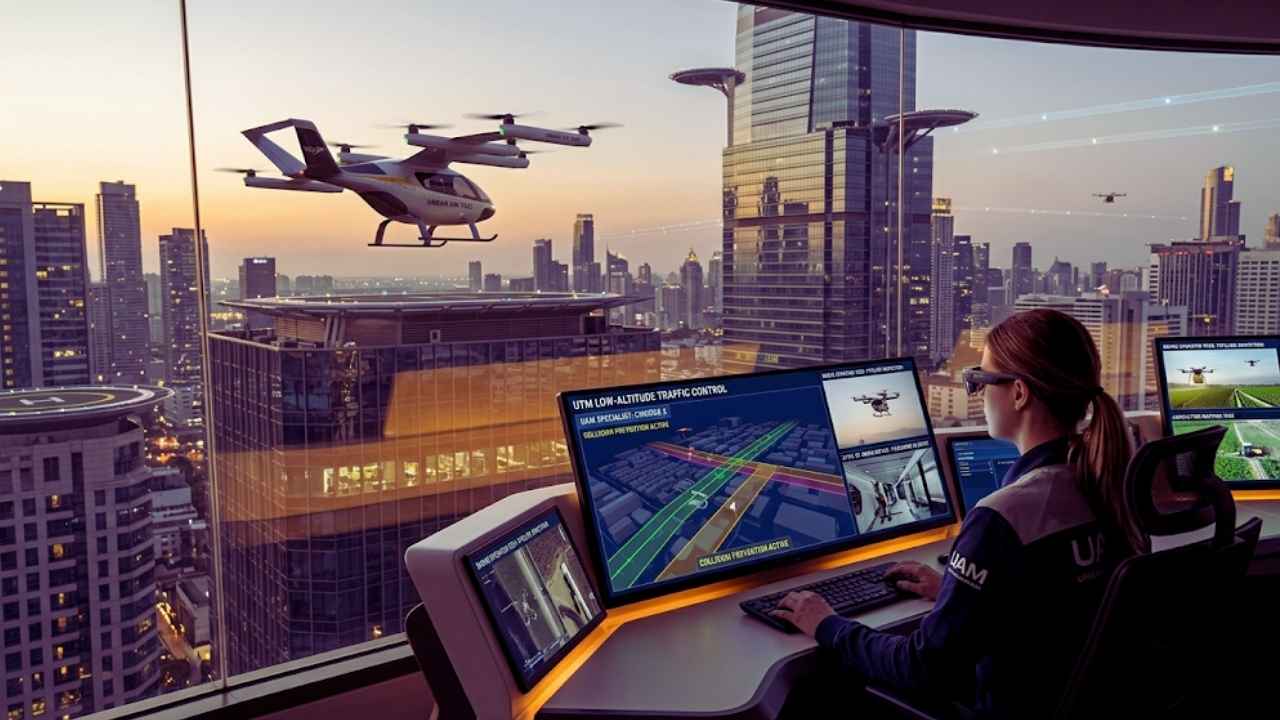
Unmanned aerial vehicles, commonly known as drones, have moved far beyond photography and hobbyist flying. Commercial drone operators are now used for pipeline inspections, agricultural mapping, search and rescue operations, and urgent medical deliveries. Beyond small drones, the industry is rapidly preparing for the launch of electric vertical takeoff and landing vehicles.
These are essentially flying electric taxis designed for congested urban environments. Companies are currently developing the physical infrastructure, air traffic management systems, and piloting protocols for these new vehicles. Getting involved in urban air mobility now means you will be a pioneer in the next great leap in human transportation. You will be helping to draft the rules for how these vehicles integrate into existing city airspaces safely and efficiently.
|
Emerging Field |
Core Technology |
Primary Use Case |
|
Commercial Drones |
Unmanned remote piloting |
Infrastructure inspection and delivery |
|
eVTOL Aircraft |
Electric vertical takeoff |
Urban air taxi services |
|
Drone Traffic Control |
Low altitude radar management |
Preventing urban airspace collisions |
Aviation Sustainability Experts
The industry is under immense global pressure to reduce its carbon footprint. Airlines and manufacturers are pledging to reach net zero emissions by 2050, which requires a monumental shift in how planes are powered and operated. This pressure has given rise to the sustainability expert. These professionals work on developing and implementing sustainable aviation fuels, optimizing flight routes to reduce fuel burn, and advising airlines on massive carbon offset programs.
If you have a background in environmental science, chemistry, or corporate sustainability, the industry desperately needs your expertise to help them transition to a greener future. The role involves analyzing massive datasets on emissions, working with fuel suppliers to test new bio fuels, and ensuring airlines comply with strict new international environmental regulations.
|
Sustainability Focus |
Professional Goal |
Impact on Industry |
|
Sustainable Fuels |
Developing plant based jet fuel |
Massively reduces carbon emissions |
|
Route Optimization |
Using AI for direct flight paths |
Saves millions of gallons of fuel annually |
|
Carbon Offsetting |
Investing in green global projects |
Helps airlines reach net zero targets |
Step-by-Step Guide to Starting Your Aviation Career
Knowing what jobs are available is only the first part of the journey. Actually breaking into the industry requires a deliberate, step by step approach. The training is rigorous, the regulations are strict, and the financial investment can be significant. Here is exactly how you can navigate the process from day one to your first day on the job.
Step 1: Identify Your Ideal Aviation Path
The very first thing you need to do is an honest self assessment. Do you want to travel constantly, or do you prefer to sleep in your own bed every night? Do you excel at hands on mechanical work, or are you better at customer service and team leadership? If you want to be a pilot, understand that it requires a massive upfront investment of time and money, along with rigorous continuous testing.
If you want to be an engineer, you need to prepare for years of technical study and apprenticeship. If you want to be an air traffic controller, you must have perfect hearing, vision, and the ability to handle high stress situations. Research the day to day realities of your chosen job to ensure it aligns with your long term lifestyle goals. Talk to people already doing the work to get a realistic picture.
|
Career Choice |
Lifestyle Impact |
Financial Investment Needed |
|
Airline Pilot |
Constant travel, irregular hours |
Very high initial training costs |
|
Mechanic |
Shift work, home every night |
Moderate technical school fees |
|
Air Traffic Control |
High stress, shift work |
Low cost, government paid training |
Step 2: Meet Basic Educational and Medical Requirements
Every job in this sector has strict baseline requirements. For most ground, operational, and cabin crew roles, a high school diploma or equivalent is the absolute minimum educational requirement, though a college degree can certainly help you advance into management faster down the line. If you are pursuing a career as a pilot or an air traffic controller, you must pass a specialized medical examination.
For commercial pilots, this is known as a Class 1 Medical Certificate. You need to be examined by an approved medical examiner who will check your vision, hearing, heart health, neurological function, and overall physical condition. It is highly recommended to get your medical certificate before you spend a single dollar on flight training to ensure you are legally allowed to fly commercially. Finding out you have a disqualifying condition after taking out a loan is a terrible situation.
|
Requirement |
Who Needs It |
Purpose |
|
Class 1 Medical |
Commercial Airline Pilots |
Ensures perfect physical health for flying |
|
High School Diploma |
All entry level positions |
Establishes basic educational competency |
|
Background Check |
Everyone with airport access |
Maintains strict national security standards |
Step 3: Choose the Right Training Program or Flight School
Your training provider will shape the foundation of your entire career. If you are becoming a mechanic, look for schools that are officially certified by the regulatory authority in your country, such as the Federal Aviation Administration in the United States or the European Union Aviation Safety Agency in Europe. For aspiring pilots, you generally have two distinct routes.
You can attend a fast track immersive flight academy that takes you from zero experience to a commercial license in about nine to twelve months. Alternatively, you can attend a traditional university that offers a professional flight degree, allowing you to earn your flight ratings alongside a bachelor degree over four years. Fast track programs get you to the airlines quicker to take advantage of the current hiring wave, while university programs offer a broader educational foundation.
|
Training Route |
Time to Complete |
Best Suited For |
|
Fast Track Academy |
9 to 12 months |
Career changers wanting quick airline entry |
|
University Degree |
4 years |
High school graduates wanting a full degree |
|
Trade Apprenticeship |
2 to 3 years |
Aspiring mechanics learning on the job |
Step 4: Secure Funding and Scholarships
Flight training and engineering programs are notoriously expensive. A fast track pilot program can easily cost upwards of one hundred thousand dollars. Fortunately, because the industry is so desperate for talent right now, there are more financial resources available today than ever before. Many major airlines have launched their own in house training academies where they subsidize the cost of training in exchange for a commitment to work for them for a certain number of years.
There are also numerous scholarships offered by organizations promoting diversity, pilot unions, and aerospace manufacturers. Look into specialized loans, government education grants, and tuition reimbursement programs offered by regional airlines to help ease the massive financial burden. Be very careful with high interest private loans and always exhaust your scholarship options first.
|
Funding Source |
How It Works |
Obligation |
|
Airline Cadet Program |
Airline pays partial training costs |
Must work for the airline for several years |
|
Industry Scholarships |
Grants from aviation foundations |
None, free money based on merit |
|
Specialized Loans |
Deferred payments while in school |
Must be repaid with interest once hired |
Step 5: Gain Experience and Build Your Hours
Graduating from flight school or engineering college is just the beginning. A newly minted commercial pilot usually has around two hundred and fifty flight hours. However, to fly for a regional or major airline in many countries, you need one thousand five hundred hours to earn your transport pilot certificate. To bridge this massive gap, most new pilots become certified flight instructors.
Teaching new students how to fly is the most common and practical way to build hours while earning a steady paycheck. Other hour building jobs include flying skydivers, towing aerial banners, or flying pipeline survey missions. For mechanics, you will need to spend time working as an apprentice under the close supervision of licensed technicians before you can legally sign off on aircraft maintenance yourself. This grind phase builds the practical skills you need to be safe.
|
Hour Building Job |
Description |
Pros and Cons |
|
Flight Instructor |
Teaching students in small planes |
Great pay, but highly repetitive flying |
|
Banner Towing |
Flying low and slow over beaches |
Fun flying, but seasonal work |
|
Survey Pilot |
Flying grid patterns for mapping |
Builds cross country time, but lots of travel |
Step 6: Network and Apply for Airline Placements
The aerospace community is surprisingly small and tight knit. Your professional reputation matters from day one. Treat every single day at flight school or the maintenance hangar like a job interview. Attend industry conferences, join professional organizations, and connect with airline recruiters on professional networking platforms. Many flight schools have direct pipeline agreements with regional airlines. If your school has these partnerships, take full advantage of them immediately.
Airlines regularly host recruitment events and open days for cabin crew and ground staff. Show up professionally dressed, have your resume tailored to highlight safety and customer service, and demonstrate a genuine passion for the work. Staying in touch with your former instructors and classmates is savvy because they will eventually be the ones referring you for major airline jobs later in your career.
|
Networking Strategy |
Action Item |
Expected Result |
|
Industry Conferences |
Attend local aviation expos |
Meet face to face with airline recruiters |
|
Pipeline Agreements |
Enroll in school partnered programs |
Guarantees an airline interview upon graduation |
|
Online Platforms |
Build a professional digital profile |
Allows airlines to source you directly |
Salary Expectations for Aviation Professionals in 2026
Compensation across the board has surged significantly due to the ongoing talent shortage and recent union negotiations. While entry level pay used to be a major hurdle that kept people out of the industry, the financial outlook today is incredibly strong and stable. Whether you are fixing engines or flying the plane, the compensation packages reflect the high demand for skilled labor.
Commercial airline pilots at the regional level are seeing unprecedented starting salaries, often boosted by massive signing and retention bonuses. A first officer at a regional carrier can expect to make a very comfortable living right out of training. Once a pilot reaches the rank of captain at a major legacy carrier, especially flying widebody international routes, potential earnings can reach between three hundred and fifty thousand to over half a million dollars annually, depending on seniority and company profit sharing. Maintenance technicians are also seeing a major bump in pay.
Entry level mechanics can expect solid middle class wages, but specialized engineers with type ratings on specific modern aircraft can command premium salaries, often well into the six figures, along with excellent overtime opportunities. Cabin crew salaries vary wildly depending on the airline and the country, but they generally include a base pay plus hourly flight pay, daily per diems for meals while away from home, and excellent health and travel benefits.
|
Profession |
Entry Level Expectation |
Senior Level Potential |
|
Regional Airline Pilot |
$70,000 to $90,000 |
$150,000 plus |
|
Major Airline Captain |
$150,000 to $200,000 |
$350,000 to $500,000 plus |
|
Maintenance Technician |
$50,000 to $70,000 |
$120,000 plus |
Final Thoughts
The aerospace industry is currently offering a rare window of opportunity. With the massive shortage of skilled professionals and the rapid expansion of global fleets, securing your place in the market has never been more achievable. Navigating aviation careers in 2026 requires dedication, financial planning, and a commitment to rigorous training, but the payoff is a highly lucrative, stable, and exciting career.
Whether your goal is to command a commercial jet or manage the intricate systems that keep them flying safely, the industry is waiting for you to take the first step. Jump in now while the hiring doors are wide open.
Frequently Asked Questions (FAQs) About Aviation Careers 2026
What is the highest paying job in aviation?
The highest paying job is generally a senior captain flying widebody aircraft for a major international airline. With decades of seniority, high hourly flight rates, per diems, and company profit sharing, these pilots can earn upwards of half a million dollars a year. Other exceptionally high paying roles include aerospace engineering directors, chief maintenance officers, and senior air traffic controllers at high volume radar facilities.
Do I need a college degree to become a pilot in 2026?
No, a traditional four year college degree is no longer a strict requirement to become an airline pilot. In the past, major legacy airlines required a bachelor degree to even secure an interview. However, due to the severe pilot shortage, nearly all major airlines have dropped the degree requirement completely. They are now focusing entirely on your flight experience, your regulatory certifications, your safety record, and your performance in flight simulators during the interview process.
How long does it take to become a commercial pilot?
The timeline depends entirely on the training route you choose. If you enroll in an accelerated, full time flight academy, you can earn your commercial pilot license and flight instructor certificates in about nine to twelve months. After that, it typically takes another one and a half to two years of working as a flight instructor to build the required one thousand five hundred flight hours needed to fly for a commercial airline. Expect the journey from day one to sitting in an airline cockpit to take about two and a half to three years.
Is it too late to start an aviation career at 30 or 40?
Absolutely not. The industry is a fantastic place for a second career. Airlines and corporate flight departments often prefer older candidates because they bring maturity, life experience, and proven decision making skills to the job. The mandatory retirement age for commercial airline pilots is currently 65 in most jurisdictions. If you start your training at 40, you still have over twenty years of a highly lucrative flying career ahead of you.
What are the vision requirements for pilots and air traffic controllers?
You do not need naturally perfect vision to pass an aviation medical exam. For a Class 1 Medical Certificate, your vision simply needs to be correctable to 20/20. Wearing glasses or contact lenses is perfectly acceptable for both pilots and air traffic controllers, provided they effectively correct your sight to the required legal standard. Color blindness, however, can be a disqualifying factor for certain specific operational roles depending on the severity.
How do airlines verify candidates during the hiring shortage?
Even with a massive shortage, airlines do not compromise on safety or background checks. They utilize rigorous simulator evaluations, psychological screening, and deep background investigations. Many carriers now employ artificial intelligence tools to run initial candidate profile screenings to ensure flight hours match certified logbooks before extending a conditional offer of employment.