

Understanding how a company actually makes money can sometimes feel like trying to solve a puzzle. You download a free app, use it every single day, and naturally wonder how the developers afford to pay their rent. Or you walk into a store, see a physical product sold at a surprisingly low price, and question how the manufacturer stays afloat.
The answer to these mysteries always lies in the underlying framework the founders chose to build upon. In today’s fast-paced economy, having a great product simply is not enough to guarantee success. You need a highly strategic path to generate revenue, manage operating costs, and deliver real value to your target audience. By pulling back the curtain on these financial engines, we can see exactly how different industries operate, scale, and survive over the long haul. Whether you are an aspiring entrepreneur trying to launch a startup, or just a curious consumer, learning about the different types of business models will completely change how you view the brands you interact with every day.
What Is a Business Model?
At its core, a business model is simply a company’s master plan for profitably operating in the real world. It outlines exactly how a company creates value, delivers that value to its customers, and captures financial value in return. You can think of it as the engine inside a car; the exterior might look flashy, but without a working engine, you are not going anywhere.
If you build a revolutionary piece of software but cannot figure out how to charge users for it without driving them away, your company will fail. A clear plan identifies your target audience, clarifies the specific problem you are solving for them, and maps out the exact revenue streams that will cover your operational costs.
|
Component |
Description |
Why It Matters |
|
Value Proposition |
The unique solution or benefit your product offers to consumers. |
It gives people a reason to buy from you instead of your competitors. |
|
Target Audience |
The specific group of people or companies you are trying to reach. |
Trying to sell to everyone usually means you end up selling to no one. |
|
Revenue Streams |
The specific ways your company takes in money from its customers. |
This dictates your cash flow and determines if the company can survive. |
|
Cost Structure |
The fixed and variable expenses required to keep the business running. |
If your costs consistently exceed your revenue, the business will fail. |
A well-crafted framework connects the product you are selling to the customer who wants to buy it while ensuring the math actually works. You have to consider your pricing strategy, your marketing channels, and your customer acquisition costs all at once. If it costs you fifty dollars in advertising to acquire a single customer, but that customer only spends twenty dollars on your product, your model is fundamentally broken. Fixing these leaks early on is the secret to building a sustainable company.
12 Types of Business Models Explained
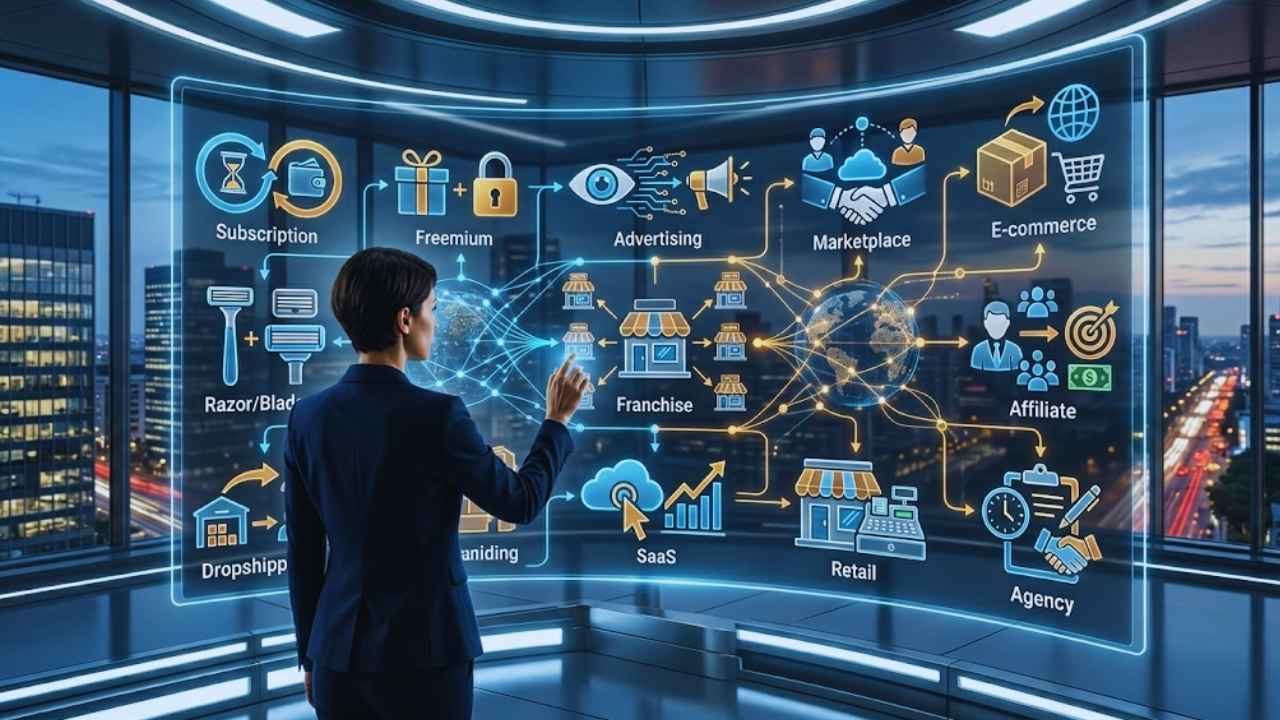
There is no single correct way to run a company, which is why we see so many different types of business models thriving in the modern economy. Different products, industries, and customer bases require entirely different approaches to generating income. Choosing the right structure depends heavily on how much upfront capital you have, the nature of the product you are selling, and the specific habits of your target audience. Below is a detailed breakdown of the twelve most common and effective approaches companies use to generate revenue today.
|
Model Name |
Core Revenue Source |
Ideal Product or Service Type |
|
Subscription |
Recurring monthly or yearly fees |
Software, digital media, curated physical goods |
|
Freemium |
Premium upgrades from free users |
Mobile apps, productivity software, digital tools |
|
Advertising |
Selling audience attention to brands |
Social media platforms, search engines, news sites |
|
Marketplace |
Transaction fees or commissions |
Peer-to-peer services, freelance platforms, rentals |
|
E-commerce |
Direct sales of physical goods |
Consumer brands, apparel, electronics, cosmetics |
|
Razor and Blades |
High-margin consumable refills |
Printers, coffee machines, shaving products |
|
Franchise |
Upfront fees and ongoing royalties |
Fast food, hotels, local service businesses |
|
Affiliate |
Commissions on referred sales |
Blogs, product review sites, influencer channels |
|
Dropshipping |
Arbitrage on physical products |
Trend-based consumer goods, niche accessories |
|
SaaS |
Cloud software subscriptions |
B2B enterprise tools, customer relationship managers |
|
Retail |
Wholesale to retail markups |
Groceries, department stores, traditional storefronts |
|
Agency |
Billable hours or project fees |
Marketing, consulting, legal, specialized services |
1. The Subscription Model
The subscription approach has completely taken over the digital and physical world over the last decade. In this setup, customers pay a recurring fee to maintain continuous access to a product or service. This is incredibly attractive to business owners because it creates predictable, recurring revenue. Instead of constantly hunting for new customers to make a one-time sale, you focus on keeping your current users happy while slowly adding new ones.
For the consumer, the appeal is convenience. Rather than paying a massive upfront cost to own a library of movies or a software license, they pay a small monthly fee. The biggest challenge here is managing churn, which is the percentage of people who cancel their accounts each month. If your churn rate gets too high, your company will bleed money. To survive, you have to constantly update your offerings and remind users why they are paying you every thirty days.
2. The Freemium Model
This is a brilliant customer acquisition strategy heavily used in the tech industry. You offer a basic, somewhat limited version of your product entirely for free to eliminate the barrier to entry. Millions of people can download your app or use your software without ever opening their wallets. Once they rely on your tool for their daily workflow, you offer premium upgrades that unlock better features, remove ads, or increase storage limits.
The psychology behind this is incredibly powerful. When people invest their time into a free tool, they build habits around it. When they eventually hit a usage limit, paying a small fee feels like a natural next step rather than a forced sale. The tricky part is balancing the free tier. If you give away too much, no one will ever pay you. If you give away too little, people will abandon the app before they see its true value.
3. The Advertising Business Model
If you have ever wondered how major search engines and social media apps make billions of dollars without charging you a dime, this is the answer. In this framework, the user is not the paying customer; the user’s attention is the actual product being sold. Companies build massive, highly engaged audiences by offering free content, addictive algorithms, or incredibly useful search tools.
Once they have your attention, they sell access to your screen to third-party advertisers. The real money in 2026 comes from targeted data. Advertisers pay top dollar to show their products to very specific demographics. A fitness brand will pay a premium to show ads specifically to people who watch workout videos. While this can be wildly profitable, it requires a massive volume of daily traffic, making it a very difficult strategy for a brand new startup to pull off.
4. The Marketplace and Peer-to-Peer Model
A marketplace company does not actually own the inventory it sells. Instead, it acts as a digital middleman, providing a secure platform where buyers and sellers can find each other. The company generates revenue by taking a small percentage cut or charging a flat fee on every transaction that happens on the platform.
This structure is highly scalable because you do not have to manufacture products, rent warehouses, or ship boxes. Your only job is to maintain the website, build trust, and handle customer disputes. However, getting a marketplace off the ground is notoriously hard because of the chicken-and-egg problem. Buyers will not visit a site with no sellers, and sellers will not list items on a site with no buyers. Overcoming that initial hurdle requires brilliant marketing.
5. The E-commerce and Direct-to-Consumer Model
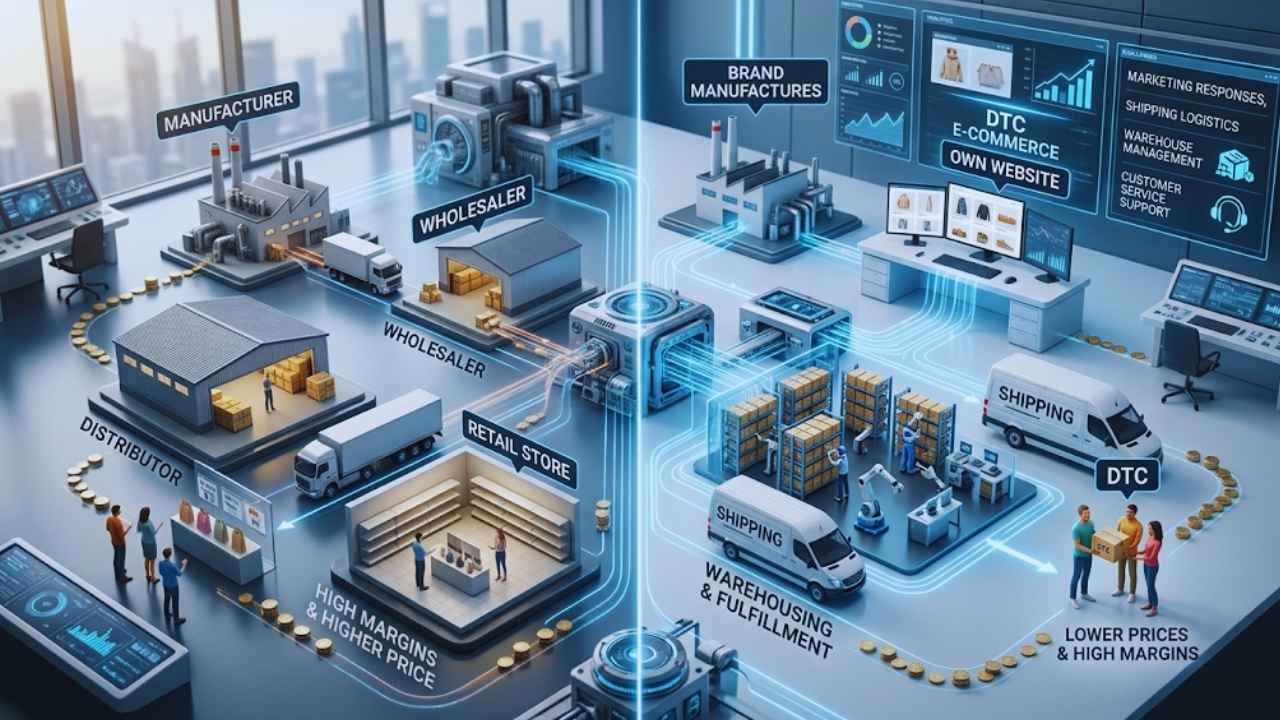
E-commerce is simply selling goods over the internet, but the direct-to-consumer angle has completely reshaped retail. In a traditional supply chain, a manufacturer sells to a wholesaler, who sells to a distributor, who sells to a retail store, who finally sells to you. Every single person in that chain takes a cut of the profit, which drives the final price up.
Direct-to-consumer cuts out all of those middlemen. A brand manufactures a product and sells it directly to you through their own website. This allows them to keep higher profit margins or offer the product at a much lower price. The downside is that the brand is now entirely responsible for their own marketing, shipping, warehousing, and customer service. They cannot rely on foot traffic at a local mall to get sales.
6. The Razor and Blades Model
This is a classic pricing tactic where a company sells a primary item at a very low price, or even at a loss, just to lock you into their ecosystem. The true profit comes from selling the high-margin consumable goods that you need to make the primary item work. The name comes from the practice of selling cheap razor handles and expensive replacement blades.
You see this everywhere once you know what to look for. Video game consoles are often sold near the cost of manufacturing, but the companies make billions taking a cut of every game sold on the system. Coffee pod machines are incredibly cheap to buy, but you are forced to buy their specific proprietary coffee pods for years. The secret to making this work is ensuring competitors cannot easily make cheap knock-off versions of your consumable refills.
7. The Franchise Model
Franchising is a rapid expansion strategy that relies on outside capital. Instead of a parent company spending millions of dollars to open thousands of locations themselves, they sell the rights to use their brand name and operational playbook to independent entrepreneurs. These independent operators are called franchisees.
The parent company makes money by charging a hefty upfront franchise fee, plus an ongoing royalty percentage based on the location’s gross sales. This allows a brand to expand globally with very little financial risk. The franchisee provides the money to build the store and handles the daily headache of hiring local staff. The biggest risk here is maintaining quality control across the globe.
8. The Affiliate Marketing Model
Affiliate marketing is a performance-based revenue system. A company pays a commission to an external partner for driving traffic or generating sales through a unique tracking link. When a customer clicks that specific link and buys a product, the partner earns a percentage of the profit.
For the company selling the product, this is virtually risk-free marketing. They only pay for actual results rather than hoping a billboard generates sales. For the affiliate partner, it is a great way to monetize a blog or a social media following without having to deal with inventory, shipping, or customer complaints. Success here relies entirely on the affiliate maintaining genuine trust with their audience.
9. The Dropshipping Model
Dropshipping exploded in popularity because it requires almost zero upfront cash to start. A merchant sets up an online store and lists products for sale, but they do not actually hold any inventory. When a customer places an order, the merchant automatically forwards the order details to a third-party supplier, who ships the product directly to the customer’s doorstep.
The merchant keeps the difference between the retail price and the wholesale cost. While it sounds incredibly easy, the market is aggressively competitive. Profit margins are razor-thin, and you have absolutely no control over product quality or shipping times. If a supplier takes three weeks to ship a damaged item, the merchant is the one who has to deal with the angry customer and process the refund.
10. Software as a Service Model
The software as a service approach completely changed the technology sector. Years ago, you had to drive to an electronics store, buy a physical disk in a cardboard box, and install it on your computer. Today, software is hosted in the cloud and accessed through a simple web browser. You essentially rent the software by paying a monthly or annual fee.
This provides massive benefits on both sides. Users do not have to worry about complicated installations or computer hardware requirements, and they always have the most updated version. Developers get a steady, predictable stream of recurring revenue and can fix bugs for every single user at the exact same time without shipping out physical update disks.
11. The Retail Model
This is the oldest and most familiar form of commerce in human history. A retailer buys goods in massive bulk quantities at a low wholesale price, places them in a physical store or an online catalog, and sells them individually to consumers at a higher retail price.
Retailers essentially act as curators. You pay a premium for the convenience of walking into one grocery store to buy milk, vegetables, and laundry detergent, rather than having to visit three separate farms and a chemical plant. Success in retail requires mastering supply chain logistics, inventory management, and predicting local consumer demand so you do not get stuck with unsold goods.
12. The Agency and Consulting Model
While most companies sell physical or digital products, agencies and consultants sell human time and specialized expertise. Clients hire these firms to solve complex problems or execute tasks that their internal employees cannot handle. An agency typically does the actual work, like designing a website or running an ad campaign, while a consultant provides high-level strategy and tells the client what they should do.
You can generate revenue by charging an hourly rate, a monthly retainer fee, or a flat project rate. The main advantage is that it requires almost zero money to start; you just need a laptop and a brain full of specialized knowledge. The major drawback is scalability. You only have so many hours in a week, so the only way to grow revenue is to drastically raise your prices or hire more employees.
How to Choose the Right Business Model for Your Company
Picking the perfect framework is not about finding a magic formula that works for everyone. It is about deeply understanding what you are selling, who you are selling it to, and how much money you have in your bank account right now. You have to align your operational strategy with your market reality. A structure that works perfectly for a global software company will instantly bankrupt a local bakery. You need to evaluate your risk tolerance and your long-term vision before committing to a specific path.
|
Factor to Consider |
Why It Is Important |
How It Impacts Your Choice |
|
Initial Capital |
Determines what you can afford to launch. |
Low capital pushes you toward dropshipping or consulting; high capital allows for retail or DTC. |
|
Customer Type |
B2B customers buy differently than B2C consumers. |
B2B favors SaaS and agency models; B2C favors e-commerce and freemium. |
|
Product Lifespan |
How often does the customer need to buy this? |
Daily use products fit subscriptions; one-off purchases fit traditional retail. |
|
Scalability Goals |
How big do you eventually want this company to be? |
Agencies are hard to scale; software and marketplaces scale infinitely. |
First, look at your audience. Are you selling to large enterprise businesses or individual teenagers? Businesses expect dedicated support and monthly invoices, making software or agency structures ideal. Teenagers want quick, low-cost convenience, leaning heavily toward freemium apps or dropshipping. Second, evaluate your product. If people only need to buy your product once every ten years, a subscription model makes absolutely no sense. Ultimately, the best companies remain flexible and often blend two or three of these concepts together to create multiple streams of income.
Final Thoughts
At the end of the day, understanding the different types of business models is the ultimate cheat code for navigating the modern commercial landscape. You do not have to reinvent the wheel to build a highly successful company. You just need to observe the frameworks that have already proven themselves in the market, pick the one that aligns best with your specific product and audience, and execute it relentlessly.
Remember that your initial choice is not a permanent life sentence. Many of the biggest companies in the world started with one specific approach and pivoted to something completely different once they understood their customers better. The most important step is simply getting started. Analyze your resources, pick the framework that makes the most logical sense for your current situation, and adjust your sails as you gain real-world experience.
Frequently Asked Questions (FAQs) About Business Models Explained
Can a company use more than one business model at the same time?
Absolutely. In fact, relying on a single revenue stream is incredibly risky. Apple sells physical hardware directly to consumers, runs a digital marketplace where they take a cut of app sales, and charges a recurring subscription for cloud storage. Diversifying your income makes your company much more resilient to sudden market crashes.
What are the most profitable types of business models?
Profitability depends entirely on how well you execute, but software as a service usually boasts the highest profit margins. Once you build the initial software, the cost to duplicate it and sell it to a new customer is essentially zero. This allows revenue to scale exponentially while operating costs remain relatively flat.
Can you transition from one model to another without losing customers?
It is possible, but it is dangerous. We have seen many software companies transition from a one-time purchase model to a monthly subscription model, which often angers their original customer base. If you decide to pivot, you have to clearly explain why the change benefits the customer, and you often have to grandfather your old users into their original pricing to prevent massive backlash.
How is AI impacting traditional business models in 2026?
AI is fundamentally changing how agencies, consultants, and customer service departments operate. We are seeing a massive rise in AI chatbot service businesses that completely replace traditional human call centers. Companies that sell human time are having to pivot to selling strategic oversight, because AI can now execute routine tasks in seconds that used to take junior employees hours to complete.