

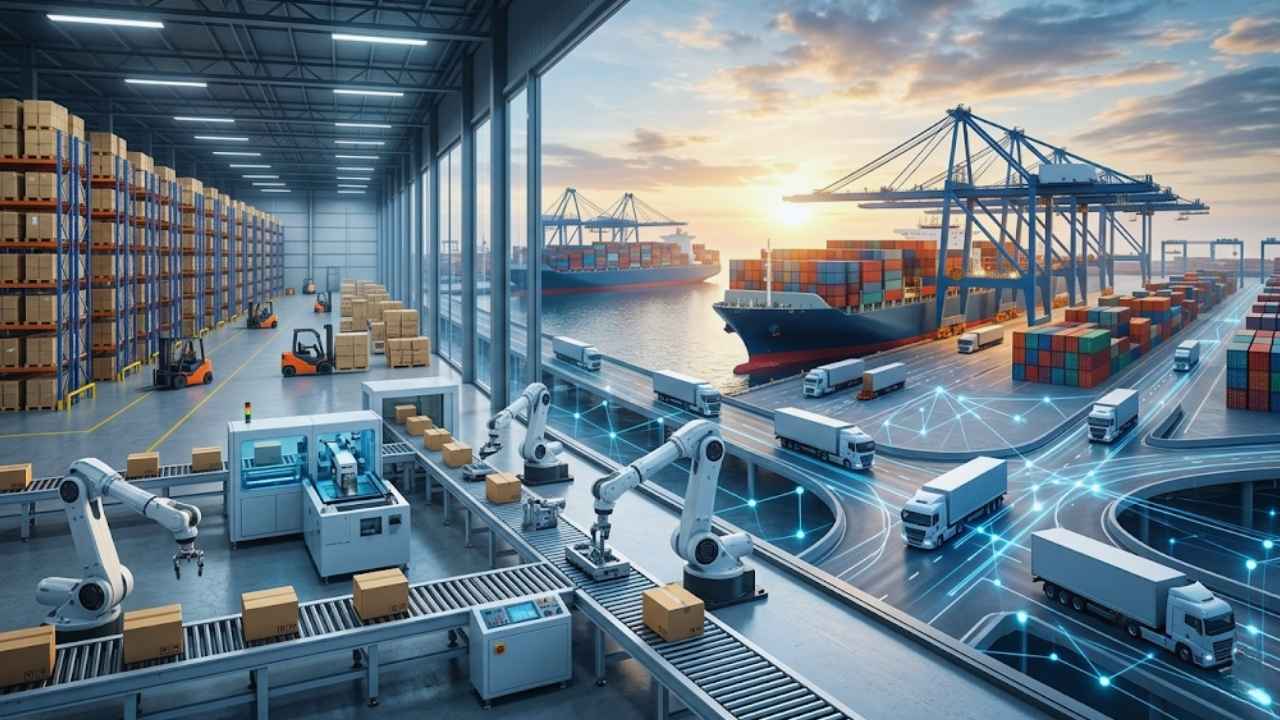
Ever look at a 30-pack of paper towels at a warehouse club and wonder how they sell it for less than your local corner shop pays wholesale? Or how tech giants hand out enterprise software practically for free?
It comes down to brutal, simple math. Make more of something, and it costs less to produce each piece. You take massive upfront bills and spread them across millions of products or users. Getting economies of scale explained doesn’t take an economics degree. You just need to look at how pure volume drops the price tag. When companies crank up their output, their cost per unit plummets. This is the exact playbook global heavyweights use to starve smaller competitors out of the market and capture massive profits.
But the playbook is rewriting itself right now. Generative AI inference costs, sky-high cloud bills, and supply chain shifts are breaking the old rules. Let’s look at exactly how scale actually works today, why it matters, and what happens when a company gets too bloated to survive.
The Core Concept: Economies of Scale Explained
To really get how big companies win on cost, you have to split their expenses into two distinct buckets: fixed costs and variable costs. Fixed costs are the checks you write no matter what. Office rent, heavy manufacturing machinery, and the salaries of your core engineering team. Variable costs shift based on your actual output. Think raw materials, cardboard boxes, and per-query AI API calls.
When you ramp up production, your variable costs naturally rise. But your fixed costs stay exactly the same. Because you push more products out the door or sign up more users, the fixed cost attached to each individual item shrinks.
Say you spend $500,000 coding a new B2B SaaS platform. If you land one enterprise client, it cost you half a million dollars to serve that user. If you scale up to 10,000 customers, your fixed development cost drops to 50 bucks a head. That is the engine of scale. You take the initial financial hit, and every sale after that is practically pure profit.
|
Cost Category |
How It Acts During Hyper-Growth |
Real-World Example |
|
Fixed Costs |
Stays totally flat regardless of volume |
Global server leases, core R&D, office rent |
|
Variable Costs |
Rises directly as output increases |
Raw materials, shipping fees, AI inference calls |
|
Cost Per Unit |
Drops incredibly fast as volume jumps |
Paying $50 per user at 10k users vs $5 at 100k |
Internal vs. External Scale Advantages
Scale rarely happens by accident. The financial perks come from deliberate inside moves and massive outside industry shifts. When you want economies of scale explained practically, look at the internal levers companies pull. Internal scale happens when a specific business gets larger and sharper.
They buy in massive bulk to force suppliers to drop prices. They score cheap corporate loans because banks see them as safe bets. They hire specialized wizards—like a dedicated VP of Supply Chain—who spot and kill inefficiencies a busy founder simply misses.
External scale happens to an entire industry or zip code. Think about tech startups crowding into Silicon Valley or the dense hardware manufacturing hubs in Shenzhen. Because so many similar companies cluster together, a massive pool of specialized engineers, suppliers, and lawyers builds up around them. A startup opening shop in one of these hubs instantly taps into that grid, lowering their baseline cost to hire talent or find parts.
|
Scale Type |
Where the Advantage Comes From |
How It Helps the Bottom Line |
|
Internal Purchasing |
Buying materials in massive volume |
Negotiating lower wholesale prices on contracts |
|
Internal Financial |
Large corporate asset backing |
Securing lower interest rates on business loans |
|
External Infrastructure |
Industry clustering in one region |
Shared access to specialized roads or fast internet |
|
External Labor |
Concentrated talent pools |
Spending less time and money on recruiting |
How Software and Cloud Giants Win on Cost in 2026
We see this play out everywhere, but the digital world takes it to extremes. Once a tech company crosses a certain size, its cost advantage builds an invisible wall that locks competitors out. However, a quick look at 2026 earnings reports shows the traditional rules of software scale are cracking.
The AI Margin Squeeze in B2B SaaS
Software used to be the ultimate scale machine. Writing code costs a fortune, but adding one more user costs almost nothing. Just a few cents for compute and bandwidth. Classic SaaS businesses routinely bragged about 80% to 90% gross margins. AI completely wrecked that math. AI-first software relies on heavy computing power. Every time a user runs a prompt or an agent completes a task, it triggers a direct, variable cost for computing power (inference).
According to 2026 industry benchmarks, while traditional SaaS fights to hold a 75% margin, AI-native platforms average closer to 52%, with some scaling AI startups bleeding down to 25% margins. Inference costs easily eat up 4% to 9% of total revenue. Heavy users cost the company real money, which totally breaks the classic flat-fee subscription model.
To fight back, SaaS leaders are shifting how they scale:
- Migrating to Local Models: Dropping expensive external APIs for smaller, locally hosted open-source models to cap variable costs.
- Usage-Based Billing: Forcing heavy users to pay for the exact compute they burn.
- Embedded Fintech: Baking payment processing directly into the software. Vertical SaaS companies that nail this can multiply their revenue per user simply by capturing transaction fees.
Cloud Hyperscalers and the 72% Discount
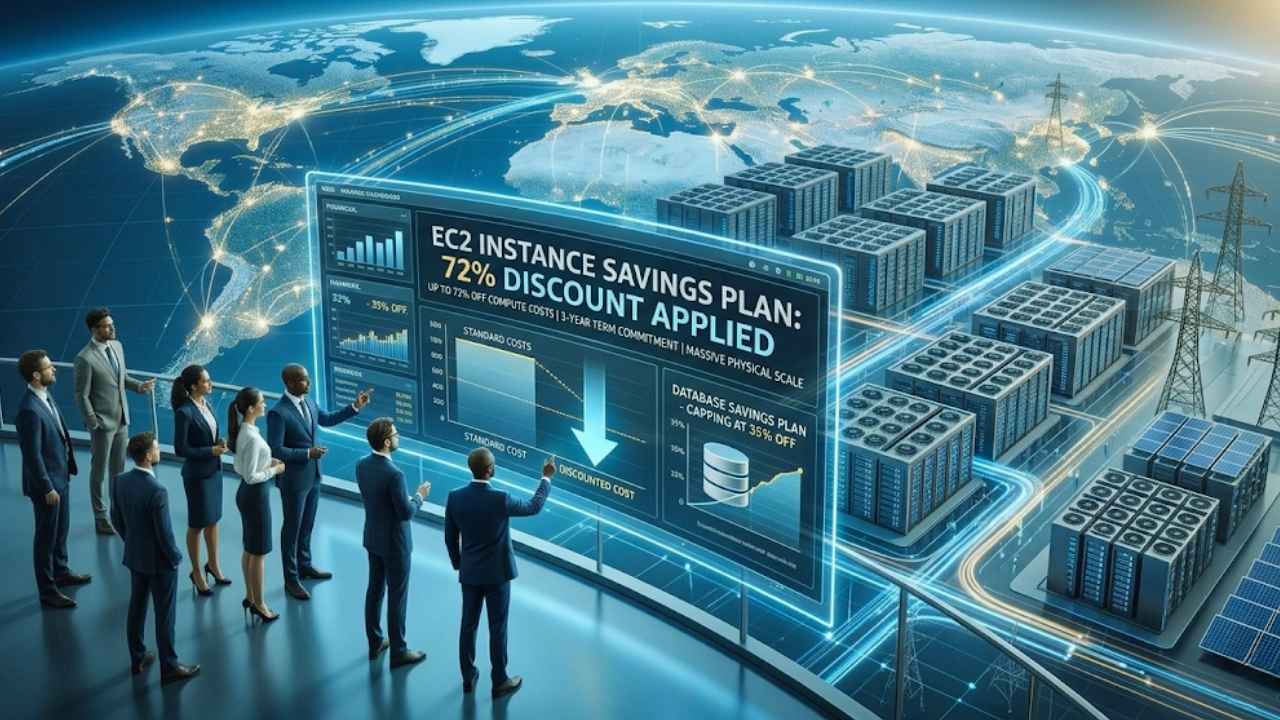
Cloud providers like AWS, Microsoft Azure, and Google Cloud operate on an unbelievable physical scale. They build global networks of data centers and spread the real estate and hardware costs across millions of clients.
This gives them insane pricing power to lock in cash flow. AWS uses its massive capacity to offer incredibly steep discounts. For example, in 2026, an AWS EC2 Instance Savings Plan slashes compute costs by up to 72% if a company commits to a 3-year term. They even introduced Database Savings Plans capping at 35% off. No startup can buy servers cheap enough to compete with a 72% wholesale discount.
|
Tech Sector |
The 2026 Playbook for Scale |
The Financial Win |
|
Vertical SaaS |
Adding embedded fintech to software |
Capturing payment fees to multiply user revenue |
|
AI Software |
Moving from APIs to local models |
Pushing gross margins back above 60% |
|
Cloud Computing |
Massive global hardware buying |
Offering 72% discounts to lock in enterprise clients |
Physical World Scale: Logistics and Mega-Factories
In the physical world, scale relies on aggressive automation and massive purchasing power. The barriers to entry here are literal concrete and steel.
Electric Vehicles and Gigafactories
Building an electric vehicle factory from scratch costs billions. But by building massive “Gigafactories,” top automakers spread their heavy R&D and robotic tooling costs over millions of cars.
Big producers run long, uninterrupted assembly lines. Through pure automation and volume, top EV makers drive the unit cost of sedans down dramatically. By building their own batteries and buying lithium in bulk, they box out newer EV startups who have to pay retail prices for parts off the shelf.
Retail Supply Chain Consolidation
Global e-commerce giants win by owning their distribution networks. They buy goods in such massive quantities that suppliers happily hand over steep wholesale discounts just to stay on the shelves.
By running automated mega-warehouses and securing deep ocean freight discounts, global retailers slash the shipping cost per package. They pay a fraction of what a standard mom-and-pop shop pays to ship a single box.
|
Physical Industry |
The Playbook for Scale |
The Financial Win |
|
Auto Manufacturing |
Vertical integration and Gigafactories |
Cheaper per-unit assembly and battery costs |
|
Retail Logistics |
Automated mega-warehouses |
Securing bulk freight discounts |
|
Consumer Electronics |
Centralizing production in tech hubs |
Accessing low-cost labor and instant components |
The Breaking Point: When Bigger Isn’t Better
Growth looks great on a spreadsheet, but it hides a massive trap. We can’t have economies of scale explained without looking at the dark side. Economists call this “diseconomies of scale.” I just call it corporate bloat.
At a certain size, companies hit a wall. Communication snaps across global time zones. A simple product update that used to take an afternoon now requires three weeks, four oversight committees, and a pointless slide deck. When a company gets too bureaucratic, efficiency dies. Suddenly, the total cost to produce a single unit starts climbing back up.
Workers in massive corporations feel entirely disconnected from the final product. They become cogs in a machine. That breeds low morale, low productivity, and high turnover. Management loses touch with the factory floor and the customer service inbox. When a business hits this bloated stage, sharp, agile competitors easily step in and steal their customers.
|
Warning Sign |
The Root Cause |
The Financial Impact |
|
Slow Decisions |
Too much middle management |
Missed opportunities and wasted payroll |
|
Communication Breakdown |
Siloed departments hiding data |
Duplicated work and costly errors |
|
Low Morale |
Staff feeling disconnected from the mission |
High turnover and climbing hiring costs |
How Small Businesses Compete Against the Giants
If giant corporations hold an unbeatable cost advantage in materials and shipping, how do smaller businesses survive? Simple: stop fighting on price.
Trying to beat a massive international corporation in a price war is financial suicide. You will never outscale them. Instead, you win by being everything the giant corporation cannot be.
Niche Specialization
Big companies need a massive, broad audience to feed their scale. They build generic products for the masses. A small business can build a hyper-specific product that solves a painful problem for a niche audience. A global CRM company builds software for everyone; a smart startup builds a CRM exactly for commercial plumbers, complete with specific invoicing tools.
Agility and Premium Quality
Mass production forces companies to use cheaper materials to hold their margins. Small businesses pivot the other way. By using high-end components, offering white-glove support, and moving fast to catch new trends, you can easily charge a premium price. Customers gladly pay more when they get a tailored, superior experience.
|
Competitive Tactic |
Why Big Companies Fail at It |
How Small Businesses Win |
|
Niche Specialization |
They need a broad mass-market audience |
Solve a painful problem for a tight niche |
|
Premium Quality |
High-volume production relies on cheap parts |
Use high-end materials and charge a premium |
|
Extreme Agility |
Corporations move slowly due to red tape |
Adapt to fast-moving industry trends instantly |
Final Thoughts
Getting economies of scale explained shows exactly why the big players keep dominating the global market. By spreading their massive fixed costs over millions of units—whether those units are API calls or electric vehicles—they create a pricing floor that new guys just can’t survive. Volume equals power.
But scale isn’t magic. As AI changes the math for software margins, and corporate bloat bogs down massive institutions, growth demands strict operational discipline. The key to winning long-term isn’t just getting as big as possible. It is growing smart enough to keep your variable costs down while staying fast enough to actually keep your customers happy.
Frequently Asked Questions (FAQs) About Economies of Scale Explained
How does the “Network Effect” differ from economies of scale?
Scale lowers your cost to produce a product as you get bigger. The network effect actually increases the value of your product as you get bigger. Think of a social media app: it doesn’t just get cheaper to run per user, it actually becomes a better product because more people are on it to interact with.
Can a total monopoly suffer from diseconomies of scale?
Absolutely. A monopoly controls the market, but that doesn’t mean it runs efficiently. Without aggressive competition forcing them to innovate, monopolies usually grow bloated, slow, and bureaucratic. Their internal costs skyrocket, even if their gross profits look great on paper due to a lack of market alternatives.
What is the 70-80% rule in cloud infrastructure scaling?
When companies buy AWS Savings Plans, experts use the 70-80% rule. Instead of committing to 100% of their projected server usage, they commit to 70% to 80%. This ensures they max out their discounts on baseline traffic without accidentally paying for server space they don’t end up using if traffic drops.
Do economies of scale apply to pure service-based businesses?
Yes, but they hit a hard ceiling much faster than software or manufacturing. A global consulting firm can scale its marketing and HR costs. But to take on more clients, they still have to physically hire more human consultants. Those high variable labor costs put a hard cap on their scale advantage.