

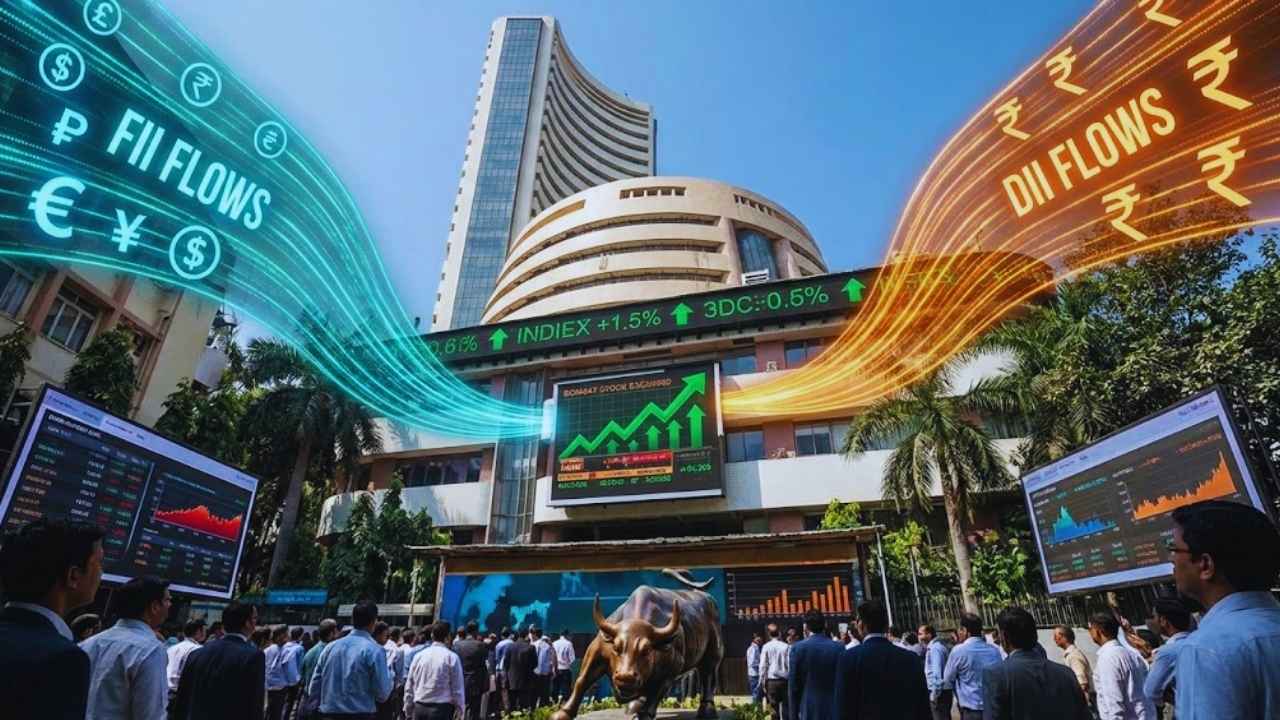
In today’s fast-changing stock market environment, understanding who is buying and who is selling has become very important. Over the past few years, as more people rely on online platforms for market insights, FII DII data has emerged as a useful and reliable indicator of overall market direction. In many cases, it helps investors understand why the market is moving the way it is.
This article explains, in simple terms, what FII and DII data means, how it impacts the Indian stock market, and why tracking institutional activity can make a real difference for investors across experience levels.
What Is FII and DII Data?
Domestic institutional investors are referred to as DII, and foreign institutional investors are referred to as FII. These organisations include large international investment businesses, banks, insurance companies, pension funds, and mutual funds.
The amount of money these institutions buy or sell on the stock market every day is displayed in FII DII data. In essence, it enables you to track the flow of significant and knowledgeable capital. These players frequently have a significant and consistent influence on market trends because they make investments based on data, research, and long-term perspectives.
To put it simply, markets typically remain favourable when FIIs and DIIs make significant purchases. Markets may be under pressure when they sell. It is important to note that many traders and investors in the sector use institutional activity, even though this does not ensure results.
Why Institutional Buying Matters?
Institutional investors control large sums of money. Because of this, their trades can move prices, change trends, and influence market sentiment. In practice, a single day of strong FII buying can increase indices value, while sustained selling can lead to corrections.
Here’s why FII DII data is important today:
- It reflects market confidence or caution
- It helps identify trend strength
- It shows whether new money is entering or exiting the market
- It supports better decision-making alongside price and volume data
Overall, this data enables investors to understand the bigger picture rather than focusing only on short-term price movements.
How FII and DII Behaviour Differs?
FIIs and DIIs often behave differently depending on global and domestic conditions.
FIIs usually react to:
- Global interest rates
- Currency movements
- International market trends
- Risk appetite across global markets
DIIs, on the other hand, are more focused on:
- Domestic economic growth
- Corporate earnings
- Long-term investment opportunities
- Retail investor inflows
In many situations, FIIs may sell due to global concerns, while DIIs step in to support the market. This balance between foreign and domestic institutions often smooths volatility and creates stability over time.
How FII DII Data is Used by Investors?
FII DII data is not a standalone indicator, but it works well when combined with other tools. Many traders use it along with technical indicators such as price trends, volumes, and moving averages to improve their market understanding.
For example, when strong FII buying aligns with positive price movement, it often confirms trend strength. By contrast, if prices rise while institutions are selling, it may signal caution.
For all experience levels, from first-timers to seasoned users, tracking institutional activity makes market behaviour easier to understand and more structured.
Using FII DII Data with VWAP Indicator
To get the most from institutional data, many market participants combine it with tools like the VWAP indicator. VWAP, or Volume Weighted Average Price, helps show the average price at which a stock is traded throughout the day, based on both price and volume.
When institutional buying happens above VWAP, it often signals strong demand. When selling happens below VWAP, it may indicate weakness. Together, FII DII data and VWAP offer a complete and simplified way to view both who is trading and at what price levels.
This combination is flexible, works in different situations, and is widely used across the industry.
Why Tracking Institutional Data Is a Major Shift?
Lately, there has been a clear improvement in how investors approach market analysis. Instead of relying only on tips or news, many now focus on data-based insights. This shift towards institutional tracking is a strong idea and reflects a more mature investment approach.
As new tools and the latest tech make this data easy to access, investors can now analyse market behaviour in real time. This change has improved transparency and helped people make more informed decisions.
In a fast-changing space like the stock market, such tools are ready for the future and can grow with demand.
Final Thoughts
FII DII data, which offers organised and trustworthy institutional insights, is essential for stock market analysis and investment. This data is easily accessible through online platforms like BlinkX, and when combined with tools like the VWAP indicator, it helps better understand the market behaviour. By combining these insights with price research, investors may navigate the market more effectively.