


You want to log your cycle without wondering who else is reading it. Euki is the top pick among period and cycle tracking apps with privacy, since it keeps everything on your phone and scored 10/10 in Mozilla’s July 2026 tests.
Below you’ll find a privacy chart, honest flaws for each app, and a 5-minute lockdown checklist.
Why Your Cycle Data Needs Extra Protection
Here’s the catch: most period apps aren’t covered by HIPAA. That law protects records held by doctors, insurers and health plans, which is why choosing between an HMO, PPO or EPO plan brings privacy rules that a free app download doesn’t.
The legal picture shifted again recently:
- June 18, 2025: A Texas federal court vacated most of the 2024 HIPAA rule that added extra protection for reproductive health records. The appeal was dismissed that September.
- 2024: The FTC updated its Health Breach Notification Rule so more health apps must report breaches to users and the FTC within 60 days.
- Flo case: Flo, Google and Flurry agreed to settlements totaling $59.5 million, and a jury found Meta violated California’s privacy law in August 2025.
Key takeaway: for period and cycle tracking apps with privacy, the safest data is data the company never holds.
Quick Privacy Chart
Here’s how the ten period and cycle tracking apps with privacy compare on the questions that matter most.
|
# |
App |
Where Data Lives |
Account Needed |
Platforms |
Cost |
|---|---|---|---|---|---|
|
1 |
Euki |
Your phone only |
No |
iOS, Android |
Free |
|
2 |
drip. |
Your phone only |
No |
iOS, Android |
Free |
|
3 |
Apple Health Cycle Tracking |
Phone, encrypted iCloud |
Apple ID |
iPhone, Apple Watch |
Free |
|
4 |
Read Your Body |
Phone by default |
No |
iOS, Android |
Free + paid extras |
|
5 |
Mensinator |
Your phone only |
No |
Android |
Free |
|
6 |
Periodical |
Your phone only |
No |
Android |
Free |
|
7 |
Clue |
Cloud (EU, GDPR) |
Optional |
iOS, Android |
Free + Clue Plus |
|
8 |
Natural Cycles |
Cloud (EU, GDPR) |
Yes |
iOS, Android |
Paid |
|
9 |
Flo |
Cloud |
Varies |
iOS, Android |
Free + Premium |
|
10 |
Spot On |
Phone and cloud |
Varies |
iOS, Android |
Free |
Bottom line: the top six never send your cycle to a company server by default. The bottom four trade some privacy for syncing, backups or richer features.
The 10 Best Period and Cycle Tracking Apps With Privacy
1. Euki
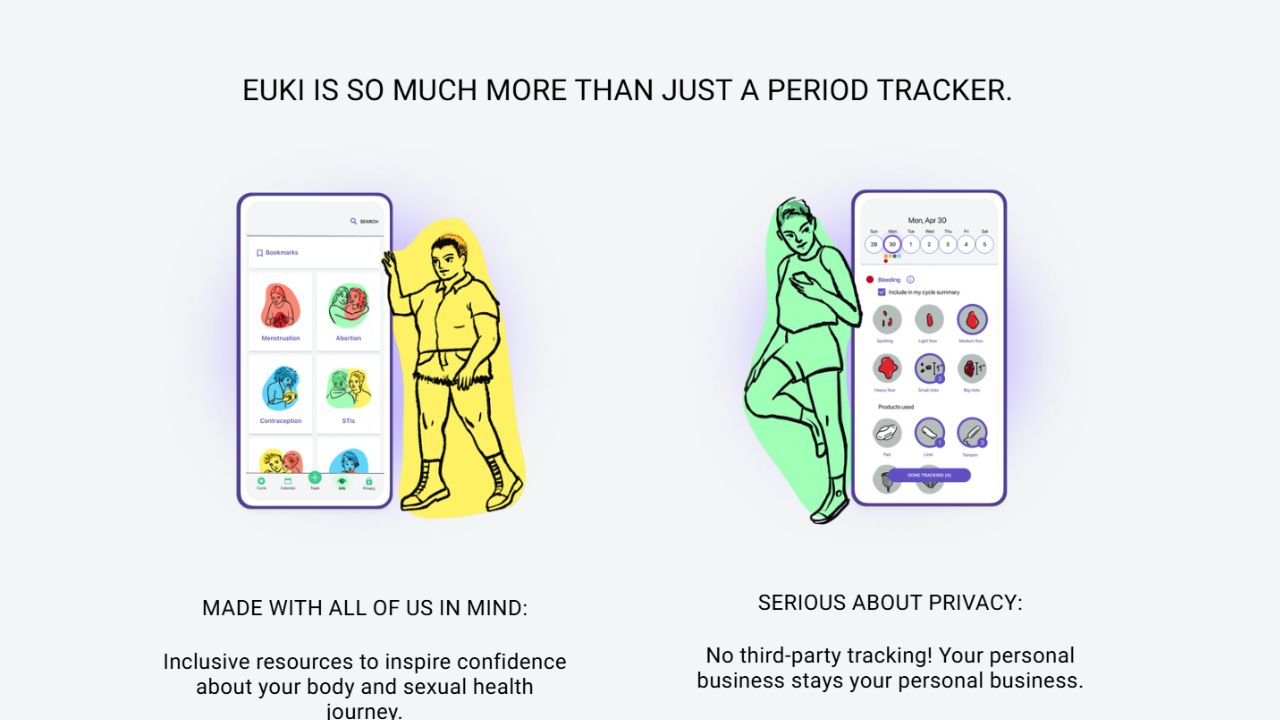
Euki is the gold standard. Mozilla found no third-party tracking in its core features, and your cycle data, symptoms and notes stay on your device with no account required. Picture this: someone pressures you to open the app, so you type a decoy PIN and a fake screen appears instead of your data.
Real flaws users complain about:
- There’s no backup or sync. Lose your phone or forget your PIN, and your history is gone for good.
- App store reviews report bugs, including crashes when editing past logs and calendar glitches.
Who Should Skip This: anyone who needs cloud backup or multi-device sync.
2. Drip
drip. is an open-source, non-commercial tracker that leaves your data on your phone. It uses the symptothermal method, logging temperature, cervical fluid and more, and it explains its math instead of hiding it.
Real flaws:
- The design is plain on purpose. Users who want polished charts and daily tips may find it bare.
- Backups depend on you. You export and import the file yourself.
Who Should Skip This: people who want automatic predictions without logging extra signs.
3. Apple Health Cycle Tracking
Already on iPhone? You may not need a new app. With two-factor authentication on, Cycle Tracking data synced to iCloud is end-to-end encrypted, so Apple can’t read it. You can also export a PDF of your last 12 months for a doctor.
Real flaws:
- It’s Apple-only, so it’s no help if you switch to Android.
- Third-party apps you’ve allowed into Health can read cycle data unless you turn off their access in Settings.
Who Should Skip This: Android users and anyone sharing an Apple ID.
4. Read Your Body
Read Your Body comes from a UK non-profit and is built for fertility awareness charting. It stores data locally by default, and educators from methods like FEMM and Marquette approve it.
Real flaws:
- It doesn’t make predictions on purpose, which surprises casual users.
- The custom setup has a learning curve if you’re new to charting.
Who Should Skip This: anyone who just wants “your period is due Tuesday.”
5. Mensinator
The truth is, sometimes simple wins. Mensinator is a small, open-source (MIT) Android tracker with no sign-up, local storage, and JSON export. The F-Droid download is about 7 MiB and needs Android 8.0 or newer.
Real flaws:
- Android only.
- It tracks periods and basic stats, not fertility signs.
Who Should Skip This: iPhone users or anyone tracking fertility.
6. Periodical
Periodical is another Android-only tracker that keeps data on the device and skips the cloud. It’s a long-time favorite in privacy guides for a reason: it does one job.
Real flaws:
- No iOS version.
- The interface feels dated next to newer apps.
Who Should Skip This: anyone who wants symptom insights or reminders beyond the basics.
7. Clue
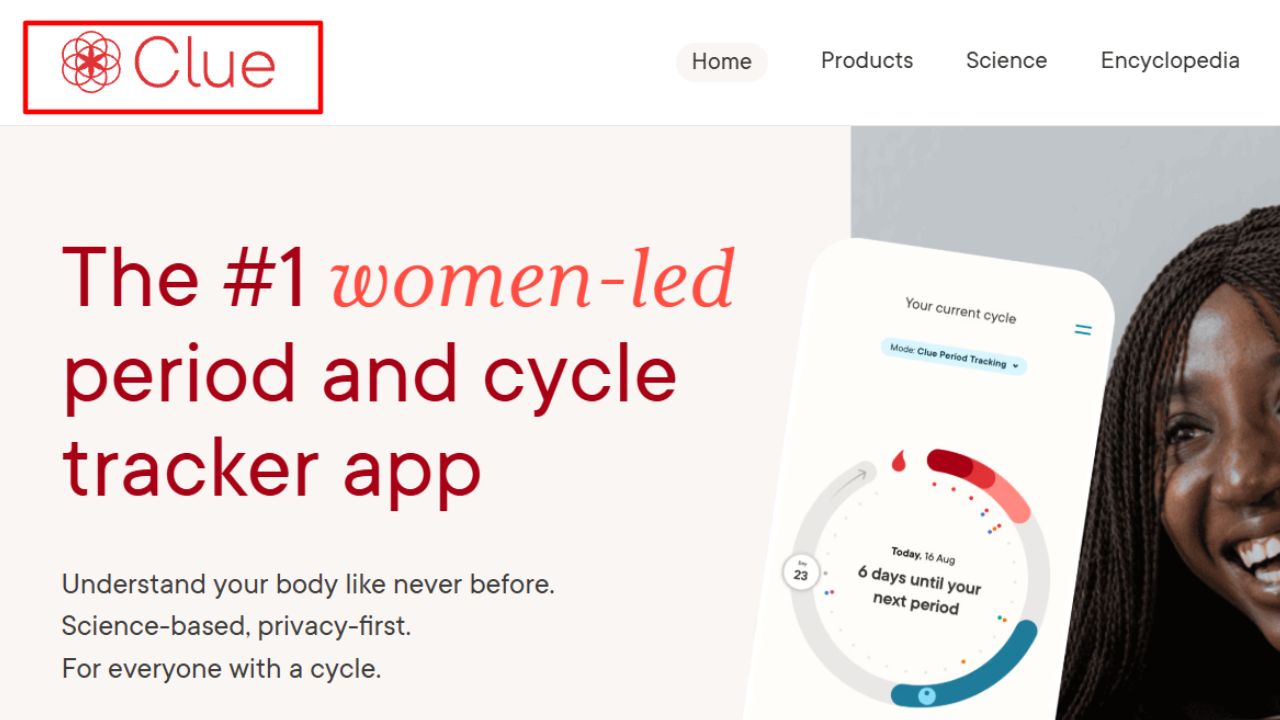
On the flip side, if you want cloud backup and deep insights, Clue is the strongest mainstream choice. It’s based in Berlin, so the GDPR applies, and Clue says it won’t comply with subpoenas for your health data. Mozilla scored it 8/10.
Real flaws:
- Mozilla found internal analytics logging detailed events, and outside providers could still tell your device used Clue.
- It collects a lot of data because its features depend on daily entries.
Who Should Skip This: anyone who wants nothing stored off their phone. Clue’s GDPR setup reflects why Europe often ranks high in lists of countries with the best healthcare, but it’s still a cloud service.
8. Natural Cycles
Natural Cycles is FDA-cleared as birth control, using your temperature to flag fertile days. It’s 93% effective with typical use and 98% with perfect use. The company says it never sells your data.
Real flaws:
- It’s paid. App Store plans have started around $21.99 a month or $149.99 a year, with higher tiers above that.
- Your data lives in the cloud, and Mozilla called it “not the worst” but “not the best” for data sharing.
Who Should Skip This: anyone who only wants a free period calendar.
9. Flo
Flo has improved, but it carries history. Mozilla scored it 7/10 and praised its Anonymous Mode, which hides your IP address through a relay. It also holds dual ISO 27001 and 27701 certifications.
Real flaws:
- In Mozilla’s test, an ad-attribution firm got a device ID before Anonymous Mode was switched on.
- Flo settled an FTC case in 2021 over sharing health data, and it builds a detailed long-term health profile.
Who Should Skip This: anyone who won’t turn on Anonymous Mode before logging anything.
10. Spot On (Planned Parenthood)
Spot On’s native tracking and birth control reminders showed no sharing with advertisers. Big mistake, though, to assume the whole app is clean. Its in-app web pages sent data to analytics firms, including age and last period date during abortion-provider searches.
Real flaws:
- Privacy breaks down inside the built-in browser pages.
- Mozilla scored it 5/10.
Who Should Skip This: anyone who plans to search for care inside the app. Use a private browser instead.
Apps That Promise More Than They Deliver
That brings us to the biggest mistake people make: trusting marketing words like “encrypted.” Stardust promoted end-to-end encryption after Roe was overturned, but TechCrunch found it was standard server encryption. In 2026, Mozilla scored it 2/10 after finding symptom entries going to an analytics firm.
Period Calendar scored 6/10. Mozilla found ad networks getting device details and IDs at launch, with no full in-app way to turn ads off.
Lock Down Any Tracker in 5 Minutes
Now, you might be wondering what to do today. Whatever you pick, follow these steps:
- Turn on the app PIN and your phone’s passcode.
- Skip sign-ups with Google or Facebook accounts.
- Check permissions. Deny location, contacts and ad tracking.
- Turn on privacy modes like Flo’s Anonymous Mode before your first entry.
- Delete old data you don’t need, or schedule automatic deletion where the app allows it.
Frequently Asked Questions (FAQs)
Which period tracking app is the most private?
Euki and drip., because they keep all cycle data on your phone and don’t need an account.
Are period tracking apps covered by HIPAA?
Usually not. HIPAA covers doctors, insurers and their partners, not most consumer apps.
Can my period app data be subpoenaed?
If a company stores your data, it can receive legal requests. Data that lives only on your phone can’t be handed over by the app company.
Is Apple Health safe for cycle tracking?
It’s one of the safer options. With two-factor authentication on, synced cycle data is end-to-end encrypted.
Should I delete my period tracking app?
Not necessarily. Switch to a local-only app if you’re worried, and delete your account and data from the old app first.
Final Thoughts
The best period and cycle tracking apps with privacy keep your data where you control it. Start with Euki or drip. if you can live without backups, or Apple Health if you’re on an iPhone. Then take five minutes to lock down your settings.
Disclaimer: This guide is for general information and isn’t legal or medical advice.