

Managing money feels overwhelming when bills pile up and groceries cost more every single month. You want to take control of your finances, but complicated spreadsheets and restrictive tracking often make people quit before they see any real progress. The 50-30-20 budget rule offers a much simpler, big-picture approach to handling your paycheck without losing your mind.
Instead of counting every penny, you group your money into three broad buckets. But with recent inflation and shifting economic times, you might rightfully wonder if this popular framework still holds up. Let’s look at exactly what this rule is, where it came from, and whether it actually works in real life today.
What is the 50/30/20 Budget Rule?
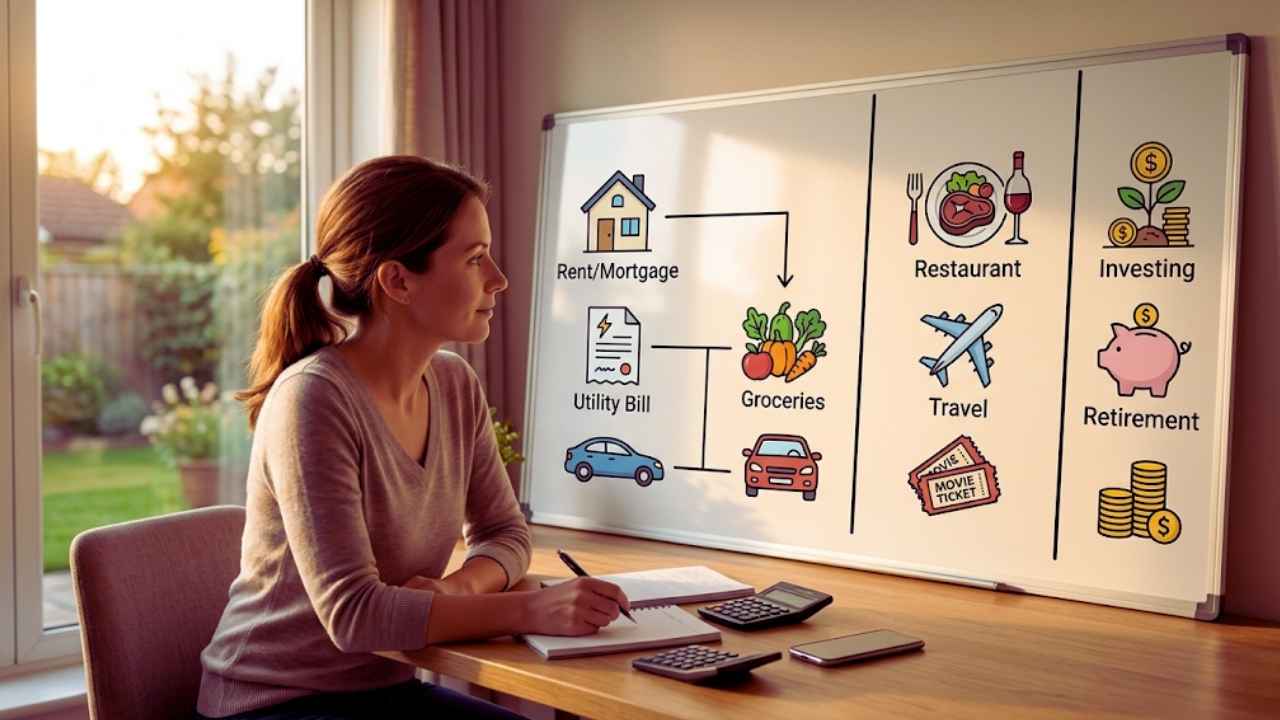
The 50/30/20 budget rule is a straightforward method that splits your after-tax income into three basic categories: needs, wants, and savings or debt repayment. Instead of creating dozens of tiny spending buckets for every single transaction, you only have to manage these three main areas each month. This framework keeps your finances balanced while giving you permission to enjoy your hard-earned money guilt-free.
|
Category |
Percentage Allocation |
Description of Expenses |
Common Examples |
|
Needs |
50% |
Essential expenses required for your basic survival and living. |
Rent, basic utilities, groceries, transportation to work, minimum debt payments. |
|
Wants |
30% |
Discretionary spending meant for your lifestyle and entertainment. |
Dining out, hobbies, vacations, streaming subscriptions, concert tickets. |
|
Savings & Debt |
20% |
Money set aside for future security or aggressive debt payoff. |
Emergency fund, retirement accounts, investing, extra credit card payments. |
50 Percent for Needs
Half of your take-home pay is allocated to your essential living expenses. These are the bills that you absolutely must pay to survive and maintain your basic quality of life. If you lost your job tomorrow, these are the expenses that would still exist and demand your attention immediately. You simply cannot skip these without facing serious consequences like eviction, utility shut-offs, or damaged credit scores.
Needs typically include rent or mortgage payments, basic utility bills like water and electricity, groceries, necessary transportation costs like car payments or transit passes, and essential insurance premiums. Minimum debt payments, such as the bare minimum required on a credit card or student loan, also fall firmly into this category. It is incredibly important to separate true needs from lifestyle choices here. A basic phone plan is a need, but the newest smartphone upgrade is a want. Groceries are a need, but eating at a fancy steakhouse is a want.
30 Percent for Wants
This is the category that makes the 50/30/20 budget rule so appealing to many people. Unlike rigid financial plans that strip away all the fun, this method explicitly gives you permission to spend up to thirty percent of your income on things you genuinely enjoy. You work hard for your money, and you deserve to enjoy the fruits of your labor without feeling guilty every time you swipe your debit card. Wants encompass all the non-essential expenses in your life.
This includes dining out at restaurants, buying tickets to concerts or movies, travel, hobbies, and subscription services like streaming platforms or premium apps. It represents the lifestyle bucket that makes life enjoyable and prevents budget burnout. If you ever need to cut back on spending because of an emergency, this is the first category you should look at. Trimming your wants is always much easier than trying to negotiate lower rent or cheaper utilities with a landlord.
20 Percent for Savings and Debt Payoff
The final twenty percent of your income is dedicated entirely to securing your financial future. This bucket is all about building wealth, creating a safety net, and reducing financial liabilities beyond the minimum requirements. Ignoring this category leaves you vulnerable to sudden expenses and seriously delays your long-term goals like retirement or homeownership.
This money should be directed toward building a solid emergency fund, investing in a retirement account like a 401(k) or Roth IRA, and saving for a down payment on a house. If you have high-interest credit card debt, any extra money you throw at the balance to pay it off faster comes from this twenty percent bucket. Keep in mind that your minimum monthly payment comes out of your needs bucket, but the aggressive extra payments live here in the savings category so you can crush the principal balance quickly.
Where Did the 50/30/20 Rule Come From?
You might think a financial guru on Wall Street invented this method, but its roots are actually quite practical and academic. Senator Elizabeth Warren and her daughter, Amelia Warren Tyagi, popularized the framework in their 2005 book called All Your Worth. They spent years analyzing data on middle-class spending habits to find a reliable pattern of stability.
|
Fact |
Detail |
|
Creators |
Senator Elizabeth Warren and Amelia Warren Tyagi |
|
Origin Year |
2005 |
|
Source Material |
All Your Worth: The Ultimate Lifetime Money Plan |
|
Core Goal |
Prevent bankruptcy by keeping fixed living expenses manageable. |
|
Target Audience |
Middle-class families seeking sustainable financial balance. |
The Core Philosophy Behind the Plan
The creators of this framework noticed a dangerous trend in how everyday Americans managed their money. People were taking on massive fixed expenses like huge mortgages and expensive car leases, leaving them with absolutely no wiggle room when bad luck struck. If someone lost a job or faced a medical emergency, their high fixed costs dragged them straight into bankruptcy because they could not easily downsize their lives.
The philosophy behind the rule is pure risk mitigation. By hard-capping your inescapable needs at fifty percent, you naturally build a buffer into your life. If your income suddenly drops, you can instantly pause your thirty percent wants and your twenty percent savings to keep a roof over your head. The rule was designed to be a durable standard for financial survival, ensuring that you never overextend your lifestyle to the point of danger.
Real-World Testing and Research
The numbers for this system were not pulled out of thin air or guessed by financial planners. The authors looked at decades of economic data to see exactly where families were going wrong. They found that families who went bankrupt often did not spend recklessly on luxury items, designer clothes, or constant vacations. Instead, they were trapped by massive mortgages, high healthcare costs, and overwhelming childcare expenses.
The 50/30/20 budget rule emerged as a mathematical safety net based on real-world financial failures and successes. They realized that when families kept their “must-haves” below that fifty percent mark, they weathered economic storms far better than those who stretched their essential costs to seventy or eighty percent of their income. It proved that managing fixed costs is the true secret to long-term wealth and stability.
Does the 50/30/20 Budget Rule Actually Work Today?
The short answer is yes, but it demands much more flexibility today than it did two decades ago. Housing costs, groceries, and healthcare have skyrocketed, heavily impacting how far a modern paycheck stretches. Let’s look at how the rule holds up to modern financial pressures.
|
Aspect |
The 50/30/20 Reality Today |
|
Inflation Impact |
Higher grocery and utility costs make staying under 50% for needs very difficult. |
|
Housing Costs |
Rent and mortgages consume a much larger slice of the pie than they did in 2005. |
|
Flexibility Needed |
The rule remains excellent as a baseline, but percentages often need tweaking. |
|
Psychological Edge |
It still prevents budget burnout by explicitly allowing guilt-free spending on wants. |
The Advantages of the 50/30/20 Method

The absolute biggest strength of this rule is its sheer simplicity. You do not need an accounting degree, complex software, or daily check-ins to understand it. Because there are only three distinct categories, it is incredibly easy to set up and monitor. This makes it a perfect starting point for people who have never tracked their spending before and feel intimidated by the whole process of managing money.
It also strongly promotes psychological balance. By explicitly carving out space for personal enjoyment, it prevents budget burnout. Many people quit managing their money because they try to cut out all discretionary spending, which is rarely sustainable. Knowing you have a dedicated allowance for dining out or entertainment makes it much easier to stick to your long-term financial goals without feeling miserable along the way.
The Disadvantages and Modern Challenges
The primary criticism of the 50/30/20 budget rule is that it can feel completely out of touch with the reality of today. Housing costs, groceries, and basic healthcare have outpaced wage growth in almost every major area. For someone living in a major city or supporting a family on a single income, keeping essential needs under fifty percent of their take-home pay might be mathematically impossible.
When rent alone consumes half of a paycheck, the entire formula falls apart. Furthermore, twenty percent might not be enough for some people to reach their savings goals. If you are starting late on your retirement planning or trying to aggressively pay off massive student loan debt, you likely need to save much more than twenty percent. The fixed percentages assume a level of economic normalcy that many people simply do not experience right now.
How to Start Using the 50/30/20 System
Transitioning to this method is incredibly straightforward once you know your numbers. You do not need expensive apps; a simple notepad or basic spreadsheet works perfectly fine. Follow these steps to align your current financial reality with the target percentages.
|
Step |
Action to Take |
Expected Outcome |
|
1 |
Calculate After-Tax Income |
Know exactly how much money hits your bank account each month. |
|
2 |
Track Past Spending |
See where your money currently goes by checking old statements. |
|
3 |
Categorize Expenses |
Drop every past expense into needs, wants, or savings. |
|
4 |
Adjust Habits |
Cut unnecessary wants or find cheaper needs to hit the targets. |
|
5 |
Automate Finances |
Set up automatic transfers for your 20% savings bucket. |
Calculate Your After-Tax Income
Your budget must be based on the money that actually hits your bank account, not your gross salary. Look at your paystubs and see what your net pay is after taxes are taken out. If your employer automatically deducts contributions for a retirement plan or health insurance, you will need to add those back into your total to get a true picture. Those automatic deductions actually count toward your twenty percent savings and fifty percent needs categories.
For freelancers or self-employed individuals, this step involves a bit of estimation. You need to look at your average monthly income over the last six months and subtract the money you must set aside for quarterly taxes. Base your budget on that safer, lower average to ensure you do not overspend during slow months when freelance work dries up.
Track and Categorize Your Current Spending
Before you can change your habits, you need to know exactly where your money is currently going. Look back at your bank and credit card statements from the last three months. Categorize every single transaction into needs, wants, or savings and debt. Be completely honest with yourself during this process. The morning coffee run is a want, not a need, even if it feels essential to waking up.
That premium cable package is a want, while basic internet for your remote job is a need. This exercise is often an eye-opening experience for people who have never tracked their spending. Small daily habits add up to massive amounts over a month, and seeing those numbers on paper is usually the motivation needed to make a permanent change.
Adjust Your Habits to Fit the Target Percentages
Once you see your current baseline, compare it to the target percentages of the 50/30/20 budget rule. Most people find that their needs or wants are taking up way too much of the pie, leaving very little for savings. If your needs are currently sitting at seventy percent, you might have to look at drastic changes like downsizing your living situation, finding a roommate, or refinancing a car loan.
If your wants are out of control, the fix is much easier. You will need to start canceling unused subscriptions, cooking more meals at home, and finding free entertainment options. The goal is to slowly adjust your lifestyle month by month until you hit the desired split. You don’t have to fix everything in one day; gradual adjustments are much more likely to stick.
Real-Life Examples and Scenarios
Looking at percentages can be abstract, so let’s look at how this plays out with real numbers in actual bank accounts. The average American household spends around $6,500 a month, but incomes vary wildly based on location. Seeing the math applied helps you understand how the rule scales.
|
Monthly Take-Home Pay |
Needs Budget (50%) |
Wants Budget (30%) |
Savings Budget (20%) |
|
$3,000 |
$1,500 |
$900 |
$600 |
|
$5,000 |
$2,500 |
$1,500 |
$1,000 |
|
$8,000 |
$4,000 |
$2,400 |
$1,600 |
Managing on an Average Income

Imagine an individual who brings home $4,000 a month after taxes. Under the 50/30/20 budget rule, they have $2,000 allocated for their needs. This amount must cover their rent, groceries, utility bills, and basic transportation. Depending on their city, this might mean having a roommate or driving an older car to keep costs down and stay within that fifty percent limit. They have $1,200 available for their wants.
This is a very comfortable amount that allows for weekend outings, a gym membership, streaming services, and perhaps saving up for a fun vacation. Finally, they have $800 directed toward their savings and debt. They might put $400 into a high-yield emergency fund and use the remaining $400 to make extra payments on a lingering credit card balance to knock out the debt fast.
Scaling Up When You Get a Raise
The beauty of this system is how it naturally scales with your life. If that same person gets a promotion and their take-home pay increases to $6,000, their lifestyle can comfortably inflate without destroying their savings rate. Their needs bucket grows to $3,000, allowing them to upgrade to a nicer apartment or buy better quality groceries without guilt.
Their wants bucket expands to $1,800, giving them more freedom for luxury purchases or international travel. Most importantly, their savings bucket automatically jumps to $1,200 a month. This ensures that their wealth grows at the exact same pace as their lifestyle. It completely prevents the dreaded lifestyle creep, where a raise instantly disappears into mindless spending and leaves you no wealthier than before.
Adjusting the Rule for High Cost of Living Areas
If you live in a city where housing is incredibly expensive, do not throw the whole concept away just because you cannot hit the exact numbers. Strict rules often discourage people from trying, but flexible guidelines lead to long-term success.
|
Alternative Ratio |
Needs % |
Wants % |
Savings % |
Best Used For |
|
60/20/20 |
60% |
20% |
20% |
High rent cities where essential costs are unavoidable. |
|
70/10/20 |
70% |
10% |
20% |
Periods of high inflation or temporary income loss. |
|
40/10/50 |
40% |
10% |
50% |
Aggressive debt payoff or early retirement phases. |
|
50/40/10 |
50% |
40% |
10% |
Young professionals prioritizing immediate experiences. |
When Needs Exceed 50 Percent?
If your essential needs consume sixty or seventy percent of your income, you have to make conscious trade-offs. The specific numbers are less important than the intentionality behind them. If your rent takes up half your paycheck, you cannot magically change that overnight. Instead, acknowledge the reality of your living situation and adjust the other categories. You might adopt a 60/20/20 budget instead.
By accepting that needs require sixty percent, you reduce your wants to twenty percent to maintain a strong savings rate. This forces you to be highly selective about your discretionary spending, prioritizing only the things that bring you the absolute most joy and cutting out the mindless purchases that add zero value to your life.
Finding Balance Without Giving Up
The biggest mistake people make is abandoning the entire concept of budgeting just because their needs hit sixty-five percent. Even if you can only afford to save five percent of your income right now, tracking your money still prevents you from sliding into terrible consumer debt. The framework forces you to look at your money honestly.
If you live in an expensive area, use the rule to identify exactly how much you can afford to spend on weekends without compromising your rent check. Budgeting is not about punishing yourself; it is about giving yourself permission to spend within safe boundaries. Whether you use 50/30/20 or 70/20/10, the act of assigning a purpose to your dollars keeps you entirely in the driver’s seat of your financial future.
Alternatives to Percentage-Based Budgets
If the 50/30/20 budget rule does not resonate with you, there are several other proven budgeting methods to consider. Not everyone thinks in terms of percentages, and finding the right financial tool is like finding the right pair of shoes.
|
Budgeting Method |
How It Works |
Best Suited For |
|
Zero-Based Budgeting |
Every dollar is assigned a specific job. Income minus expenses equals zero. |
Detail-oriented people who want strict control over every penny. |
|
Envelope System |
Cash is placed into physical envelopes for specific spending categories. |
Over-spenders who need physical friction to stop buying things. |
|
Pay Yourself First |
Savings are automated immediately. The rest is spent however you want. |
Hands-off people who hate tracking categories and receipts. |
Zero-Based Budgeting
Zero-based budgeting is a highly detailed method where every single dollar gets an assigned job before the month even begins. Your total income minus your planned expenses should equal exactly zero. If you have fifty dollars left over at the end of your planning, you must assign it to savings, debt, or a specific want. You never leave money just sitting aimlessly in your checking account.
This method is incredibly effective for people who feel like their money constantly disappears and they need strict oversight of their cash flow. It forces extreme accountability because if you overspend in the grocery category, you have to actively move money out of your entertainment category to cover the difference. It leaves no room for guesswork.
The Envelope System
The envelope system is a classic method that relies on psychology and physical boundaries. You pull your discretionary budget out of the bank in cash and place it into physical envelopes labeled for groceries, dining out, and entertainment. When the cash in the dining out envelope is empty, you stop eating at restaurants until the next month.
It is an excellent way to curb impulse buying because handing over physical cash actually hurts more psychologically than swiping a piece of plastic or tapping your phone. If you struggle with credit card debt or mindless online shopping, transitioning to a cash-only envelope system for your wants category will snap your spending habits back into reality almost overnight.
The Pay Yourself First Method
The pay yourself first method is the most relaxed alternative available for those who hate math. You simply automate your savings and investment contributions the exact moment your paycheck hits your account. Once your future is funded and your basic fixed bills are paid, you can spend whatever money is left over however you please. You do not have to track percentages or write down transactions at all.
As long as the savings happen first, the rest of the money is yours to enjoy stress-free. This works exceptionally well for high-income earners or people who naturally spend less than they make, as it removes the friction of daily tracking while still ensuring long-term wealth building happens automatically in the background.
Final Thoughts
The 50/30/20 budget rule remains a highly effective tool for gaining clarity over your financial life without making you obsess over every dime. It provides a reliable roadmap for the average person to follow. It removes the stress of tracking minor details and replaces it with a balanced, sustainable approach to managing your hard-earned money. While the exact percentages might be difficult to achieve in certain modern economic climates, the underlying philosophy still holds incredible value today.
By keeping your essential living costs reasonable, making space for personal enjoyment, and consistently prioritizing your future through savings, you can build a stable and stress-free financial life. Find the balance that works for your unique situation, adjust the numbers if you need to, and stick to the daily habits that build lasting wealth.
Frequently Asked Questions (FAQs) About 50 30 20 Budget Rule
Is the 50/30/20 budget rule before or after taxes?
The rule applies strictly to your after-tax income. You should only calculate your percentages based on the net pay that actually deposits into your bank account. Using your gross income will result in a budget that overestimates your spending power, leading to accidental debt because you are budgeting money that the government has already taken for taxes.
Do 401(k) contributions count toward the 20 percent savings?
Yes, any money you contribute to a retirement account counts toward your savings goal. If your employer deducts this money automatically from your paycheck, you should add that amount back to your take-home pay when doing your initial calculations. This gives you an accurate view of your savings rate and keeps your math correct.
Where do credit card payments fit into this rule?
Your minimum required credit card payment belongs in the needs category, because failing to pay it will destroy your credit score and result in late fees. However, any extra money you pay above the minimum to wipe out the debt faster belongs in the twenty percent savings category, as you are actively improving your net worth.
Can freelancers use this budgeting method?
Freelancers can absolutely use this method, but they must calculate their income differently. Because freelance income fluctuates wildly, you should average your monthly earnings over the last six months, subtract your estimated quarterly taxes, and apply the rule to that conservative average to ensure you can cover your needs during slow months.
Are subscriptions like internet and phones considered needs or wants?
Basic phone and internet plans are considered needs in the modern world, especially if you work from home or need them for essential communication. However, premium cable packages, multiple streaming services, and the latest smartphone upgrades firmly belong in the wants category, as you could easily survive without them.