

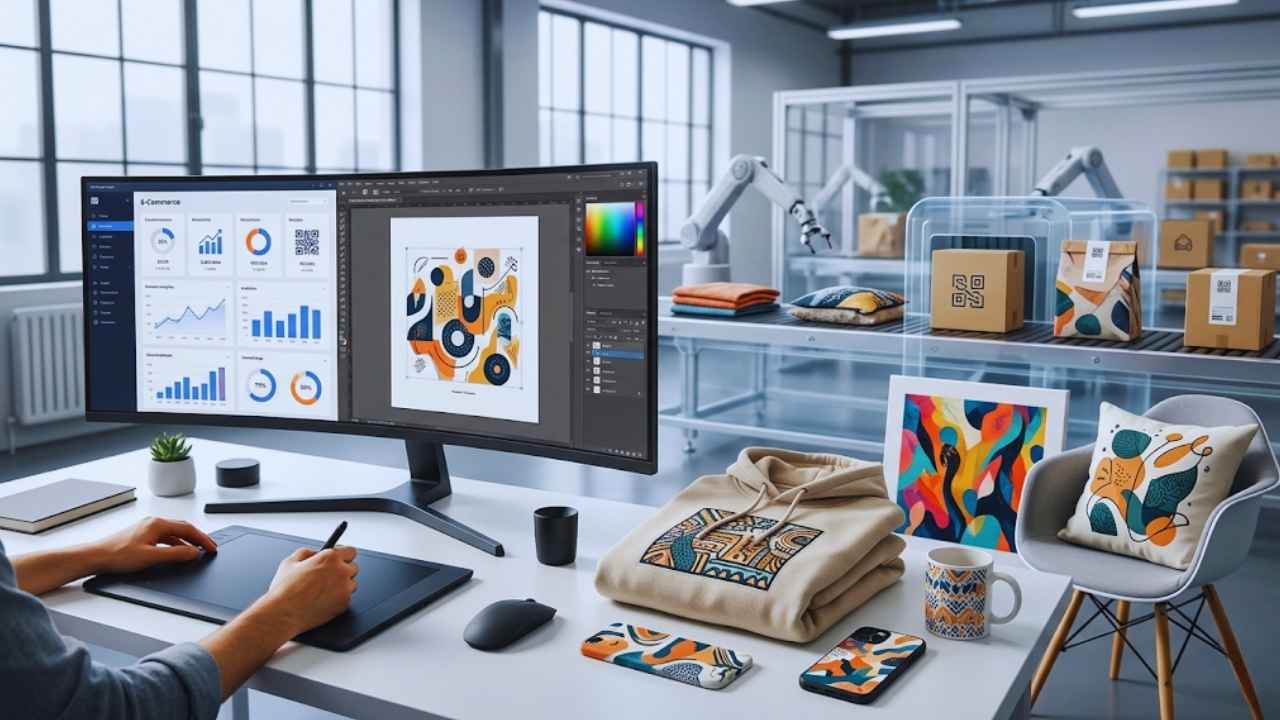
Starting an online store used to require thousands of dollars up front for stock, warehouse space, and shipping logistics. Today, the inventory-free model has flipped that old retail system upside down, making e-commerce accessible to almost anyone with a computer and an internet connection.
If you want to launch a brand without risking your savings on bulk inventory, learning how to start print on demand business 2026 is one of the smartest moves you can make. You can find out more about opening a branch of this business in Malta from reputable specialists like those from companyincorporationmalta.com. This model allows you to design items digitally and sell them worldwide, while a manufacturing partner handles the messy work of printing, packing, and shipping. Let us break down exactly how you can establish a profitable, independent brand from scratch this year.
What is a Print on Demand Business?
A print on demand store operates on a simple, reactive supply chain where physical products are manufactured only after a customer pays for them. You connect your digital storefront to a specialized printing supplier and upload your custom artwork onto digital mockups of apparel, home decor, or accessories. When a visitor buys an item, the supplier automatically receives the order data, prints your design on the blank product, and ships it directly to the buyer. You pay the supplier their base production rate, and you keep the remaining profit margin from the retail price you set.
You never actually touch the physical product, meaning you will not have boxes of unsold merchandise sitting in your living room or garage. This setup frees up your time to focus entirely on creating fresh designs and marketing your brand to the right audience. The supplier essentially acts as your silent partner, working entirely behind the scenes to fulfill orders as they arrive. Because the shipping label features your brand name and logo, the customer assumes you handled the entire process from start to finish.
|
Business Element |
Your Responsibility |
Supplier Responsibility |
|
Inventory Management |
None |
Stores blank products and manages stock levels |
|
Product Design |
Creates and uploads high-quality artwork |
Ensures accurate print translation onto physical items |
|
Order Fulfillment |
Routes orders automatically via software |
Prints, packages, and ships the final product |
|
Customer Support |
Handles buyer questions and return requests |
Replaces defective or misprinted items |
How the Supply Chain Works?
The day to day operations run completely in the background while you build your brand. Your online store functions as the front facing retail counter, passing transaction data to your production partner through direct software integrations. The customer never sees the third party factory because the package arrives with your custom store logo and return address. This white label system protects your brand identity while completely removing the physical burdens of traditional retail.
Capital Requirements vs Traditional Retail
Traditional retail setups demand substantial capital for bulk production runs, forcing you to guess which sizes and colors will appeal to shoppers months in advance. Print on demand removes this financial wall entirely by shifting manufacturing costs onto the actual purchase event. You only spend money on a product after a customer has already given you the retail payment. Your early capital stays in your pocket, free to be spent on high quality software tools, domain registration, and target market testing.
Why Start a Print on Demand Business in 2026?
The online marketplace is highly competitive, but the financial potential for unique, custom products remains incredibly strong for structured brands. Consumers continue to reject mass produced items in favor of highly specific goods that match their personal identities, professions, and values. Entering this space right now lets you capture this massive shift toward individual expression through an incredibly nimble business framework.
You have the flexibility to test dozens of different product ideas in a single week without losing a dime if they fail to sell. Compared to traditional overseas dropshipping, print on demand offers much faster shipping times and significantly better quality control. As advertising costs fluctuate, having a business model with zero holding costs gives you the ultimate financial safety net. You can run your store part-time from your laptop, scaling up your efforts only when you find a winning product line.
|
Traditional Retail |
Print on Demand Model |
|
High upfront financial risk |
Zero inventory investment required |
|
Slow to adapt to changing trends |
Instantly launch new designs within minutes |
|
Massive potential for unsold stock |
Products only created when purchased |
|
Requires physical warehouse space |
Run entirely from a laptop anywhere |
Market Growth and Projections
The numbers backing the custom printing industry paint a very healthy picture for new digital storefronts. Market research shows the global custom apparel and print on demand industry is on track to break through massive revenue milestones before the end of the year. This momentum is fueled by a generational shift in shopping habits, as buyers actively search out independent creators instead of buying from giant retail chains.
Sustainability and Zero Waste Production
Modern shoppers care deeply about where their goods come from and how manufacturing impacts the planet. Traditional fashion brands generate tons of landfill waste every year by destroying overproduced clothing lines that failed to sell. Print on demand operates as an inherently sustainable, zero waste manufacturing alternative. Because every single hoodie, mug, or canvas print is made exclusively for a verified buyer, you can proudly market your brand as an eco conscious business.
Step 1: Find a Profitable Print on Demand Niche
Trying to sell generic products to the general public is a fast track to business failure. The internet is already packed with basic graphic t-shirts, meaning you must target a highly specific group of people who share a deep common interest. Finding a narrow niche allows you to speak directly to an active audience, making your marketing campaigns much more effective and less expensive. When you focus on a specific community, your brand becomes the go-to destination for their specific needs.
You stop competing on price and start competing on emotional connection and shared identity. A strong niche allows you to build a loyal email list of repeat buyers who will gladly purchase multiple items throughout the year. Instead of casting a wide net and catching nothing, you drop a specific line right where the most passionate buyers are swimming. By digging deep into one specific area, your store builds massive authority and trust over time.
|
Niche Evaluation Criteria |
What to Look For |
Warning Signs to Avoid |
|
Audience Passion |
High engagement, active forums, deep pride |
Broad interests, casual hobbies, zero community |
|
Search Demand |
Steady year-round search volume on Google |
Short-lived viral fads, declining search trends |
|
Design Potential |
Rich inside jokes, specialized terminology |
Generic quotes, overused clip art concepts |
|
Purchasing Power |
Willingness to spend on premium custom goods |
Extremely price-sensitive audiences |
Analyzing Google Trends and Market Data
You should never build a product line based entirely on a random guess or personal preference. Use free search tools to look at behavior over twelve month cycles to ensure your niche has stable, year round demand. Look for search queries that show commercial intent, meaning people are looking to buy rather than just looking for free information. Check online platforms to see what independent items are getting consistent reviews from shoppers to validate your ideas.
Passion Meets Profitability
The ideal target market lives at the intersection of strong consumer pride and clear purchasing power. Look into communities centered around specific professions like software architecture, niche hobbies like blue water fly fishing, or specialized pet breeds. These groups love to display their identities through what they wear and display in their homes. When your designs tap into inside jokes or deep pride, your products transform from simple items into meaningful conversation starters.
Step 2: Choose Your Products Wisely
The catalog of customizable blanks has grown far beyond standard cotton shirts and basic ceramic mugs. To build a highly profitable brand, you need to offer a curated selection of items that carry strong retail margins and match your audience’s expectations. Selecting the right product mix allows you to increase your average order value through smart product bundles. You should resist the urge to add hundreds of random products to your store, as this confuses buyers and makes your brand look disorganized.
Instead, launch with three to five high-quality items that logically fit together. For example, if you target coffee lovers, focus deeply on premium ceramic mugs, travel tumblers, and coasters before expanding into apparel. Pay close attention to seasonal shifts, swapping out tank tops for heavy fleece blankets as the winter months approach. Testing products strategically ensures you only invest your marketing energy into items that actually convert into sales.
|
Product Category |
Best For |
Average Profit Margin Potential |
|
Premium Apparel |
Building a recognizable streetwear or lifestyle brand |
Moderate to High |
|
Home Decor |
Capturing interior design trends and older demographics |
High |
|
Drinkware |
Impulse purchases and seasonal gift-giving |
Moderate |
|
Accessories |
Cross-selling and increasing average order value |
Low to Moderate |
Top Selling Print on Demand Categories
Apparel continues to generate the highest overall sales volume across the e-commerce industry, but sub categories like premium streetwear are growing incredibly fast. Heavyweight oversized hoodies, organic cotton blank tees, and eco friendly tracksuits allow you to charge premium prices. Home decor is another massive growth space, where custom throw pillows, fleece blankets, and personalized wall art perform exceptionally well.
Personalization and Customization Trends
The biggest standard for product success right now is giving the buyer the power to customize the product themselves. Incorporating simple text fields where shoppers can add their names, significant years, or personal coordinates turns a basic item into a one of a kind gift. Photo upload features that allow pet owners to put their animals onto custom clothing lines carry incredibly high conversion rates. These emotional items command much higher prices because they cannot be replicated by traditional retail.
Step 3: Create High-Quality, Retail-Ready Designs
Your designs are the primary reason a customer chooses to buy from your store instead of a major retail chain. If your graphics look pixelated, use generic clip art, or lack a clear artistic style, your store will struggle to survive. Your goal must be to create clean, high resolution artwork that looks right at home on premium retail shelves. Sometimes the best performing items are simply clever text-based phrases utilizing strong typography and excellent color palettes.
You do not always need complex, multi-colored illustrations to make a massive profit. However, whatever style you choose must perfectly match the visual language of your chosen niche. A minimalist, elegant font works perfectly for a wedding niche, but would fail completely in a heavy metal music niche. Treat your design files like your most valuable business assets, ensuring they are perfectly formatted for physical printing.
|
Design Asset Checklist |
Quality Standard |
|
Resolution |
Minimum 300 DPI (Dots Per Inch) |
|
File Format |
Transparent PNG or scalable vector files |
|
Color Profile |
Designed in CMYK for accurate physical ink printing |
|
Legal Check |
100% original artwork free of trademark infringement |
Leveraging AI Design Tools Safely
Generative artificial intelligence has democratized the asset creation process, giving small store owners massive creative power. Software platforms can produce stunning base patterns, complex illustrations, and unique text styles in seconds. However, you must use these tools as a starting point rather than a final product. Always refine your generated imagery, scale the resolution up using high quality upscalers, and ensure your final files do not violate trademark laws.
Hiring Freelance Designers
If you do not have a natural eye for graphic design or want highly specific hand drawn illustrations, outsourcing your artwork is an excellent path. Platforms connect you with professional vector artists who understand print specifications perfectly. When hiring freelance creators, provide a highly detailed design brief that includes reference images, preferred color palettes, and your target niche details. Always secure a signed contract stating that you own the exclusive, permanent commercial rights to all files.
Step 4: Select the Right Print on Demand Platform
Your manufacturing partner is the most critical link in your entire e-commerce business model. They control the raw product quality, print accuracy, packaging presentation, and shipping speeds, meaning their performance determines your reputation. You must choose an established partner known for consistent execution and great communication. A cheap supplier who consistently ships late or prints crooked designs will ruin your brand through terrible customer reviews.
Take the time to read recent reviews from other store owners regarding the supplier’s current fulfillment times and customer service responsiveness. Look into their product catalog deeply to ensure they stock the specific fabric weights and colors your audience wants. Remember that you are not locked into a single supplier forever; you can easily switch partners or use multiple platforms simultaneously to get the best products. Finally, always calculate the total cost of fulfillment, including base price and shipping, to determine your true profit margins.
|
Top Platform Feature |
Why It Matters For Your Store |
|
Production Locations |
Closer facilities mean faster shipping and happier buyers |
|
Branding Options |
Custom neck labels and pack-ins build brand loyalty |
|
Product Catalog Depth |
Allows you to expand your store offerings easily |
|
Integration Reliability |
Prevents lost orders and broken tracking numbers |
Comparing Top Providers
The major forces in the custom fulfillment space serve slightly different business setups. Some companies own and operate their own production facilities across the globe, offering incredible quality control, custom inside labels, and branded packaging inserts. Others operate as a massive network of independent printing houses, giving you a wider catalog of unique products and lower base costs that help maximize your profit margins.
Factors to Consider: Quality, Shipping, and Integrations
Do not make your platform choice based entirely on the lowest available price tag. Look closely at where their fulfillment centers are located relative to where your target audience lives, as long shipping times will quickly destroy your brand reputation. Ensure their software plugs directly into your website platform without requiring custom coding work. Most importantly, use their sample ordering systems to buy your own products so you can personally test the quality.
Step 5: Build Your Online Store or Choose a Marketplace
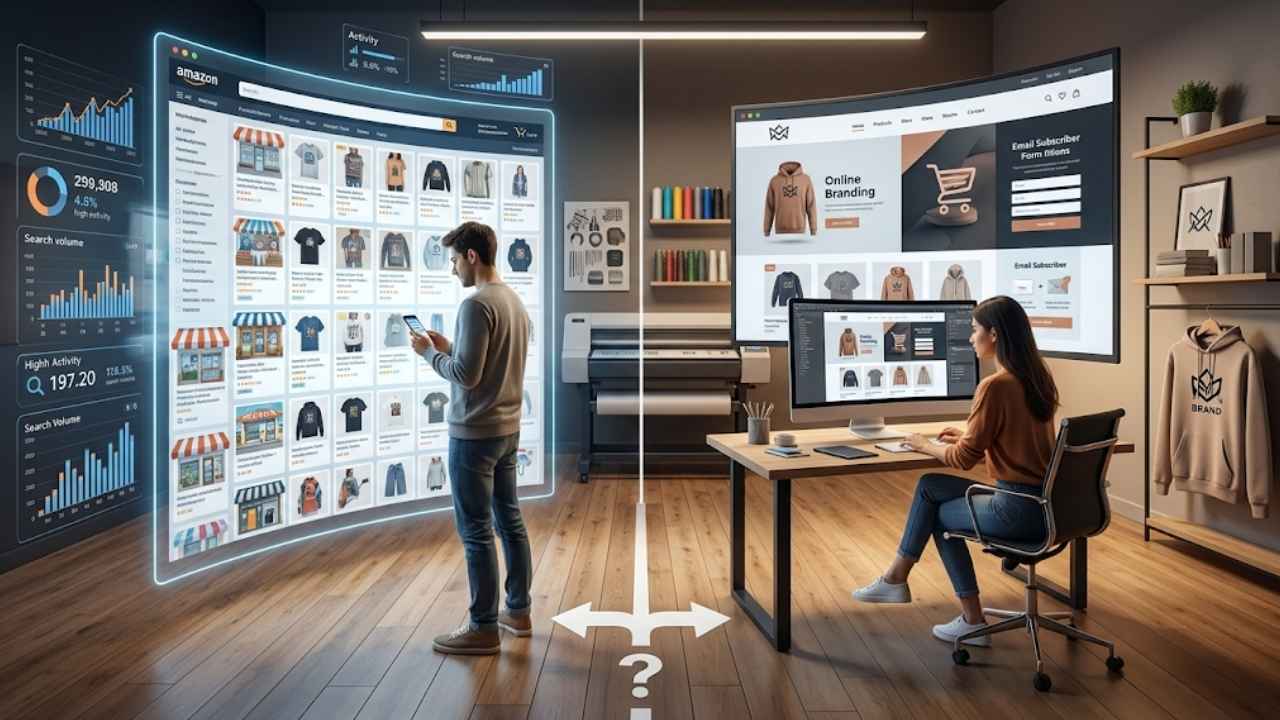
You must decide where your products will live online and how customers will browse your catalog. You can choose to list your items on an established third party marketplace or take total control by building an independent e-commerce website. Both options have distinct operational realities that affect your budget and workload. Marketplaces are fantastic for getting your feet wet because they already have millions of daily active buyers searching for products.
However, the immense competition means you often have to slash your prices just to get noticed. Building an independent website is much harder initially because you have to drive every single visitor to your pages yourself. The massive upside is that an independent site is a true business asset that you fully own and control. You capture customer emails, dictate the entire visual experience, and run your store free from sudden marketplace algorithm changes.
|
Store Architecture |
Pros |
Cons |
|
Third-Party Marketplace |
Built-in organic traffic, low upfront technical setup |
High competition, platform fees, no brand ownership |
|
Independent Website |
Complete control, higher profit ceilings, email list building |
Requires active marketing to drive all traffic, monthly fees |
Selling on Marketplaces vs Your Own Website
Marketplaces offer incredible benefits for beginners because shoppers use their search bars to buy products every single day. This means you do not need a massive marketing budget to secure your earliest sales. The major downside is that you are trapped in their ecosystem and forced to pay listing fees. Building your own site gives you a distinct brand identity, lets you collect customer data, and keeps you free from sudden rule changes.
Setting Up Your Ecommerce Platform
If you choose to build an independent storefront, focus completely on simplicity and user experience. Choose a clean, professional website theme that loads quickly on both desktop computers and mobile devices. Set up highly intuitive navigation menus so visitors can sort through your collections by product type or design theme quickly. Ensure your checkout process is incredibly smooth, offering modern, secure payment options to reduce abandoned shopping carts.
Step 6: Optimize Your Store for SEO and Conversions
Building a beautiful store is only half the battle; you also need to make sure search engines can find your pages and turn visitors into buyers. Search engine optimization provides a steady stream of free, organic traffic over the long term, reducing your dependence on expensive paid ads. Traffic is completely useless if your website is confusing, slow, or looks untrustworthy.
You need to build product pages that answer every possible question a buyer might have before they even have to ask. Include sizing charts, clear shipping estimates, and a straightforward return policy directly near the add-to-cart button. Make sure your website loads instantly, especially on mobile networks, because slow sites kill conversion rates immediately. By combining smart keyword placement with a flawless user experience, you turn casual browsers into confident buyers.
|
Store Optimization Focus |
Action Required |
|
Page Load Speed |
Compress all image files and remove unnecessary site code |
|
Mobile Responsiveness |
Test checkout flow on multiple smartphone screens |
|
Trust Signals |
Display secure checkout badges and clear store policies |
|
Product Descriptions |
Use natural, keyword-rich text highlighting product benefits |
Keyword Strategy for Product Titles and Descriptions
Avoid using vague, artistic names for your merchandise that do not align with what human beings actually type into search boxes. Use a descriptive title like “Oversized Heavyweight Black Hoodie for Streetwear Outfits.” Write product copy that answers common consumer questions naturally, detailing the specific fabric blend, care instructions, and sizing accuracy. This detailed text helps search engines index your pages correctly while giving shoppers confidence.
High Quality Mockups and Visuals
Because online shoppers cannot physically touch your merchandise, your visual assets have to do all the heavy lifting. Move past the standard flat digital templates provided by suppliers, as they look cheap and fail to build emotional desire. Invest in high quality lifestyle mockup templates that display your designs on real human models in natural environments. Showing a custom mug in a cozy kitchen dramatically increases perceived value.
Step 7: Launch and Market Your Business
An online store without active marketing is just a hidden file on the internet. To build a consistent flow of daily orders, you must deploy a structured marketing mix that balances long term organic growth with short term promotional campaigns. You cannot just launch your store, cross your fingers, and wait for sales to roll in. Modern e-commerce requires you to be proactive on social media, acting as the primary voice and face of your brand.
Short-form video is currently the absolute best way to get millions of free eyeballs on your products if you learn how to spot trends. Do not just post boring photos of your shirts; show the design process, package a sample order on camera, or talk passionately about your niche. Consistency is the secret weapon here; posting one good video a week is far better than posting ten videos in one day and disappearing for a month.
|
Marketing Channel |
Best Strategy for New Stores |
|
TikTok / Instagram Reels |
Create behind-the-scenes content and lean into niche trends |
|
Email Marketing |
Offer a small discount in exchange for email sign-ups |
|
Facebook / Meta Ads |
Run targeted campaigns once organic sales prove a design works |
|
|
Upload aesthetic product mockups linked directly to your store |
Organic Social Media and User Generated Content
Short form video platforms are the most powerful free discovery tools available for new brands. Create entertaining video clips that show the reality of your niche, tap into community inside jokes, or document your journey as an independent creator. Avoid posting constant sales pitches; instead, make content that people naturally want to share. Encourage your customers to post their own unboxing videos in exchange for discount codes to gain social proof.
Paid Advertising Basics
Once you verify that a specific design is selling well through organic traffic, you can look into paid advertising to scale up your operations. Platforms allow you to put your product images directly in front of users who have explicit interests that match your niche perfectly. Start with a small daily budget to test your messaging, track your return on ad spend carefully, and only increase your budget when your data shows clear profitability.
Common Mistakes to Avoid as a Beginner
The path to e-commerce success is full of common traps that can quickly exhaust your budget and cause you to give up early. Understanding these operational missteps ahead of time allows you to protect your capital and build a far more stable business. Many beginners fall into the trap of stealing copyrighted designs, which always leads to permanent store bans and frozen bank accounts. Another massive mistake is pricing items too low in an attempt to beat competitors, completely forgetting to factor in software fees, taxes, and marketing costs.
You must set realistic profit margins, or you will actually lose money on every sale you make. Do not ignore customer service; a single unanswered email can lead to a credit card chargeback and a terrible public review. Finally, stop expecting to become a millionaire overnight. Print on demand is a real business model that requires time, daily effort, and a willingness to learn from your early failures.
|
Common Beginner Mistake |
How to Avoid It Completely |
|
Copyright Infringement |
Only use 100% original artwork or properly licensed fonts/graphics |
|
Ignoring Profit Margins |
Calculate all platform, production, and shipping fees before pricing |
|
Poor Customer Service |
Set up a professional support email and respond within 24 hours |
|
Giving Up Too Early |
Commit to a minimum six-month testing and learning phase |
Protecting Your Store from Legal Issues
Never base your store around movie characters, professional sports teams, or famous musicians. Automated trademark bots sweep e-commerce platforms constantly, and they will shut down your store without warning. Building a brand on stolen intellectual property is not a sustainable business plan. Invest time in creating original concepts that stand on their own merits within your specific niche.
Pricing for Long Term Survival
Do not race to the bottom by offering the cheapest products online. When you compete solely on price, you attract the worst type of customers and destroy your ability to pay for advertising. Price your items to reflect the custom nature and quality of your designs. A healthy profit margin allows you to absorb occasional refund requests, pay for better software tools, and actually take home a living wage from your efforts.
Final Thoughts
Building a modern e-commerce brand is a marathon that rewards patience, original creative work, and data driven marketing strategies. When you learn how to start print on demand business 2026, you are mastering the core principles of digital retail—niche selection, supply chain management, and audience acquisition—without the traditional financial pressures of upfront stock investments.
Success in this field belongs to the disciplined creators who treat their storefronts as genuine customer centric brands rather than simple get rich quick schemes. Stay consistent with your content production, protect your brand reputation by ordering samples, and continue adjusting your product catalog based on what your analytics tell you.
Frequently Asked Questions (FAQs) About Print on Demand Explained
While you do not have to purchase product stock up front, you must budget for domain registration fees, monthly e-commerce platform subscriptions, and transaction processing fees from payment gateways. You will also need capital to cover the cost of physical product samples and any premium mockup assets or design software tools required to produce professional store listings.
How do custom printing platforms handle international currency and tax compliance?
Most modern printing engines route global orders to production facilities located closest to the end customer, which helps minimize import customs issues. Your e-commerce store platform will calculate regional sales taxes at checkout based on your business location, while your fulfillment partner will charge you taxes based on where the product is printed and delivered.
Can I run a successful custom merchandise brand completely from a mobile device?
You can easily monitor sales dashboards, respond to customer service emails, and post marketing videos using a smartphone. However, the initial website layout setup, deep keyword research, and high resolution file management are much easier and more precise when executed on a laptop or desktop computer.
What is the average timeline to see consistent organic sales from search engines?
Organic search engine optimization is a long term growth strategy that typically takes three to six months to start generating consistent traffic. You can accelerate this timeline significantly by pairing your search optimization with short form video marketing campaigns that drive immediate direct traffic to your optimized product pages.
How should I handle shipping delays caused by carrier disruptions?
Maintain complete transparency by publishing realistic delivery timelines on every single product page and inside your automated order confirmation emails. If a regional shipping carrier experiences a major disruption, send a personal, proactive email update to your affected buyers offering a discount code on their next purchase to preserve brand loyalty.
Can I sell print on demand products locally in my own city?
Yes, you can absolutely use this fulfillment model to supply local businesses, sports teams, or community events. You simply order the products at your base cost through your supplier and have them shipped to your local address to distribute in person.
Do I need to register a formal company to start selling?
While you can often start selling as a sole proprietor, registering a formal business entity like an LLC provides legal protection for your personal assets. It also allows you to open dedicated business bank accounts, which makes tracking your expenses and filing taxes much simpler.