


Food costs keep climbing across the board. You pop into the store for a carton of milk and a loaf of bread, and suddenly you are staring at a massive receipt. We all desperately want to know how to save money on groceries without living on instant noodles or treating couponing like a full-time job.
The numbers back up the financial pain you feel at the checkout register every single week. Recent economic data shows grocery costs are staying stubbornly high, and a standard family of four can easily drop over $1,300 a month on food alone. You absolutely do not have to surrender your whole paycheck to the local supermarket.
Stores spend a literal fortune designing building layouts that trick your brain into spending more cash. Everything from the slow music playing overhead to the specific placement of the cereal boxes is a psychological trap. Once you actually know their hidden secrets, you can fight back and win. Here are 15 real, no-nonsense tactics to keep your hard-earned cash exactly where it belongs.
Plan Before You Shop
You actually win the budget battle before you even step foot outside your front door. If you show up to the supermarket without a solid plan, you will absolutely overspend. Preparation keeps your cart strictly focused on what you actually need for the week.
1. Shop Your Pantry First
We all buy things we already own because we refuse to look in the back of the cabinet. Before you write down a single item for your next grocery run, open your fridge, freezer, and pantry doors. Dig all the way to the back shelves to see what is hiding in the dark corners. You want to build your upcoming meals around that half-empty box of pasta, last month’s frozen chicken breasts, and those stray cans of black beans.
This reverse-engineering approach forces you to consume your food before it goes bad. It drastically shrinks your immediate shopping list and saves you a ton of cash. Keep a dry-erase marker right on your fridge door to list leftovers and open jars. When you know exactly what you have, you stop buying expensive duplicates.
|
Audit Area |
Target Items |
Money-Saving Action |
|
Pantry |
Canned beans, pasta, rice |
Base your next two dinners on these dry goods. |
|
Freezer |
Older meats, frozen veggies |
Move the oldest protein to the fridge to thaw. |
|
Fridge |
Expiring dairy, soft produce |
Chop up wilting veggies for a quick soup or stir-fry. |
2. Flip Your Meal Planning
Most people pick five recipes they want to eat and then go buy the specific ingredients. That is an incredibly expensive habit that drains your wallet. Smart shoppers completely flip the script and let the store dictate the menu. Look at the weekly store ad before you even think about what sounds good for dinner.
If chicken thighs and bell peppers are on super sale, you are eating fajitas on Tuesday. If ground beef has a massive red discount tag, make a giant pot of chili. You let the store’s deep discounts decide your weekly menu to lock in the savings. This strategy guarantees you never pay full retail price for your expensive meats and fresh veggies.
|
Planning Step |
Traditional Method |
Smart Money Method |
|
Step 1 |
Pick a random recipe |
Check the weekly store flyer |
|
Step 2 |
Write down ingredients |
Note the cheapest proteins on sale |
|
Step 3 |
Pay full price at the store |
Build a recipe around the cheap items |
3. Use a Hard Budget
Swiping a credit card feels like spending fake money in a video game. You do not feel the financial sting until the massive bill hits your inbox weeks later. If you struggle to stay on track in the middle of the aisles, switch your payments entirely to cash. Decide you are only spending exactly $150 this week for your household.
Put exactly $150 in a paper envelope and leave your plastic cards at home on the counter. When the cash runs out, your shopping trip is officially over. If you absolutely hate carrying cash, keep a simple budgeting app open on your phone and log every item as it hits the cart.
|
Budget Method |
Pros |
Cons |
|
Cash Envelopes |
Physically impossible to overspend |
Requires a trip to the ATM |
|
Calculator App |
Shows real-time running total |
Easy to accidentally forget an item |
|
Prepaid Debit |
Hard limit on funds |
Takes time to reload the balance |
Outsmart the Store
If you really want to master how to save money on groceries, you have to beat the physical store layout. Every single aisle wants to take your money.
4. Never Shop Hungry
It sounds like a silly joke, but strict behavioral science actually backs it up entirely. Shopping on an empty stomach makes you spend significantly more money on high-calorie, highly processed garbage. Your tired brain wants fast energy, making that massive display of cookies look completely irresistible.
You end up throwing expensive junk food into the cart that was never on your list. Eat a crisp apple or a huge handful of nuts before you grab a shopping cart. You will make incredibly smart choices instead of expensive, hungry mistakes. A full stomach is literally your best defense against clever supermarket marketing.
|
Shopping State |
Brain Focus |
Typical Purchases |
|
Starving |
Fast calories, immediate reward |
Chips, cookies, expensive prepared foods |
|
Full / Satisfied |
Logic, budget, long-term health |
Raw ingredients, planned staples, bulk items |
5. Look Up and Down
Massive food brands pay supermarkets big bucks to place their items right at eye level. Stores reserve that prime, easy-to-reach real estate exclusively for the priciest, most heavily marketed products. They know humans are naturally lazy and will just grab whatever is directly in front of their face.
To find the actual deals, you have to physically stretch up to the top shelf or crouch all the way down to the bottom. That exact spot is where you will find the bulk bags, regional brands, and drastically cheaper alternatives. Stop paying a premium just for convenience and start scanning the entire shelf vertically.
|
Shelf Level |
What You Usually Find |
Price Point |
|
Top Shelf |
Local brands, bulk items, overstock |
Medium to Low |
|
Eye Level |
Premium name brands, heavy marketing |
Highest |
|
Bottom Shelf |
Store brands, heavy bulk bags |
Lowest |
6. Give Store Brands a Chance
Store brands are definitely not the terrible, cardboard-tasting knockoffs you remember from the 1990s. Today, many private-label items roll off the exact same factory assembly lines as the big expensive name brands. They simply get a different paper label and a much lower price tag at the end of the line.
Swap your usual expensive cereals, canned goods, and baking spices for the store brand. You instantly knock 15 to 30 percent off your final bill without doing any extra work. Your family probably will not even taste the difference at the dinner table.
|
Grocery Item |
Name Brand Cost |
Store Brand Cost |
|
Box of Cereal |
$5.49 |
$3.29 |
|
Canned Black Beans |
$1.79 |
$0.99 |
|
Shredded Cheese |
$4.99 |
$3.49 |
7. Check the Unit Price
Ignore the big, flashy price printed right on the front of the box. Look closely at the tiny orange or yellow tag stuck to the shelf to find the unit price. This tiny number tells you the exact cost per ounce or per pound of the food inside. A giant “value size” box is actually not always the cheapest option on the shelf.
Retailers know you automatically assume bigger is cheaper, and they frequently use that assumption against you. Do the simple math before you put anything in the cart. You will be shocked at how often the smaller boxes are actually cheaper by the ounce.
|
Product Size |
Retail Price |
Unit Price (Cost per oz) |
|
Regular Box (12 oz) |
$3.50 |
$0.29 per oz |
|
“Family Size” (20 oz) |
$6.20 |
$0.31 per oz |
|
Winner |
Regular Box |
Saves $0.02 per oz |
Save on Meat and Produce
Fresh food absolutely destroys weekly budgets. But slashing your bill does not mean eating junk food every single day. You just have to buy your fresh food strategically.
8. Buy What is in Season
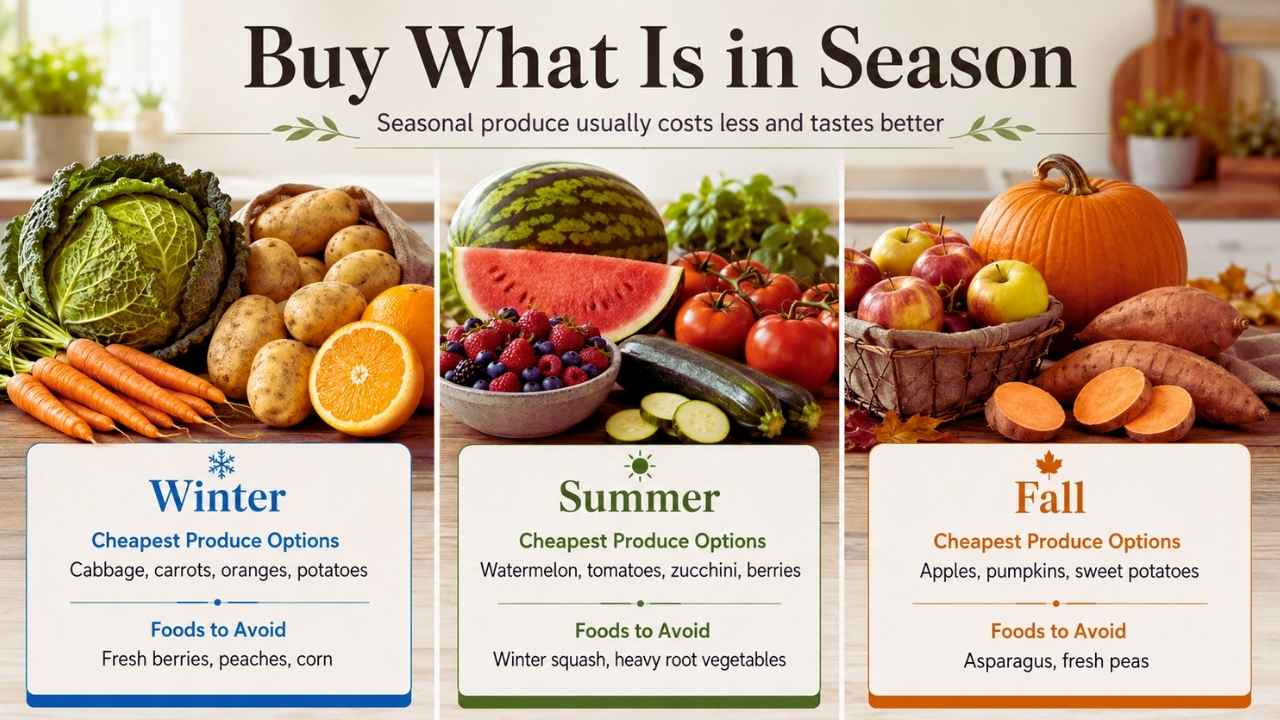
Buying fresh strawberries in the middle of December means you pay a massive premium to ship them across the entire world. They usually taste incredibly watery and bland anyway, making it a total waste of your money. Stick strictly to the seasons to keep your costs rock bottom.
Buy heavy squash, root vegetables, and bright citrus during the cold winter months. Load up on sweet berries, juicy tomatoes, and fresh corn in the hot summer. When a specific crop is highly abundant locally, the retail price naturally drops at the register. Nature actually dictates the absolute best sales.
|
Season |
Cheapest Produce Options |
Foods to Avoid |
|
Winter |
Cabbage, carrots, oranges, potatoes |
Fresh berries, peaches, corn |
|
Summer |
Watermelon, tomatoes, zucchini, berries |
Winter squash, heavy root vegetables |
|
Fall |
Apples, pumpkins, sweet potatoes |
Asparagus, fresh peas |
9. Do Not Sleep on Frozen Veggies
Forget the old myth that frozen vegetables completely lack proper nutrition. Large farms flash-freeze these vegetables within mere hours of picking, firmly locking in all the good stuff at peak ripeness. Meanwhile, expensive fresh produce sits on hot trucks for days, losing valuable vitamins by the hour.
Frozen broccoli, spinach, and mixed berries cost way less and last for many months in your freezer. You get the exact same health benefits for a fraction of the cost. Plus, you never have to feel completely guilty about throwing away a bag of slimy spinach ever again.
|
Veggie Type |
Lifespan |
Best Culinary Use |
|
Fresh Spinach |
5 to 7 days |
Raw salads, delicate garnishes |
|
Frozen Spinach |
8 to 12 months |
Soups, stews, baked casseroles |
|
Cost Difference |
High |
Low (Saves up to 40%) |
10. Hunt for Meat Markdowns
Meat easily eats up the biggest single chunk of your grocery budget every week. Find out exactly when your local store butcher marks down cuts nearing their official sell-by date. Usually, this markdown magic happens early on quiet weekday mornings. Look closely for those bright yellow or neon red “Manager’s Special” stickers plastered on the plastic wrap.
You can routinely grab high-quality steaks, pork chops, and chicken breasts for half the normal price. Cook it that exact same night or toss it straight into the deep freezer, and it is perfectly safe to eat.
|
Meat Cut |
Original Price |
Markdown Price (Est. 50% off) |
|
Ground Beef (1 lb) |
$6.99 |
$3.49 |
|
Chicken Breasts |
$8.50 |
$4.25 |
|
Pork Chops |
$7.00 |
$3.50 |
11. Go Meatless Twice a Week
You definitely do not have to go completely vegan just to save some serious cash. Swapping out expensive meat just two nights a week completely changes your entire grocery budget. Trade heavy ground beef for cheap black beans, brown lentils, or versatile chickpeas.
Eggs are another incredibly dirt-cheap protein that cooks up in minutes. A massive pot of spicy lentil soup or some crispy black bean tacos cost next to nothing to prepare. You feed the whole family a filling meal for the price of a single chicken breast.
|
Protein Source |
Cost per Serving |
Health Benefit |
|
Beef Steak |
$4.00+ |
High iron, high cost |
|
Dried Lentils |
$0.20 |
High fiber, extremely cheap |
|
Eggs (2) |
$0.40 |
Complete protein, fast cooking |
Maximize Apps and Rewards
Put down the scissors right now. You absolutely do not need to clip tiny paper coupons anymore. Your smartphone is now the ultimate budget hack.
12. Scan for Cashback
Modern apps like Ibotta and Fetch Rewards literally pay you real money to buy everyday household staples. Open the application, tap a few digital offers for basic things like sandwich bread or whole milk, and check out normally. Snap a quick picture of your paper receipt on the walk back to your car.
The app securely banks your cash in the background. You can quickly transfer it straight to your checking account or grab a digital gift card. It takes roughly ten seconds of effort and pays off instantly.
|
App Name |
How it Works |
Best Feature |
|
Ibotta |
Select offers, upload receipt |
High payouts on specific name brands |
|
Fetch Rewards |
Scan any receipt, earn points |
Works on any brand, incredibly easy |
|
Checkout 51 |
Pick weekly offers |
Updates every Thursday with new deals |
13. Join the Loyalty Club
If you shop at a specific grocery store, you absolutely need their free loyalty card in your wallet. It is genuinely the only way to actually secure the sale prices visibly listed on the shelves. Without the card, you automatically pay the inflated retail price every single time.
Better yet, the store tracks exactly what you buy and sends you highly personalized coupons for your favorite items. Some major national chains even link your digital card to local gas station discounts. You save money on food and fuel at the exact same time.
|
Loyalty Perk |
Why You Need It |
Financial Impact |
|
Shelf Discounts |
Unlocks the yellow tag prices |
Saves $10 to $20 per trip |
|
Custom Coupons |
Discounts on your exact staples |
Stops you from buying items you don’t need |
|
Fuel Points |
Cents off per gallon of gas |
Lowers your monthly commuting costs |
14. Stack Your Coupons
Download your primary grocery store’s mobile app and spend two quiet minutes tapping digital coupons before you leave the house. The absolute ultimate hack for major savings is a tactic called “stacking.” Wait patiently until an item hits the weekly sale ad, then apply your digital manufacturer coupon directly on top of that sale price.
The store register automatically combines the two separate discounts at checkout. This specific method is exactly how the true grocery pros walk out with household goods for just pennies on the dollar.
|
Stacking Math |
Example: Box of Cereal |
Price |
|
Original Price |
Normal retail cost |
$5.00 |
|
Store Sale |
Weekly ad discount |
-$2.00 |
|
Digital Coupon |
Clipped in the store app |
-$1.00 |
|
Final Price |
What you actually pay |
$2.00 |
Build Better Kitchen Habits
To keep your grocery bill low forever, you have to build solid habits. These routines stop you from ordering expensive takeout when you get incredibly lazy.
15. Cook Once, Eat Twice
The grocery store is actually not your biggest financial enemy; the food delivery app on your phone is. Protect yourself from ordering expensive Tuesday night takeout by adopting the habit of batch cooking. When you make a big simmering pot of chili or baked pasta, intentionally double the entire recipe.
Eat one hot batch for dinner and instantly freeze the rest in individual glass containers. You just created your own cheap, healthy microwave dinners for the busy nights ahead. Buy your dry basics like brown rice and dried beans in massive bags to drop the cost even further.
|
Batch Meal Idea |
Effort Level |
Freezer Lifespan |
|
Vegetable Chili |
Low (One pot) |
3 to 4 months |
|
Baked Ziti |
Medium (Requires baking) |
2 to 3 months |
|
Chicken Curry |
Low (Slow cooker) |
3 to 4 months |
Final Thoughts
Figuring out exactly how to save money on groceries is not about making one massive overnight change. It is entirely about building very small, sustainable daily habits. Do not try to rush and execute all 15 of these specific tactics today.
Start incredibly simple: check your pantry tonight, consciously ignore the eye-level shelves tomorrow, and download your local store’s mobile app. Once these basic moves become pure second nature, you will easily walk out of the supermarket with a full cart and a lot more cash sitting safely in your checking account.
Frequently Asked Questions (FAQs) About How to Save Money on Groceries
Why are milk and eggs always at the back of the store?
Store designers do this entirely on purpose. Everyone universally needs milk and eggs on a weekly basis. By putting them in the far back corner, the store forces you to walk past thousands of shiny, brightly colored, tempting items. They desperately hope you will toss an expensive box of cookies in the cart on your long walk back to the register.
Is buying in bulk at warehouse clubs always cheaper?
Not always. Bulk is fantastic for non-perishable items like toilet paper, dry rice, and canned goods. But buying a massive tub of fresh spinach or a giant block of soft cheese usually ends in total disaster for a small family. If half the food rots inside your fridge, you did not save a single dime.
Should I shop on Wednesdays?
Usually, yes. Many supermarkets launch their brand new weekly sales first thing on Wednesday morning. If you shop that specific morning, you get the new deals, and often the store will still honor the deals ending from the previous week. It is a brilliant double win for your wallet.
What does the “sell-by” date actually mean?
A “sell-by” date is just an internal note for the store’s stock crew to rotate inventory. The food is still perfectly safe and delicious to eat for days afterward. Do not throw away perfectly good food just because it passed the sell-by date. You are literally just throwing cash directly into the trash can.