


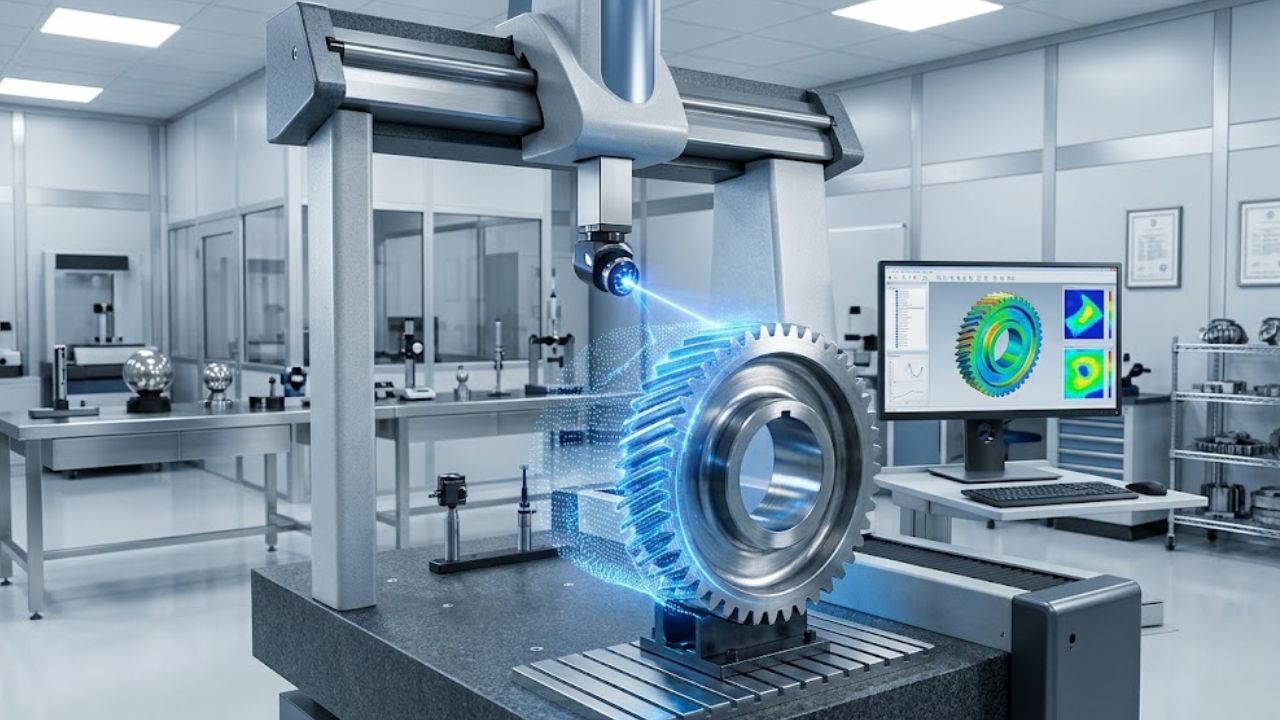
Advanced metrology solutions redefine manufacturing standards by providing precision—a critical aspect that underpins quality assurance, driving success while minimizing costly reworks.
By implementing precise measurement technologies within industries like automotive, businesses significantly lower defect rates, thereby optimizing workflows and enhancing product quality. The result is higher customer satisfaction and reduced costs.
Aerospace manufacturers have achieved remarkable accuracy improvements and reduced downtime thanks to advanced measuring technologies such as laser scanning and 3D modeling.
Selecting the right metrology equipment hinges on the specific needs of the industry. Essential tools like coordinate measuring machines, optical systems, and laser scanners are vital to meeting rigorous quality criteria.
The integration of metrology into manufacturing processes should follow a phased method, which includes pilot projects and employee training to maximize benefits while minimizing disruptions.
Financially speaking, investing in precision through advanced metrology can lead to fewer defects, heightened efficiency, and better product performance—contributing to enhanced customer loyalty and lower costs.
Looking ahead, the future of metrology promises innovations like digital twins and predictive analytics, along with increased automation and AI integration to improve accuracy and streamline quality control processes.
The Powerful Impact of Advanced Metrology Solutions
How Precision Redefines Manufacturing Standards
In the fiercely competitive landscape of today, businesses either thrive or struggle based on their commitment to precision. Advanced metrology solutions lay the groundwork for upholding high standards in manufacturing. It’s not merely a necessity; rather, precision stands as an irrefutable aspect of quality assurance that defines success. By ensuring parts meet exact specifications, manufacturers can sidestep costly reworks and delays, benefiting both their reputation and finances.
This uptick in precision boosts production efficiencies. Clients often discover that adopting such solutions dramatically reduces waste, optimizes workflows, and ultimately enhances product quality. Take the automotive sector as an example—shifting towards precise measurements has notably cut down defect rates, allowing for a more streamlined supply chain. The outcome? Happier customers and lower costs.
Real-World Success Stories: Precision in Action
Take, for instance, a prominent aerospace manufacturer grappling with part discrepancies. By collaborating with an advanced metrology solutions provider, this company introduced new measuring technologies that revitalized their assembly line. The implementation of laser scanning and 3D modeling not only fine-tuned the process but also enabled predictive maintenance. Accuracy climbed, downtime diminished, and production levels soared.
- Improved parts compatibility
- Enhanced process efficiency
- Significant reduction in product recalls
These achievements underscore the importance of investing in precision-driven technologies. Real-life success stories reveal that the return on investment frequently far surpasses the initial implementation costs.
Working through the Complexity of Metrology Technologies
Understanding the Different Types of Metrology Equipment
Selecting appropriate metrology tools can seem daunting given the vast array of options. From coordinate measuring machines (CMMs) to optical inspection systems, the field offers a rich selection. Each piece of equipment serves a critical role in ensuring that components adhere to stringent quality standards.
“The right metrology system doesn’t just provide measurements; it offers insights that drive precision and efficiency.”
It’s essential to recognize that the main types of metrology equipment include:
- CMMs – Fundamental for three-dimensional measurements.
- Optical measurement systems – Ideally suited for non-contact inspections.
- Laser scanners – Excellent for capturing intricate geometries.
- Calipers and gauges – Basic tools for quick checks.
Matching equipment capabilities with production requirements is critical. Expertise in selecting the appropriate metrology solution can profoundly influence overall production quality.
Choosing the Right Solution for Your Industry Needs
- Identify the key measurements necessary for your products.
- Evaluate equipment based on accuracy, speed, and ease of use.
- Consider integration capabilities with existing systems.
- Seek options that offer scalability for future needs.
Through careful assessment and planning, businesses can confidently choose tools that optimize their quality assurance processes, thus improving overall productivity.
Maximizing ROI with Metrology Excellence
Strategies for Integrating Metrology into Existing Processes
Integrating advanced metrology into manufacturing processes isn’t just about incorporating new technology; it’s about embracing a new mindset. Professionals recommend a phased approach—systematically testing systems allows for adjustments and training, which builds employee confidence while reducing operational disruptions.
Some effective strategies might include:
- Launching pilot projects to gauge effectiveness.
- Offering thorough training for personnel.
- Creating feedback loops for continuous enhancement.
This iterative process ensures that metrology delivers maximum value. The boost in precision directly correlates with lower overall costs and heightened customer satisfaction. That’s a win-win situation.
The Financial Benefits of Enhanced Precision
Investing in precision brings not only qualitative advantages; the financial implications are substantial. Businesses often observe a decline in defects when implementing advanced metrology solutions, leading to less time devoted to rework and increased production capacity.
“Every improvement in measurement translates directly into financial gains.”
Financial gains achieved with enhanced precision include:
- Cost reductions owing to fewer defects and returns.
- Increased efficiency resulting in quicker time-to-market.
- Improved product performance, which drives greater customer loyalty.
These factors bolster the case for advanced metrology, portraying it as more than just an expense; it’s a crucial investment yielding dividends in numerous forms.
Future Trends: Where Metrology is Headed
Innovations on the Horizon: What to Expect
The future of metrology is indeed promising, with a range of innovations poised to transform the industry. Clients can anticipate advancements in digital twins, which facilitate precise simulations of physical systems. These developments promote predictive analytics that enhance decision-making quality.
Moreover, the growing incorporation of cloud technology enables teams to collaborate seamlessly on measuring processes from various locations. Businesses often discover that remote monitoring solutions significantly reduce downtime and boost productivity.
- Expansion of integrated measurement environments.
- Increased focus on machine learning for predictive maintenance.
- Greater utilization of mobile metrology solutions.
These trends are not mere forecasts; they’re beginning to take hold in various sectors. The proactive adoption of these cutting-edge developments will set industry leaders apart from their competitors.
The Role of Automation and AI in Metrology
As manufacturing processes increasingly lean towards automation, the importance of artificial intelligence in metrology becomes more prominent. AI can process vast amounts of measurement data efficiently, identifying anomalies that human analysts might overlook.
So, what’s the takeaway? Automation promises to streamline quality control, diminishing human error and accelerating inspection times. Integrating AI holds the potential to elevate precision to unprecedented levels.
- Real-time analysis of measurements for immediate feedback.
- Predictive capabilities that prevent flaws before they occur.
- Robust data management systems that enhance traceability.
As these technologies evolve, they’ll empower companies to achieve unparalleled accuracy in their manufacturing processes.
FAQs
What industries can benefit most from advanced metrology solutions?
Industries such as aerospace, automotive, and medical devices stand to gain tremendously from advanced metrology solutions. Each sector possesses unique precision requirements that contribute to improved quality assurance, operational efficiency, and regulatory compliance.
How does employee training fit into the integration of metrology solutions?
Employee training is key to maximizing the returns on metrology solutions. Experts advocate for comprehensive training programs that equip staff with the skills necessary to effectively utilize advanced tools, thereby minimizing disruptions and boosting confidence in operations.
What are the most common types of measurement technologies used today?
Among the prevalent measurement technologies are laser scanning, coordinate measuring machines (CMMs), and optical measurement systems. Each technology addresses particular measurement challenges and is essential for maintaining precision within manufacturing processes.
How can businesses measure the ROI of metrology investments?
Companies can track ROI by monitoring reductions in defect rates, cost savings stemming from fewer reworks, and enhancements in production efficiency. Analyzing these metrics aids in quantifying the financial impact of their precision technology investments.
What role does predictive maintenance play in advanced metrology?
Predictive maintenance augments metrology by enabling businesses to foresee equipment failures before they occur. This forward-thinking strategy minimizes downtime and ensures ongoing operations, making it a crucial aspect of sustaining precision in manufacturing processes.
Are there specific metrics businesses should focus on when implementing metrology systems?
Companies should concentrate on metrics like accuracy, repeatability, and measurement speed. These indicators are vital for assessing the effectiveness of metrology systems, ensuring they align with broader production goals and quality standards.
How can a phased approach to integration be structured?
A phased approach could commence with pilot projects to trial new systems, followed by gradual expansion based on feedback. Incorporating real-time assessments and insights from employees ensures necessary adjustments can be made before full-scale implementation, ultimately maximizing overall value.
What future trends might emerge in metrology technology?
Emerging trends include the increased integration of artificial intelligence, enhanced use of cloud technology for remote teamwork, and advancements in digital twin capabilities. These innovations are set to bolster accuracy, efficiency, and collaboration across various manufacturing scenarios.