


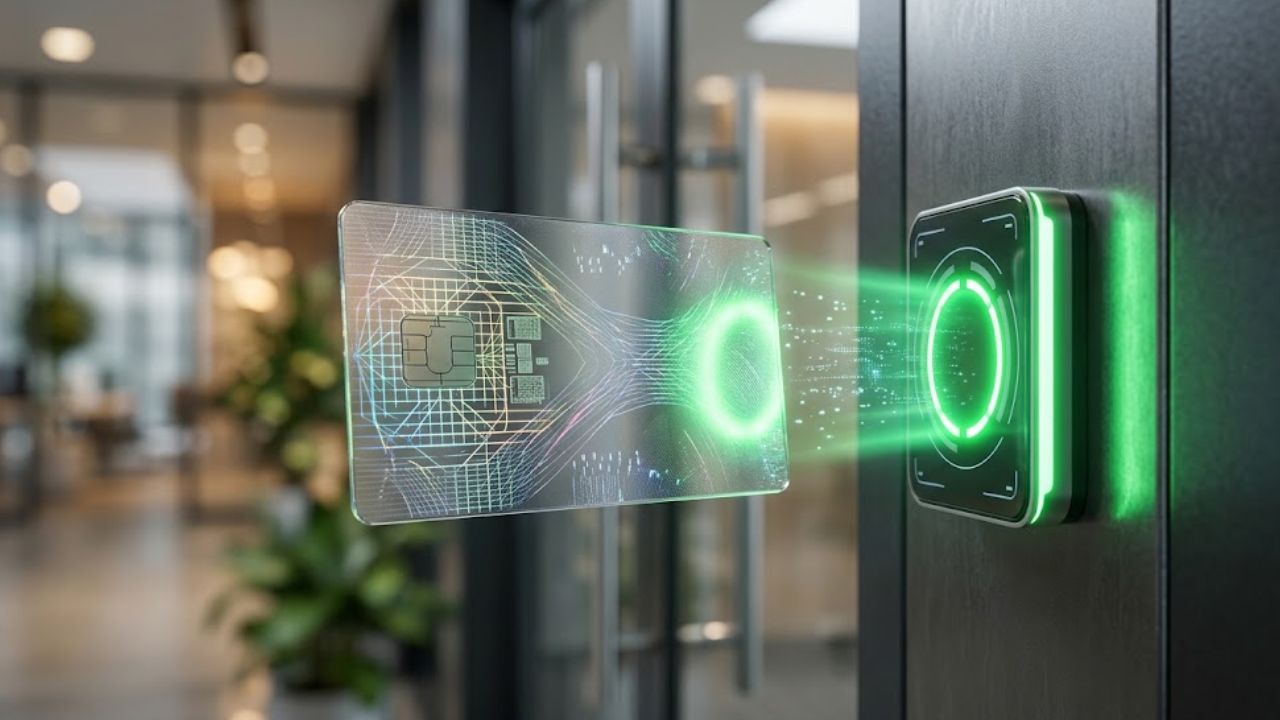
iCLASS credentials provide advanced security features like robust encryption, mutual authentication, and diverse key management, rendering unauthorized access almost impossible.
When compared to traditional RFID systems, iCLASS significantly boosts data security thanks to complex signal processing and dynamic cryptography, effectively tackling vulnerabilities that come with fixed passwords.
Operating at 13.56 MHz, iCLASS guarantees faster data transmission, superior data integrity, and extended read ranges, enhancing the overall user experience at access points.
With its dynamic key strategy, iCLASS minimizes cloning risks, leading to fewer security breaches than MIFARE systems. This makes iCLASS particularly popular in high-security settings.
For successful integration of iCLASS technology, it’s crucial to evaluate current systems for compatibility and train users on operational procedures to develop a strong security culture.
Various sectors, including education, healthcare, and corporate environments, leverage iCLASS to bolster security, streamline access processes, and increase operational efficiency.
Emerging trends in access control focus on improving convenience and security through mobile credentials, biometric integrations, and the application of AI to enhance threat detection capabilities.
Unpacking the Unique Advantages of iCLASS Credentials in Access Control
What Makes iCLASS Deliver High-Security Access?
In the fast-paced world of access control solutions, security is non-negotiable. iCLASS credentials operate at the cutting-edge of this mission, providing unmatched protection through their advanced features. They harness strong encryption techniques that make it nearly impossible for unauthorized users to gain access. So, what fuels their high-security standing? It’s a mix of groundbreaking technologies like mutual authentication processes and diverse key management strategies. These qualities mean that each transaction transcends a mere read operation, evolving into a sophisticated exchange of secured information.
For businesses, this translates to crucial security benefits. In industries where breaches might result in massive financial losses and damage to reputation, adopting iCLASS credentials offers a formidable protective barrier. When combined with advanced 13.56 MHz readers, the experience becomes instantaneous. Weaknesses in security protocols can lead to breaches. But with iCLASS, vulnerabilities are effectively sealed off.
Enhancements Over Traditional RFID Solutions
iCLASS credentials usher in a transformative era when stacked against traditional RFID solutions. While basic RFID systems might provide essential tracking, the refined enhancements of iCLASS truly set it apart. With advanced signal processing in play, unauthorized scanner interceptions become a Herculean challenge. As a result, businesses can handle their data with a higher level of security. The expanded memory capabilities found in iCLASS cards also allow storage of multiple credentials, simplifying user interactions.
Think about it: traditional RFID systems often rely on static passwords, which are relatively easy to compromise. iCLASS tackles this issue head-on with dynamic cryptography, offering virtually unbreakable access security. As organizations increasingly transition to contactless systems, upgrading to iCLASS is not just advantageous; it’s essential.
Key Features of iCLASS: The High-Frequency Advantage
Understanding 13.56 MHz Performance in Real-World Applications
At its core, iCLASS shines through its operation at the 13.56 MHz frequency, significantly boosting performance. Why’s that? It enables faster data transmission, ensures high data integrity, and extends read ranges. This results in reduced wait times at access points, and that translates into a significantly improved user experience. As users simply wave their credentials, the quick response fosters a seamless flow free from lag.
In real-world scenarios, iCLASS has proven its value across various domains—from government facilities to educational institutions. In each instance, it not only expedites access but also heightens security. With an extended read distance, users aren’t forced to come too close to a reader, which is vital in busy settings where crowding can be a concern.
- Higher Speed:iCLASS solutions significantly outperform older systems regarding reading speed.
- Improved Range: The ability to read cards from a greater distance leads to more efficient access points.
- Enhanced Reliability: There’s less interference at this frequency range, resulting in fewer errors.
iCLASS vs. MIFARE: A Comparative Analysis of Security
When evaluating iCLASS and MIFARE, both have their loyal user bases. However, the differences in their security models hold significant weight. iCLASS employs a dynamic key strategy that effectively reduces risks associated with cloning. Each interaction involves the exchange of unique keys that vary per transaction. In contrast, MIFARE lacks this dynamic aspect, giving iCLASS an edge in high-security situations.
Real-world case studies reveal that businesses utilizing iCLASS credentials tend to report far fewer security breaches than those that adopt MIFARE. This increased security isn’t just theoretical; it’s been borne out in many deployments. Organizations that prioritize robust security solutions would be wise to favor iCLASS.
“The difference between a simple security system and a high-security solution is often found in the details: how data is managed, how access is authenticated, and how vulnerabilities are mitigated.”
Integrating iCLASS with Modern Access Control Systems
How to Optimize Your Access Control Setup with iCLASS
Integrating iCLASS into existing access control systems demands careful planning. Yet the payoff can be substantial. First, businesses should evaluate their current technology landscape to confirm compatibility. The best integration occurs when both hardware and software can communicate seamlessly. Choosing a unified platform that supports iCLASS can yield significant operational advantages.
Moreover, preparation extends beyond just tech upgrades. Employee training plays a pivotal role in successful implementation. Users need to understand not only how to operate the system but also why the security features in iCLASS are essential. Clear communication reduces uncertainty and helps cultivate a shared responsibility towards security.
- Assess Compatibility: Review the capabilities of existing access control systems.
- Invest in Unified Platforms: Select hardware and software that inherently support iCLASS technology.
- Training & Awareness: Equip personnel with insights into best practices and security protocols.
Real-World Use Cases: iCLASS in Various Industries
Diverse industries are effectively employing iCLASS technology, highlighting its adaptability. In educational settings, iCLASS credentials simplify student access and bolster campus safety. Healthcare systems see significant improvements in patient identification, leading to reduced wait times and fewer medical errors. Likewise, in corporate environments, companies enjoy enhanced efficiency as iCLASS manages secure access to critical areas.
Specific sectors achieve remarkable benefits through this technology:
- Education: Secure student IDs thwart unauthorized access while promoting efficient campus facility use.
- Healthcare: Patient management systems benefit from iCLASS by minimizing misidentification and elevating care standards.
- Corporate: Employee and visitor management are optimized, achieving security without compromising workflows.
The Future of Access Control with iCLASS Technology
Emerging Trends in Access Control Systems
As technology steadily progresses, the future landscape of access control is set for thrilling transformations. It’s evident that contactless systems, exemplified by iCLASS, are taking the lead, but emerging trends are emphasizing a fusion of security and convenience. The advent of mobile credentials and biometric integrations is poised to revolutionize user authentication, streamlining systems considerably.
This transformation paves the way for more advancements, including artificial intelligence that can amplify threat detection and response capabilities. Such systems will continuously analyze user behavior, allowing for proactive actions against unauthorized access attempts.
Predicting the Next Steps for High-Frequency RFID Security
High-frequency RFID technologies, particularly iCLASS, appear poised for an evolution centered around stronger physical security measures and advanced data encryption. Heightened collaboration with IoT devices might yield more comprehensive access control ecosystems. Yet, it’s crucial to focus not just on technological components, but also on integrated security solutions that safeguard entry points while offering insights into overall security status.
Clients can expect partnerships between developers and security firms to expand, fostering environments where intelligent technology aligns with security best practices.
“In a world where connectivity and security battle for supremacy, combining strengths from both realms will dictate the future of access control.”
As the marketplace evolves to meet new challenges, businesses adopting iCLASS technology stand to enhance their security and lead in operational efficiency. The path forward looks bright, hinting that organizations will have access to more robust tools than ever.
FAQs
What industries benefit most from iCLASS technology?
iCLASS technology provides substantial advantages across various sectors, particularly in education, healthcare, and corporate environments. These industries leverage the security benefits and operational efficiencies that iCLASS facilitates, ranging from streamlining student access on campuses to enhancing patient identification and boosting workplace productivity.
How does iCLASS address data privacy concerns?
Through the use of advanced encryption techniques and authenticated transaction processes, iCLASS effectively safeguards sensitive information. This not only protects data during transmission but also alleviates risks associated with unauthorized access, empowering organizations to manage privacy concerns confidently.
What role do mobile credentials play in the future of iCLASS?
Mobile credentials are set to greatly enhance the user experience by offering unmatched convenience. They allow users to access secure environments effortlessly using their smartphones. The integration of mobile technology with iCLASS systems marks a natural progression towards more manageable yet secure authentication methods.
How often should businesses upgrade their iCLASS systems?
Regular evaluations and upgrades are essential to ensure optimal performance and security. Experts typically suggest reviewing systems every few years to harness the latest technological advancements, resolve compatibility issues, and align security protocols with emerging threats.
Are there specific certifications required for iCLASS installation?
While there aren’t universally required certifications, working with authorized dealers or professionals with iCLASS experience is advisable. These specialists usually come equipped with the expertise needed for proper installation, maintenance, and user training, leading to the most effective outcomes.
Can iCLASS be integrated with existing security systems?
Absolutely, but integration necessitates a comprehensive compatibility evaluation. Choosing systems designed to communicate with iCLASS technology can ensure a seamless transition. Proper integration will enhance security while streamlining operational workflows throughout the organization.
What is the expected lifespan of iCLASS credentials?
Generally, iCLASS credentials are built for durability, often exceeding several years, depending on usage and environmental factors. Appropriate care and handling can further extend their lifespan, ensuring reliable operation within security systems.
How do organizations train staff on using iCLASS technology effectively?
Training should encompass not only the operational aspects but also the best practices for security. Hosting regular workshops and informational sessions allows employees to grasp the value of iCLASS features, nurturing a culture of security throughout the organization. A proactive approach can drastically enhance overall system effectiveness.