

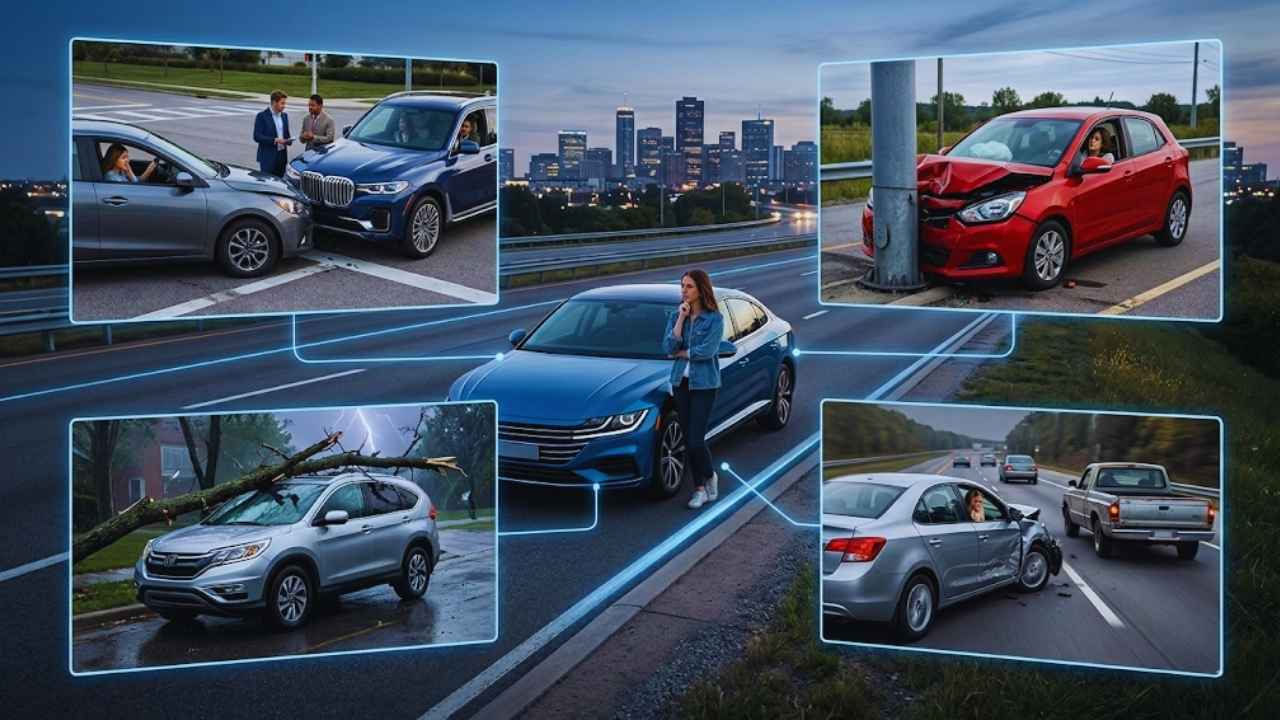
Getting the keys to your first car is an incredibly exciting milestone that brings a sudden rush of freedom and independence. But right alongside that freedom comes a stack of confusing paperwork and the heavy responsibility of protecting yourself on the road. If you feel totally lost staring at a policy quote from a local agent, you are definitely not alone.
Having auto insurance coverage types explained for beginners is the absolute best way to cut through the confusing industry jargon and figure out exactly what you are paying for every month. Car insurance is essentially a massive financial safety net designed to protect your future. You pay a set amount of money regularly, and in exchange, an insurance provider steps in to cover catastrophic costs if you ever get into a terrible accident.
Whether you just bought a brand new sedan straight off the dealership lot, inherited an older family truck, or simply want to understand the bills you have been paying blindly for years, learning these basic concepts will save you serious money and endless stress. The insurance industry uses highly specific language that can easily intimidate new drivers into buying coverage they do not actually need or skipping coverage that could save them from a massive lawsuit.
This comprehensive guide breaks down every single component of a standard auto policy into plain English. We will explore how different coverages protect your physical car, how liability limits protect your bank account, and how to confidently shop for the best rates. By the time you finish reading, you will have the exact knowledge needed to build a custom policy that perfectly fits your budget and lifestyle.
The Core Components of an Auto Insurance Policy
Before you can build a policy that fits your specific lifestyle, you need to learn the basic language insurance agents speak every single day. A standard car insurance policy is essentially a legally binding contract made up of several moving parts that dictate exactly how much money leaves your bank account each month and how much the insurance company pays out after a bad crash. We will look at how premiums, deductibles, and limits interact to form the absolute backbone of your coverage.
Getting these numbers right is the secret to balancing daily affordability with genuine financial protection for your future. Having auto insurance coverage types explained for beginners usually starts right here with the foundational math that drives the entire industry. Understanding these core elements prevents you from overpaying for useless features or underinsuring yourself against major financial disasters on the open road. It is the first major step toward taking complete control of your financial security.
|
Term |
Simple Definition |
How It Impacts Your Wallet |
|
Premium |
The amount you pay to keep the policy active. |
Paid monthly or yearly; lower deductibles mean higher premiums. |
|
Deductible |
Your out of pocket cost before insurance kicks in. |
You pay this directly to the mechanic after an accident. |
|
Limit |
The maximum amount the insurance company will pay. |
Higher limits cost slightly more but protect your personal savings. |
Understanding Premiums, Deductibles, and Limits
Your premium is the fixed price you pay your insurance company to keep your protection active and legally valid. You can usually choose to pay this bill every single month, twice a year, or annually depending on your budget preferences. If you stop paying your premium, the company will eventually cancel your policy entirely, leaving you driving illegally and entirely exposed to massive financial risk.
Your deductible is the specific cash amount you agree to pay out of your own pocket before your insurance starts paying for your physical car repairs. Imagine you have a thousand dollar deductible and you get into a crash causing four thousand dollars of damage to your bumper and hood. You pay the auto body mechanic the first thousand dollars, and your insurance company cuts a check for the remaining three thousand. If you agree to a higher deductible, your insurance company will usually reward you by lowering your monthly premium.
Your coverage limit is the absolute maximum ceiling on what the insurance company will pay for a single accident event. If the total damages go over that limit, you are legally on the hook for paying the rest. You will often see limits written as three numbers slashed together, like 50/100/50 on your declaration page. That specific format means the policy pays a maximum of fifty thousand dollars for one person’s injuries, one hundred thousand dollars total for all injuries combined in the crash, and fifty thousand dollars for physical property damage.
The Difference Between Minimum and Full Coverage
Almost every local state government requires drivers to carry a minimum amount of auto insurance just to legally register a vehicle and get license plates. This state minimum requirement is almost always strictly liability insurance, which only pays to fix the cars and bodies of the innocent people you hit. It absolutely does not give you a single dime to fix your own car, replace your stolen vehicle, or pay your own hospital bills after a wreck.
You hear people talk about full coverage all the time, but it is actually a myth that it is a single premium product you can buy off a shelf. Instead, full coverage is a casual industry nickname for a policy that bundles liability insurance with collision and comprehensive coverage. This heavy bundle protects other people on the road while also paying to fix your own vehicle, completely regardless of who caused the accident. If you take out a loan from a bank to buy a car, your lender will forcibly require you to carry this bundled coverage until the loan is entirely paid off to protect their investment.
Essential Auto Insurance Coverage Types Explained
To build a safety net that actually works when you need it most, you must understand the specific buckets of coverage available on the market today. Each type of insurance serves a completely unique purpose and is triggered by very different everyday circumstances. We will break down exactly how liability, collision, and comprehensive policies behave in the real world when you actually file a claim.
By looking at real scenarios, you can easily see where your current policy might have dangerous gaps that leave your savings exposed. Getting these core auto insurance coverage types explained for beginners is crucial because picking the wrong mix can leave you facing massive lawsuits. You want to walk into any conversation with an insurance agent knowing exactly what bodily injury means versus property damage. This ensures they never upsell you on random products you do not actually need for your specific car or financial situation.
|
Coverage Type |
What It Actually Does |
Who It Protects |
|
Bodily Injury Liability |
Pays medical bills for others if you cause a crash. |
The other driver and passengers. |
|
Property Damage Liability |
Pays to fix the cars or fences you accidentally hit. |
The other driver’s property. |
|
Collision |
Pays to repair your car after a crash. |
Your own vehicle. |
|
Comprehensive |
Covers theft, weather, fire, and animal strikes. |
Your own vehicle. |
|
Uninsured Motorist |
Pays your bills if a driver without insurance hits you. |
You and your passengers. |
|
Medical Payments |
Pays immediate hospital bills regardless of fault. |
You and your passengers. |
|
Personal Injury Protection |
Covers lost wages and deep medical costs. |
You and your passengers. |
Bodily Injury Liability Coverage
Bodily injury liability is the absolute rock solid foundation of any standard auto policy. It is legally required almost everywhere and stands as the most critical financial protection you can possibly buy to shield your long term wealth.
What Does Bodily Injury Liability Cover?
When you are legally determined by the police and adjusters to be at fault for a car crash, bodily injury liability steps in to pay the medical expenses of the other people involved. This includes the driver you hit, their passengers, and any pedestrians walking nearby who might have been caught in the crossfire.
It strictly covers emergency room visits, expensive ambulance rides, long physical therapy sessions, and even funeral expenses in the worst possible situations. Beyond just the direct medical bills, this coverage will actually pay for your legal defense attorney if the injured person decides to sue you in court for their lost wages or emotional pain and suffering.
Example Scenario for Bodily Injury Liability
Picture yourself driving home late from work in the pouring rain. You get distracted by your radio for just a split second, your tires lose traction, and you accidentally rear end the car stopped at a red light in front of you. The other driver suffers severe whiplash and needs three expensive months of physical therapy to recover fully.
Because you caused the wreck, your bodily injury liability coverage will automatically pay for all of their specialized doctor visits and any income they lose while they are out of work, right up to the maximum limit you picked when you initially bought the policy.
Property Damage Liability Coverage
Just like bodily injury coverage, property damage liability is legally required in most places and solely benefits the other party when you make a careless mistake on the road.
What Does Property Damage Liability Cover?
While bodily injury pays to heal humans, property damage liability pays exclusively to fix broken physical objects. It handles the massive cost of repairing or completely replacing the other person’s vehicle after a crash you caused. But the coverage goes way beyond just other cars on the highway. If you hit a patch of black ice and slide off the road into a neighbor’s expensive wooden fence, a brick mailbox, a city street lamp, or even a commercial storefront window, your property damage liability will cover the exact cost to rebuild those structures.
Why High Property Damage Limits Matter
Cars today are basically driving computers loaded with highly expensive sensors, backup cameras, and radar systems in the bumpers. A simple low speed fender bender with a brand new electric vehicle can easily result in fifteen thousand dollars of hidden repair costs at the body shop. Some state minimums allow you to carry as little as five thousand dollars in property damage coverage. If you cause fifteen thousand dollars in damage and your limit is only five thousand, the remaining ten thousand dollars has to come straight out of your personal checking account. Bumping up your liability limits costs very little extra per month but provides massive peace of mind against modern vehicle repair costs.
Collision Coverage
While liability insurance exists purely to protect everyone else around you, collision coverage is designed entirely to protect your own property and your own wallet from taking a massive hit.
What Does Collision Coverage Pay For?
Collision coverage pays to fix or totally replace your personal car if you collide with another vehicle or hit a stationary object, totally regardless of who is legally at fault for the incident. If you accidentally scrape your doors heavily against a concrete pillar in a tight parking garage, slide into a deep snowy ditch, or get hit by someone else and just want your own insurance to handle it quickly without arguing, collision coverage takes care of the bill. You will just have to pay your selected deductible first before the coverage activates.
Do You Actually Need Collision Coverage?
According to general industry data, a massive percentage of insured drivers carry collision coverage to stay safe. But you do not always mathematically need it. If you own your car free and clear without a loan, and it is a much older model worth very little money, paying a high monthly premium for collision might not make sense. However, if your car is relatively new, highly expensive to repair, or you still owe the bank money on an auto loan, you absolutely must carry collision coverage to protect your investment and satisfy your lender agreements.
Comprehensive Coverage
Insurance agents sometimes call this specific tier other than collision coverage because it handles all the weird, random, unpredictable things that happen when you are not actively crashing into someone else.
Incidents Covered Under Comprehensive Insurance
Comprehensive coverage acts as a massive financial umbrella for destructive events entirely outside of your driving control. This heavily includes natural disasters like rising flash floods, massive hail storms that dent your entire roof, and heavy tree branches falling on your hood during a severe windstorm. It also fully covers total vehicle theft, malicious street vandalism, and sudden engine fires. One of the most common claims filed under comprehensive coverage is hitting a wild animal. If a large deer jumps in front of your truck on a dark rural highway, the shattered windshield and crushed front grill are fixed entirely under comprehensive, not collision.
Comprehensive vs Collision: What is the Difference?
The easiest rule of thumb for a beginner to remember is that collision always involves your car hitting another car or an object while you are actively driving down the street. Comprehensive covers almost everything else that destroys your car, usually when it is parked overnight or when bad weather strikes without warning. Both of these specific physical damage coverages strictly require you to pay your chosen deductible out of pocket before the insurance company steps in to pay the remaining body shop invoices.
Uninsured and Underinsured Motorist Coverage
Even though it is highly illegal to drive on public roads without active liability insurance, millions of irresponsible people completely ignore the law every single day. This coverage protects you directly from their terrible choices.
Why You Need Protection from Other Drivers?
Uninsured motorist coverage is your personal armor if you get hit by someone who let their policy cancel due to nonpayment. Instead of draining your own bank account to pay for an accident you did not even cause, your own insurance company steps in and covers your rising hospital bills. Underinsured motorist coverage is very similar, but it specifically kicks in when the person who hit you actually has an active policy, but their legal limits are way too low to cover the massive extent of your serious medical damages.
How Uninsured Motorist Coverage Works in Real Life?
Imagine you are driving through a green light and a speeding driver wildly T-bones your car in the intersection. You suffer a broken leg, and the police arrive to discover the other driver has absolutely zero insurance. Without uninsured motorist coverage, you would have to hire an expensive lawyer and try to sue the driver directly, which usually fails because people without insurance rarely have cash sitting around to take. With this coverage firmly on your policy, your own company pays your hospital bills directly, saving you from complete financial ruin and terrible stress.
Medical Payments Coverage (MedPay)
Medical Payments coverage, often referred to simply as MedPay by local agents, is an optional add on in many regions that provides a brilliant layer of rapid health security for you and your friends.
Benefits of MedPay After an Accident
MedPay covers direct medical expenses for you and the passengers sitting inside your car after a terrible crash, completely regardless of who actually caused the collision. It pays rapidly for urgent doctor visits, overnight hospital stays, necessary bone x-rays, and extremely expensive emergency ambulance fees. The absolute best part about MedPay is that there are absolutely zero deductibles or hidden copays to worry about when you file a claim. You can even use it cleverly to pay the high deductibles on your normal daily health insurance plan.
Personal Injury Protection (PIP)
Personal Injury Protection is a much broader, significantly more robust version of MedPay. PIP is strictly legally required if you live in a specific region that follows a strict no fault auto insurance legal system.
What Makes PIP Different from MedPay?
While standard MedPay only looks at direct hospital bills and ambulance receipts, PIP goes several vital steps further to protect your overall daily lifestyle. Along with paying the doctors, PIP can actually replace a large portion of the weekly paycheck you lose if your injuries force you to stay home from work for months. It can also pay for essential daily services you can no longer do yourself while you recover in bed, like hiring someone to mow your lawn, clean your kitchen, or watch your young children during the day.
Optional but Valuable Car Insurance Add-Ons
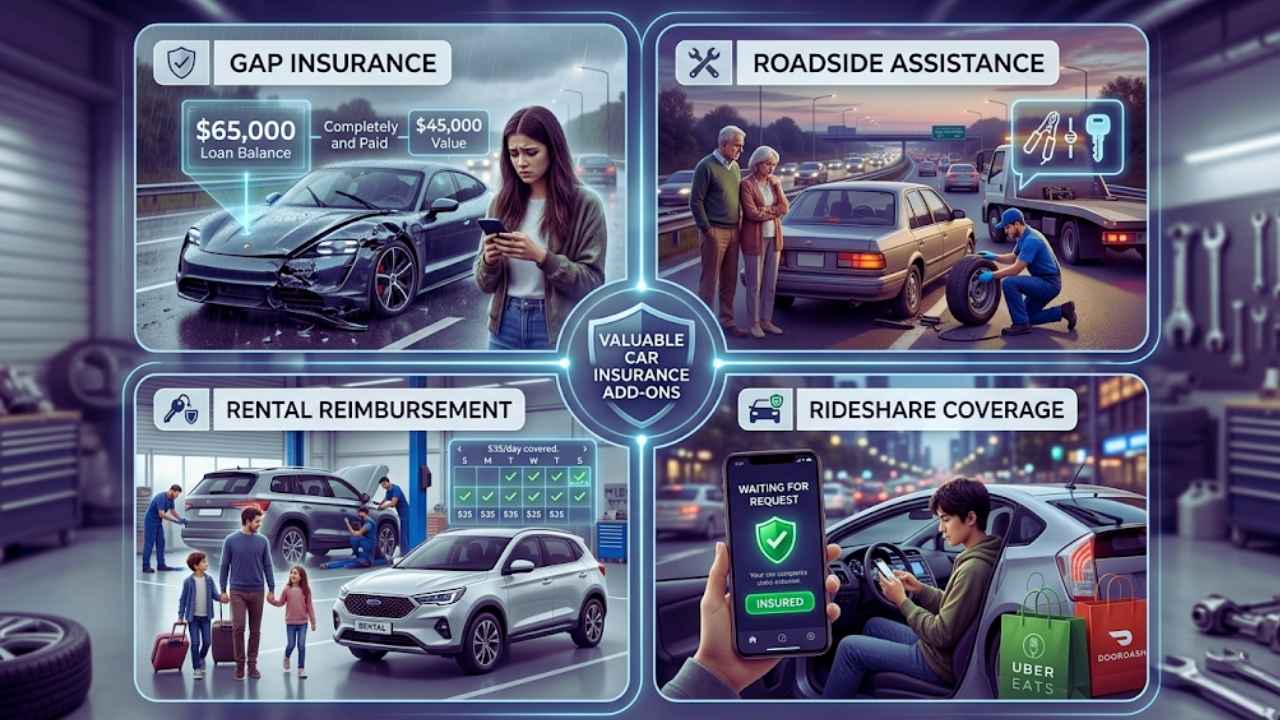
Once you have the core foundation of your policy built and legally compliant, you can start looking at the extra features insurance companies offer to make your life easier. These optional add ons are usually very cheap to bundle into your monthly payment, but they can completely save the day when bizarre things happen far from home. We will explore how these specific riders customize your coverage to fit your unique daily routine and commute.
Whether you drive a brand new leased sports car or you hustle on the weekends delivering food for extra cash, there is an add on designed perfectly for your exact situation. Adding these features prevents those minor daily inconveniences from turning into massive credit card debt. Having auto insurance coverage types explained for beginners means looking beyond just the legal minimums and building a policy that actually supports your lifestyle.
|
Add-On Name |
Best For |
What It Actually Does |
|
Gap Insurance |
Brand new car owners. |
Pays the difference between your loan balance and car value. |
|
Roadside Assistance |
Commuters and older cars. |
Covers towing, dead batteries, and locked doors. |
|
Rental Reimbursement |
People who need a daily vehicle. |
Pays for a temporary rental while your car is in the shop. |
|
Rideshare Coverage |
Delivery and ride app drivers. |
Fills the coverage gap while waiting for gig requests. |
Gap Insurance for New Cars
The exact second you drive a shiny brand new car off the dealership lot, its actual cash value plummets drastically due to instant depreciation. If you finance the car with a very small cash down payment, you might quickly owe the bank much more money than the car is actually worth on the open market. If you total the car the very next month in a bad storm, standard insurance only pays you the current depreciated value. Gap insurance swoops in and generously pays the remaining difference directly to the bank. This brilliant add on prevents you from making heavy monthly loan payments on a crushed car that currently sits completely useless in a local junkyard.
Roadside Assistance and Towing Coverage
Breaking down on the shoulder of a busy highway at midnight is a massive headache that tests anyone’s patience. Adding roadside assistance directly to your auto insurance policy provides incredible daily peace of mind for just a few extra dollars a month. It covers the steep cost of a private tow truck to haul your broken vehicle to a trusted mechanic across town. It also sends a professional to deliver emergency gasoline if you run dry, jump start a dead winter battery, change a flat tire in the pouring rain, or unlock your doors if you accidentally leave your keys sitting on the driver seat.
Rental Car Reimbursement
If your primary car is trapped in the local auto body shop for three long weeks after a major collision, you still desperately need a reliable way to get to work and buy weekly groceries. Rental car reimbursement coverage steps up and pays the daily cost of a temporary rental vehicle while your primary car is being actively repaired for a covered claim. These policies usually have a strict dollar limit per day and a maximum total payout limit. You always want to check your exact paperwork to ensure the daily allowance provided is actually enough money to rent a vehicle that matches the size of your current family car.
If you use your personal car to hustle for gig economy apps and deliver food or transport people, your standard personal auto policy will absolutely not protect you while you work. Standard personal policies have incredibly strict legal exclusions against using your private vehicle to transport paying strangers or commercial goods for profit. Rideshare insurance perfectly bridges the highly dangerous coverage gap between your personal policy and the commercial coverage the gig company provides. This ensures you are totally protected financially during the quiet periods when you have the app turned on but have not accepted a formal ride request yet.
How to Choose the Right Auto Insurance Coverage for Your Needs
With all these confusing options sitting on the table, building the perfect policy can feel totally overwhelming for a new driver trying to budget their money. The real trick is to take a hard, honest look at your personal life and find the absolute perfect sweet spot between genuine financial protection and a monthly bill you can actually afford to pay. We will look at the exact variables that matter most, from the actual metal you drive every day to the specific numbers sitting in your savings account.
Getting auto insurance coverage types explained for beginners means helping you see exactly how giant insurance corporations view your life through their risk algorithms. Once you understand what makes your rates go up or down, you can make highly strategic choices that lower your bills without sacrificing the safety net you desperately need.
|
Factor to Consider |
How It Changes Your Strategy |
Action Step |
|
Vehicle Age |
Older cars do not need expensive collision. |
Use the ten percent rule to drop full coverage. |
|
Personal Assets |
Wealthy drivers need much higher limits. |
Buy enough liability to cover your total net worth. |
|
Driving Record |
Tickets and crashes spike your monthly rates. |
Drive safe to earn substantial good driver discounts. |
|
Comparing Quotes |
Different companies view your risk differently. |
Get fresh quotes from three different insurers yearly. |
Assessing Your Vehicle’s Value and Age
The physical car sitting in your driveway heavily dictates the exact coverage you need to buy from an agent. A brand new luxury vehicle absolutely demands robust collision coverage and gap insurance to protect your massive financial investment from being wiped out. On the flip side, if you drive a heavily used sedan with two hundred thousand miles on the dashboard, paying high monthly premiums for comprehensive and collision coverage might cost you more over three years than the whole car is actually worth. In that specific scenario, dropping those expensive coverages and simply sticking to strong, high limit liability protection is the smartest financial move you can make for your budget.
Evaluating Your Personal Financial Risk
Your auto insurance should act as a giant steel shield for your broader financial life and future earning potential. If you have significant cash savings in the bank, own a nice piece of residential real estate, or have other valuable investments, you become a prime target for a devastating lawsuit if you cause a severe multi car pileup. In this situation, financial experts highly recommend carrying enough bodily injury liability to completely cover your total calculated net worth. If you are a young student just starting out with very few assets, you can safely choose slightly lower liability limits while you work hard to build your wealth over the next decade.
Factors That Influence Your Insurance Premium
Insurance companies do not just guess a random dollar amount for your premium bill. They run your life through incredibly complex math algorithms to figure out exactly how statistically risky you are to insure.
Age and Driving Experience
The simple truth backed by decades of data is that young, inexperienced teenage drivers get into far more accidents than older adults who have been driving safely for years. Because of this harsh statistical reality, drivers under the age of twenty five typically pay the highest insurance premiums on the entire market. As you get older and rack up solid years of safe driving without crashing into anything, your monthly rates will naturally begin to drop significantly as you prove you are a low risk customer.
Your Driving Record and Claims History
Your past behavior behind the wheel is the absolute biggest clue to your future risk profile. If your official driving record is loaded with expensive speeding tickets, reckless driving charges, or past at fault accidents, insurance companies will penalize you heavily with massive premium price spikes. Conversely, maintaining a spotless, clean driving record for several consecutive years will earn you substantial good driver discounts that save you hundreds of dollars annually and keep your rates incredibly stable.
Location and Credit Score
Where you park your car every single night changes your rates immensely. If you live in a dense, crowded city with famously high rates of vehicle theft, frequent street vandalism, and terrible daily traffic jams, you will pay much more for coverage than someone living in a quiet rural farming town. Additionally, most insurance companies legally check a variation of your financial credit score to help set your rates. People with excellent credit histories are statistically proven to file fewer auto claims, so they are heavily rewarded with much cheaper insurance premiums across the board.
Comparing Quotes from Different Insurance Providers
Every single insurance company weighs all of these complex risk factors very differently in their private software. One massive company might penalize you heavily for a minor speeding ticket from three years ago, while a competing company might completely ignore the old ticket but offer you a huge discount just for having a great credit score. The single most financially rewarding step you can take is to gather free quotes from at least three different insurance providers before signing any final paperwork. Carefully compare the exact same coverage limits across all the quotes to see which company truly offers the absolute best value for your specific life.
Final Thoughts
Wrapping your head around policies, limits, and deductibles takes a little bit of patience, but you get the hang of it quickly once you learn the basic vocabulary. Having auto insurance coverage types explained for beginners proves that you absolutely do not need a finance degree to protect your family on the road. The goal is never to blindly buy the absolute cheapest plan available just to save a few dollars, but to build a customized safety net that protects your actual net worth without draining your monthly budget.
Take the time to aggressively evaluate your car’s true market value, check your official driving history, and compare multiple quotes from different providers. When you finally understand exactly what you are paying for, you can hit the road with total confidence knowing your financial future is completely secure against the unpredictable nature of daily driving. You now have the exact tools needed to negotiate with agents, select the perfect coverage buckets, and keep your hard earned money safe from unexpected disasters.
Frequently Asked Questions (FAQs) About Auto Insurance Types Explained
What is the most basic type of car insurance required by law?
In almost every single region across the map, the most basic and legally required type of auto insurance is strictly liability coverage. This always includes both bodily injury liability and property damage liability packaged together. It legally ensures that if you cause a terrible accident, the innocent victims will have their hospital bills and vehicle repair costs fully covered up to your chosen policy limits. Driving without this absolute bare minimum is illegal and can result in losing your license entirely.
Does my auto insurance cover rental cars?
In most normal everyday cases, if you already have robust full coverage on your personal vehicle, that exact same coverage effortlessly extends to rental cars you drive for weekend vacations or business trips. Your liability, collision, and comprehensive limits will seamlessly apply to the temporary rental vehicle. However, you will still be personally responsible for paying your standard deductible if you scrape or crash the rental car. It is always a smart idea to call your insurance agent to verify your exact policy details before you aggressively decline the rental company’s highly expensive daily insurance products at the counter.
How much car insurance do I actually need?
The amount of insurance you truly need depends entirely on your current financial situation and what you stand to lose in a bad lawsuit. As a general rule of thumb, you want enough bodily injury liability to completely cover the total value of your personal assets, including your home equity and savings. Extremely low state minimums are rarely ever enough money to protect you in a major crash, so you should always aim to purchase much higher limits than what the local law strictly forces you to carry.
Can I drop collision coverage on an older car?
Yes, you can absolutely drop collision coverage legally if you own your car completely and do not have an outstanding auto loan with a demanding bank. A fantastic mathematical rule of thumb is to finally drop your collision and comprehensive coverage when the combined annual cost of those specific premiums equals or exceeds ten percent of your vehicle’s current depreciated market value. Keeping it past that point means you are technically paying more for the insurance over time than the car is actually worth to replace.
What is the NAIC number and why do I need it?
The NAIC number is a highly specific unique five digit identification code assigned to every single authorized insurance company by the National Association of Insurance Commissioners. You will usually find this number printed directly on your official proof of insurance card that you keep in your glovebox. You absolutely need this specific number to process insurance claims quickly, register your car properly at the local DMV, and help legal authorities track down your exact policy details after an accident occurs.