
You spend about a third of your life asleep, yet you probably still wake up feeling completely exhausted. We run on black coffee and hope the weekend somehow fixes our massive sleep debt, but it never actually does. Chronic sleep loss wrecks your daily focus, severely slows your metabolism, and tanks your overall cognitive productivity.
As someone leading a busy professional team and managing daily business operations, I know firsthand that shutting down a racing brain at night feels nearly impossible when deadlines approach. But getting better rest is not about sheer luck, and it definitely is not about staring at the ceiling hoping to magically drift off. You have to look at the hard data and understand what your body actually needs to recover. To fix your energy levels permanently, you need to deeply understand improve sleep quality science and build a concrete routine that actually works for your lifestyle. Let us break down exactly how your brain handles rest and what you can do tonight to fall asleep faster and wake up incredibly sharp.
The 2026 Sleep Crisis and Its Massive Impact
People universally know that sleep matters, but they consistently fail to get enough of it on a nightly basis. The 2026 Global Sleep Survey found that over half of adults rank sleep as the single most important factor for living a long, healthy life. Yet, a massive majority of those same adults face daily, frustrating barriers to getting that essential rest. Stress and anxiety consistently take the top spot because when your mind races with heavy work demands, cortisol spikes, and your brain entirely refuses to shut down.
We also know through rigorous clinical studies that chronic sleep deprivation directly and measurably cuts your life short. Recent medical data shows that severe sleep insufficiency is a massive predictor of lower life expectancy, sitting dangerously close to chronic smoking in terms of long-term health risks. We clearly face a modern public health crisis, but the permanent fix starts directly in your own bedroom with your daily habits and nightly routines.
|
Barrier to Sleep |
People Affected |
Biological Cause |
|
Stress or Anxiety |
39% |
High cortisol levels block sleep onset |
|
Work Demands |
22% |
Late hours push back melatonin release |
|
Screen Use |
21% |
Blue light stops natural melatonin production |
|
Home Duties |
19% |
Caretaking and chores delay physical relaxation |
|
Sleep Disorders |
18% |
Undiagnosed physical airway obstructions |
The Biological Mechanics of Your Rest
Two main biological systems run your entire sleep process, and you must understand both to get better rest. Your sleep drive runs on a chemical called adenosine, which starts building up in your brain the exact minute you wake up in the morning. The longer you stay awake, the more this chemical accumulates, creating a heavy physical pressure to sleep. When you finally crash for the night, your brain actively flushes this adenosine out, resetting the entire system for the next day.
Your circadian rhythm acts as your internal twenty-four-hour clock, using light and dark signals to tell your brain exactly when to release cortisol to wake up and melatonin to sleep. Irregular daily schedules and bright artificial lights totally throw these two critical systems completely out of sync. When your circadian rhythm misfires, you find yourself exhausted during the day but entirely wide awake when your head finally hits the pillow at night.
|
Biological System |
Primary Job |
Chemical Driver |
What Ruins It |
|
Sleep Drive |
Makes you physically tired |
Adenosine |
Caffeine, long afternoon naps |
|
Circadian Rhythm |
Syncs you to day and night |
Melatonin and Cortisol |
Blue light, inconsistent bedtimes |
Understanding Improve Sleep Quality Science Nightly Cycles
If you want to actually change your daytime energy levels, you have to completely respect how your brain cycles at night. Sleep is never just a flat state of unconsciousness; every ninety to one hundred and twenty minutes, your brain runs through a highly specific and necessary cycle. When you break down improve sleep quality science, you quickly realize that disrupting these delicate cycles causes the real long-term physical damage.
First, you hit light sleep where your heart rate slows and your body temperature visibly drops to prepare for deeper rest. Next comes deep sleep, which is the absolute holy grail of physical recovery because your body actively repairs muscle tissue, boosts the immune system, and flushes harmful toxins out of your brain. Finally, you enter Rapid Eye Movement sleep, which powerfully handles memory consolidation and emotional control so you can focus the next day. Waking up repeatedly fragments these vital cycles, and losing even thirty minutes a night creates a massive, destructive sleep debt that ruins productivity.
|
Sleep Stage |
Time Spent |
What Happens to Your Body |
|
Light Sleep |
50-60% |
Memory sorting, heart rate drops significantly |
|
Deep Sleep |
15-20% |
Physical repair, cellular toxin clearing |
|
REM Sleep |
20-25% |
Cognitive repair, emotional processing, dreaming |
Daily Habits That Protect Your Sleep Architecture
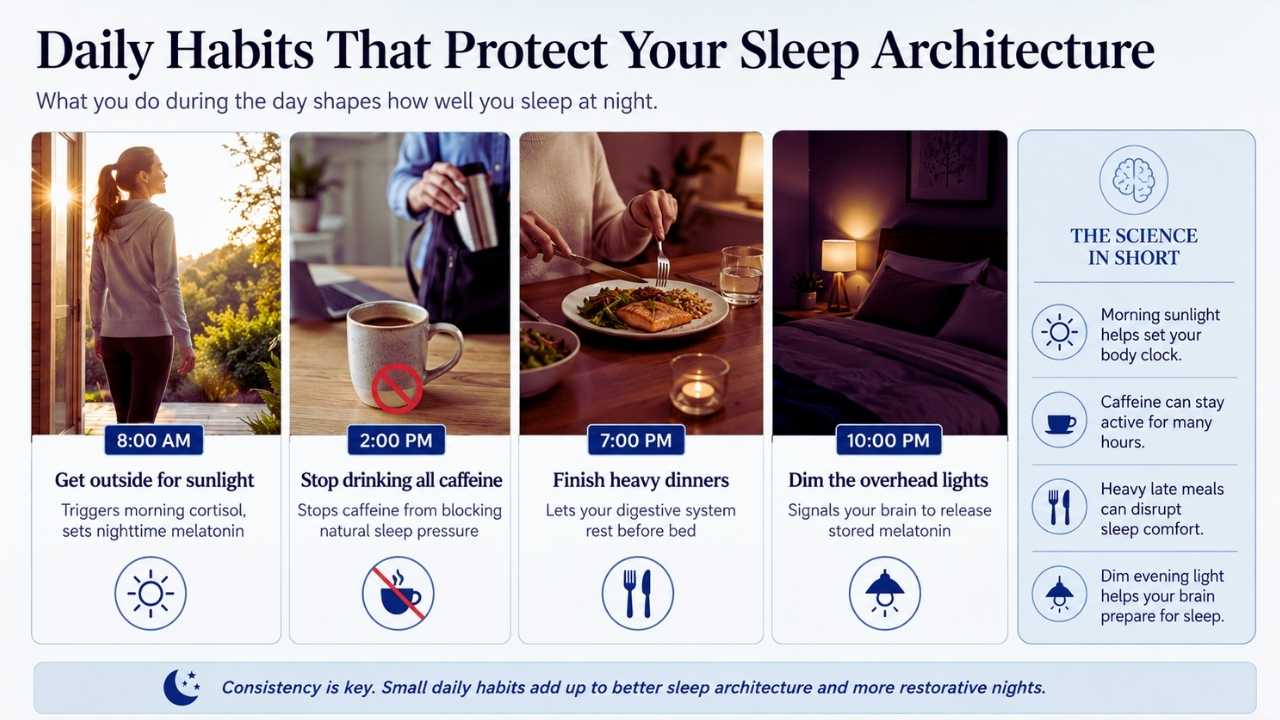
Great sleep absolutely starts the very second your morning alarm goes off and you get out of bed. What you consistently do during the daylight hours dictates exactly how fast you will fall asleep when night arrives. First, you must get outside and view natural sunlight within an hour of waking up to start a vital timer in your brain. This morning light exposure firmly tells your pineal gland to release melatonin about fourteen hours later, preparing you for bed naturally.
Second, you have to respect the caffeine half-life because caffeine aggressively binds to your adenosine receptors and blocks the tired feeling entirely. Since caffeine stays in your system for many hours, drinking a strong coffee in the late afternoon guarantees that half of that stimulant is still keeping you awake at night. Real improve sleep quality science demands a strict caffeine cutoff at least ten hours before your planned bedtime to ensure the chemical leaves your bloodstream completely.
|
Time of Day |
Required Action |
Why It Works Scientifically |
|
8:00 AM |
Get outside for sunlight |
Triggers morning cortisol, sets nighttime melatonin |
|
2:00 PM |
Stop drinking all caffeine |
Stops caffeine from blocking natural sleep pressure |
|
7:00 PM |
Finish heavy dinners |
Lets your digestive system rest before bed |
|
10:00 PM |
Dim the overhead lights |
Signals your brain to release stored melatonin |
Hacking Your Bedroom Environment for Maximum Recovery
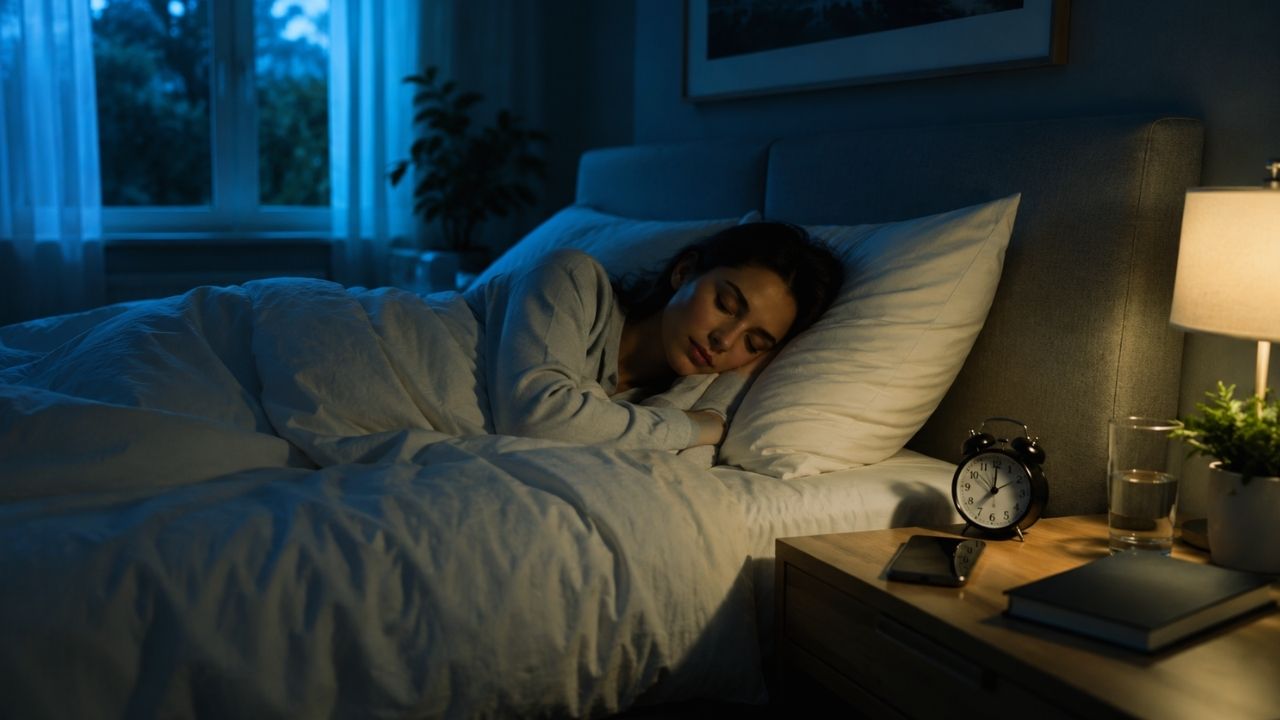
Your physical bedroom setup directly and heavily impacts your ability to achieve and maintain deep, restorative sleep. To successfully hit slow-wave sleep, your core body temperature must drop by two to three degrees Fahrenheit over the night. A hot, stuffy room forces your brain to remain trapped in light sleep, so you should always keep your thermostat between sixty and sixty-seven degrees Fahrenheit. Light and noise are also absolute sleep killers, as streetlamps or glowing phone chargers easily pass light through your closed eyelids and kill melatonin production instantly.
You should immediately buy thick blackout curtains, put dark tape over bright LED lights, and use a white noise machine to block unpredictable sounds like loud traffic outside. Treat your sleeping environment exactly like a dark, cool cave to physically signal to your brain that it is time to shut down completely. Your posture matters greatly too, so if you wake up with a stiff neck, you must upgrade your pillows to keep your head and cervical spine perfectly aligned throughout the night.
|
Room Variable |
Ideal Setting |
Recommended Tools for Success |
|
Temperature |
60-67 Degrees Fahrenheit |
Programmable thermostat, breathable cotton sheets |
|
Room Light |
Absolute total darkness |
Blackout curtains, electrical tape for device lights |
|
Ambient Noise |
Continuous, low-level sound |
Quality white noise machine, foam earplugs |
|
Posture Support |
Aligned spine and neck |
Orthopedic pillows designed for side sleepers |
Diet, Nutrition, and the Truth About Supplements
What you actively put into your digestive system directly dictates how well your body recovers during the night. Alcohol absolutely ruins your sleep architecture; while a stiff drink makes you pass out faster, it acts purely as a chemical sedative rather than a natural sleep aid. It destroys your normal brain wave patterns, completely blocks necessary Rapid Eye Movement sleep, and virtually guarantees you will wake up sweating in the middle of the night. Eating high-fat or heavily spiced meals right before bed also forces your digestive system to work overtime, raising your body temperature and keeping you awake.
Instead of alcohol, you should look into targeted, heavily researched supplements like magnesium bisglycinate to help calm your overactive central nervous system safely. L-theanine, which is naturally found in green tea, quickly lowers daytime anxiety and prepares a racing mind for actual physical rest. Skip the massive doses of over-the-counter melatonin because they usually leave you incredibly groggy the next morning and are better saved strictly for beating travel jet lag across time zones.
|
Supplement Name |
Best Used For |
Normal Dose |
Important Notes |
|
Magnesium Bisglycinate |
Physical muscle relaxation |
200-400mg |
Highly bioavailable and very easy on the stomach |
|
L-Theanine |
Calming a racing, stressed mind |
100-200mg |
Take thirty minutes before getting into bed |
|
Melatonin |
Fixing travel jet lag only |
0.3-1mg |
High doses cause severe morning brain fog |
Leveraging 2026 Sleep Technology for Better Metrics
Modern wearable technology in 2026 gives you incredibly accurate, actionable data on your heart rate variability and personal sleep stages. Devices like smart rings and advanced fitness watches allow you to clearly spot how a late dinner or a stressful meeting completely crushes your deep sleep metrics for the night. We now also have access to smart mattresses that actively pump cool water underneath your sheets to precisely drop your core body temperature throughout the night.
However, you must carefully avoid endlessly obsessing over these digital numbers because chasing the perfect sleep score directly causes orthosomnia, a recognized anxiety disorder where stressing about sleep prevents you from sleeping. You should use the technology temporarily to clearly find your baseline metrics, ruthlessly fix your bad evening habits, and then confidently take the watch off your wrist entirely. The true goal of tracking your health data is to create lasting behavioral changes, not to add another stressful screen to stare at right before you close your eyes.
|
Technology Category |
Examples |
Core Benefit |
Potential Drawback |
|
Biometric Trackers |
Smart rings, fitness watches |
Tracks HRV and sleep stages |
Can easily cause sleep anxiety and orthosomnia |
|
Temperature Control |
Smart mattress water pumps |
Drops core body temp for deep rest |
High initial financial cost to purchase |
|
Light Therapy Alarms |
Dawn simulator devices |
Wakes you up naturally with light |
Requires consistent wake times every day |
Final Thoughts
You cannot just lie in bed every night and blindly hope for a good, restorative sleep to happen on its own. You have to actively take absolute control of your physical environment, strictly fix your daily light habits, and aggressively protect your schedule from modern digital distractions.
If you want to truly master improve sleep quality science, you need to stop fighting your fundamental biology and start giving your brain exactly what it needs. Cool down your room aggressively, block out all the artificial blue light, and put the heavy coffee mug down early in the afternoon. Fix your nightly sleep routine with absolute consistency, and your daytime performance, professional focus, and overall physical health will naturally take care of themselves.
Frequently Asked Questions (FAQs) About Improve Sleep Quality Science
Does my sleeping position actually matter?
Yes. A recent study analyzing sleep positions found that side sleepers generally experience better rest. Interestingly, subjects who preferred to sleep on their right side reported the highest quality sleep (15%), followed by left-side sleepers (31%), and then back sleepers (54%). Side sleeping also heavily reduces the risk of airway collapse and snoring.
Does mouth taping actually help you sleep?
Yes, for many people. Taping your mouth shut with gentle, porous tape forces you to breathe through your nose. Nasal breathing increases nitric oxide production, which improves oxygen circulation, lowers your heart rate, and prevents the airway from collapsing. This often leads to deeper sleep and reduces snoring.
Can you catch up on “sleep debt” over the weekend?
Not entirely. While sleeping in on Saturday can make you feel slightly better, you cannot reverse the cognitive and metabolic damage caused by a week of sleep deprivation. Your brain does not operate on a simple banking system. Consistency beats binge-sleeping.
Why do I always wake up at 3 AM?
This is often related to cortisol spikes or blood sugar drops. As your body prepares for the morning, cortisol naturally rises. If you are highly stressed, or if you ate a high-sugar meal right before bed, your blood sugar crashes, prompting an emergency release of cortisol that wakes you up entirely.
Can yoga actually replace sleep medication?
For some, yes. A 2026 meta-analysis indicated that specific mindfulness-based movement interventions, like yoga and Tai Chi, yielded sleep improvements comparable to clinical therapies over a 12-week period.