


Got debt? When you need to borrow cash or finally pay off what you already owe, you’ll hit a familiar crossroads. Do you apply for a fresh loan, or do you just swipe the plastic already sitting in your wallet? Both tools give you money when you’re in a pinch, but they work in totally different ways behind the scenes.
Pick the wrong one, and you could easily waste thousands of dollars on interest. Worse, you might trap yourself in a cycle of minimum payments that feels impossible to escape. Figuring out personal loans vs credit cards for debt means looking past the monthly payment. You have to dig into the actual math. Interest rates, sneaky fees, and payoff timelines dictate the true cost of your debt.
I’ve seen folks drain their hard-earned savings just trying to keep up with minimum credit card payments simply because they used the wrong tool for the job. As we push through 2026, borrowing costs have shifted dramatically. You need to know exactly what you’re signing up for. In this guide, I’ll break down the math, look at today’s rates, and help you decide which path leaves more money in your bank account.
The Basics of Personal Loans and Credit Cards
Borrowing money comes with rules. Those rules change depending on the exact product you pick. One gives you a lump sum with a hard deadline to pay it back. The other gives you a flexible spending limit with no real finish line. Choosing the right path starts with understanding these mechanics.
How Personal Loans Work?
A personal loan hands you a single, lump-sum payment upfront. If you get approved for $15,000, the bank drops exactly $15,000 into your checking account. In exchange, you agree to pay it back over a set timeframe, usually between one and seven years.
Because personal loans are installment accounts, your monthly payment is totally fixed. You pay the exact same amount on the same day every month until you owe zero. This makes budgeting a breeze. No surprises. No sudden payment hikes.
Most personal loans today are unsecured. You don’t have to put up your house or car as collateral. Lenders just look at your credit score, your income, and your current debt. This strict schedule forces discipline. You literally know the exact date you’ll be debt-free before you sign the paperwork.
How Credit Cards Work?
Credit cards are a whole different beast. They use a revolving line of credit. Instead of cash upfront, the bank gives you a spending limit. You borrow against that limit, pay some back, and borrow again. You only pay interest on the balance you carry over to the next month. Pay it off in full before the due date, and you pay zero interest.
But here’s the catch: credit cards usually have variable interest rates. When the Federal Reserve hikes rates, your credit card rate jumps up, too. Plus, credit cards don’t have a fixed payoff date. The bank only asks for a tiny minimum payment each month—often just 1% to 3% of your balance. If you only pay the minimum, you’ll stay in debt for decades while interest charges pile up.
|
Feature |
Personal Loan |
Credit Card |
|
How you get the money |
One lump-sum deposit |
A revolving limit you use constantly |
|
Interest Rate |
Fixed (never changes) |
Variable (goes up and down) |
|
Payoff Timeline |
Strict schedule (1 to 7 years) |
None (open-ended) |
|
Monthly Payment |
Stays exactly the same |
Changes based on your balance |
|
Debt Paydown |
Forces you to pay off the principal |
Allows you to pay mostly interest |
2026 Interest Rate Comparison
Want to know which option is cheaper? Look at the interest rates. In almost every normal scenario, personal loans carry much lower rates than credit cards. Let’s look at the real numbers for 2026 so you can run your own math.
Average Personal Loan Rates Today
Right now, the average interest rate for a standard personal loan is about 12.28% if you have good credit. But that’s just an average. Have an excellent credit score and solid income? You can find rates starting as low as 6.20%. On the flip side, if your credit is poor, lenders see you as a risk and might quote you rates up to 36%.
Because the rate is locked in, doing the math is easy. Let’s say you borrow $15,000 at 12.5% over four years. Your payment is roughly $398 a month. By the end, you’ll pay about $4,138 in total interest. That specific rate never changes, protecting you from crazy inflation and sudden bank rate hikes.
Average Credit Card Rates Today
Credit card rates are brutal right now. As of 2026, the national average credit card rate sits around 20.50%. Standard rewards cards easily top 22%. Have a store credit card or bad credit? You’re looking at insane rates between 25% and 30%.
Carrying a balance at these rates is financially toxic. If you put that same $15,000 on a card at 21% and only pay $398 a month, it’ll take you over five years to pay it off. Worse, you’ll hand the bank nearly $9,000 in interest. That’s more than double the cost of the personal loan.
|
Financial Tool |
2026 Average Rate |
What to Watch Out For |
|
Personal Loan (Excellent Credit) |
6.20% to 10.50% |
Rates are locked in for the whole term. |
|
Personal Loan (Average) |
~12.28% |
Poor credit can push this to 36%. |
|
Standard Credit Card |
19.50% to 22.00% |
Rates jump when the Fed raises rates. |
|
Retail Store Card |
27.00% to 32.00% |
Usually carries the highest market rates. |
|
Penalty APR Card |
Up to 30.00% |
Hits you if you’re 60 days late on a payment. |
When a Personal Loan Is the Cheaper Option?
Because personal loan rates are so much lower, they usually win when you need to finance something big over a long period. Using a personal loan the right way can literally save you thousands.
Consolidating High-Interest Debt
This is the absolute best use for a personal loan. If you have three maxed-out credit cards charging 22% interest, you’re bleeding cash every month. By taking out a personal loan at 10% or 12%, you can use that cash to wipe out all your credit cards at once.
This cuts your interest rate in half and simplifies your life. No more juggling five due dates and random minimum payments. You just have one fixed bill. Comparing personal loans vs credit cards for debt in this scenario isn’t even a contest. The loan wins every time.
Financing Large, One-Time Expenses
Need a new roof? Hit with a massive medical bill? A personal loan is the smarter play. Big expenses take time to pay off. Slapping a $10,000 plumbing bill on a credit card will wreck your finances if you can’t pay it off in 30 days. The compound interest will eat you alive.
A personal loan spreads that cost out over three to five years at a lower rate. You get the cash to fix the emergency today, but you pay it back at a pace that doesn’t ruin your monthly budget.
Locking in a Fixed Repayment Schedule
Credit card companies want you in debt forever. That’s why minimum payments are so low. A personal loan fixes this by enforcing a strict timeline. You sign a contract to pay the debt down to zero by a specific date. If you lack financial discipline and tend to let balances roll over, a loan removes the temptation to slack off. It forces you to become debt-free.
|
Strategic Use |
Why the Loan Wins |
|
Debt Consolidation |
Swapping 24% for 12% saves you cash immediately. |
|
Home Repairs |
Spreads a $20,000 cost over 5 years with fixed billing. |
|
Medical Bills |
Keeps a hospital bill from maxing out your emergency credit. |
|
Auto Repairs |
Fixes the car now without paying 25% interest on parts. |
|
Forced Discipline |
Removes the ability to reuse the credit line once you pay it down. |
When a Credit Card Might Actually Save You Money?
Credit cards aren’t always the bad guy. Sometimes, swiping plastic is actually the cheapest way to borrow money. You just have to play the game by the bank’s rules.
Taking Advantage of 0% Intro APR Offers
If you have excellent credit, this is the ultimate debt hack. Many banks offer 0% APR promo periods for 12 to 21 months just to steal you away from other banks.
You can transfer your high-interest debt right onto this new card. Pay it off before the promo ends, and you pay exactly zero interest. In the battle of personal loans vs credit cards for debt, a 0% rate obviously beats a 10% loan. But be careful. If you don’t pay it off in time, the rate shoots right back to 20% or higher.
Covering Small, Short-Term Expenses
Need $300 for a new alternator and know you can pay it off next payday? Use a credit card. Personal loans aren’t built for tiny, short-term needs. Most lenders won’t even write a loan for less than $1,000, and the application takes a few days.
Credit cards give you instant cash at the register. Pay the statement balance in full before the due date, and it functions as a free 30-day loan.
Earning Cash Back and Rewards on Everyday Spending
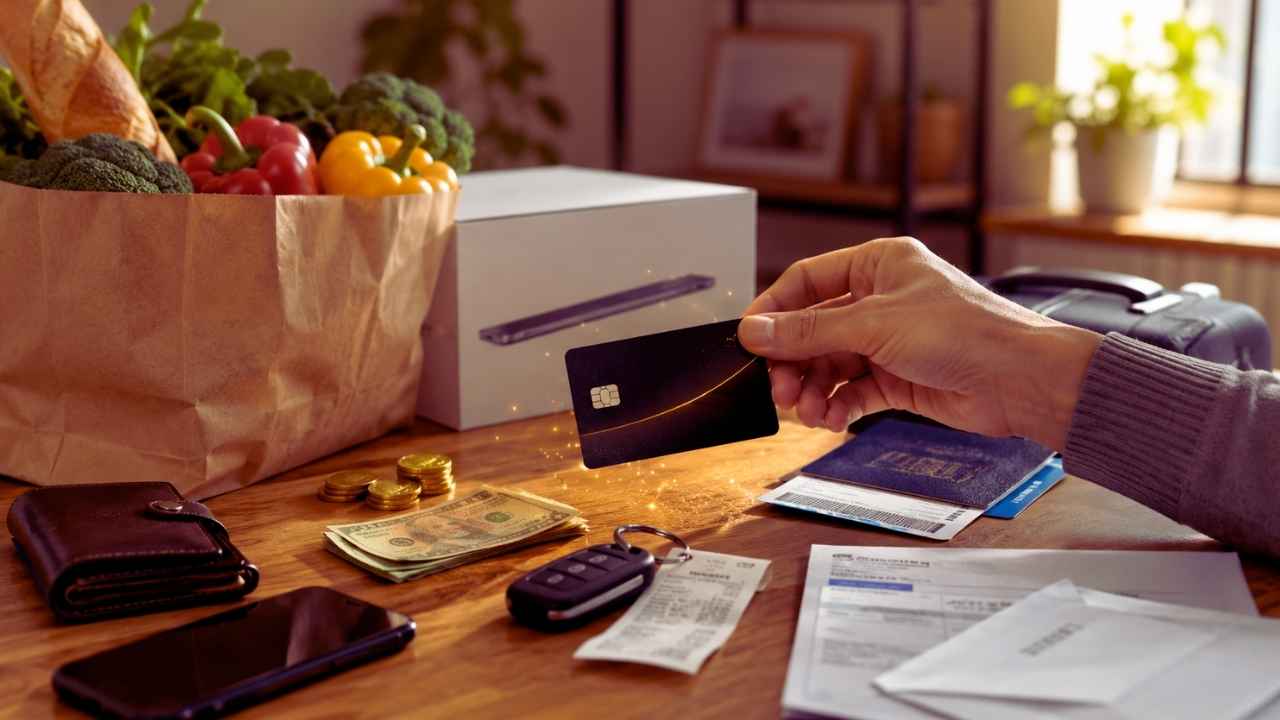
If you treat your credit card like a debit card and absolutely never carry a balance, the bank actually pays you. Many cards give you 2% to 5% cash back on groceries and gas. Got the cash in your checking account for a new laptop? Put it on the card, grab the cash back, and pay it off the next day. A personal loan can’t give you travel miles or cash rewards.
|
Winning Scenario |
The Financial Benefit |
|
0% Balance Transfers |
Pauses all interest charges for up to 21 months. |
|
Minor Emergencies |
Instant access to cash without applying for a new loan. |
|
Quick Travel Needs |
Book a flight instantly without draining your checking account. |
|
Cash Back Hustle |
Earn 2% to 5% back on everyday buys (if paid in full). |
|
Bridging Paydays |
Cover a high utility bill until your next check clears. |
Important Fees That Affect the Total Cost
Interest rates are only half the story. Both tools pack hidden fees that change the real cost of borrowing. You need to run the math on these fees before you sign anything.
Origination Fees on Personal Loans
Some lenders offer no-fee loans, but many charge an “origination fee” to process your application. This fee comes straight out of your loan payout. It usually ranges from 1% to 8%.
If you borrow $10,000 with a 5% fee, the bank keeps $500. You only get $9,500 in your bank account, but you still have to pay back the full $10,000. If your credit isn’t great, you’ll probably get hit with this fee. Make sure the lower interest rate actually makes up for the upfront cost.
Annual Fees and Balance Transfer Fees
Great rewards cards and 0% transfer cards often charge an annual fee. This can range from $95 to over $500. If you just want a card to pay down debt, a high annual fee ruins your savings.
Also, moving debt to a 0% card isn’t free. Banks charge a balance transfer fee of 3% to 5%. Move $10,000, and they instantly slap $400 onto your balance. You have to make sure the interest you save beats that $400 fee.
|
Sneaky Fee |
How It Hits Your Wallet |
|
Loan Origination Fee |
1% to 8% taken right out of your loan payout. |
|
Balance Transfer Fee |
3% to 5% added to your balance when you move debt. |
|
Annual Card Fee |
$95 to $550+ charged yearly just to hold the card. |
|
Standard Late Fee |
$15 to $40 penalty for missing your due date. |
|
Penalty APR |
Pushes your card rate to 30% if you’re 60 days late. |
How Your Credit Score Influences Your Choice?
Your credit score is the bouncer at the club. It decides which cheap debt products you’re actually allowed to use.
Excellent Credit Borrowers
If your FICO score is over 740, you hold all the power. You’ll easily qualify for personal loans under 8% with zero fees. You’ll also get instant approval for the longest 0% APR credit cards.
For you, it comes down to timeline. Can you pay the debt off in 18 months? Use the 0% credit card. Need four years to pay off a massive balance? Take the low-interest personal loan.
Fair to Poor Credit Borrowers
If your score is under 670, borrowing gets expensive fast. You won’t get a 0% credit card. The cards you do get will charge up to 36% interest.
If you apply for a personal loan, lenders will see you as a risk. Expect rates near 30% and an 8% origination fee. Neither option is cheap. But a personal loan still usually edges out a credit card because the fixed payment stops the debt from spiraling completely out of control.
|
Your Credit Tier |
Personal Loan Reality |
Credit Card Reality |
|
Excellent (740+) |
Single-digit APRs. Zero origination fees. |
Instant approval for 21-month 0% APR offers. |
|
Good (690 to 739) |
Mid-teen rates. Small upfront fees. |
Shorter 0% promos and standard rewards cards. |
|
Fair (630 to 689) |
Rates near 20% with mandatory origination fees. |
Stuck with standard 28% retail cards. |
|
Poor (under 629) |
Rates hitting 36%. Maximum 8% origination fees. |
Tiny limits. Might need a secured deposit. |
Step-by-Step Guide to Making Your Decision
Still staring at a pile of bills and unsure what to do? Stop guessing. Follow this simple process to find the exact mathematical answer for your budget.
Assessing Your True Debt Load
First, add up every dollar you owe. Then, look hard at your monthly budget. How much cash can you genuinely afford to put toward this debt every month? Divide your total debt by your monthly payment. This tells you exactly how many months it will take to hit zero. This timeline is the most important number in this entire process.
Picking the Right Tool for the Job
Got your timeline? Great. If it’s under 21 months and your credit is solid, grab a 0% balance transfer card. Pay the transfer fee and knock it out.
If it’s going to take you longer than two years, go to a reputable online lender and get prequalified for a personal loan. Prequalification doesn’t hurt your credit score. Compare the loan’s interest and fees against what you’re paying now. Go with the one that keeps more cash in your pocket.
|
The Plan |
What You Actually Do |
|
Step 1: Calculate Totals |
Add up all your existing balances across every account. |
|
Step 2: Set the Budget |
Find your max monthly payment to get your strict timeline. |
|
Step 3: Check Eligibility |
Pull your credit score to see if 0% cards are realistic. |
|
Step 4: Get Prequalified |
Use soft-pull tools to see real personal loan rates. |
|
Step 5: Run the Math |
Compare the loan’s interest vs the card’s transfer fee. Pick the winner. |
Final Thoughts
Choosing between personal loans vs credit cards for debt boils down to knowing your numbers and admitting your spending habits. Need strict discipline, locked-in payments, and a guaranteed finish line? The personal loan wins every single time. It stops the bleeding and forces you to deal with the problem.
But, if your credit is awesome, you’re highly organized, and you can kill the debt in under two years, a 0% credit card is mathematically unbeatable.
Whatever you do, don’t just sit there paying the minimums while hoping the debt magically vanishes. Take an hour today, run the math, and pick a tool. Taking control right now will literally save you thousands of dollars and get you your life back.
Frequently Asked Questions (FAQs) About Personal Loan vs Credit Card
When figuring out personal loans vs credit cards for debt, people usually hit the same roadblocks. Let’s clear up the confusion so you don’t make a mistake that tanks your credit score.
Does getting a personal loan hurt your credit score?
Applying causes a hard inquiry, which drops your score a few points temporarily. But, if you use the loan to pay off maxed-out credit cards, your credit utilization ratio plunges. That almost always triggers a massive, rapid jump in your credit score, easily erasing the tiny hit from the inquiry.
Can I use a personal loan to pay off my car?
You can, but it’s usually a bad idea. Auto loans are secured by the car itself, making the interest rates way lower than unsecured personal loans. If you want a better rate on your car, just apply for a standard auto refinance loan.
What happens if I can’t pay my personal loan?
They can’t repossess your house or car right away. But they will report the default, trashing your credit score for up to seven years. After that, they’ll hand your account to aggressive debt collectors and might even sue you to garnish your wages.
Is it better to keep credit card balances at zero?
Yes! 100% yes. The idea that carrying a small balance builds your credit score is a total myth. Carrying a balance just hands free money to the bank. To build great credit, use the card normally and pay the statement balance in full every single month.
Are there penalties for paying off a personal loan early?
Most modern, reputable lenders don’t charge prepayment penalties anymore. You can pay the loan off three years early and save a ton of interest. But always check the fine print before you sign. If they charge a penalty for paying early, walk away and find another lender.