

The job market in 2026 is moving faster than ever, and the first sixty seconds of your meeting are still the most important. When a recruiter looks at you and asks for your story, they aren’t just being polite. They are checking to see if you can communicate clearly and if you actually know who you are as a professional.
Knowing how to answer tell me about yourself is about much more than just listing where you went to school or what your last job title was. It is your chance to show that you are savvy, tech-forward, and ready to solve their specific problems. In a world where AI does the heavy lifting, your ability to tell a human story is what actually gets you the offer. You need to be ready to speak about your impact and your future goals without sounding like you are reading from a script.
Why This Question Still Matters in 2026?
The reason this question hasn’t gone away is that it serves as a high-speed assessment of your personality and priorities. Even though many companies use automation for the first few rounds, the final decision always comes down to a human connection. Interviewers use this opening to see how you handle an open-ended prompt and whether you can stay focused under pressure.
If you can explain your career in a way that makes sense for their company, you prove you’ve done your homework. It also sets the stage for everything that follows in the conversation. By choosing which parts of your life to highlight, you actually tell the interviewer which questions to ask next. You aren’t just answering a question; you are taking control of the room.
Understanding the Recruiter’s Intent
Hiring managers in 2026 are looking for people who can adapt to a hybrid or remote setup without constant hand-holding. When they ask you to talk about yourself, they are looking for signs of autonomy and leadership. They want to hear about a time you took a project and ran with it. They are also checking for “culture add” to see if you bring a new perspective to their existing team.
|
Feature |
Purpose in 2026 |
Impact on Hiring |
|
First Impression |
Sets the energy for the entire talk |
Determines the “vibe” and rapport |
|
Narrative Control |
You choose which wins to highlight |
Steers the follow-up questions |
|
Communication Check |
Proves you can be concise and clear |
Essential for hybrid/remote roles |
|
Strategic Alignment |
Connects your past to their future |
Shows you understand company goals |
The Winning Framework: Present, Past, Future
The most effective way to structure your response is by using a three-part timeline that keeps you from rambling. You start with what you are doing right now, touch on how you got there, and end with why you are sitting in that specific chair today. This prevents the “resume read-back” where you just list things the recruiter already knows.
Most people spend way too much time on their college days and not enough on their recent wins. In 2026, the “Present” part of your answer should be the strongest because it shows what you can do for the company on day one. You want to make sure your answer feels like a bridge between your current skills and their current needs.
Present: Your Current Impact
Talk about your current role and a major project you just finished. Use a real number if you can, like how much money you saved or how many new users you brought in. You might say, Right now, I’m managing backend systems for a fintech startup where we just scaled to ten thousand daily transactions.
Past: Your Relevant Experience
Pick one or two highlights from your past that prove you have the right background. You don’t need to mention every job you’ve had since you were twenty. Focus on the moments where you learned something that makes you better at the job you want now.
Future: Your Career Goals
End by explaining why this new role is the perfect next step for you. This shows you have a plan and that you aren’t just applying to every open listing you find on Google. It makes the company feel like they are part of your success story.
|
Segment |
Time Allocation |
Key Objective |
|
Present |
40% of your time |
Show current value and recent wins |
|
Past |
30% of your time |
Provide context and proof of skills |
|
Future |
30% of your time |
Link your goals to the company’s needs |
Incorporating 2026 Trends into Your Answer
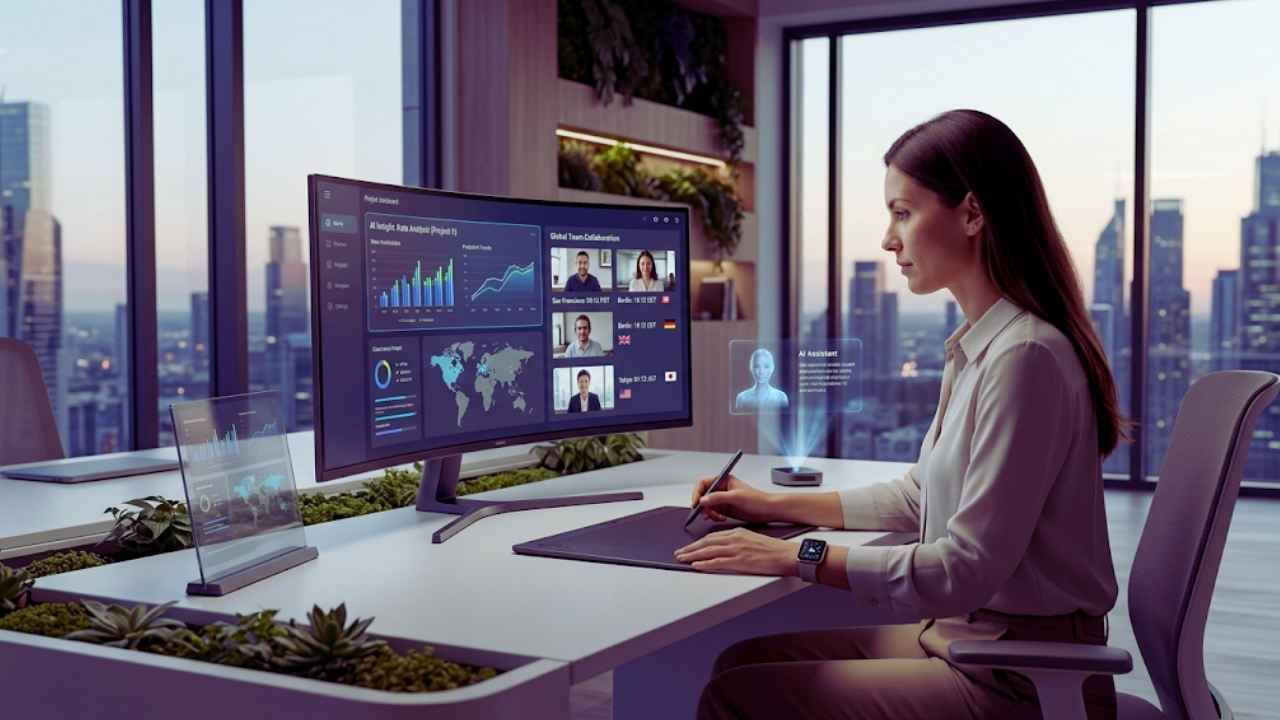
To look like a top-tier candidate in 2026, you need to show that you are comfortable with modern ways of working. This means mentioning how you use technology to be more productive or how you stay connected with a global team. It isn’t enough to just say you are a hard worker; you have to show you are a smart worker who knows how to use the latest tools.
For example, mentioning how you used AI to analyze data or how you managed a project across three different time zones shows you are ready for a modern office. These small details tell the recruiter that you won’t need a lot of training to get up to speed. It also shows you are someone who keeps an eye on where the industry is going.
Highlighting Tech Fluency and AI Literacy
Even if you aren’t in a technical role, you should mention your comfort with digital platforms. Talk about how you use automation to handle boring tasks so you can focus on more important things. This shows you are efficient and forward-thinking.
Emphasizing Hybrid Collaboration
Since most offices in 2026 aren’t five days a week in person, show that you can build relationships through a screen. Mention a time you led a team meeting on video or worked on a shared document with someone in a different country. This proves you are a “global” professional.
|
Trend |
What to Say |
Why it Wins |
|
AI Integration |
“I use AI to speed up my research.” |
Shows you are efficient and modern |
|
Remote Autonomy |
“I’ve led projects with zero supervision.” |
Proves you are a self-starter |
|
Digital Presence |
“I’m a pro at collaborative tools like Slack.” |
Shows you can communicate anywhere |
|
Continuous Learning |
“I just finished a course on data ethics.” |
Shows you stay updated on trends |
Industry-Specific Examples and Scripts
Every field has its own expectations for how you should present yourself. A software developer needs to talk about architecture and scale, while a marketing manager needs to talk about growth and brand voice. When you are figuring out how to answer tell me about yourself, you should use the words that your industry uses every day. This makes the recruiter feel like you are already one of them.
For instance, a nurse might focus on patient safety and new medical tech, while a sales pro would lead with their revenue numbers and client retention. Tailoring your story to the specific industry shows that you understand the unique pressures and goals of that sector. It moves you from being a “general” candidate to being a “specialized” expert.
The Tech and Engineering Approach
If you are a developer, lead with your stack and the scale of your work. Talk about how you handle complex problems and your experience with things like Kafka or Next.js. Mentioning a specific technical challenge you solved is much better than just saying you “write code.”
The Creative and Marketing Approach
If you are in a creative field, your intro is a sample of your work. You need to be engaging and tell a story that has a clear beginning, middle, and end. Talk about the data behind your creativity and how your campaigns actually helped a company grow.
|
Industry |
Best “Hook” |
Key Language to Use |
|
Software Dev |
A system you built that didn’t crash |
“Scalability,” “Architecture,” “Agile” |
|
Healthcare |
A time you improved patient care |
“Safety,” “Outcome,” “Telehealth” |
|
Sales/Marketing |
A number showing how much you sold |
“ROI,” “Conversion,” “Brand Equity” |
|
Education |
How you used tech to help students |
“Engagement,” “Platform,” “Literacy” |
Common Mistakes to Avoid in Your Introduction
There are a few things that can kill your chances before the interview even gets moving. The biggest mistake is talking too much about your personal life or your childhood. Recruiters don’t need to know where you grew up or what your hobbies are unless they are directly related to the job. Another trap is being too modest.
You aren’t bragging; you are just stating the facts of your career. On the flip side, don’t be robotic. If you sound like you are reading a script, the recruiter will lose interest. You want to sound like a person having a conversation, not a machine giving a report. Avoid using “AI-speak” like saying your role was “multifaceted” or that you work in an “evolving landscape.” Use normal words instead.
The Resume Recital Error
Don’t just go through your resume from top to bottom. The recruiter has already read it. Use your time to tell the “why” and the “how” behind the bullet points on the paper. Give them the context that they can’t get from a PDF.
The Negative Past Trap
Never speak poorly about your old boss or your old company. Even if they were terrible, find a way to stay positive. If you complain about your past, the recruiter will worry that you will eventually complain about them too.
|
Red Flag (Avoid) |
Green Flag (Do This) |
|
“I’ve always loved computers since I was five.” |
“I’ve spent ten years building web apps.” |
|
“My last boss didn’t appreciate my work.” |
“I’m looking for a new challenge in a fast-paced team.” |
|
Talking for five minutes without stopping. |
Keeping your answer to about ninety seconds. |
|
Mentioning your personal debt or family issues. |
Focusing on your professional certifications. |
How to Handle Different Interview Formats?
In 2026, you might find yourself in three different types of interviews, and each one needs a slightly different approach. A video call is the most common, but some companies now use asynchronous interviews where you record your answer to a computer prompt. In-person interviews are becoming rarer, but they are often the final hurdle for big roles. For a video call, you need to focus on your lighting and eye contact with the camera.
For a recorded prompt, you have to be incredibly concise because the timer will cut you off. If you are lucky enough to be in person, your body language and the way you walk into the room say just as much as your words. Being ready for all three shows that you are adaptable and tech-savvy.
Mastering the Video Call Intro
On camera, your facial expressions matter more than they do in person. Smile when you start and try to look at the little green light on your laptop, not the recruiter’s face on the screen. This makes it look like you are making eye contact.
Nailing the Asynchronous Recording
These are stressful because there is no human to talk to. Treat it like a thirty-second elevator pitch. Get to your biggest win as fast as you can. Practice a few times before you hit the “record” button so you don’t run out of time mid-sentence.
|
Interview Type |
Main Focus |
Pro Tip |
|
Live Video Call |
Eye contact and lighting |
Look at the camera, not the screen |
|
Async Recording |
Conciseness and timing |
Get your best fact out in the first 20 seconds |
|
In-Person Meeting |
Body language and energy |
Use your hands to show enthusiasm |
|
Phone Interview |
Tone of voice and clarity |
Stand up while talking to sound more energetic |
Refining Your Delivery and Confidence
Once you have your words down, you need to work on how you say them. The goal is to sound natural, not like you’ve memorized a poem. Record yourself on your phone and listen to it. Are you saying “um” or “like” too many times? Are you speaking too fast? In 2026, the most confident candidates are the ones who can speak slowly and clearly. They don’t rush to fill every second of silence.
Use the “two-minute rule” to make sure you aren’t going on for too long. If your answer is ninety seconds of high-impact information, you will look much more professional than if you ramble for four minutes. Also, don’t be afraid to take a breath before you start. It shows you are thinking and that you are in control of the conversation.
The Hook Technique
Start with a strong statement that grabs their attention. Instead of saying I’m a marketer, try I’ve spent the last three years figuring out exactly why people click on green buttons instead of red ones. This makes the interviewer want to hear more.
Ending with a Question
A great way to show you are engaged is to end your answer by asking them a question. You could say, I’m really excited to bring that experience to your team. I saw your company is moving into the Asian market—is that a big focus for this role?
|
Step |
Action |
Check |
|
Speed |
Speak at a conversational pace |
[ ] |
|
Fillers |
Cut out the “ums” and “likes” |
[ ] |
|
Ending |
Toss the ball back with a question |
[ ] |
|
Energy |
Sound like you actually want to be there |
[ ] |
Final Thoughts
Mastering how to answer tell me about yourself is the best thing you can do for your career this year. It isn’t just about getting through the first few minutes; it’s about proving that you are the exact right person for the job. By using the Present-Past-Future framework, avoiding common mistakes, and showing that you understand modern tech trends, you will stand out from the crowd.
Remember that an interview is a two-way street. You are checking them out just as much as they are checking you out. Stay confident, keep your answer under two minutes, and focus on the value you bring to the table. If you do that, you’ll find that the rest of the interview feels much more like a natural conversation and less like an interrogation. Good luck out there—you’ve got this.
Frequently Asked Questions (FAQs) About Tell Me About Yourself Interview
1. What if I have no experience and just graduated?
Focus on your academic projects and any clubs you were in. Talk about the skills you learned, like leadership or time management, and how they apply to the job. Show that you are eager to learn and that you are already up to speed on the latest industry tools.
2. How long should my answer actually be?
Aim for ninety seconds to two minutes. If you go shorter than a minute, you might seem like you have nothing to say. If you go longer than two minutes, the interviewer might start checking their watch. It’s better to leave them wanting more than to bore them.
3. Is it okay to talk about my volunteer work?
Only if it’s relevant to the job or shows a skill like leadership or organization. If you organized a giant charity event, that’s great to mention. If you just like to walk dogs on the weekend, keep it for a later conversation.
4. Can I ask the interviewer to clarify what they want to hear?
It’s usually better to just dive in. If you are really nervous, you can ask, ~Would you like me to start with my current role or give a broader overview of my career?~ But most recruiters prefer you to take the lead.
5. Should I mention my remote work setup?
If the job is remote or hybrid, definitely. Mention that you have a dedicated workspace and that you are comfortable working without someone looking over your shoulder. This is a huge plus for managers who are worried about productivity in a home office.