


You stare at your screen every Friday afternoon, exhausted from your standard office job, wondering if this is all there is. You want more money, more freedom, and a solid backup plan. You are not alone. The cost of living is high, and relying on a single employer feels riskier than ever before. Millions of people are building secondary income streams right now to secure their financial futures. But doing it without crashing and burning takes serious strategy.
Juggling forty hours a week at your main job while trying to get a new venture off the ground is a massive challenge. It means giving up some leisure time and getting incredibly strict about your daily routine. The payoff, however, can change your life entirely. Whether your goal is to pay down debt, save for a massive purchase, or eventually replace your salary, this guide covers exactly how to start a side hustle while working full time without losing your mind.
Why Start a Side Hustle in Today’s Economy?
The standard career path is no longer the only way to build wealth or secure your future. Millions of professionals are realizing that relying on a single income stream is an incredibly risky financial move. Building a secondary business provides a massive safety net against sudden corporate layoffs or industry shifts.
It also allows you to explore new passions and test market demand without walking away from your main paycheck. In 2026, the technological barrier to entry has never been lower, making this the perfect moment to launch.
|
Motivation |
Description |
Real World Benefit |
|
Financial Security |
Creating a backup income source. |
Protection against sudden job loss. |
|
Debt Repayment |
Generating extra cash to pay off loans. |
Reaching financial zero much faster. |
|
Skill Development |
Learning new tools and industries. |
Becoming more valuable in the job market. |
|
Wealth Building |
Saving extra money for investments. |
Accelerating early retirement goals. |
The Rise of the Gig Economy
The global gig economy continues to expand rapidly, completely changing how we view employment. Recent statistics from Monzo and other financial platforms indicate that a massive portion of the workforce now participates in some form of secondary income generation. People are no longer just doing it for fun; they are treating these projects as serious micro-businesses.
From freelance writers to software developers consulting on Next.js architectures, the market for specialized, part-time talent is booming. Companies prefer hiring fractional experts for specific projects rather than bringing on full-time staff, which creates a perfect environment for you to offer your skills.
Building a Financial Safety Net
Relying entirely on one company for your livelihood is a dangerous game. Corporate restructurings happen without warning, leaving loyal employees scrambling to pay their bills. A secondary income stream acts as your personal insurance policy. When you generate your own revenue, you take back control of your financial stability.
Even an extra five hundred dollars a month can cover essential utilities or boost your emergency savings. This financial cushion gives you incredible peace of mind and makes the stress of your primary job much easier to handle.
Assessing Your Current Situation Before You Begin
You cannot simply launch a business without understanding your current personal commitments. Many ambitious people burn out quickly because they fail to audit their existing schedule before taking on more work. You must figure out exactly how many hours you actually have available each week to dedicate to a new project.
Figuring out how to start a side hustle while working full time requires brutal honesty about your daily routine and energy levels. This strict assessment phase determines whether your business idea is realistic or just a fantasy that will drain you.
|
Assessment Area |
What to Measure |
Actionable Next Step |
|
Weekly Hours |
Time spent working, commuting, and sleeping. |
Find 5 to 10 hidden hours in your week. |
|
Energy Peaks |
When you feel most alert and creative. |
Schedule complex tasks during peak times. |
|
Financial Runway |
How much you can spend to start. |
Keep initial costs as close to zero as possible. |
|
Skill Inventory |
Things you already know how to do well. |
Pick an idea that uses your existing talents. |
Conducting a Strict Time Audit
You cannot manage what you refuse to measure. Spend one entire week tracking exactly how you spend every single hour of your day. Use a simple spreadsheet or a note-taking app on your phone to log everything. Track your commute, your working hours, your meals, your screen time, and your sleep schedule.
Most people are shocked to discover how many hours they lose to mindless scrolling on social media or binge-watching television shows. Identifying these hidden, wasted hours is the very first step to finding the time you need for your new business venture.
Evaluating Your Daily Energy Levels
Having free time means nothing if you have zero energy left to use it. If you find two free hours at nine o’clock at night but you are entirely exhausted from your day job, you will not get any productive work done. Notice when you naturally feel the most focused and creative.
Are you a morning person who can wake up early and grind for two hours before your commute? Or do you get a second wind in the late evening? Aligning your new business tasks with your natural energy peaks is absolutely crucial for long-term sustainability.
Finding the Right Idea for Your Skills
Picking the right business model makes all the difference between a fun, profitable project and a miserable second job. You want a venture that leverages the skills you already have rather than forcing you to start from scratch. Do not try to learn a completely new industry while also trying to balance your demanding day job.
Focus on business models that offer flexibility, low startup costs, and highly scalable growth. The absolute best side gig feels like a natural extension of your existing knowledge base and professional experience.
|
Business Model |
Pros |
Cons |
|
Freelancing |
Fast cash, zero startup costs. |
Trading time for money, hard to scale. |
|
Digital Products |
Passive income potential, scalable. |
Takes time to build, marketing is tough. |
|
E-Commerce |
Tangible products, high demand. |
Inventory management, shipping hassles. |
|
Content Creation |
Builds a personal brand, sponsorships. |
Very slow to monetize, algorithms change. |
Service-Based vs. Product-Based Models
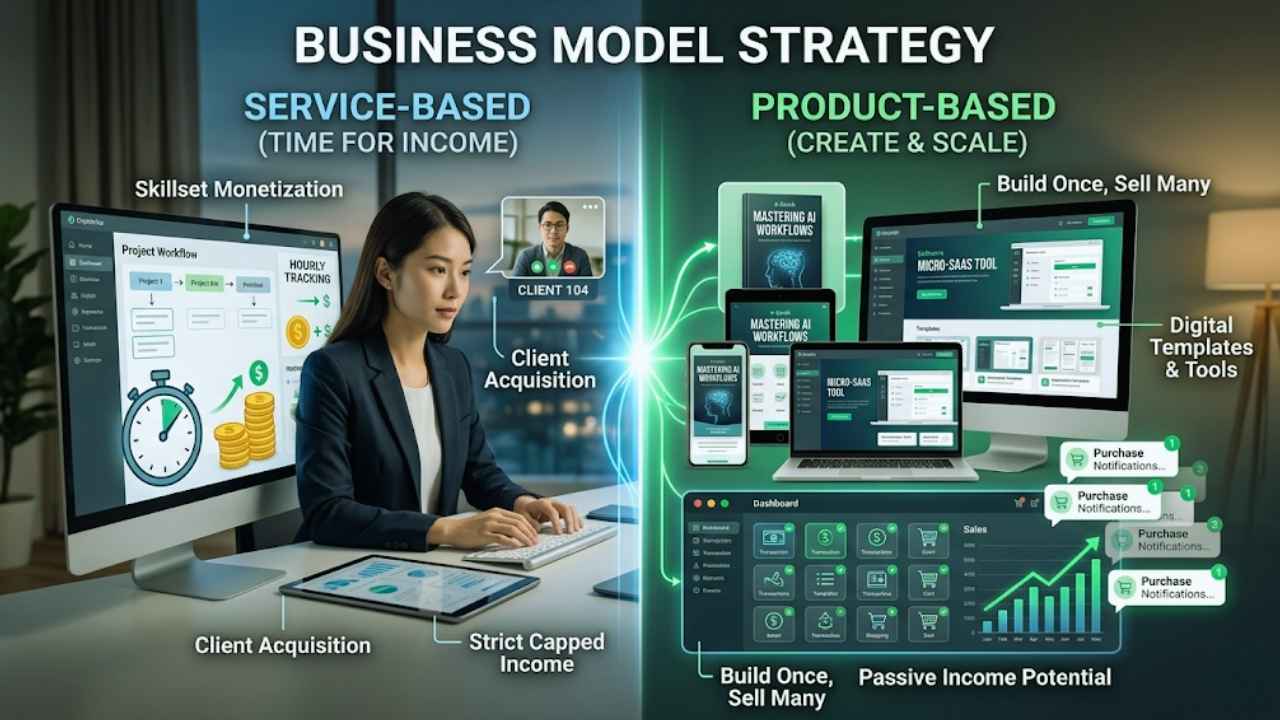
Service-based models involve trading your time for money, such as freelance writing, graphic design, or technical consulting. These are usually the easiest and cheapest to start because you already possess the skills and just need to find clients willing to pay for them. The downside is that your income is strictly capped by the number of hours you can physically work.
Product-based models involve creating something once and selling it multiple times. This could be selling digital templates, e-books, or access to a software tool. Digital products are highly recommended for busy professionals because they offer the potential for passive income once the initial creation phase is finished.
Leveraging AI Tools for Faster Growth
Artificial intelligence has completely changed the game for independent creators and small business owners. Smart founders use AI tools to handle heavy lifting, allowing them to compete with larger agencies. For instance, generating high-fidelity visual assets used to require a full-time designer.
Now, utilizing platforms like ImagineLab.art or Black Forest Labs allows you to produce stunning, text-free images and marketing materials in seconds. You can use tools like Claude to brainstorm content strategies or draft marketing emails. By outsourcing the tedious work to AI, you preserve your limited time for high-level strategy and client acquisition.
Legal Considerations and Protecting Your Main Job
Protecting your primary source of income is your absolute top priority when starting a new venture. You never want to put your current job in jeopardy over a new business idea that has not even made money yet. Companies have strict rules about what you can and cannot do outside of office hours, especially if it relates to their industry.
You need to read your employment contracts closely to avoid massive legal trouble down the line. Setting a clear, impenetrable boundary keeps your professional reputation safe and prevents unnecessary drama.
|
Legal Consideration |
Why It Matters |
How to Handle It |
|
Non-Compete Clauses |
Prevents you from working in the same field. |
Check state laws; pick a different industry. |
|
Conflict of Interest |
Stops you from stealing company clients. |
Never pitch to your employer’s customers. |
|
Equipment Usage |
Companies track what you do on their devices. |
Buy your own laptop and phone for business. |
|
Tax Obligations |
Extra income means extra taxes. |
Save 30% of all profits in a separate account. |
Reviewing Your Employment Contract
Dust off the contract you signed when you were originally hired and read the fine print carefully. You are specifically looking for exclusivity clauses, which might state that you must devote your full time and professional attention strictly to the company.
While laws protecting workers from aggressive exclusivity clauses have strengthened in many regions recently, salaried professionals still need to be incredibly careful. If your contract strictly forbids outside business activities, you need to understand the risks before you register a website or accept a single dollar.
Understanding Non-Competes and Exclusivity Clauses
Non-compete clauses and conflict of interest policies are the biggest hurdles you will face. If you work as a backend engineer managing Kafka clusters for a logistics company, starting a solo consulting gig offering the exact same service to their competitors is a massive legal conflict.
Your employer could easily argue that you are stealing potential clients or utilizing insider knowledge. Always ensure your new business operates in a completely different lane from your day job. Do not use company laptops, software licenses, or mobile phones for your personal projects under any circumstances.
A Step-by-Step Launch Strategy for Busy Professionals
Getting your idea off the ground requires intense speed and laser-like focus. You do not have the luxury of spending six months planning every little detail or tweaking a logo. The primary goal is to get your product or service in front of real customers as quickly as humanly possible.
Treat your initial launch as a raw experiment designed purely to gather feedback and test the market. Mastering how to start a side hustle while working full time means choosing action over perfection every single day.
|
Launch Phase |
Key Action |
Goal |
|
1. Validation |
Pitch the idea to real people. |
Get someone to say they will pay for it. |
|
2. Building |
Create a Minimum Viable Product. |
Have something functional to sell. |
|
3. Operations |
Open a business bank account. |
Separate personal and business money. |
|
4. Marketing |
Launch a simple landing page. |
Start collecting email addresses or leads. |
Validating Your Business Idea
Before you spend money building a website or writing thousands of words of code, make absolutely sure people actually want to buy what you are selling. Talk to potential customers, run a small social media poll, or offer your service for free to one or two beta clients in exchange for honest testimonials.
If you cannot find anyone willing to pay for your idea during this validation phase, pivot to a new idea immediately. Wasting your severely limited free time on a product nobody wants is a fatal mistake.
Building a Minimum Viable Product (MVP)
Your new business does not need a perfect logo, a massive content strategy, or a complex website on day one. You just need to create a Minimum Viable Product. If you are a consultant, your MVP is a simple one-page website and a sharply written LinkedIn profile.
If you are selling an online course, your MVP might be a live video workshop rather than a fully polished, highly edited video series. Get your core offer to the market fast so you can start generating revenue and learning exactly what your customers actually care about.
Managing Your Time Without Losing Your Mind
Time is the absolute most valuable asset you have when running two demanding careers. You simply cannot afford to waste hours scrolling through social media feeds or watching random videos. Successful founders use strict organizational systems and automation tools to stay aggressively on track.
Mastering how to start a side hustle while working full time means becoming incredibly protective of your free time. You must learn to say no to distractions, low-value networking events, and things that do not directly grow your business.
|
Time Management Tactic |
Description |
Impact on Business |
|
Time Blocking |
Assigning specific tasks to calendar slots. |
Prevents procrastination and ensures focus. |
|
The Two-Minute Rule |
Doing small tasks immediately. |
Keeps your inbox and to-do list clear. |
|
Task Batching |
Grouping similar tasks together. |
Reduces mental fatigue from switching contexts. |
|
Automated Scheduling |
Using tools to book client calls. |
Eliminates endless back-and-forth emails. |
The Power of Strategic Time Blocking
Time blocking involves scheduling highly specific blocks of time for exact tasks, rather than working randomly from a generic to-do list. Look at your calendar and block out your absolute non-negotiables first: your day job, your sleep, your commute, and your family time. Then, locate the empty slots.
Block out Tuesday and Thursday evenings from seven to nine strictly for your business. Treat these calendar blocks as immutable, highly important appointments with yourself. If you respect your schedule, your business will grow.
Automating Tasks with Technology
Because your time is severely limited, you must rely heavily on technology to do the heavy lifting. Use scheduling tools to automate your social media posts for the entire week in one sitting. Set up automated email sequences to welcome new subscribers, deliver digital products, or send invoices.
As soon as you start generating a steady profit, aggressively reinvest that money into outsourcing. Hire a virtual assistant to handle basic data entry or customer service emails. Buying back your own time is the smartest investment a busy founder can make.
Avoiding Burnout and Maintaining Balance
Pushing yourself too hard for too long will eventually break your physical and mental health. I often look to sports legends like Sachin Tendulkar, who demonstrated incredible, long-term resilience over a demanding career, to understand the importance of pacing.
You must deliberately build rest into your weekly schedule to stay sharp and avoid collapsing. Ignoring your basic need for downtime will quickly make you resent the new business you are trying to build. True success means growing your income while still actually enjoying your life.
|
Burnout Warning Sign |
What It Means |
Immediate Fix |
|
Constant Fatigue |
You are not getting enough sleep. |
Enforce a strict laptop shutdown time. |
|
Irritability |
Your stress levels are too high. |
Take a full 24 hours entirely off work. |
|
Missed Deadlines |
You have taken on too much work. |
Fire bad clients or extend your timelines. |
|
Loss of Passion |
You are treating it like a chore. |
Revisit your original goals and motivations. |
Setting Clear Personal Boundaries
You have to know exactly when to turn off the laptop and walk away. It is incredibly easy to fall into the trap of working constantly, blurring the lines between your main job, your side business, and your personal life. Set a hard stop time every single evening and stick to it.
Communicate these boundaries clearly to your family and friends so they understand your busy schedule, but also make sure you are fully present when you are spending time with them. A business is not worth destroying your personal relationships.
Scheduling Guilt-Free Downtime
You cannot pour water from an empty cup. You must actively schedule time to do absolutely nothing related to work, and you must do it without feeling guilty. Whether that means taking a long walk on Sunday morning, reading a good book, or just watching a movie, your brain needs time to disconnect and recover.
Chronic overworking destroys your ability to make smart, strategic decisions. “Rest is not a waste of time; it is a biological necessity.” ~ Anonymous. Treat your recovery time just as seriously as you treat your work time.
Scaling Your Business vs. Keeping It Small
Eventually, you will reach a point where your side gig generates real, consistent revenue. At this critical stage, you have to decide what you want the future of this business to look like. Not every small project needs to turn into a massive, venture-backed corporation.
Sometimes keeping things small, highly profitable, and manageable is the absolute smartest move you can make. If you do want to go big and hire a team, you need a incredibly solid financial exit strategy from your day job.
|
Scaling Path |
Best For |
Requirement |
|
The Lifestyle Business |
People who want extra spending money. |
Keep overhead low, refuse complex projects. |
|
The Full-Time Pivot |
People who hate their day job. |
Six months of emergency savings in the bank. |
|
The Agency Model |
People who want to build a large company. |
Hiring freelancers and standardizing processes. |
|
The Passive Income Route |
People who want money while they sleep. |
Heavy focus on SEO and digital products. |
Knowing When to Quit Your Full-Time Job
If your ultimate goal is to become a full-time entrepreneur, you need a calculated exit strategy. Do not quit your job in a moment of frustration. Most financial experts recommend waiting until your new venture consistently generates at least eighty to one hundred percent of your day job salary for six consecutive months.
You should also have a dedicated emergency fund that can cover six months of your basic living expenses. Quitting prematurely puts massive, crushing financial pressure on your new business, stifling your creativity and forcing you to make desperate choices.
Enjoying the Extra Income
Not every side hustle needs to become a million-dollar empire, and you should ignore anyone who tells you otherwise. It is perfectly acceptable and highly rewarding to keep your business small.
If your original goal was simply to make an extra thousand dollars a month to fund family vacations, pay off a car loan, or buy better tech gear, and you have achieved that goal, you have already won. Enjoy the perfect balance of having a secure, reliable day job and a fun, profitable passion project on the side.
The Best Strategies on How to Start a Side Hustle While Working Full Time
Executing a dual-career strategy requires a savvy approach to mental bandwidth and task prioritization. The most successful founders do not work twenty-four hours a day; they work smarter. They leverage high-end tools to do the heavy lifting and focus entirely on revenue-generating activities.
To master this balance, you have to ruthlessly cut out anything that does not push the needle forward. This specific section outlines the tactical mindset shifts required to survive the first brutal six months of your journey.
|
Strategy |
Implementation |
Expected Result |
|
The 80/20 Rule |
Focus on the 20% of work bringing 80% of money. |
Massive reduction in wasted effort. |
|
Say No to Meetings |
Refuse calls that could be emails. |
Reclaiming hours of lost productivity. |
|
Standard Operating Procedures |
Document how you do your work. |
Allows you to easily hire help later. |
|
Visual Checklists |
Create simple trackers for daily tasks. |
Keeps momentum high even when tired. |
Ruthless Prioritization
When you only have ten hours a week to build a company, you cannot waste time designing the perfect business card. You must prioritize tasks that directly lead to sales. If an activity does not put money in your bank account or attract a new customer, push it to the bottom of the list.
Content strategy, SEO optimization, and direct client outreach should consume the vast majority of your time. Leave the administrative tweaks and aesthetic changes for later when you actually have a steady cash flow.
Building a Support System
Doing this alone is incredibly isolating. You need to surround yourself with people who understand the grind. Join online communities, follow other founders, or find a mentor who has successfully navigated this path before.
Having a network to bounce ideas off of, complain to, and celebrate wins with makes the late nights much more bearable. Your friends and family will support you, but they might not understand the technical challenges of setting up payment integrations or writing marketing copy. Find your peers.
Final Thoughts
Building a business while maintaining a full-time career is one of the most challenging but rewarding things you will ever do. It requires immense discipline, a rock-solid work ethic, and the ability to manage your time like a professional. By auditing your schedule, choosing an idea that leverages your existing skills, and protecting your legal boundaries, you significantly increase your chances of success.
Figuring out how to start a side hustle while working full time is not about working twenty-four hours a day; it is about working incredibly smart during the few hours you have. Stay focused, be patient with your progress, and remember that every massive company started as a small idea executed after hours.
Frequently Asked Questions (FAQs) About Start Side Hustle Full Time Job
Many professionals have very similar concerns and fears when jumping into a new business venture for the first time. It is completely normal to feel unsure about taxes, legalities, and massive time commitments. I have gathered the most common and critical questions people ask before they launch their projects.
These straightforward answers will give you a much clearer picture of exactly what to expect in the coming months. Knowing these details upfront saves you a lot of expensive headaches later.
1. Can my employer fire me for having a side hustle?
Yes, in many cases they can. If your project violates a non-compete clause, creates a direct conflict of interest, or negatively impacts your daily performance at your main job, your employer may have legal grounds for termination. Always check your employment contract, never use company equipment for personal projects, and keep your business completely separate from your day job.
2. How do I handle taxes with two different income streams?
Any income you earn outside of your day job is subject to taxation. It is highly recommended that you set aside roughly thirty percent of your profits into a separate business savings account specifically for tax season. This prevents you from getting hit with a massive, surprise bill from the government at the end of the year. Consider consulting a professional accountant to help structure your deductions.
3. What happens if I get poached by a competitor?
Employee poaching is a growing trend in 2026, especially for highly skilled tech and media professionals. If a competitor notices the great work you are doing on your side projects and offers you a full-time role, you have a decision to make. Weigh the new salary and benefits against your current setup. Sometimes, a successful side project serves as the ultimate resume to land a much better primary job.
4. Are there business models that require zero upfront money?
Absolutely. Service-based freelancing requires almost zero capital. If you already know how to write SEO content, design graphics, manage social media, or write code, you can create a free profile on freelance marketplaces today. You can start applying for contract jobs immediately using the skills and the laptop you already possess.
5. How do I know when it is time to give up on an idea?
If you have consistently marketed your product or service for three to six months and you still cannot find anyone willing to pay for it, the market is sending you a clear signal. Do not let your ego force you to burn money on a failing idea. Pivot quickly, take the lessons you learned, and apply them to a brand new venture.