

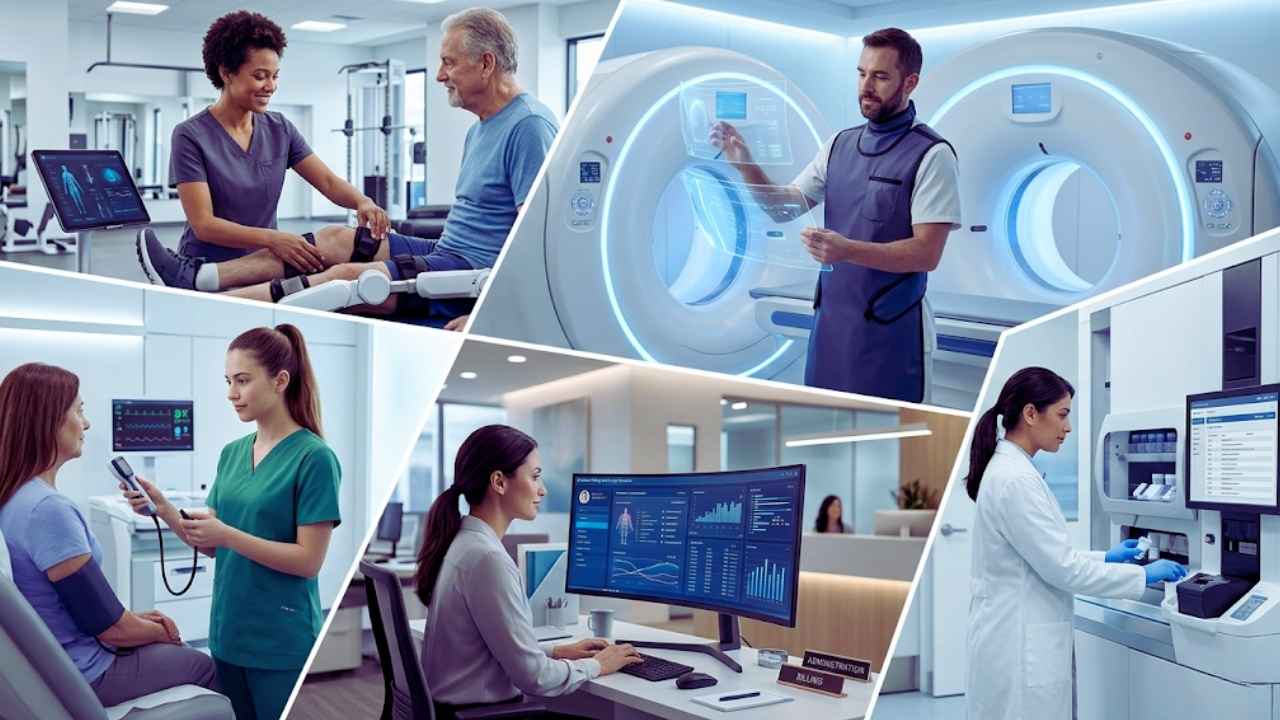
Thinking about jumping into the medical field but dreading the idea of a decade in school? You are not alone. The healthcare system in 2026 looks vastly different than it did even five years ago. Today, hospitals, clinics, and tech startups rely heavily on professionals who completely skipped the traditional medical doctor route.
Exploring healthcare careers without medical school is no longer a backup plan for students. For many, it is the primary goal from day one. These roles offer incredible salaries, fantastic work-life balance, and the chance to make a massive difference in people’s lives. Whether you want to provide hands-on patient care, build medical software, or manage hospital operations, you have options.
We are seeing a massive shift in how care is delivered. You do not need to wear a white coat with an MD embroidered on it to be respected, well-paid, and impactful. This guide breaks down the absolute best ways to navigate the medical industry today, bypass the exhausting residency requirements, and start earning a real living much sooner.
The Growing Appeal of Non-Physician Healthcare Roles
Shorter Educational Timelines and Reduced Debt
No one wants to spend half their adult life in a classroom if they do not have to. Traditional medical school takes four years of undergraduate work, four years of medical school, and up to seven years of residency depending on the specialty. That is a massive chunk of your life spent studying and working for minimum wage. On the flip side, many top-tier medical jobs only ask for a master’s degree or a specialized clinical doctorate. You can wrap up your education, enter the workforce, and start earning a massive salary years ahead of a doctor.
Less time in school obviously means less student debt. By entering the workforce earlier, you start building your savings, buying a home, and investing in your future much sooner than your peers in medical school. You avoid taking out hundreds of thousands in loans. This financial freedom early in your twenties or thirties gives you immense peace of mind. As one industry expert noted, The modern medical student values time just as much as income. You start enjoying the fruits of your labor almost immediately without a dark cloud of debt hanging over your head.
|
Career Path |
Years of Higher Education |
Estimated Student Debt |
|
Medical Doctor (MD) |
11 to 15 years |
$200,000+ |
|
Physician Assistant |
6 years |
$70,000 to $90,000 |
|
Nurse Practitioner |
6 to 8 years |
$60,000 to $80,000 |
|
Medical AI Engineer |
4 to 6 years |
$40,000 to $60,000 |
Unprecedented Demand and Work-Life Balance
In 2026, the medical system is stretching to keep up with an aging population and complex health needs. Because of this massive demand, facilities are throwing incredible perks at qualified professionals to get them in the door. The days of physicians carrying the entire clinical load are over, explains a leading healthcare recruiter. You get extreme leverage during salary negotiations. Instead of working grueling eighty-hour weeks on call like many surgeons, advanced clinical and technical workers negotiate four-day workweeks, flexible shifts, or even hybrid schedules.
You can do meaningful, life-saving work without burning out by age thirty. You get to leave the clinic at the end of the day, go home, and actually enjoy your evening without worrying about a pager going off at two in the morning. This balance is exactly why so many people choose these paths. They want to heal others without sacrificing their own mental and physical health. You can literally have the best of both worlds. Working a predictable schedule means you have time for family, travel, and personal hobbies.
|
Factor |
Traditional Physician |
Non-Physician Role |
|
Weekly Hours |
60 to 80 hours |
36 to 40 hours |
|
On-Call Requirements |
Very High |
Low to None |
|
Schedule Flexibility |
Rigid |
Highly Flexible |
|
Remote Work Options |
Rare |
Common (Tech/Admin roles) |
Top Earning Clinical Careers with Less Schooling
Certified Registered Nurse Anesthetist
This is the heavy hitter of non-physician salaries. Certified Registered Nurse Anesthetists, or CRNAs, are the people who keep you alive and pain-free during surgery. They administer anesthesia, monitor vital signs, and adjust medications in real time while the surgeon operates. To get here, you need a background in critical care nursing followed by a rigorous three-year doctoral program. The work is intense, but the payout is astronomical.
In 2026, it is common for CRNAs to pull in anywhere from two hundred twenty thousand to nearly three hundred thousand dollars a year, depending on their state and hospital. They operate with a massive amount of autonomy, making life-and-death decisions in the operating room every single day. The level of respect they command in the surgical ward is immense. You are quite literally the patient’s lifeline while they are under the knife. It is a high-stakes job that rewards you with top-tier compensation and professional respect.
|
CRNA Detail |
Information |
|
Average 2026 Salary |
$220,000 to $290,000+ |
|
Required Degree |
Doctor of Nursing Practice (DNP) |
|
Clinical Focus |
Anesthesia, Pain Management |
|
Work Environment |
Operating Rooms, Dental Clinics, Surgery Centers |
Physician Assistant
If you like the idea of moving around the medical field without getting boxed into one specialty, becoming a Physician Assistant is a brilliant move. PAs are medical generalists. They examine patients, order lab tests, diagnose illnesses, prescribe medication, and even assist in complex surgeries. The absolute biggest perk here is lateral mobility. A PA working in pediatrics can switch to emergency medicine or dermatology without going back to school for another residency.
You just need a master’s degree from an accredited program, which takes about two years after your bachelor’s degree. The average pay sits comfortably around one hundred forty thousand dollars, offering a fantastic return on your relatively short educational investment. You work side-by-side with surgeons and doctors but skip the decade of training they endured. This flexibility makes the PA route incredibly attractive for folks who easily get bored doing the exact same thing forever. You get to keep your career fresh without starting over.
|
PA Detail |
Information |
|
Average 2026 Salary |
$135,000 to $155,000+ |
|
Required Degree |
Master’s Degree (PA Studies) |
|
Career Mobility |
Extremely High |
|
Core Duties |
Diagnosing, Prescribing, Assisting Surgery |
Nurse Practitioner
Nurse practitioners are practically running the primary care sector right now. With fewer doctors choosing primary care, NPs have stepped up to fill the gap. They focus on the whole patient, emphasizing disease prevention, mental health, and long-term health education. In many states, they have full practice authority, meaning they run their own clinics, diagnose patients, and write prescriptions without a doctor breathing down their neck.
You start as a registered nurse, gain some floor experience, and then earn a Master of Science in Nursing or a Doctor of Nursing Practice. The job security is ironclad, and the pay regularly hits six figures, making it a highly desirable path for anyone who loves talking to and helping people. They build long-term relationships with their patients over years of recurring visits. It is a deeply personal and rewarding way to practice medicine on your own terms. You become the go-to health resource for entire families in your community.
|
NP Detail |
Information |
|
Average 2026 Salary |
$125,000 to $145,000+ |
|
Required Degree |
Master’s (MSN) or Doctorate (DNP) |
|
Practice Authority |
Full in many US states |
|
Primary Focus |
Holistic Care, Disease Prevention |
The New Frontier: AI and Tech in Healthcare
Medical AI Deployment Engineer
Hospitals buy expensive AI software to read X-rays or track patient vitals, but those systems do not just magically work out of the box. They need someone to wire them into the hospital’s existing network safely. That is exactly what a Medical AI Deployment Engineer does. You make sure the artificial intelligence algorithms talk to the electronic health records without crashing the system or leaking private patient data.
You bridge the gap between software developers who write the code and the clinical staff who actually use the tools on the floor. You need a background in computer science or systems engineering. Because this skill is incredibly rare right now, hospitals will pay top dollar to bring you on board. You get to fix massive technical problems that directly save patient lives by catching diseases faster. You literally build the digital infrastructure that modern medicine relies upon to function properly without ever touching a scalpel.
|
AI Engineer Detail |
Information |
|
Average 2026 Salary |
$130,000 to $180,000 |
|
Core Skills |
Coding, System Integration, AI Algorithms |
|
Patient Contact |
None |
|
Impact Level |
High (System-wide diagnostics) |
Health Outcomes and Value-Based Care Analyst

The way hospitals make money has completely changed. They are no longer paid just for doing tests. They get paid when patients actually get better and stay out of the hospital. Health Outcomes Analysts track this progress. They crunch the numbers on patient recovery times, medication effectiveness, and readmission rates. If a specific surgical technique is sending too many patients back to the emergency room, the analyst catches it in the data.
You spend your days looking at spreadsheets and data visualization tools, finding trends that help doctors improve care and help the hospital save millions of dollars. If you love statistics and want to impact public health from behind a desk, this is your lane. You turn boring spreadsheets into actionable medical strategies that keep people healthier and out of the emergency room. It is a clean, quiet job with massive real-world impact that keeps the hospital financially afloat.
|
Analyst Detail |
Information |
|
Average 2026 Salary |
$90,000 to $120,000 |
|
Core Skills |
Data Analysis, Statistics, Healthcare Economics |
|
Patient Contact |
None |
|
Main Goal |
Improve care quality, Reduce hospital costs |
High-Demand Allied Health and Therapy Professions
Physical and Occupational Therapists
Physical therapists are movement experts. When someone shatters their leg or suffers a stroke, a physical therapist maps out the specific exercises needed to get them walking again. Occupational therapists take a slightly different angle. They help people regain the skills needed for daily life. That might mean teaching a stroke survivor how to hold a spoon, get dressed, or helping a child with autism develop fine motor skills for school.
Both jobs require advanced degrees, usually a doctorate for physical therapy and a master’s or doctorate for occupational therapy. The magic of these roles is watching a patient progress from being completely incapacitated to regaining their independence over months of hard, rewarding work. You are the person who gives them their life back. You spend hours talking with them, encouraging them, and physically guiding them toward full recovery through hands-on adjustments.
|
Therapy Type |
Core Focus |
Required Degree |
Typical Work Setting |
|
Physical Therapy (PT) |
Movement, Pain reduction |
Doctorate (DPT) |
Sports clinics, Rehab centers |
|
Occupational Therapy (OT) |
Daily living skills, Fine motor |
Master’s or Doctorate |
Schools, Hospitals, Homes |
Speech-Language Pathologist
Communication is something most of us take for granted until it is gone. Speech-language pathologists work with a massive range of patients every single day. You might spend your morning helping a toddler pronounce their first clear words and your afternoon helping an elderly patient swallow safely after severe throat surgery. The job requires a master’s degree and hundreds of hours of hands-on clinical training before you can practice alone.
Because of rising awareness around childhood developmental delays and an aging population needing post-stroke care, speech-language pathologists have their pick of jobs in schools, clinics, and major hospitals right now. It is a highly specialized field that requires immense patience and empathy. You give people back their voice, allowing them to connect with their families again. The emotional payoff for this job is simply unmatched in the medical field.
|
SLP Detail |
Information |
|
Average 2026 Salary |
$85,000 to $110,000 |
|
Required Degree |
Master’s Degree (Speech-Language Pathology) |
|
Core Focus |
Speech, Communication, Swallowing disorders |
|
Key Demographics |
Children with delays, Stroke survivors |
Steering the Ship: Healthcare Management
Medical and Health Services Manager
Hospitals are essentially massive, complicated businesses that require brilliant minds to keep them running smoothly. You can have the best surgeons in the world, but if the budget is broken or the schedules are mismanaged, the hospital fails and patients suffer. Healthcare management is all about leadership, organization, and strategy. You are the person ensuring the lights stay on, the staff gets paid, and the patients receive efficient, safe care.
Also known as healthcare administrators, these are the executives making the big decisions. They oversee massive budgets, make sure the hospital complies with strict federal health laws, and figure out how to deliver care more efficiently to save money and time. During a crisis, like a sudden influx of patients or a major budget cut, the administrator is the one steering the ship and keeping everyone calm. You do not touch patients, but your operational choices impact thousands of them every single day.
|
Management Role |
Core Duties |
Required Education |
Average Salary |
|
Clinic Manager |
Staff scheduling, Daily operations |
Bachelor’s Degree |
$70,000 to $90,000 |
|
Department Director |
Budget control, Policy compliance |
Master’s (MHA/MBA) |
$100,000 to $140,000 |
|
Hospital Executive |
Overall facility strategy, Finance |
Master’s or Doctorate |
$200,000+ |
How to Choose the Right Path for Your Future?
Evaluating Your Skills and Commitment
With so many healthcare careers without medical school available in 2026, choosing the right one requires careful self-assessment. Start by evaluating your comfort level with direct patient care. If you thrive on interpersonal connections and want to be hands-on with healing, roles like physician assistant or physical therapist are excellent choices. If you are fascinated by the medical field but prefer a behind-the-scenes environment, look into health informatics, AI deployment, or healthcare administration.
First, decide if you want to deal with patient fluids, high-stress emergencies, and emotional weight. Second, look at your timeline. If you want to be working in two years, a master’s program for a data analyst role is perfect. If you are willing to grind for three to four more years for maximum payout, look at nurse anesthesia. Finally, talk to people in the real world. Real-world exposure will tell you more than a textbook ever could. Shadowing professionals in the fields you are interested in gives you the exact clarity you need to make a firm decision.
|
Your Preference |
Best Career Match |
Why It Fits |
|
Love tech and algorithms |
Medical AI Engineer |
Bridges technology and clinical diagnostics |
|
High salary, high autonomy |
Nurse Anesthetist |
Massive pay, deeply independent daily work |
|
Variety in daily work |
Physician Assistant |
Easy lateral moves between medical specialties |
|
Business and leadership |
Medical Services Manager |
Controls budgets, staff, and hospital strategy |
Final Thoughts
You absolutely do not need an MD to be a heavy hitter in the medical world today. The healthcare industry is vast, complicated, and desperate for talented people across all sectors. By exploring healthcare careers without medical school, you are setting yourself up for a life of high earnings, solid job security, and genuine purpose. You get to skip the crushing residency hours, avoid massive medical school debt, and still walk away from your shift knowing you helped people or improved a broken system.
Take the time to weigh your options, look at the salaries in your specific state, and pick a path that fits your desired lifestyle. Do not feel pressured to take the traditional route if it does not align with your personal goals. The modern medical system has plenty of room for your exact skill set. You just need to take the first step.
Frequently Asked Questions (FAQs) About Healthcare Careers No Med School
What is the highest paying job in healthcare without a medical degree?
The highest paying role is typically the Certified Registered Nurse Anesthetist. Depending on experience and location, these professionals frequently earn well over two hundred thousand dollars annually due to their specialized skills and the critical nature of anesthesia care.
Do healthcare technology roles require a clinical background?
While having a clinical background is incredibly beneficial, it is not always mandatory. Many roles in healthcare artificial intelligence, systems architecture, and data analysis prioritize strong backgrounds in computer science, software engineering, and statistics. However, a solid understanding of medical terminology and hospital workflows goes a long way.
Can I switch from a different career into an allied health profession?
Absolutely. Many graduate programs for physical therapy, occupational therapy, and physician assistant studies accept applicants from various undergraduate backgrounds, provided they have completed the necessary prerequisite science courses. Second-career students often bring valuable life experience and maturity to these clinical roles.
Is the demand for non-physician healthcare workers expected to last?
Yes, the demand is deeply rooted in demographic shifts, particularly the aging global population, as well as advancements in medical technology that allow for more complex outpatient procedures. Employment projections through the next decade show robust, sustained growth across nearly all non-physician clinical and technical roles.
Can I transition into medical AI if my background is only in nursing?
Yes, absolutely. Many nurses transition into nursing informatics or medical tech roles right now. You will likely need to pick up certifications in data science, basic coding, or health information systems. Tech companies actually love hiring former nurses because they truly understand how a hospital floor operates and what doctors actually need from software.
What is the fastest high-paying medical job to get into?
If you already hold a bachelor’s degree in a science field, becoming a Physician Assistant is one of the fastest routes to a six-figure salary. The master’s programs are typically just twenty-four to twenty-seven months long. You graduate, pass your boards, and instantly start earning a massive income without years of low-paid residency.
Are non-physician providers replacing doctors?
They are not replacing doctors, but rather extending them. The medical system uses a collaborative, team-based approach now. Complex surgeries and highly obscure diagnoses still fall to specialized physicians, while routine care, chronic disease management, and standard procedures are increasingly handled by highly capable nurse practitioners and physician assistants.
Is healthcare management a stressful job?
It can be, but it is a very different kind of stress. Instead of dealing with medical emergencies and coding patients, you deal with financial constraints, staffing shortages, and strict legal compliance. It requires a cool head for business, sharp problem-solving skills, and a thick skin rather than a stomach for blood.