

I have always respected raw resilience. Growing up, I spent hours watching Sachin Tendulkar face down the world’s most terrifying fast bowlers. It taught me a lot about grit. He took hits, read the pitch, adapted his stance, and fought back with absolute precision. Believe it or not, your body pulls off that exact same masterclass in survival every single day.
You live in a hostile world. Bacteria, viruses, parasites, and toxins constantly try to break into your body. Yet, you stay healthy most of the time. Why? Because you have an elite internal defense force working 24/7. Understanding exactly how the immune system works is the first step to taking control of your health.
We are skipping the dense textbook lectures. Instead, let’s break down the actual mechanics of your body’s defense network. We’ll look at the cells that keep you alive, how they communicate, and what the data says about keeping them strong.
The Basics: Understanding How Immune System Works
Your immune system operates as an intricate, interconnected network of specialized organs, tissues, proteins, and cells. Rather than existing in one specific location, this defense mechanism is distributed throughout your entire body to monitor for potential threats constantly. It detects an extraordinarily wide variety of pathogens, ranging from microscopic viruses and bacteria to larger parasites, while successfully distinguishing these foreign invaders from your own healthy tissue. Without this precise recognition capability, human survival would be impossible.
To understand how the immune system works, you have to recognize its two major operational branches: innate and adaptive immunity. The innate immune system functions as your body’s immediate, preconfigured response system, rushing to block broad categories of threats the moment they appear. The adaptive immune system, conversely, operates as a highly specialized task force that learns to recognize specific molecules it has encountered before, creating a tailored response to eliminate them. Both systems rely on a continuous exchange of chemical signals to coordinate their defense efforts seamlessly.
|
Immune System Branch |
Speed of Reaction |
Target Specificity |
Memory Capability |
Core Components |
|
Innate System |
Minutes to hours |
General (attacks any foreign body) |
None |
Physical barriers, Phagocytes, Complement System |
|
Adaptive System |
Days to weeks |
Highly specific to the pathogen |
Yes (remembers invaders) |
T-cells, B-cells, Spleen, Thymus |
The Frontline Defenders: Your Innate Immunity
Your innate immune system represents the defense mechanisms you are born with, providing an immediate, albeit generalized, response to any foreign material. It does not pause to identify the specific strain of a virus or bacteria; its primary objective is simply to prevent entry and neutralize anything that manages to breach the perimeter. This system relies heavily on physical and chemical barriers as its absolute first line of defense. The skin acts as a massive, waterproof shield, while mucous membranes lining your respiratory and gastrointestinal tracts trap incoming dust and microbes.
If a pathogen successfully bypasses these physical barriers—perhaps through a minor cut or scrape—the innate system deploys cellular defenders known as phagocytes. Neutrophils, a common type of phagocyte, quickly rush to the site of the breach and physically engulf and digest the harmful bacteria. Simultaneously, the complement system, a complex cascade of over 30 blood proteins, activates to rupture bacterial cell walls and trigger localized inflammation, effectively sounding an alarm that attracts even more immune cells to the battleground.
|
Innate Defense Mechanism |
Type of Barrier |
How It Operates |
|
Skin & Mucus |
Physical |
Acts as a waterproof shield and sticky trap for pathogens. |
|
Phagocytes |
Cellular |
Engulfs and digests harmful microbes fast. |
|
Complement System |
Protein Cascade |
30+ blood proteins that rupture bacteria and boost inflammation. |
The Special Forces: Adaptive Immunity and Lymphocytes
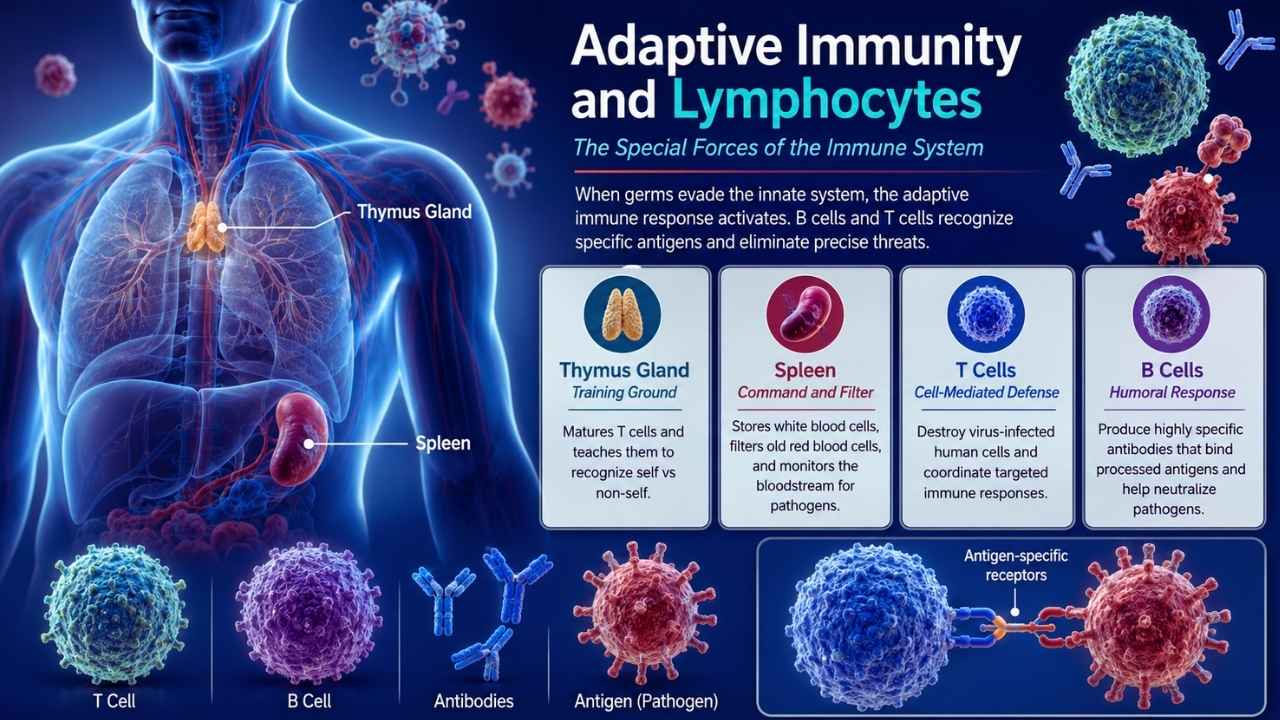
When aggressive or highly evasive germs overwhelm the innate system, your body initiates the adaptive immune response, showcasing a remarkable level of biological sophistication. This branch relies on specialized white blood cells called lymphocytes, specifically B cells and T cells, which are tasked with identifying and eliminating precise threats. Every pathogen carries unique surface proteins known as antigens, and your lymphocytes possess specific receptor molecules designed to lock onto these exact targets.
The development of these elite cells occurs in specific lymphatic organs. T cells originate in the bone marrow but migrate to the thymus gland, located behind the breastbone, where they undergo a rigorous maturation process. Here, they are trained to distinguish between your body’s own tissues (self) and foreign invaders (non-self). Meanwhile, the spleen acts as a critical command center and filtration system; it stores these mature white blood cells and continuously monitors the bloodstream for blood-borne pathogens, ready to deploy lymphocytes the moment a specific threat is detected.
|
Adaptive Component |
Role in the System |
Key Function |
|
Thymus Gland |
Training ground |
Matures T cells and teaches them to recognize “self” vs “non-self”. |
|
Spleen |
Command and filter |
Stores white blood cells and filters old red blood cells. |
|
T-Cells |
Cell-mediated defense |
Hunts down and destroys human cells infected by viruses. |
|
B-Cells |
Humoral response |
Produces highly specific antibodies to neutralize processed antigens. |
The Memory Bank: Building Long-Term Defenses
The defining characteristic that makes the adaptive immune system so powerful is its ability to create and maintain immunological memory. When your B and T cells successfully identify and neutralize a specific pathogen, a small fraction of these specialized cells remain in your system as memory cells. These memory cells quietly patrol your bloodstream and lymphatic system for years, sometimes even for an entire lifetime. If you are ever exposed to that exact same germ again, these memory cells recognize it instantaneously.
This rapid recognition triggers a drastically enhanced and accelerated immune response during subsequent encounters. Often, the memory cells coordinate the destruction of the virus or bacteria so swiftly that you do not even experience a single symptom. This profound mechanism of adaptive memory forms the fundamental biological basis for how vaccines work. By safely introducing a harmless fragment of a germ, vaccines essentially trick the immune system into building a standing army of memory cells, preparing your defenses for future, real-world exposures.
|
Immunity Type |
How You Get It |
Duration of Protection |
|
Natural Active |
Getting sick and fighting it off naturally. |
Usually long-lasting (years to a lifetime). |
|
Artificial Active |
Receiving a vaccination. |
Years (sometimes requires periodic booster shots). |
|
Natural Passive |
Antibodies passed from mother to baby. |
Short-term (a few weeks to a few months). |
The Gut Connection: Your Hidden Command Center
To truly comprehend the vast scope of your body’s defenses, you must direct your attention to your digestive system. Current medical research highlights an astonishing reality: approximately 70% to 80% of your immune system’s active cells actually reside within your gut. The gastrointestinal tract serves as the primary interface where an intricate interaction occurs between your intestinal microbiota, the physical epithelial barrier, and the local mucosal immune system. This location is strategic, given the massive amount of foreign material (food) introduced daily.
Your gut microbiome, composed of trillions of bacteria, plays a central role in maintaining immune equilibrium. These beneficial bacteria actively compete with harmful pathogens for space and nutrients, effectively crowding out potential invaders. Furthermore, the foods you consume directly dictate the strength of this defense. A diet heavily reliant on processed foods and refined sugars can drastically alter the microbiome’s balance, increasing intestinal permeability and leaving you vulnerable to infections. Conversely, a diverse diet rich in plant fibers actively feeds the good bacteria, fortifying your internal command center.
|
Gut Component |
Function |
Impact on Overall Health |
|
Gut Microbiome |
Trillions of active bacteria |
Crowds out harmful pathogens and supports digestion. |
|
Epithelial Layer |
Single-cell physical barrier |
Stops toxins from leaking into the bloodstream. |
|
Mucosal Immunity |
Local immune response |
Holds 70-80% of immune activity to monitor incoming food and germs. |
When the System Misfires: Allergies and Autoimmunity
While the immune system is a marvel of biological engineering, it is not infallible and can sometimes make significant, damaging errors. One common malfunction occurs when the system becomes overactive and initiates a massive inflammatory response against entirely harmless environmental substances. This hypersensitivity is what we recognize as an allergy. Whether it is pollen, pet dander, or specific foods, the immune system mistakenly identifies these benign particles as deadly pathogens, deploying antibodies and releasing chemicals that cause sneezing, swelling, and severe discomfort.
In more severe scenarios, the immune system fundamentally loses its crucial ability to differentiate between self and non-self. This breakdown in recognition leads to autoimmune diseases, where the body’s defense forces turn inward and begin attacking healthy tissues and organs. Conditions such as rheumatoid arthritis, multiple sclerosis, and type 1 diabetes are all prime examples of this internal misfire. While the exact triggers for autoimmune conditions remain a subject of intense scientific study, the resulting chronic inflammation and tissue damage underscore the critical importance of a properly regulated immune response.
|
Condition Type |
What Goes Wrong |
Common Examples |
|
Allergies |
Overreaction to harmless external substances. |
Pollen allergy, peanut allergy, and pet dander. |
|
Autoimmunity |
Attacks healthy internal body tissues. |
Lupus, rheumatoid arthritis, and type 1 diabetes. |
|
Immunodeficiency |
System is less active than normal, failing to fight real threats. |
HIV/AIDS and severe combined immunodeficiency. |
Proven Ways to Keep Your Defenses Strong
While you cannot alter your genetic predispositions, you possess significant control over the daily habits that directly influence your immune efficiency. Sleep, for instance, is far more than mere rest; it is a critical period when your body actively rebuilds its defense mechanisms. During sleep, immune cells repair tissues and consolidate the immunological memory required to recognize future threats. Chronic sleep deprivation severely undermines these processes, drastically increasing your susceptibility to common infections.
Equally vital is the management of chronic, long-term stress, which acts as a powerful suppressant to your immune function. Prolonged periods of high stress elevate cortisol levels, which in turn reduce oxygen flow to the digestive system and heighten inflammatory responses in the gut. By prioritizing 7-8 hours of quality sleep, maintaining a high-fiber diet to support your gut microbiome, and actively engaging in stress-reduction techniques like walking or mindful breathing, you provide your immune system with the essential resources it needs to function optimally.
|
Healthy Habit |
Biological Impact on Immunity |
Actionable Step |
|
7-8 Hours of Sleep |
Allows the body to repair tissues and build memory cells. |
Set a strict bedtime and drop all screens 1 hour prior. |
|
High-Fiber Diet |
Feeds beneficial gut bacteria and stops bad bacteria. |
Cut refined sugars; add onions, asparagus, and greens. |
|
Stress Reduction |
Lowers cortisol and increases oxygen to the gut. |
Practice daily walks or breathing exercises to lower stress hormones. |
Final Thoughts
Your body stands as an absolute biological powerhouse, engineered for extraordinary resilience. From the impenetrable physical barriers of your skin to the highly specialized memory cells constantly patrolling your bloodstream, it executes a brilliant masterclass in continuous adaptation and defense.
Understanding exactly how the immune system works is an incredibly empowering realization. You are not merely a passive host waiting to succumb to illness; you have an active role in fortifying your defenses. By consciously prioritizing restorative sleep, intentionally nourishing your gut microbiome with fiber, and actively managing daily stress, you hand your internal defenders the exact tools they require to keep you safe, healthy, and thriving for years to come.
Frequently Asked Questions (FAQs) About How Immune System Works
What happens to my immunity if my spleen is removed?
The spleen functions as a major blood reservoir and a critical filtration center for blood-borne pathogens. Because it houses and deploys a massive number of white blood cells, the surgical removal of the spleen can result in a significantly increased susceptibility to certain bacterial infections. Individuals who have had a splenectomy must exercise heightened caution and often require specific, targeted vaccinations to compensate for this lost defensive capability.
Do immune systems have a biological clock?
Yes, your immune system operates strictly on a circadian rhythm, very much like your sleep-wake cycle. The behavior of immune cells fluctuates throughout a 24-hour period. During the day, when you are active and most likely to encounter pathogens, your immune cells are highly aggressive and vigilant. At night, the system shifts its focus away from immediate defense and prioritizes tissue repair, cellular regeneration, and the building of long-term immunological memory.
Does being “too clean” actually hurt your immune system?
This concept is widely recognized in scientific circles as the “Hygiene Hypothesis.” The theory suggests that if a child is raised in an excessively sterilized environment, their developing immune system does not receive adequate exposure to harmless, everyday microbes. Deprived of this necessary “target practice” during early development, the immune system can become dysregulated later in life, a factor closely linked to the rising rates of asthma, allergies, and autoimmune conditions in modern societies.