

You turn on the news and see another wild storm. You step outside and feel weather that just does not make sense for the season. You read about melting ice caps online. But if a friend asked you to explain exactly what causes climate change, could you break it down for them? For most of us, the science sounds heavy.
We know pollution is bad and fossil fuels are a problem, but the actual mechanics get lost in the noise. Stripped down to the absolute basics, the Earth is heating up, and the way our planet handles heat is broken. Today, we are going to skip the confusing jargon. We will look at the hard facts and explain exactly what causes climate change so you understand what is actually happening to our home.
The Core Science: Unpacking What Causes Climate Change
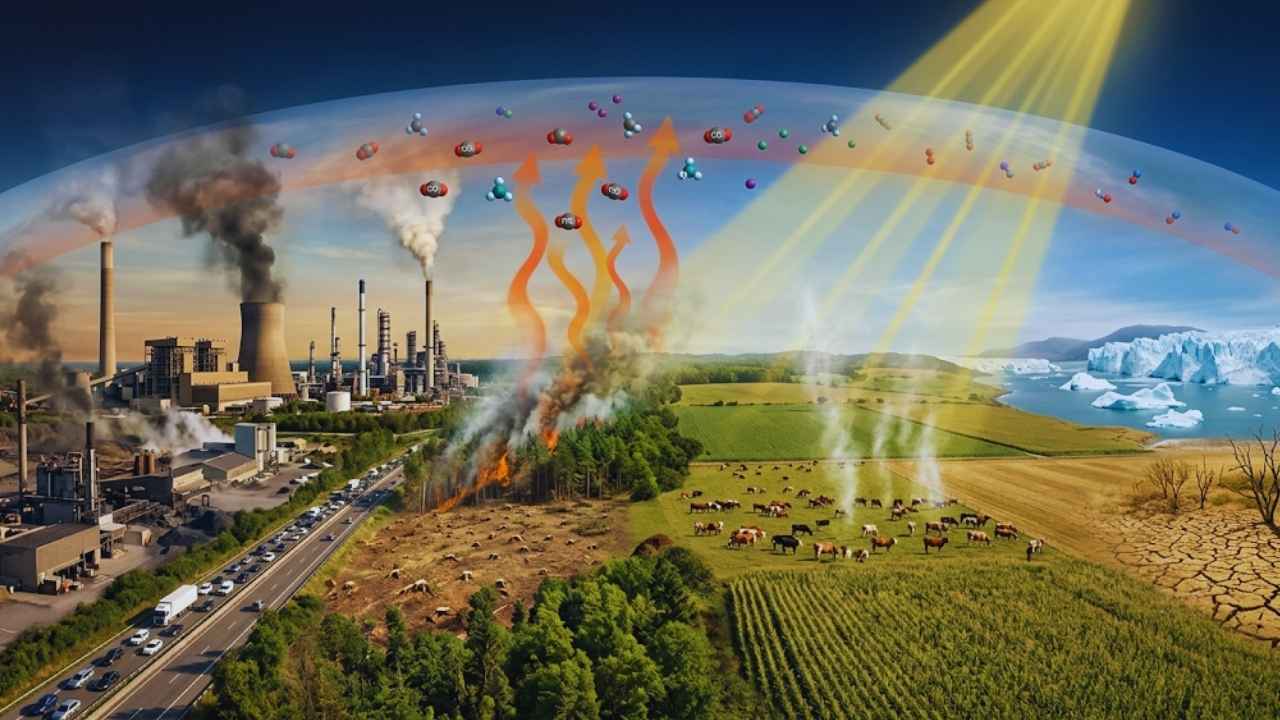
If you want to understand global warming, you need to start with the greenhouse effect. Picture your car parked in the summer sun with the windows rolled up. Sunlight easily passes through the windshield and warms up the dashboard and seats. However, when that heat tries to bounce back out, the glass traps it inside. Earth works the exact same way. Sunlight hits the planet and warms the ground and oceans.
When that heat radiates back toward space, certain gases in our atmosphere catch it. We actually need this natural greenhouse effect, because without it, Earth would be a frozen, unlivable iceball with temperatures hovering around zero degrees Fahrenheit. The problem is that we keep pumping far too many of these gases into the sky.
According to the World Meteorological Organization in their 2026 State of the Global Climate report, the Earth is experiencing an unprecedented energy imbalance. The year 2025 recorded global temperatures approximately 1.44 degrees Celsius above pre-industrial levels, confirming that the trapped heat is severely cranking up the global thermostat and wreaking havoc on our weather systems.
|
The Process |
What Happens |
The Real-World Impact |
|
Incoming Sunlight |
Solar energy hits the Earth. |
Warms the oceans and land naturally. |
|
Heat Reflection |
Earth tries to radiate heat back into space. |
Keeps our global temperature livable and stable. |
|
The Blanket Effect |
Greenhouse gases block the escaping heat. |
Cooks the atmosphere and rapidly warms the planet. |
The Big Four: Meet the Greenhouse Gases
Not all greenhouse gases act the same way, as some fade away in a decade while others hang around for thousands of years. Carbon dioxide is the primary driver of global warming. Recent data from the 2026 global climate updates shows carbon dioxide concentrations reaching a staggering 423.9 parts per million, which is 152 percent of pre-industrial levels. This gas alone causes roughly three-quarters of all warming and sticks around for centuries.
Next is methane, which does not get as much press but is incredibly aggressive. Over a 20-year span, methane traps about 80 times more heat than carbon dioxide, though it only survives in the atmosphere for about 12 years. Nitrous oxide packs nearly 300 times the warming punch of carbon dioxide and stays airborne for over a century, mostly generated by commercial farming and synthetic fertilizers.
Finally, fluorinated gases do not exist in nature at all. We invented them to run our refrigerators and air conditioners, and they trap up to 23,000 times more heat than carbon dioxide. The latest environmental assessments show total global greenhouse gas emissions reached a record 53.2 gigatons recently, pushing the climate further out of balance.
|
The Gas |
Where It Comes From |
How Long It Lasts |
Heat Power (vs. CO₂) |
|
Carbon Dioxide (CO₂) |
Burning coal and oil, chopping down trees. |
300 to 1,000+ years. |
Baseline (1x). |
|
Methane (CH₄) |
Cow burps, leaking natural gas pipes. |
About 12 years. |
80x stronger. |
|
Nitrous Oxide (N₂O) |
Synthetic farm fertilizers. |
About 114 years. |
273x stronger. |
|
F-Gases |
Air conditioners and aerosols. |
Up to 50,000 years. |
Up to 23,000x stronger. |
Human Habits: The Real Reason Behind What Causes Climate Change
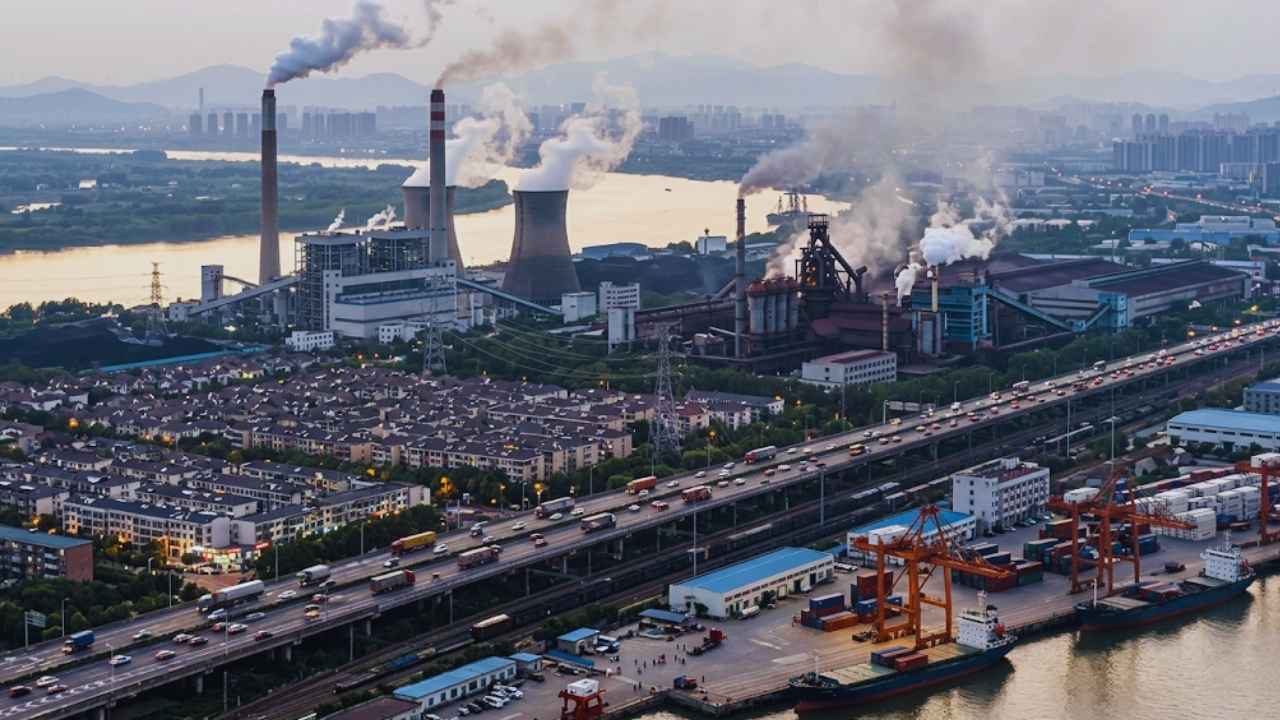
When we dig into the specifics of what causes climate change, human behavior sits right at the center. For thousands of years, the climate shifted naturally and slowly. Then we hit the Industrial Revolution, and we started burning coal, oil, and gas at massive scales to build cities and power factories. Fossil fuels are by far the biggest drivers of global heating today, making up over 75 percent of global greenhouse gas emissions.
Generating electricity and heat creates the biggest chunk of these emissions globally. When you flick on a light switch, run your air conditioner, or heat your home, you likely pull power from a plant that burns coal or natural gas. Manufacturing follows right behind power generation because making the cement, iron, steel, and plastics we use every day requires insane amounts of fossil fuel energy.
Moving around is another massive factor, as most cars, trucks, cargo ships, and planes run on petroleum. Every time you drive a gas car to the grocery store or order a cheap product shipped from overseas, fossil fuels burn to make it happen.
|
The Sector |
Share of Global Emissions |
Everyday Example |
|
Energy Generation |
34 percent |
Keeping your house warm in the winter. |
|
Industry & Manufacturing |
24 percent |
Pouring concrete for a new highway. |
|
Transportation |
15 percent |
Driving to work or flying for vacation. |
Deforestation and Farms: How We Wreck the Land
Fossil fuels catch most of the heat, but how we use the land matters just as much. The way we grow our food and manage forests directly impacts how much carbon stays locked in the ground versus how much escapes into the sky. Trees are the best air purifiers we have, as they suck carbon dioxide out of the air and lock it in their trunks and roots.
But we chop down massive forests to sell timber or make room for cattle ranches, which destroys this natural carbon sink. When trees burn or rot, they release all that stored carbon straight back into the atmosphere. Raising livestock heavily fuels the climate crisis too.
When cows digest grass, they burp out methane continuously, and since we raise over a billion cattle globally, those burps add up to a massive heating problem. Huge commercial farming operations dump synthetic, nitrogen-based fertilizers on crops to speed up growth. When those chemicals break down in the dirt, they release nitrous oxide, creating a severe and lasting climate footprint.
|
Land Use Issue |
How It Hurts the Climate |
The Main Culprits |
|
Deforestation |
Destroys natural carbon storage. |
Logging, clearing land for soy or cows. |
|
Livestock |
Spikes methane gas levels. |
Cow digestion and huge manure pits. |
|
Fertilizers |
Releases nitrous oxide. |
Massive commercial farms. |
The Ocean’s Heavy Lift: Our Hidden Climate Sink
When people talk about global warming, they usually look up at the sky, but the most drastic, terrifying changes happen underwater. The oceans act as a massive sponge, soaking up the heat and the extra carbon dioxide we pump out. If our oceans had not absorbed over 90 percent of the extra heat we created, the land would already be too hot to survive on.
The World Meteorological Organization reported in 2026 that ocean heat content has reached record highs for consecutive years. Water physically expands as it gets warmer, and that thermal expansion is a huge reason why sea levels are currently about 11 centimeters higher than they were in 1993.
The ocean also swallows about a quarter of our carbon dioxide emissions, which creates carbonic acid when mixed with seawater. This acid literally dissolves the shells of oysters, clams, and corals. Entire coral reef systems are dying off fast because the water is too hot and too acidic.
|
Ocean Problem |
Why It Happens |
The End Result |
|
Thermal Expansion |
Warm water takes up more space. |
Rising seas threaten coastal cities. |
|
Supercharged Storms |
Warm surface water fuels weather. |
Deadlier hurricanes and heavier floods. |
|
Acidification |
Seawater absorbs too much CO2. |
Dying coral reefs and melting seashells. |
Do Natural Factors Drive What Causes Climate Change?
Skeptics love to point at natural forces when debating the origins of what causes climate change, but the data tells a completely different story. It is true that the Earth’s climate shifted naturally long before humans walked around. However, natural factors cannot explain the aggressive, rapid heat spike we are living through today. Earth wobbles and stretches in its orbit over tens of thousands of years, which changes how much sunlight hits the planet.
These orbital shifts, called Milankovitch cycles, push us in and out of ice ages over 100,000-year periods, meaning they are far too slow to cause today’s sudden heat. Solar energy fluctuates on an 11-year cycle, but satellite data shows the sun’s energy output actually dropped slightly over the last few decades.
When a volcano erupts, it spews ash and gas, but human activities emit 60 to 100 times more carbon dioxide every year than all volcanoes combined. In reality, volcanic ash actually blocks sunlight and creates a temporary cooling effect, proving that humans are entirely responsible for the current crisis.
|
Natural Force |
How It Worked in the Past |
What It Is Doing Right Now |
|
Orbital Shifts |
Triggered ice ages over 100,000 years. |
Way too slow to cause today’s sudden heat. |
|
Solar Energy |
Drove long-term historical shifts. |
The output has dropped; it should be cooling us down. |
|
Volcanoes |
Ash caused temporary global cooling. |
Emits less than 1 percent of the CO2 humans produce. |
Final Thoughts
The mechanics behind a heating planet are surprisingly straightforward once you cut out the scientific noise. When you break down exactly what causes climate change, it all comes back to a planetary imbalance. We took carbon that sat safely underground for millions of years in the form of coal, oil, and gas, and we pumped it straight into the sky in just a few generations.
Add in the fact that we chop down the forests that naturally clean our air, and it is obvious why the Earth cannot vent the heat fast enough. The science is settled. The heat records are breaking every single year. Understanding exactly what is happening to our world is the first real step to holding major polluters accountable and fighting for the clean energy solutions we need to survive.
Frequently Asked Questions (FAQs) About What Causes Climate Change
Why is the Arctic melting so much faster than everywhere else?
The Arctic warms about four times faster than the rest of the globe because of the “albedo effect. “Ice is bright white, so it reflects the sun’s heat back into space. But as global warming melts that ice, it exposes the dark ocean water underneath. Dark water absorbs heat instead of reflecting it. That warms the water further, which melts more ice, creating a vicious, unstoppable cycle.
Does water vapor make global warming worse?
Yes. Water vapor is actually the most abundant greenhouse gas in the sky. But we don’t directly control it. As our CO₂ emissions warm the planet, the atmosphere gets hotter and naturally holds more moisture. That extra water vapor amplifies the heat. It acts as a multiplier, making a bad situation worse.
Can we just plant a billion trees to fix this?
Planting trees helps, but it’s not a magic fix. We pump out carbon much faster than young trees can absorb it. Plus, as the planet heats up, forests catch fire much easier. When a forest burns, it releases all its stored carbon right back into the sky. We have to stop burning fossil fuels first.
Do oceans actually slow down?
Yes. Melting ice sheets in places like Greenland dump massive amounts of cold, fresh water into the ocean. That fresh water messes with the ocean’s salt density and literally slows down major currents like the Gulf Stream. When ocean currents slow down, weather gets incredibly unpredictable, causing strange cold snaps and extreme storms.