


Starting an online business looks drastically different today than it did just a few years ago. You can no longer throw up a basic website and expect sales to roll in. E-commerce sales are projected to cross the $7.4 trillion mark globally this year. That massive number means there is plenty of money to be made, but consumer expectations have never been higher. People want personalized experiences, instant checkout, and deep transparency about where their products come from.
If you are a beginner trying to figure out how to sell online in 2026, you might feel intimidated by terms like AI agents, livestream shopping, and headless commerce. You do not need a degree in computer science or a massive marketing budget to succeed. The barriers to entry remain incredibly low because the tools available to everyday people are powerful and easy to use. You just need a solid roadmap that matches current buyer behaviors.
This guide breaks down the exact steps you need to take to build a profitable digital storefront. From choosing the right business model to mastering social media algorithms, you will learn the practical strategies that actually work in today’s highly competitive market.
Why Now is the Best Time to Figure Out How to Sell Online in 2026
Jumping into e-commerce today means ignoring outdated tactics that stopped working years ago. Global online retail sales are booming, driven largely by younger demographics and heavy mobile dependency. You must understand that consumers no longer browse static catalogs on desktop computers. They discover products through short-form video, interact with AI shopping assistants, and checkout without ever leaving their favorite social apps. Navigating this shift is the only way to build a profitable digital storefront.
|
Market Metric |
2026 Data Point |
Impact on Beginners |
|
Global Market Size |
$7.41 trillion |
Massive revenue potential for niche stores |
|
Mobile Traffic |
63 percent of all traffic |
Mobile-first store design is strictly required |
|
Social Commerce |
$2.11 trillion global value |
Selling directly on social platforms is mandatory |
|
AI Adoption |
76 percent want AI assistants |
Stores must integrate smart search and chatbots |
The Impact of AI and Social Commerce
Artificial intelligence entirely changed the way people search for products. Shoppers now talk to digital assistants that curate personalized lists based on past purchases and browsing habits. These AI tools recommend complementary products and even handle customer service complaints in real time. If your store lacks smart search features, customers will leave out of frustration.
Social commerce acts as the other massive shift. Social media platforms evolved from places to share photos into fully functional retail spaces. Buyers discover a product on TikTok or Instagram, read reviews in the comments, and enter their payment details without switching apps. This seamless process eliminates the friction that usually causes shopping cart abandonment.
Market Size and Consumer Shifts
The sheer volume of online transactions is staggering. About one third of the global population shops online regularly. This growth stems from better internet penetration and the pure convenience of home delivery. But volume does not mean easy money. Today’s consumer demands fast shipping, ethical manufacturing, and responsive customer service.
You must adapt to these expectations immediately. Modern buyers check return policies before they add items to their carts. They abandon brands that use excessive plastic packaging. They trust user-generated content more than polished corporate advertisements. When you understand these psychological shifts, you can position your brand as the exact solution they are looking for.
Step 1: Choose Your E-commerce Business Model
Your business model serves as the foundation for your entire operation. It dictates your daily tasks, your startup capital, and your profit margins. Beginners often make the mistake of choosing a complicated supply chain before proving their product concept. You need a system that fits your budget while allowing room to scale up operations once sales start flowing in consistently. Pick a structure that aligns with your long-term goals.
|
Business Model |
Startup Cost |
Profit Margin |
Best For |
|
Dropshipping |
Low |
Low to Medium |
Testing new product ideas quickly |
|
Print-on-Demand |
Low |
Medium |
Creatives and brand builders |
|
Direct-to-Consumer |
High |
High |
Building a highly unique, premium brand |
|
Digital Products |
Very Low |
Very High |
Educators, artists, and consultants |
Dropshipping and Print-on-Demand
If you have very little cash to start with, dropshipping offers the safest entry point. You do not buy any physical inventory upfront. When a customer pays you for an item, you use a portion of that money to buy the item from a supplier who ships it directly to the buyer. You keep the difference as profit. The downside involves lower profit margins and less control over shipping times.
Print-on-demand operates on the same zero-inventory principle but allows you to sell customized merchandise. You create designs for clothing, mugs, or wall art. When an order comes in, a printing facility produces the item and mails it out. This method helps you build a unique brand identity without dealing with warehouse logistics.
Direct-to-Consumer and Private Label
The direct-to-consumer route gives you absolute control over your brand. You either manufacture your own goods or hire a factory to produce items with your custom branding. This private label approach requires you to buy inventory in bulk, meaning you need more money to start.
The payoff comes in the form of much higher profit margins and total control over product quality. You can design custom packaging that creates a memorable unboxing experience. In a crowded market, owning a distinctive, high-quality product provides a massive competitive advantage that dropshippers simply cannot match.
Subscription Box Models
Consumers love the convenience of having their favorite items delivered automatically every month. Business owners love this model because it generates predictable, recurring revenue. You can curate subscription boxes for almost any niche, from organic dog treats to specialized skincare routines.
Running a successful subscription service requires excellent curation and high value. If a customer feels they are just piling up unused junk, they will cancel their membership immediately. You must constantly surprise and delight your subscribers to maintain their loyalty over the long term.
Digital Products and Services
Not everything you sell needs to come in a cardboard box. Digital products boast incredible profit margins because they have zero shipping costs and no inventory limits. You create a digital asset one time and sell it infinitely.
Popular digital items include online courses, downloadable software templates, digital art, and consulting sessions. As people increasingly look to upgrade their skills and streamline their lives, educational digital products remain highly lucrative. You can set up automated delivery systems so your customers get their files instantly upon payment.
Step 2: Find a Profitable Niche and Products
Selling generic items to a broad audience simply fails in current market conditions. The secret to learning how to sell online in 2026 lies in hyper-targeting a specific community with a distinct problem. People buy solutions, not just features. When you focus on a tight niche, your marketing becomes much cheaper because you know exactly who you are speaking to and what triggers their buying behavior.
|
Niche Strategy |
Concept |
Why It Works in 2026 |
|
Micro-Niche Focus |
Targeting a very specific audience |
Lower ad costs and higher conversion rates |
|
Trend Spotting |
Using data to find rising demands |
Captures early buyers before markets saturate |
|
Ethical Sourcing |
Selling eco-friendly or fair-trade items |
Meets modern consumer demands for sustainability |
|
Pain Point Focus |
Selling items that fix a daily annoyance |
Triggers immediate emotional buying responses |
Identifying 2026 Consumer Trends
To find a winning product, you need to look at where consumer interest is heading. You can use search volume data and social media analytics to spot rising trends before they become oversaturated. Right now, categories like smart home integration, mental wellness technology, and personalized pet care show massive growth.
Avoid chasing temporary fads that burn out in a few months. Instead, look for long-term behavioral shifts. People consistently spend money on products that save them time, improve their health, or bring happiness to their families. Build your product catalog around these permanent human desires.
Ethical Branding and Sustainability
Modern consumers actively research the environmental impact of the brands they support. Selling cheap, disposable plastic goods is becoming harder as buyers demand sustainable alternatives. They look for biodegradable packaging, carbon-neutral shipping methods, and transparent supply chains.
You do not need a perfect zero-waste operation on day one, but incorporating ethical practices gives you a strong marketing angle. If you source materials locally or donate a percentage of profits to charity, tell that story loudly. Transparency builds immense trust, which directly translates into repeat purchases.
Solving Specific Pain Points
The easiest products to sell are the ones that cure a headache. Instead of brainstorming random items to sell, try listing out specific problems people face daily.
If you sell fitness gear, do not just sell plain dumbbells. Sell compact, silent workout equipment designed specifically for people living in small, noisy apartment buildings. When your product provides a clear, highly specific solution, you do not have to push hard for a sale. You just have to show the right person that a fix to their problem actually exists.
Step 3: Select the Best E-commerce Platform for 2026
Your store platform acts as your digital real estate. Choosing the wrong software causes massive headaches down the road when you try to integrate new marketing tools or handle spikes in traffic. You want a system that handles security, hosting, and mobile optimization automatically. The goal is to spend your time marketing your products, not debugging website code or updating server software.
|
Platform Type |
Key Advantage |
Best Suited For |
|
Shopify |
All-in-one ecosystem with huge app store |
Most beginners and scaling brands |
|
WooCommerce |
Ultimate customization and ownership |
Tech-savvy users with WordPress experience |
|
BigCommerce |
Built-in features without extra app fees |
Multichannel sellers and B2B stores |
|
TikTok Shop |
Built directly into social media feed |
Viral product brands targeting Gen Z |
Hosted Solutions vs. Open Source
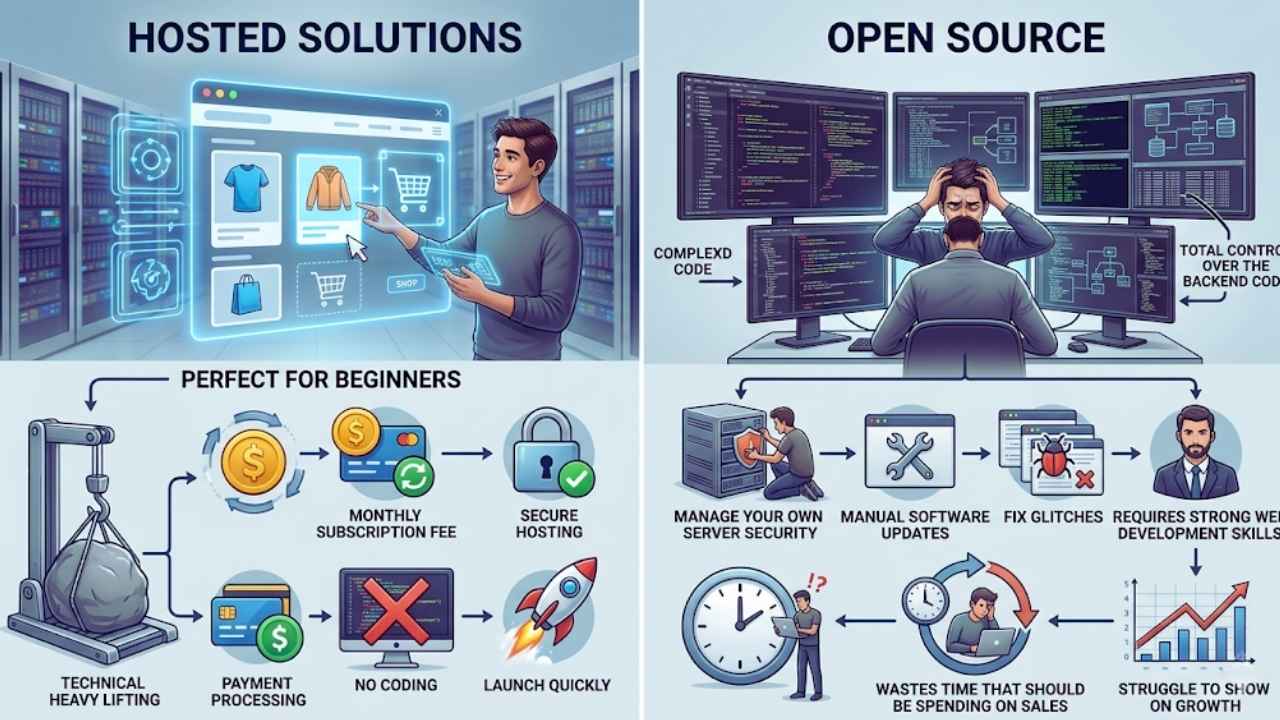
Hosted e-commerce platforms take care of all the technical heavy lifting. You pay a monthly subscription fee, and they provide secure hosting, payment processing, and drag-and-drop design tools. This setup is perfect for beginners who want to launch quickly without writing a single line of code.
Open-source platforms give you total control over the backend code of your website. However, they require you to manage your own server security, handle manual software updates, and fix glitches when things break. Unless you possess strong web development skills, open-source systems often waste time that you should be spending on sales.
Top Platforms for Beginners
Shopify dominates the industry because it perfectly balances ease of use with immense scaling power. You can launch a basic store in a few hours, yet the platform is robust enough to handle millions of dollars in sales. Its massive app store allows you to add features like loyalty programs or email marketing with one click.
WooCommerce works great if you already run a WordPress blog and want to add a store to it. It offers endless customization but carries a steeper learning curve. BigCommerce stands out by including many advanced features natively, meaning you do not have to pay for as many third-party apps as you might on other platforms.
Social Commerce Integrations
A standalone website is no longer enough. A huge portion of online retail now happens natively on social media. Your chosen platform must integrate flawlessly with these external channels.
You need the ability to sync your product catalog directly to Instagram, Pinterest, and TikTok. This integration allows users to view your products and check out while scrolling through their feeds. Reducing the number of clicks required to make a purchase is the fastest way to boost your conversion rates.
Step 4: Build a High-Converting Online Store
Traffic means nothing if your website scares people away. A high-converting store builds trust instantly through clean design, fast loading times, and transparent policies. Shoppers lack patience, so any friction during the checkout process results in an abandoned cart. You must design every single page with the mobile user in mind, making sure buttons are large and text is highly readable on small screens.
|
Store Element |
Optimization Strategy |
Expected Outcome |
|
Page Speed |
Compress all images and remove heavy scripts |
Lower bounce rates and better SEO ranking |
|
Navigation |
Use simple menus with broad categories |
Helps shoppers find items in fewer clicks |
|
Search Bar |
Implement AI semantic search tools |
Shows relevant items even with typos |
|
Checkout |
Offer guest checkout and digital wallets |
Reduces abandoned carts significantly |
Mobile-First Design is Mandatory
Most online shopping happens on smartphones. If your website looks beautiful on a desktop monitor but becomes a cluttered mess on a phone screen, you will lose the majority of your sales.
You must design your store specifically for mobile devices first. Make sure your add to cart buttons span the width of the screen so they are easy to tap. Keep paragraphs short and use high-contrast text. Before you run any ads, navigate through your entire store and buy a product using your own smartphone to spot any annoying glitches.
AI-Powered Search and Discovery
Basic search bars frustrate users because they require exact spelling matches. New search tools use artificial intelligence to understand the context of what a customer wants.
If someone types a vague description of a product, the smart search engine interprets the intent and displays the right items anyway. These tools also analyze a visitor’s behavior in real time to recommend products they are highly likely to buy. Acting as an automated digital salesperson, this technology drastically increases the amount of money each customer spends.
Frictionless Checkout and Payment Options
Cart abandonment remains the biggest profit killer in e-commerce. You do the hard work of getting a visitor to your site and convincing them to buy, only for them to leave because your checkout form has too many fields.
Keep the payment process incredibly simple. Never force a customer to create an account before they pay. Offer one-tap payment options like Apple Pay and Google Pay to speed things up. You also need to integrate flexible payment services that allow customers to split their purchase into smaller installments over time.
Step 5: Leverage 2026 Marketing Strategies
Marketing algorithms prioritize entertaining, authentic content over highly polished corporate advertisements. Figuring out how to sell online in 2026 means becoming a content creator first and a retailer second. You must reach buyers where they already spend their time, which is usually scrolling through short-form video feeds. Paid ads still work, but organic social media presence combined with AI personalization provides the highest return on investment.
|
Marketing Channel |
Content Type |
Primary Goal |
|
Short-Form Video |
Behind-the-scenes, product demos |
Viral reach and instant brand awareness |
|
Livestream Shopping |
Interactive live Q&A with product links |
Immediate conversions and community trust |
|
AI Email Marketing |
Hyper-personalized product recommendations |
Repeat purchases and customer retention |
|
SEO Marketing |
Long-form helpful guides and articles |
Long-term organic search traffic |
Social Commerce and Short-Form Video
Traditional photo advertisements suffer from banner blindness. Today, short-form video reigns supreme. Algorithms favor dynamic, unpolished videos that hold a viewer’s attention.
You do not need expensive camera gear. Use your smartphone to document your daily business operations, pack orders on camera, or demonstrate your product solving a real problem. Authenticity builds trust faster than a slick commercial. You need to hook the viewer in the first three seconds and offer enough value that they feel compelled to visit your store.
Livestream Shopping
Selling through live video broadcasts represents a massive revenue channel. Livestreams combine the interactive nature of a video call with the ease of instant purchasing.
During a broadcast, you can show different angles of a product, answer questions from the chat instantly, and offer flash sale discounts to create urgency. Customers love this format because they can see exactly what they are buying in real time without heavy video editing tricks. It humanizes your brand and drastically speeds up the buying decision.
AI Agents and Hyper-Personalization
Sending the exact same email newsletter to your entire customer list is highly ineffective. Marketing requires deep personalization driven by artificial intelligence.
AI software segments your audience based on what they click, what they buy, and how much they spend. If someone buys a coffee machine, the system automatically sends them an email offering a discount on coffee beans three weeks later just as they are running out. When marketing feels highly relevant to the individual’s specific situation, they are much more likely to open their wallets again.
SEO and Content Marketing Updates
Search engines update their rules constantly, but they always prioritize genuinely helpful information. Writing robotic articles stuffed with keywords will get your site penalized.
You need to demonstrate real experience and authority in your niche. If you sell hiking gear, write detailed guides about local trails or record videos on how to pack a backpack efficiently. High-quality content proves to search engines that your site is trustworthy, which pushes your store higher in organic search results and brings in free traffic for years to come.
Step 6: Master Logistics, Fulfillment, and Customer Service
A sale is only the beginning of the customer relationship. Post-purchase experience determines whether a buyer returns or leaves a negative review that tanks your conversion rate. Modern shoppers expect real-time tracking, eco-friendly packaging, and instant support when things go wrong. Mastering your supply chain and return policies turns casual buyers into vocal brand advocates who do your marketing for free.
|
Logistics Factor |
Customer Expectation |
Best Practice for Sellers |
|
Shipping Speed |
Fast and predictable delivery |
Partner with local fulfillment centers |
|
Order Tracking |
Real-time map updates |
Use post-purchase tracking software |
|
Returns Process |
Zero friction, no questions asked |
Provide automated return portals |
|
Customer Support |
Instant resolution of issues |
Use AI chatbots backed by human agents |
Transparent Last-Mile Logistics
Nobody likes sitting around wondering when their package will arrive. Vague delivery windows destroy trust. Customers demand precise tracking information from the moment the box leaves the warehouse to the moment it hits their porch.
Integrate tracking software that sends automated text or email updates at every stage of the journey. If a weather event delays a shipment, notify the customer immediately before they have to ask. Proactive communication turns a potentially negative shipping delay into a display of excellent customer care.
Automated and Intuitive Returns
Beginners often try to hide their return policy to prevent refunds. This strategy backfires completely. A complicated return process creates massive friction, and most shoppers will simply refuse to buy from you in the first place if they feel trapped.
Make your return process entirely automated. Let customers log into a portal, print a shipping label, and send the item back without needing to email support. Treat returns as valuable data points. If a specific shirt gets returned constantly for being too small, you know you need to update your sizing chart immediately.
Building Loyalty Through Experience
Acquiring a new customer costs significantly more than keeping an existing one. Your long-term profitability depends on getting people to buy from you repeatedly.
Start by designing an incredible unboxing experience. Use custom tissue paper, include a handwritten thank you card, or throw in a small free sample. These tiny details make the customer feel special. Follow up with a loyalty program that rewards them with points or exclusive discounts for future purchases. Exceptional service guarantees that they will talk about your brand to their friends.
Final Thoughts
The digital marketplace moves incredibly fast, but the foundational rules of business remain exactly the same. You need to offer a high-quality product, treat your customers with respect, and adapt to changing technology. Understanding how to sell online in 2026 is ultimately about reducing friction.
Use AI tools to simplify search, use social commerce to streamline checkout, and rely on short-form video to build genuine connections. Start small, listen closely to customer feedback, and adjust your strategies based on real data. With dedication and the right approach, you can build a highly successful digital brand.
Frequently Asked Questions (FAQs) About How to Sell Online 2026
How do AI shopping agents change SEO for e-commerce?
Search engine optimization now involves optimizing for AI agents, not just traditional search engines. AI tools pull data from structured product feeds, detailed reviews, and high-quality content to recommend products to users. Sellers must ensure their product metadata is incredibly accurate and detailed so these agents can understand exactly what the product is and who it benefits.
Traditional e-commerce requires a buyer to visit a specific website, browse pages, and checkout through a standard shopping cart. Social commerce happens entirely within a social media application like TikTok or Instagram. The user views content, taps a product tag, and pays natively within the app, removing multiple steps from the buying process.
Can I start selling online without relying on overseas suppliers?
Yes, you can easily source products domestically. Many sellers use local manufacturers, local print-on-demand facilities, or local wholesale distributors. While overseas manufacturing often costs less, domestic sourcing provides much faster shipping times, better quality control, and appeals to buyers who prefer supporting local businesses.
How does mobile-first indexing affect new online stores?
Search engines primarily look at the mobile version of your website to determine where you should rank in search results. If your store looks bad or functions poorly on a smartphone, search engines will bury your site, even if your desktop version is flawless. You must design for the phone screen first and the computer screen second.