

Got an empty bedroom? Maybe the kids finally moved out, or maybe you bought a house that is a bit too big for you right now. Whatever the reason, that empty room is just sitting there. It is collecting dust, hiking up your heating bill, and costing you property taxes.
Why not turn it into cash? Building a steady rent out a room income is one of the smartest ways to help pay your mortgage and fight off inflation. People call it “house hacking,” and it really works. But do not just hand a stranger off the internet a spare key. That is asking for trouble.
Sharing your home changes everything. You share a kitchen, a living room, and maybe a bathroom. You have to deal with someone else’s habits, their friends, and their messes. To make a real profit without losing your mind, you need a solid plan. You have to treat this spare bedroom like a tiny business and take your emotions out of it. Let’s break down exactly how to prep, price, and protect your home while bringing in extra cash every single month.
The Real Financial Math Behind Your Hustle
In 2026, finding affordable housing is a massive challenge for many renters, making single rooms highly desirable. Average room rents near universities or urban hubs now range from $1,200 to $1,800 per month. Even in suburban markets, you can easily charge a premium, with many options falling securely between $1,000 and $1,200 depending on location and amenities. Before you jump in, you must calculate the hidden costs that eat into your profit.
High electric bills often stem from inefficient HVAC systems, which can add $400 to $800 to your annual energy costs. Poor insulation and air leaks also contribute another $220 to $440 in yearly losses. If you plan to build a steady room rental income, you must subtract these creeping utility jumps from your gross rent check. When you run the numbers accurately, you can quickly see if opening your home is worth the financial reward.
|
Expense Category |
Estimated Monthly Cost Increase |
Impact on Profitability |
|
Utilities (Water/Power) |
$40 – $90 |
Medium; bake a flat utility fee into the lease. |
|
Wi-Fi/Internet Upgrades |
$0 – $40 |
Low; a fixed cost unless you need gigabit speeds. |
|
Insurance Premiums |
$15 – $30 |
Low; requires adding a specific rider to your policy. |
|
Wear and Tear |
$30 – $60 |
Medium; carpets, appliances, and plumbing degrade faster. |
|
Cleaning Supplies |
$10 – $20 |
Low; toilet paper and dish soap disappear fast. |
Upgrading Your Space for High-Quality Tenants
Getting your room ready does not mean gutting the space and spending a fortune on luxury renovations. Renters looking for a single room prioritize safety, cleanliness, and affordability above high-end finishes. Start by removing all your personal items, family photos, and clutter from the closets. A fresh coat of neutral paint is one of the cheapest ways to make the room feel brand new and highly desirable.
You must also focus on privacy by installing a keyed lock on the bedroom door, which instantly gives your renter peace of mind. Adding blackout curtains is another affordable upgrade that improves sleep quality, especially if you want to attract travel nurses or shift workers. To keep your kitchen private, consider spending a little extra on a mini-fridge and a small microwave for the renter. These minor investments drastically reduce shared kitchen traffic and eliminate common food disputes before they even happen.
|
Upgrade/Improvement |
Average Upfront Cost |
Why It Matters for Your Rental |
|
Keyed Bedroom Lock |
$15 – $35 |
Non-negotiable for tenant privacy and setting boundaries. |
|
Fresh Coat of Paint |
$50 – $100 |
Neutral colors make the room feel brand new. |
|
Blackout Curtains |
$25 – $60 |
Improves sleep quality; perfect for shift workers. |
|
Mini-Fridge & Microwave |
$120 – $200 |
Reduces kitchen traffic and food-sharing arguments. |
|
Dedicated Storage Shelves |
$30 – $50 |
Keeps shared bathrooms and hallways clutter-free. |
Setting a Price to Maximize Your Rent Out a Room Income
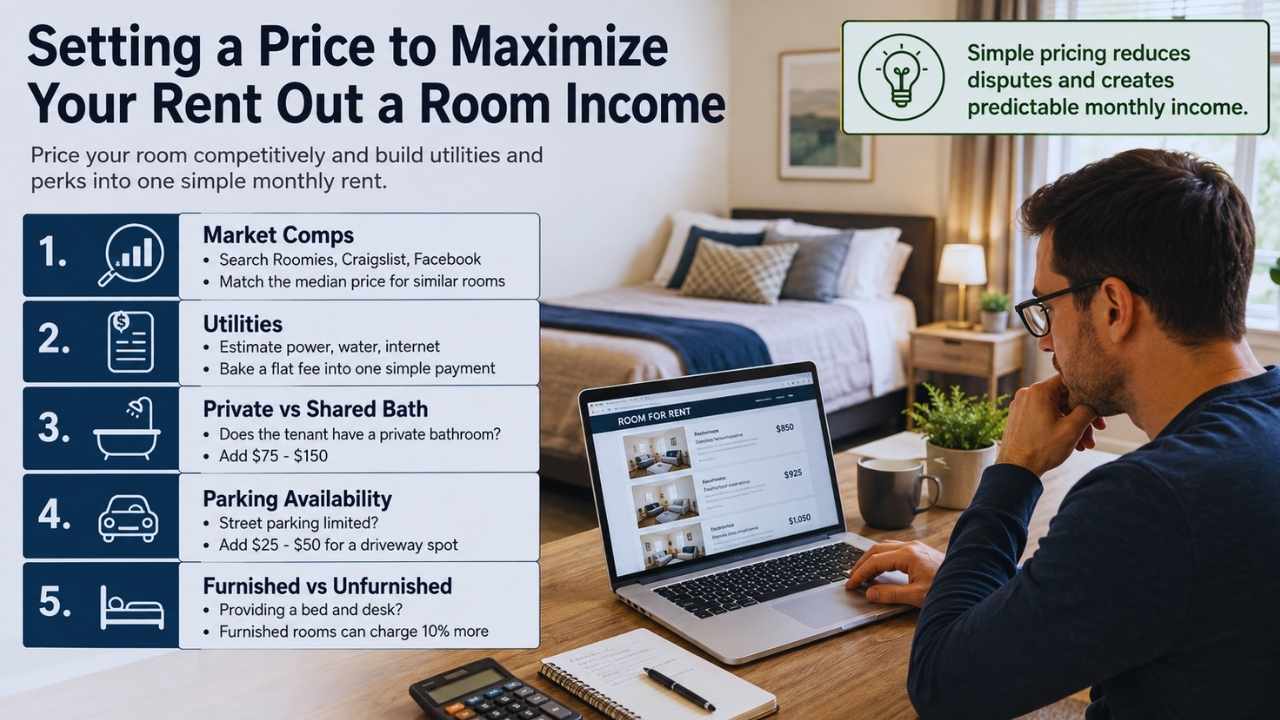
Pricing your space correctly is the most critical step to ensure your room does not sit empty for months. If you charge too much, applicants will simply rent a studio apartment instead. If you charge too little, you leave money on the table and might attract unreliable people. Start your research by scanning online marketplaces to see what similar rooms are going for in your specific zip code. Look closely at what your competitors include, such as private bathrooms, dedicated parking spots, or high-speed internet.
You can justify charging higher rent if you offer exclusive perks like gigabit fiber or an en-suite bathroom. Instead of splitting utility bills down the middle every month, calculate the expected increase and roll it into a flat monthly rent price. Keeping the financial transaction simple prevents petty arguments over who left the lights on and guarantees a predictable income from renting out a room for your household budget.
|
Pricing Factor |
How to Evaluate It |
Suggested Action for Pricing |
|
Market Comps |
Search Roomies, Craigslist, Facebook. |
Match the median price for similar size and amenities. |
|
Utilities |
Guess the jump in power, water, internet. |
Bake a flat fee into the rent for one simple payment. |
|
Private vs Shared Bath |
Does the tenant have their own bathroom? |
Add $75 – $150 to the rent; privacy sells fast. |
|
Parking Availability |
Is street parking terrible in your area? |
Charge a $25 – $50 premium for a driveway spot. |
|
Furnished vs Unfurnished |
Are you providing a bed and desk? |
Furnished rooms pull in travel nurses; charge 10 percent more. |
The Art of Tenant Screening Without Breaking the Law
Your daily peace of mind is worth far more than a monthly rent check, which makes tenant screening absolutely essential. Grabbing a random person off the internet without checking their background is a fast track to property damage and legal nightmares. Write a brutally honest advertisement that clearly states your dealbreakers, quiet hours, and house rules. When applicants contact you, insist on a ten-minute phone call to gauge their personality and ask why they are moving. If they complain constantly about their previous landlords, they will likely complain about you as well.
For those who pass the phone interview, demand a formal background and credit check. In 2026, tenant screening software typically costs $20 to $55 per applicant report, with platforms like TransUnion SmartMove running around $25 and Avail premium screening costing up to $55. Some jurisdictions also charge mandatory county-level court access fees that range from $5 to $95, so make sure the applicant covers these extra costs upfront.
|
Screening Step |
Tool/Method to Use |
Red Flags to Watch For |
|
Initial Phone Call |
10-minute casual chat. |
Evasiveness about why they are moving. |
|
Background Check |
TransUnion SmartMove, RentPrep. |
Sub-600 credit scores, heavy debt, past evictions. |
|
Income Verification |
Pay stubs, call the boss. |
Income is less than 3x the rent amount. |
|
Reference Check |
Call previous landlords. |
“Would you rent to this person again?” (If they hesitate, run). |
|
Legal Check |
Mrs. Murphy Exemption. |
You can choose lifestyles, but never discriminate by race. |
Lodgers Versus Tenants: What the Law Actually Says
You need to clearly understand the legal classification of the person living in your home before you sign anything. In many states, a person renting a single bedroom inside an owner-occupied house is legally viewed as a lodger rather than a traditional tenant. This distinction is incredibly important because traditional tenants enjoy heavy legal protections that make evictions slow, expensive, and stressful. Lodgers, on the other hand, typically have far fewer rights, giving the homeowner much more control over their own property.
For example, in certain jurisdictions, you can end a lodger agreement simply by giving them formal written notice equal to their rent payment period. Once that specific notice expires, the lodger loses their right to stay and becomes a trespasser under the law. At that point, local police can often intervene to remove the person, allowing you to bypass the messy court eviction system entirely. Always consult a local real estate attorney to confirm exactly how your specific state handles these situations.
|
Legal Concept |
What It Means for Room Rentals |
Action Required by You |
|
Lodger Classification |
Renting a room in an owner-occupied home. |
Check if your state distinguishes between tenants and lodgers. |
|
Eviction Rules |
Lodgers often bypass standard court evictions. |
Read up on local police removal for trespassing lodgers. |
|
Written Notice |
The timeline to ask someone to leave. |
Issue formal written notices exactly as your state requires. |
|
Right of Access |
Homeowners retain control of the house. |
Respect their bedroom, but assert control over common areas. |
Drafting a Bulletproof Lease Agreement
Handshake deals and verbal agreements are completely useless if you end up in small claims court. If you want to protect your physical property and your sanity, you must put absolutely everything into a written lease agreement. For first-time house hackers, starting with a month-to-month lease is the safest strategy to test the waters. A month-to-month contract gives you the ultimate flexibility to ask a problematic roommate to leave with just a standard thirty-day written notice.
Your lease must include strict rules about shared living spaces, cleaning duties, and who controls the daily thermostat settings. You also need an ironclad guest policy that limits overnight visitors to a specific number of days per month. If you fail to put guest limits in writing, your renter’s romantic partner might practically move into your house for free. Writing these rules down on day one eliminates confusion and gives you concrete legal leverage.
|
Lease Clause |
What It Should Cover |
Why You Absolutely Need It |
|
Term Length |
Month-to-month vs fixed term. |
Month-to-month is way safer for first-time house hackers. |
|
Guest Policy |
Limit overnight guests to X days a month. |
Stops a renter’s partner from secretly moving in. |
|
Quiet Hours |
Example: 10 PM to 7 AM on weekdays. |
Ensures you can actually sleep in your own home. |
|
Maintenance Duties |
Who takes out the trash, cleans the kitchen. |
Stops you from becoming an unpaid maid for your renter. |
|
Severability |
Standard legal boilerplate clause. |
If a judge throws out one rule, the rest of the lease survives. |
Taxes, Deductions, and the IRS
The federal government considers your side hustle to be a business, which means they want their cut of the profits. You are legally required to report the money you collect from your renter on Schedule E of your annual tax return. However, the tax code also gives smart homeowners a massive break through legal deductions that offset this new revenue. By using the square footage method, you can calculate the exact percentage of your home that the rented room occupies.
You can then deduct that specific percentage of your mortgage interest, property taxes, and utility bills directly against your rental profits, keeping more of your rent-a-room income safe from taxes. Additionally, you can deduct the full cost of any direct repairs or furniture purchases made strictly for the rented bedroom. If you rent out your room for fourteen days or less during the entire year, you qualify for the Augusta Rule, and the money is completely tax-free. Tracking your expenses carefully ensures you keep the maximum amount of your hard-earned money.
Read Also: Tax-Advantaged Accounts Explained: HSA, FSA, 401k, IRA
|
Tax/Legal Aspect |
What It Means |
Action Required at Tax Time |
|
Schedule E |
IRS form for reporting rental income. |
Track all rent money and expenses in a simple spreadsheet. |
|
Pro-rata Deductions |
Deducting a piece of your household bills. |
Divide the room’s square footage by the total home size. |
|
Direct Expenses |
Repairs made strictly for the rented space. |
Keep all receipts; these are 100 percent deductible. |
|
The Augusta Rule |
Renting under 15 days a year is tax-free. |
Track the exact number of days paying guests stay. |
|
Depreciation |
Deducting the wear and tear of the house. |
Ask a CPA; claiming this creates future tax bills when you sell. |
Protecting Your Asset: Get the Right Insurance
Do not make the dangerous mistake of assuming your standard homeowner policy covers a paying renter. Standard residential insurance policies explicitly exclude business activities, and renting out a bedroom is legally classified as running a business. If your renter trips over a loose carpet, breaks their wrist, and decides to sue you, your insurance company will likely deny the claim entirely. Once the insurance adjusters discover the injured person was an undisclosed paying tenant, you will be left paying out of pocket.
To protect your home, you must contact your insurance agent immediately and ask to add a specific roomer or boarder endorsement to your policy. This minor upgrade extends your liability coverage to include the rented space and protects your financial future. The cost of this endorsement is incredibly small compared to the devastating expense of an uncovered lawsuit. Always secure the proper insurance coverage before you ever hand over the front door keys.
|
Insurance Type |
What It Covers |
Who Needs It |
|
Standard Homeowners |
Covers your home and personal liability. |
Every homeowner, but it ignores business activities. |
|
Endorsement HO 04 40 |
Adds coverage for a separate rented structure. |
People renting out detached backyard guesthouses. |
|
Roomer Endorsement |
Extends coverage to a rented bedroom. |
People renting a room inside their primary house. |
|
Landlord Policy (DP-3) |
A policy for non-owner-occupied rentals. |
Not for house hackers; only if you move out entirely. |
Once the lease is officially signed and the boxes are unpacked, the reality of sharing your private sanctuary truly sets in. Managing a shared household requires direct communication, a thick skin, and a willingness to address problems immediately. Establish a routine where you check in with your renter every few weeks to ask how things are going. This simple habit prevents minor annoyances from boiling over into massive, lease-breaking arguments.
If your renter leaves a pile of dirty dishes in the kitchen sink, talk to them face-to-face instead of leaving passive-aggressive sticky notes. You must also remember to respect their private space, because they are a paying customer who deserves quiet enjoyment. You cannot simply walk into their bedroom whenever you feel like it, even though your name is on the mortgage. Setting firm boundaries while maintaining mutual respect is the absolute best way to ensure a peaceful and profitable home.
|
Conflict Area |
Prevention Strategy |
Resolution Tactic |
|
Cleanliness |
Make a chore chart for the common areas. |
Address messes within 24 hours politely but firmly. |
|
Thermostat Wars |
Put temperature rules in the lease. |
Install a smart thermostat with a passcode lock. |
|
Late Rent |
Create a painful late fee. |
Hand them a formal written notice when rent is 1 day late. |
|
Kitchen Clutter |
Assign specific shelves to each person. |
Buy them a mini-fridge to stop kitchen overlap completely. |
Final Thoughts
Renting out your spare room takes real work upfront, but the cash payoff is huge. If you skip the background checks, rely on handshakes, or hide the money from the IRS, this side gig will turn into a massive legal headache.
But if you treat your home like a real business, set the right price, and lay down firm rules on day one, you will build a solid, stress-free income from renting out a room. Stop letting that extra space sit empty. Run the math, swap the locks, draft the rules, and start making your property work for you today.
Frequently Asked Questions (FAQs) About Rent Out a Room Income
Do I have to accept Emotional Support Animals (ESAs) if I’m allergic?
Federal laws usually force landlords to accept support animals. But the “Mrs. Murphy” exception often saves owner-occupied homes (four units or less) from these federal rules. This means you technically don’t have to accept an ESA if you share the home, but always check your state laws, as they might be stricter than the federal government.
What happens if my roommate just stops paying rent?
If the law sees them as a “tenant,” you have to grind through standard court eviction. If they are a “lodger” (a single renter in your home), states like California let you hand them a written notice. After the notice expires, they become a trespasser and the cops can remove them.
Can I charge a daily fee when they have overnight guests?
Don’t charge a nightly “fee.” It makes you look like a hotel and creates legal headaches. Instead, just limit guests in the lease. State clearly that guests can stay a maximum of 3 nights per month. If they overstay, the renter breaks the lease.
How do I handle the internet if my roommate games or works from home?
Talk about this upfront. Two people on Zoom calls will crash standard Wi-Fi. Upgrade to a fiber gigabit plan and charge slightly more for rent, advertising “High-Speed Gigabit Fiber Included” in your listing.