

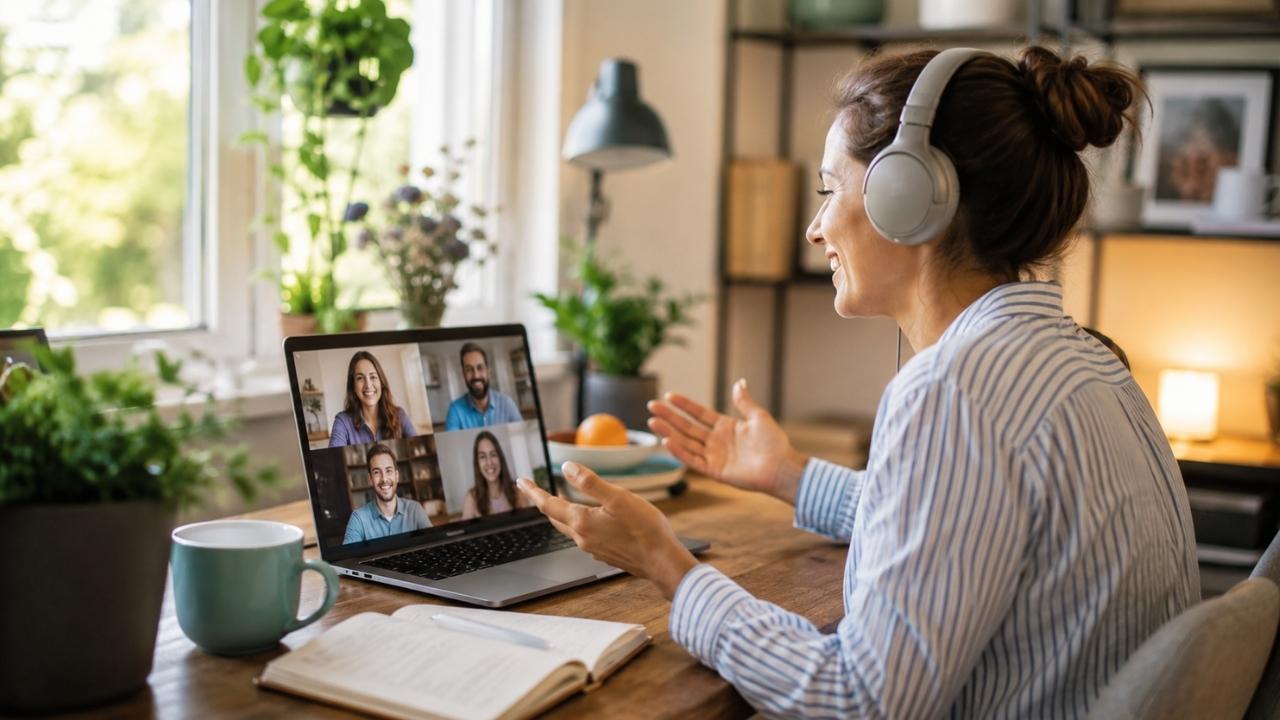
Working from home sounds like hitting the absolute jackpot. You skip the terrible morning commute. You wear comfortable sweatpants to major strategy meetings. You make your coffee exactly how you like it in your own kitchen. But then month three hits. The house gets way too quiet.
You realize you have not used your actual voice since Tuesday afternoon. The total freedom of the home office suddenly feels like solitary confinement. I completely get it. Experiencing remote work loneliness sneaks up on you, and it remains the absolute biggest hurdle for modern professionals today. When your only interactions happen through a glowing screen, you naturally feel totally detached from your team and your real friends. You do not have to give up the amazing perks of working from home just to feel normal again. We are going to look at exactly why this quiet isolation happens and exactly how you can fix it right now.
The Harsh Reality Behind Remote Work Loneliness
When you pack up your desk and leave a busy corporate office, you lose dozens of micro-interactions that you never realized actually mattered. You stop waving to the security guard every morning. You stop chatting with coworkers while the microwave runs in the breakroom. You stop grabbing quick lunches with the marketing team on a random Tuesday. These tiny moments seem pointless, but sociologists call them weak ties. Weak ties keep us grounded in reality and give us a true sense of belonging to a physical community.
Without them, remote work loneliness hits incredibly fast and hard. Your laptop turns into a solid wall instead of a bridge to the outside world. The latest data completely backs this up. According to Buffer’s recent State of Remote Work report, one in three remote workers say their absolute biggest struggle is staying home too often. Another 23 percent flat-out name isolation as their number one professional challenge.
Gallup’s 2025 global workplace data shows 27 percent of fully remote workers feel lonely every single day, which is significantly higher than on-site workers. A 2026 study published in Science even noted a massive 58 percent rise in hours spent completely alone for workers in remote-capable jobs. It is a massive structural shift in how we socialize, and ignoring it will only make it worse over time.
|
Workplace Factor |
Office Life |
WFH Life |
Real Impact on You |
|
Social Friction |
High (unplanned chats happen constantly) |
Low (everything gets scheduled) |
You lose spontaneous connection |
|
Visual Cues |
High (eye contact, body language) |
Low (cameras off, text-based) |
You misunderstand people more often |
|
Work and Life Split |
Clear physical boundary (leaving the building) |
Blurry boundary (your couch is your desk) |
You risk hidden burnout |
|
Weak Ties |
Daily exposure to friendly strangers |
Zero exposure to strangers |
You feel disconnected from society |
The Real Health Toll of Staying Inside
We usually brush off feeling lonely as a temporary bad mood that will completely pass after the weekend. You tell yourself to just toughen up, grab another hot coffee, and push through the rest of the workweek. But medical professionals view chronic isolation much more severely than a simple emotional slump. It is a genuine, verified physical health threat that ruins bodies over time. In 2023, the U.S. Surgeon General officially declared loneliness a public health epidemic.
He issued a stark warning that chronic loneliness carries health risks equal to smoking 15 cigarettes a day. Sitting completely alone in a quiet apartment for forty hours a week damages you on a biological level. Poor social connection links directly to a 29 percent greater risk of heart disease, a 32 percent higher chance of a stroke, and a 50 percent jump in dementia risk for older adults. When you sit at your desk feeling totally disconnected from humanity, your cortisol levels aggressively spike.
Over time, that constant stress destroys your immune system entirely. Fixing this problem is quite literally about protecting your lifespan and long-term vitality. Cigna’s 2024 Vitality Index classified more than half of American workers as lonely, and 36 percent of those lonely workers are actively seeking a new job just to escape the crippling quiet.
|
Health Risk |
The Startling Reality |
Biological Impact |
|
Mortality Rate |
Equals smoking 15 cigarettes daily |
Destroys long-term cellular health |
|
Heart Disease |
29 percent increased risk |
Weakens your entire cardiovascular system |
|
Stroke Risk |
32 percent higher likelihood |
Driven by chronic stress and high cortisol |
|
Dementia Risk |
50 percent increased risk |
Happens due to zero cognitive social stimulation |
Fix Your Broken Daily Routine
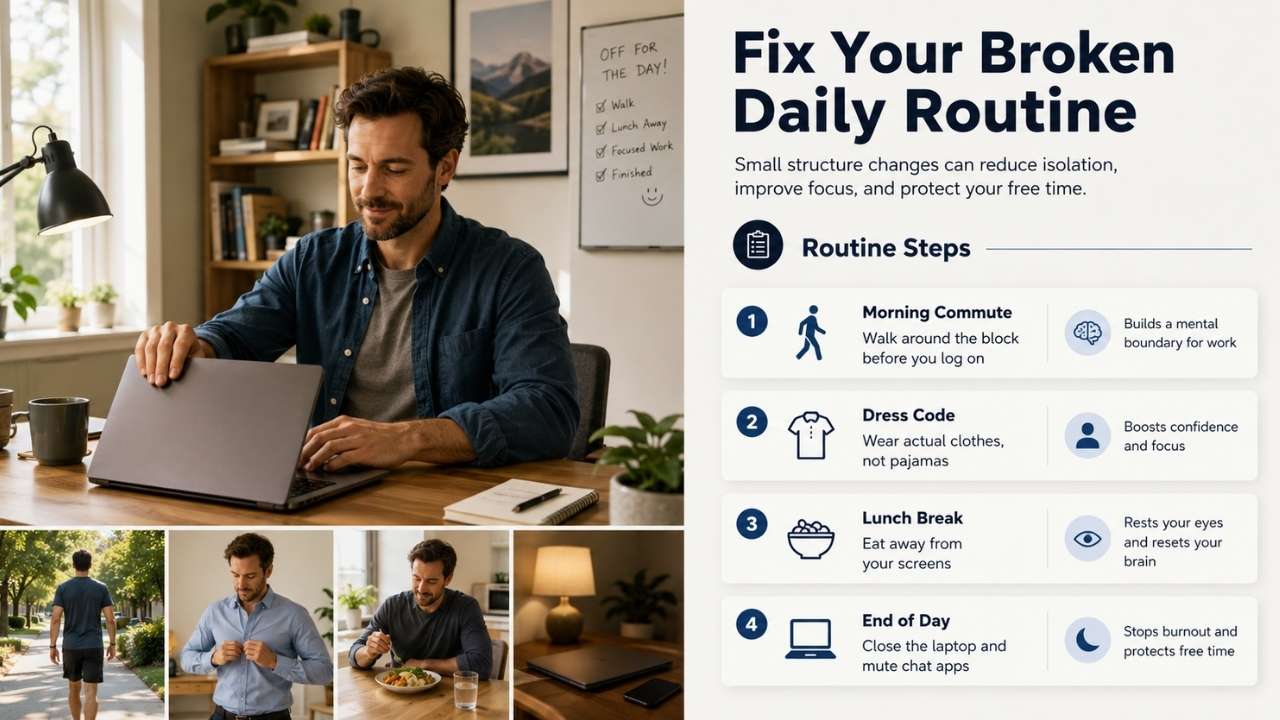
If you roll out of bed exactly five minutes before your first video call, you ruin your day before it even begins. A complete lack of daily structure makes you incredibly passive. When you become passive, you isolate yourself even more from the people around you. Remote workers save roughly 55 minutes a day by completely skipping the terrible morning commute. That extra time is a massive win for your schedule, but you have to spend it on purpose.
Otherwise, Tuesday feels exactly like Thursday, and the weeks quickly blur together into one long block of time. Start by building a fake commute to trick your brain. Wake up early, take a hot shower, and put on real clothes instead of sweatpants. Step outside and walk around your neighborhood block for fifteen minutes before you ever open your laptop. This physical movement tells your brain the workday is officially starting right now.
Do the exact same thing when you finish working for the evening. Shut the laptop, leave the room, and take a long evening walk. This mental wall stops your job from bleeding into your night. Overworking is a massive trigger for isolation because it completely drains the energy you need to hang out with real friends.
|
Routine Step |
Action You Can Take Today |
Psychological Benefit |
|
Morning Commute |
Walk around the block before you log on |
Builds a mental boundary for work |
|
Dress Code |
Wear actual clothes (no pajamas) |
Boosts your confidence and focus |
|
Lunch Break |
Eat away from all your screens |
Rests your eyes and resets your brain |
|
End of Day |
Close the laptop, mute your chat apps |
Stops burnout and protects your free time |
Find Your Third Place And Leave the House
You simply cannot work from your kitchen table every single day and expect to stay completely sane. Humans desperately need a total change of scenery to stay sharp and mentally engaged. Sociologists talk heavily about the concept of the third place. This is a physical spot separate from your home, which is your first place, and your actual office, which is your second place. Since your home and your office are now the exact same building, finding a fresh third place is entirely non-negotiable for your sanity.
Pack up your laptop and go to a local coffee shop at least twice a week. You do not even have to talk to anyone while you are there. Just hearing the loud espresso machine and seeing people walk by gives you a genuine sense of belonging. Libraries offer a great, completely free alternative if you need deep focus without the loud background noise of a café. If you have the extra cash, look into a dedicated coworking space in your city.
These spots mimic the great social perks of a corporate office but let you keep your entirely flexible schedule. You get the fun networking and the casual kitchen chats, but you get to go home whenever you want. Just getting out of the house physically forces you to interact with the world again.
|
Third Place Option |
Financial Cost |
Noise Level |
Best Used For |
|
Coffee Shop |
Low (just buy a drink) |
Medium to High |
Clearing emails, soaking up energy |
|
Public Library |
Free |
Very Low |
Deep work, extreme focus |
|
Coworking Space |
Medium to High (monthly fee) |
Varies by room |
Networking, building a regular routine |
|
Public Parks |
Free |
Varies greatly |
Brainstorming, reading physical papers |
Rethink How You Use Slack and Zoom
We rely heavily on chat applications and video software to keep us linked tightly to our coworkers. But typing text into a silent void all day long eventually feels incredibly robotic. To fight off the quiet, you must change exactly how you use your daily software. First, default to video calls for all hard or complicated conversations. Text entirely lacks human tone, and long email chains just make people extremely mad.
A quick five-minute video call solves the confusion much faster and gives you highly needed face-to-face time. Second, build digital watercoolers on purpose. Create dedicated spaces for absolute nonsense during the workday. If your company lacks a chat channel for pets or cooking, make one today and invite your team. Post a picture of your burnt toast or your cat sleeping directly on your keyboard.
Small, funny moments build real trust and break the endless silence. Set up virtual coffees at least once a month. Message a coworker you rarely talk to and ask for a fifteen-minute chat about absolutely nothing work-related. You will be surprised by how many people happily say yes to the invitation. They are probably fighting remote work loneliness right alongside you.
|
Communication Tool |
Best Way to Use It |
Impact on Isolation |
|
Video Calls |
Complex problems, brainstorming sessions |
High (closest thing to real life) |
|
Phone Calls |
Quick questions, walking outside |
Medium (reduces screen fatigue) |
|
Instant Messaging |
Quick status updates, dropping links |
Low (feels very transactional) |
|
Virtual Coffees |
Scheduled non-work chats |
Very High (replicates the office breakroom) |
Get a Life Offline
When you worked in a traditional downtown office, the job automatically handed you a vibrant social life. Happy hours, casual lunch groups, and breakroom birthday cakes came entirely standard with the gig. Now that you stay home, you have to work a little harder to get your regular social fix. Stop making your job your one and only source of friendship. Build a incredibly robust life completely offline and away from all screens. Join a local neighborhood run club on the weekends.
Take an evening pottery class just for fun. Play in a recreational kickball league on Thursday nights. Volunteer your free time at the local dog shelter. When you force yourself to talk to new people in your local town, you take the heavy pressure off your job. You actually start to enjoy the quiet focus of your home office because you know you have a fun trivia night coming up later.
It completely flips the script on your mindset. Being home turns into a peaceful recharge instead of a lonely, inescapable trap. You will clearly find that having distinct groups of friends outside of your exact industry gives you a much better perspective on life.
|
Offline Activity |
Effort Required |
Social Benefit |
|
Fitness Classes |
Medium |
You meet locals and boost endorphins |
|
Volunteering |
Medium to High |
Gives you purpose and community ties |
|
Hobby Groups |
Low |
Connects you with like-minded people |
|
Rec Sports |
High |
Forces weekly teamwork and commitment |
What Companies Need to Do
This heavy burden does not sit entirely on your own shoulders. Companies carry a massive, undeniable responsibility here as well. If a business saves millions of dollars by ditching their downtown office real estate, they need to spend a big chunk of that money directly on their people. Leaders must eagerly budget for annual or bi-annual company retreats. Flying everyone out to one specific city for three days of team-building and big dinners pays massive dividends.
Once people share a real pizza in real life, their digital messages get much warmer and friendlier. You do not get mad at a short email from Dave in accounting once you know Dave’s dry sense of humor. Managers also need to check in properly every single week. Start one-on-one meetings by asking how they are doing outside of work, and actually listen to the honest answer.
Companies should openly offer stipends for fast internet or local coworking spaces. If an employer completely ignores the mental health of their remote staff, they pay for it heavily later. The quiet isolation will quickly turn into high turnover and terrible company productivity.
|
Leadership Action |
Cost to Company |
Real Benefit to You |
|
Coworking Stipend |
Low monthly fee per employee |
Gives you a reason to escape the house |
|
Annual Retreats |
High (Travel, hotels, food) |
Builds deep trust and team cohesion |
|
No Meeting Days |
Free |
Drops your Zoom fatigue and stress |
|
Mental Health Days |
Medium (Paid time off) |
Stops severe burnout before it starts |
Move Your Body, Clear Your Head
Physical stagnation always causes deep mental stagnation over time. Sitting in one single chair for nine straight hours, staring at a bright screen just inches from your face, totally wrecks your body. Physical sluggishness quickly turns directly into heavy emotional apathy. Make daily movement entirely non-negotiable for your routine. You do not have to run three miles before breakfast to see the benefits. Just stand up and stretch your arms every single hour to keep your blood actively moving.
Buy a tall standing desk or a small walking pad to keep your legs active while you clear out your inbox. Take all of your internal phone calls while walking around your neighborhood block. Watch your daily diet incredibly closely. It is wildly easy to eat processed junk food all day when your pantry sits just five steps away.
Bad food rapidly spikes your blood sugar, causing terrible afternoon crashes and intensely foul moods. Prep your healthy lunch just like you would if you drove to a real corporate office. Drink a massive amount of water all day long. When your physical body feels really good, the heavy mental weight of working alone feels much lighter.
|
Health Strategy |
How to Do It |
Direct Benefit to You |
|
Walking Meetings |
Take internal calls on your phone outside |
Gets you sunshine and a screen break |
|
Hydration Target |
Keep a massive water jug on the desk |
Boosts energy and stops headaches |
|
Ergonomic Setup |
Buy a real chair, put the monitor at eye level |
Stops back pain and physical stress |
|
Scheduled Meals |
Prep your lunch the night before |
Stops you from mindlessly eating chips |
Final Thoughts
The massive shift to remote work changed history. It handed us back our time, our autonomy, and our daily comfort. But it absolutely demands a new set of personal skills to keep your head straight.
You cannot sit on your couch and wait for connection to magically find you. You have to actively chase it. Build a solid routine. Walk out your front door every single day. Call a coworker just to see what they are up to. Join a local club. By intentionally designing your week, you can easily crush remote work loneliness and build a wildly happy career from anywhere. Working from home is a superpower, but only if you actively protect your mind along the way.
Frequently Asked Questions (FAQs) About Remote Work Loneliness
Do introverts get lonely working from home?
Yes, absolutely. Introverts might strongly hate loud, crowded offices, but they still need basic human contact. Introverts thrive on extremely low-pressure interactions, like waving to the mail carrier or nodding at a barista. When those small moments vanish, introverts quickly slip into unhealthy isolation without even noticing it.
How do extreme time zones make this worse?
Working across huge time differences completely ruins human connection. If you live in London and your team lives in California, you spend your entire day working alone, reading delayed text messages. Fix this by negotiating a few hours of overlap for live calls, or explicitly ask your boss to pair you with a remote buddy in your own time zone.
What is the real difference between burnout and isolation?
They feed off each other aggressively. Burnout comes from chronic stress, overworking, and ignoring professional boundaries. Isolation is the raw feeling of zero connection. Remote workers constantly mask their isolation by working incredibly long days just to pass the time. That toxic habit leads straight to complete burnout.
Does getting a dog actually help?
Absolutely. Studies consistently prove pets instantly drop your stress levels and offer real companionship. Dogs forcefully put you into a strict daily routine. You have to feed them and walk them. That gets you out of the house, puts you in the sun, and forces you to talk to your neighbors.
Why do I feel worst on Friday afternoons?
Offices naturally celebrate Fridays. People leave early, grab a beer, and talk loudly about the weekend. At home, Friday at five o’clock feels exactly like Tuesday morning. The total lack of transition makes the quiet feel much sharper. Beat this by making firm Friday night plans with friends so you have a hard stop to your workweek.