

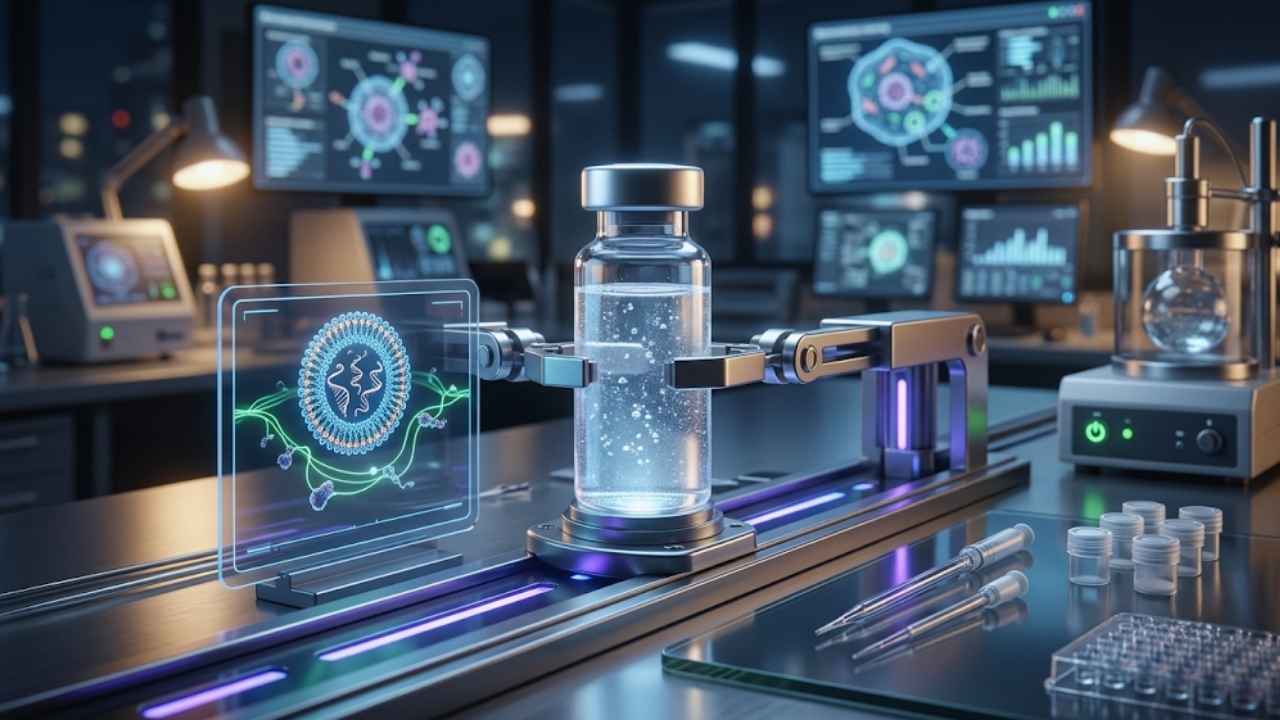
The COVID-19 pandemic thrust a microscopic piece of biology right into our living rooms. Suddenly, everyone was talking about “spike proteins” and “lipid nanoparticles” over breakfast. But despite all the news coverage, a lot of us still wonder: exactly how mRNA vaccines work?
It sounds like sci-fi, but the core idea is incredibly elegant. Instead of injecting a weakened virus into your arm to trigger your immune system, mRNA technology just hands your cells a temporary instruction manual.
Let’s strip away the dense medical jargon. We will look at what is actually inside the needle, how your cells read the instructions, and why this tech is about to change how we fight everything from the seasonal flu to cancer.
The Basics: What is mRNA?
To understand the vaccine, you first need to meet the messenger.
Your body runs on trillions of cells. Each cell has a nucleus, which acts like a secure, high-tech library. Inside this library sits your DNA—the master blueprint for everything that makes you, you. Because DNA is too precious to risk damage, it never leaves the library.
When your body needs to build something—say, a protein to repair muscle tissue—it makes a temporary, disposable photocopy of that specific DNA page. That photocopy is messenger RNA (mRNA).
The mRNA carries these instructions out of the library and onto the cell’s factory floor (the cytoplasm). There, tiny molecular machines called ribosomes read the copy and build the required protein. Once the job is done, the cell shreds the mRNA photocopy and throws it away.
This happens millions of times a second inside you. When scientists designed these shots, they tapped right into this everyday routine. The only twist? Instead of your body writing the instructions, scientists print them in a lab. The concept of using mRNA as a therapeutic wasn’t born overnight. Researchers spent decades figuring out how to sneak this delicate messenger past our body’s natural defenses without destroying it, culminating in the lipid nanoparticle delivery systems we rely on today.
Read Also: Tips to Take Blood Pressure Reading at Home [Step-by-Step Guide]
|
Component |
Role in the Body |
Analogy |
|
DNA |
Stores your complete genetic code in the nucleus. |
The master blueprint locked in a safe. |
|
mRNA |
Carries a temporary copy of specific instructions to the cell. |
A disposable photocopy of one page. |
|
Ribosomes |
Reads the mRNA and builds the actual proteins. |
The factory workers on the assembly line. |
|
Proteins |
Do the actual physical work inside your body. |
The final manufactured product. |
A Step-by-Step Guide: How mRNA Vaccines Work
What actually happens when you get the shot? It sets off a beautifully timed chain reaction inside your arm.
Here is how the cellular training ground operates:
- The Delivery: The shot delivers lab-made mRNA containing blueprints for a “spike protein.” This is a harmless protein found on the outside of the virus. To protect the fragile mRNA, scientists wrap it in a tiny bubble of fat.
- The Factory Floor: This fat bubble slips into your muscle cells and drops off the mRNA in the cytoplasm. It never goes near the library nucleus, so it cannot touch your DNA.
- The Assembly Line: Your ribosomes read the blueprint and start assembling the harmless spike proteins.
- The Cleanup: Once the proteins are made, your cell acts like a paper shredder. It breaks down the mRNA completely within a couple of days.
- The Alarm Bells: The cell pushes the new spike proteins to its outer surface. Your immune system spots these strange shapes, realizes they don’t belong, and sounds the alarm.
- The Defense System: Your white blood cells build targeted antibodies to destroy the spikes. Even better, they create memory cells.
If the real virus ever tries to invade, your body already knows the enemy’s face and has the weapons ready to wipe it out. The entire process takes just a few days, but the protective memory cells it leaves behind can guard you for months or even years, depending on how quickly the virus mutates.
|
Step |
Action Taking Place |
What it Means for You |
|
1. Injection |
mRNA enters the arm muscle wrapped in a fat bubble. |
The “instruction manual” is delivered. |
|
2. Translation |
Cells read the mRNA and build harmless viral proteins. |
Your body manufactures the training target. |
|
3. Disposal |
The cell completely destroys the mRNA strands. |
The vaccine leaves your system quickly. |
|
4. Immune Response |
White blood cells attack the foreign viral proteins. |
You might feel mild side effects like a fever. |
|
5. Memory |
The immune system remembers the protein shape. |
You gain long-term protection against the real virus. |
Ingredients Inside the Shot
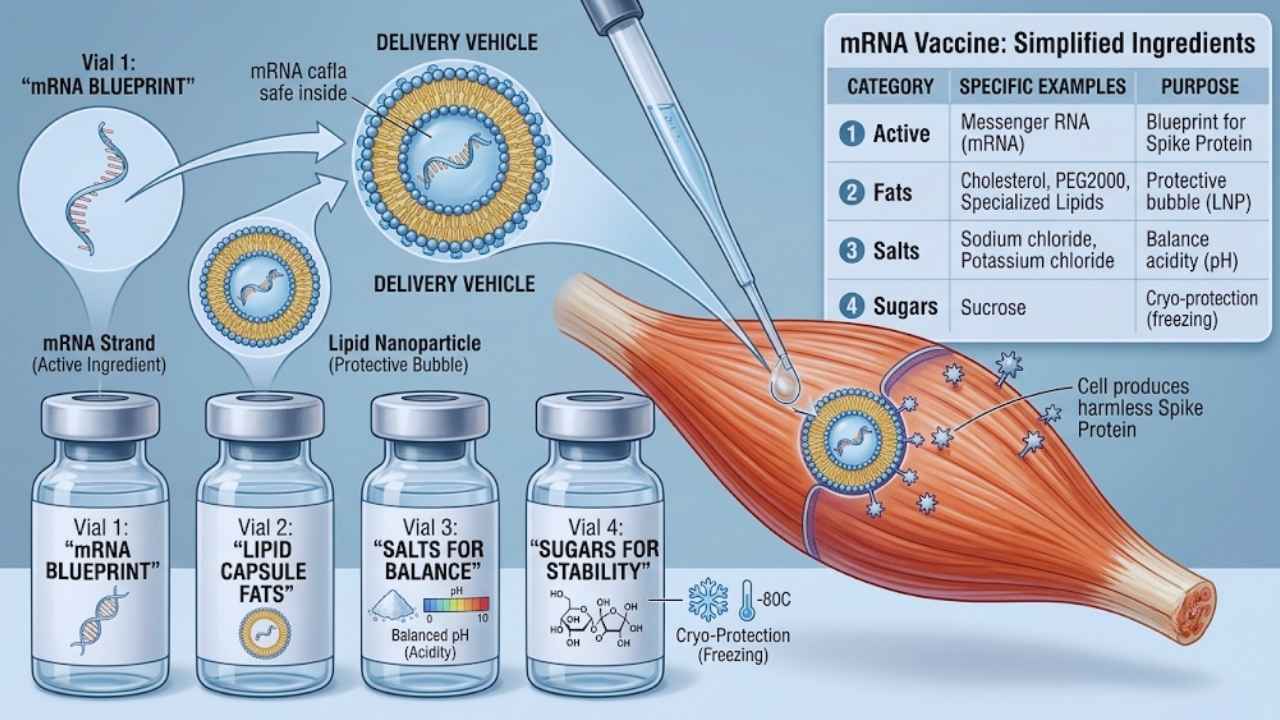
A lot of the early hesitation around these vaccines came from a simple question: What’s actually in this thing? To understand how mRNA vaccines work, it helps to look closely at the ingredients.
Left on its own, naked mRNA is incredibly fragile. Your body’s natural defensive enzymes would slice it to pieces before it even reached a cell. To fix this, scientists engineered a protective transport capsule called a lipid nanoparticle (LNP). The LNP tech is actually older than the COVID vaccines; it was first approved by the FDA in 2018 for a drug treating a rare nerve disease.
Compared to older, traditional vaccines, the ingredient list is remarkably clean. There are no live or dead viruses, no heavy metal preservatives, and no egg proteins. Instead of a long list of complex biological agents, you just have the genetic code, fats for protection, salts for pH balance, and sugars to keep it stable during freezing.
|
Ingredient Category |
Specific Examples |
Purpose in the Vaccine |
|
Active Ingredient |
Messenger RNA (mRNA) |
Provides the blueprint to build the spike protein. |
|
Lipids (Fats) |
Cholesterol, PEG2000, specialized lipids |
Forms a protective bubble around the fragile mRNA. |
|
Salts |
Potassium chloride, sodium chloride |
Balances the acidity so the vaccine matches human blood. |
|
Sugars |
Sucrose |
Acts as an antifreeze to protect the bubbles during freezing. |
Traditional vs. mRNA: Why Are They So Fast to Make?
The lightning speed of the vaccine rollout made plenty of people nervous. It left many asking how scientists could figure out how mRNA vaccines work against a new threat so fast without cutting safety corners. The secret lies in the manufacturing shift from biology to chemistry.
Traditional vaccines require growing actual viruses in massive labs, often using millions of chicken eggs or giant vats of living cells. Scientists then have to kill or weaken the virus, purify it, and package it. It is a slow, finicky, months-long biological process. This is why flu shots have to be predicted and manufactured almost a year in advance.
mRNA vaccines don’t need the actual virus at all. All scientists need is its genetic code, which can be sent over the internet as a text file. Once they have that digital sequence, they can synthesize the mRNA in a sterile lab using chemical mixers. It is a true plug-and-play system. If a new virus variant pops up, scientists don’t have to rebuild the factory—they just change the code in the software. This speed allows for incredibly rapid responses to emerging global health threats.
|
Feature |
Traditional Vaccines (e.g., Flu Shot) |
mRNA Vaccines |
|
Core Method |
Injects weakened or dead viruses. |
Injects instructions to make a viral protein. |
|
Manufacturing Speed |
Slow (requires growing viruses in labs). |
Extremely fast (synthesized chemically). |
|
Flexibility |
Hard to adapt to new virus strains quickly. |
Highly adaptable; just change the genetic code. |
|
Decades in Use? |
Yes, over 70 years. |
No, commercialized widely in 2020. |
Safety and Side Effects: What the Data Shows
While the public rollout felt sudden, the science behind it wasn’t new. Researchers spent over thirty years perfecting the technology. In fact, Dr. Katalin Karikó and Dr. Drew Weissman won the 2023 Nobel Prize in Medicine for figuring out how to alter mRNA so the human body wouldn’t immediately reject it.
Because these shots don’t contain a virus, they cannot give you an infection. When you feel a sore arm, fatigue, or a mild fever after the shot, that isn’t the vaccine making you sick. That is your immune system running a test drill. Your body is raising its temperature and pumping blood to the area to fight off what it thinks is an invader.
Recent large-scale Phase 3 trials for newer mRNA vaccines continue to confirm this safety profile. While temporary reactions like injection-site pain, headache, and myalgia are very common as the immune system activates, serious adverse events remain incredibly rare. For instance, extensive monitoring during the latest trials found no new or elevated risks of conditions like myocarditis compared to older standard-dose vaccines.
|
Side Effect Category |
Examples |
Cause |
|
Very Common (Expected) |
Sore arm, fatigue, headache, chills. |
Normal immune system activation. |
|
Uncommon |
Swollen lymph nodes, mild joint pain. |
Aggressive immune cell response. |
|
Extremely Rare |
Myocarditis (mild heart inflammation). |
Rare inflammatory response (mostly in young men). |
|
Myth (Does Not Happen) |
Changing DNA, infertility, shedding virus. |
Biological impossibility based on cellular mechanics. |
Beyond Viruses: The Future of mRNA Technology
The coolest part about this science is that we are just scratching the surface. Now that the delivery system has proven safe in billions of people, researchers are pointing it at humanity’s toughest medical battles. The global market for mRNA technology is booming as companies push numerous therapies through advanced clinical trials.
Take the seasonal flu, for example. In mid-2026, Moderna’s mRNA-1010 flu vaccine received a unanimous thumbs-up from an FDA advisory panel for adults over 50. Phase 3 global trials showed it actually outperformed standard-dose flu shots by reducing laboratory-confirmed influenza illness by an extra 26.6%. Furthermore, companies are actively recruiting for “combination vaccines” (like the mCombriax trial) that put flu and COVID protection into one single annual shot.
The oncology field is equally exciting. Doctors can now biopsy a patient’s tumor, identify its specific genetic mutations, and print a custom mRNA shot. This shot teaches the patient’s own white blood cells to hunt down and destroy those specific tumor cells. As of 2026, personalized cancer vaccines like mRNA-4157 (Intismeran Autogene) are deep into Phase 3 trials for several cancers, including melanoma and non-small cell lung cancer, showing incredible promise in stopping cancer from returning after surgery.
|
Medical Field |
Potential mRNA Application |
Current Status |
|
Oncology (Cancer) |
Personalized vaccines to train the body to hunt tumors. |
Active Phase 3 trials for Melanoma and Lung Cancer. |
|
Infectious Disease |
Standalone flu (mRNA-1010) and Flu/COVID combos. |
FDA panel recommended; Phase 3 superiority proven. |
|
Rare Genetic Diseases |
Delivering missing protein blueprints for cystic fibrosis. |
Laboratory and early clinical research. |
|
Autoimmune Disorders |
Training the immune system to stop attacking healthy tissue. |
Experimental research phase. |
Final Thoughts
Learning how mRNA vaccines work clears away the confusion. It isn’t weird science fiction; it is just a clever way to utilize our cells’ natural communication system. By giving our bodies a safe look at the enemy’s uniform, we let our immune systems train and prepare for the real fight ahead.
From stopping seasonal flu outbreaks with higher efficacy to designing custom therapies for lung cancer and melanoma, this tiny genetic messenger is opening a whole new era in modern medicine.
Frequently Asked Questions (FAQs) About How MRNA Vaccines Work
Can an mRNA vaccine alter my DNA?
No. It is physically impossible. Your DNA stays locked inside the cell’s nucleus library. The mRNA instruction manual drops off its info on the factory floor outside that room and never gets a key to go inside.
Does the mRNA stay in my body forever?
Not at all. Think of it like a self-destructing text message. Once your cell reads the recipe and builds the protein, natural enzymes dissolve the mRNA. It disappears within days.
If this was rolled out so fast, how do we know it’s safe long-term?
History shows us that vaccine side effects show up within the first two months. Because the ingredients inside an mRNA vaccine break down and leave your body so quickly, long-term side effects appearing years down the road are highly improbable from a biological standpoint.
Why do these shots need to be kept so cold?
mRNA is notoriously unstable. If it gets too warm, the protective fat bubbles melt and the blueprints fall apart, making the vaccine useless.
Are mRNA vaccines going to replace all older shots?
Probably not. While mRNA is great for fast-moving targets like the flu or new viruses, traditional vaccines are still incredibly cheap and reliable for stable diseases like tetanus or measles.